Saros will test your skills, but taking on the challenge is more than worthwhile.
Game developer Housemarque made a big splash back in 2021 with the release of its sci-fi shooter Returnal, which fused together bullet hell combat and roguelike systems to wide acclaim. Five years later, the developer is releasing its long-awaited follow-up: Saros, a flashy sci-fi game that serves up much of the same nigh-masochistic pleasures that made Returnal so memorable, only on a much more ambitious scale.
Saros’ core gameplay loop will be familiar to anyone who has played a roguelike before–you fight, you die, and you fight again. However, this game also incorporates a few potent meta-progression options to make future runs easier, while keeping its big combat setpieces extremely challenging nonetheless.
Make no mistake: Saros is not an easy game to beat. However, its breathtaking world design, wide variety of bosses, and absolutely fantastic combat make getting back up and trying again a genuinely thrilling proposition each and every time.
Saros
Platform: PlayStation 5
Release date: 30 April, 2026
Price: US$69.99
What is Saros about?
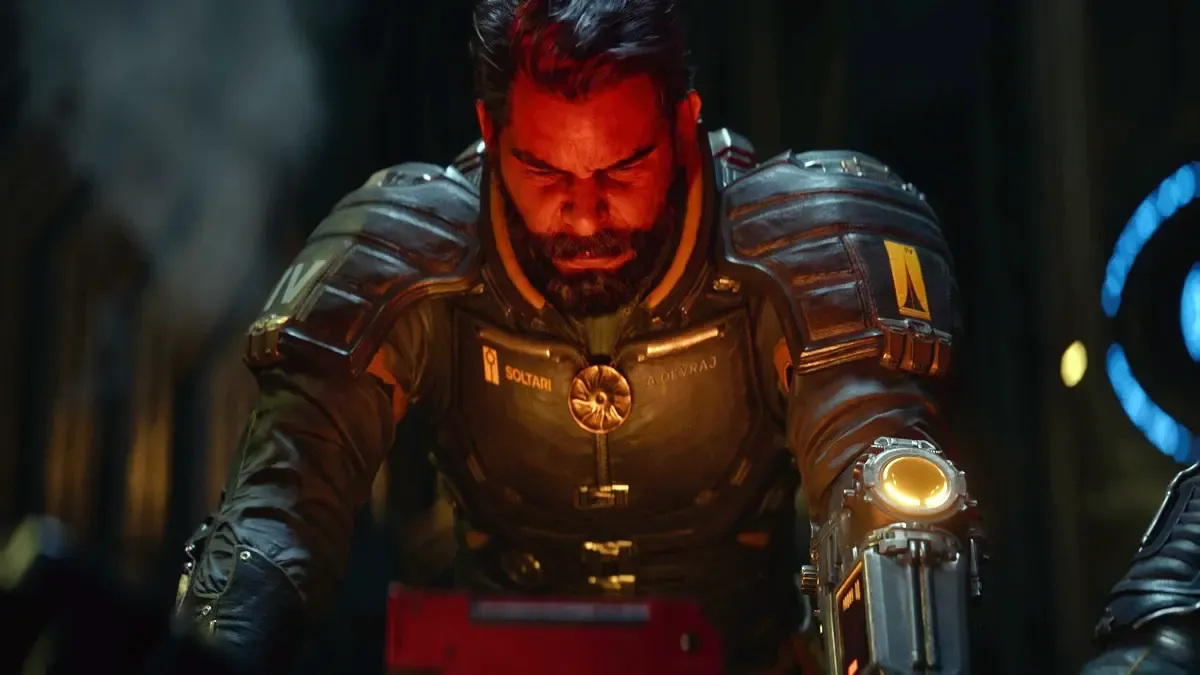
Saros follows a group of Enforcers from a megacorporation called Soltari, who have been sent to investigate the disappearance of several colonists on the planet Carcosa. Players step into the shoes of Arjun Devraj, a Soltari Enforcer who arrives on the planet on a rather more personal mission than he’s letting on: he’s looking for one of the planet’s missing colonists, a woman named Nitya.
It quickly becomes clear that Arjun and his fellow Enforcers have found themselves in great danger in Carcosa, as the planet is teeming with monstrous entities out for blood. Above them hangs a sun that warps the minds of those below, creating friction among Arjun’s crew as they slowly but surely begin to mentally unravel. There is little levity to be found in Arjun’s travels, as the story begins with things looking grim for his colleagues, and only getting grimmer by the day.
The presence of Arjun’s crew means that the player will rarely feel isolated during their travels on Carcosa. Colleagues will chirp in Arjun’s ear as he makes runs across the planet’s biomes, and debrief their discoveries upon his return. The atmosphere of cold isolation that loomed over Selene in Returnal is replaced here by a constant sense of unease and tension. This alien planet is manipulative and its ambitions for the Enforcers are unknown, but players will slowly see this crew lose trust in each other, and thus wonder if there’s anyone left for Arjun to rely on.
Is Saros’ story good?
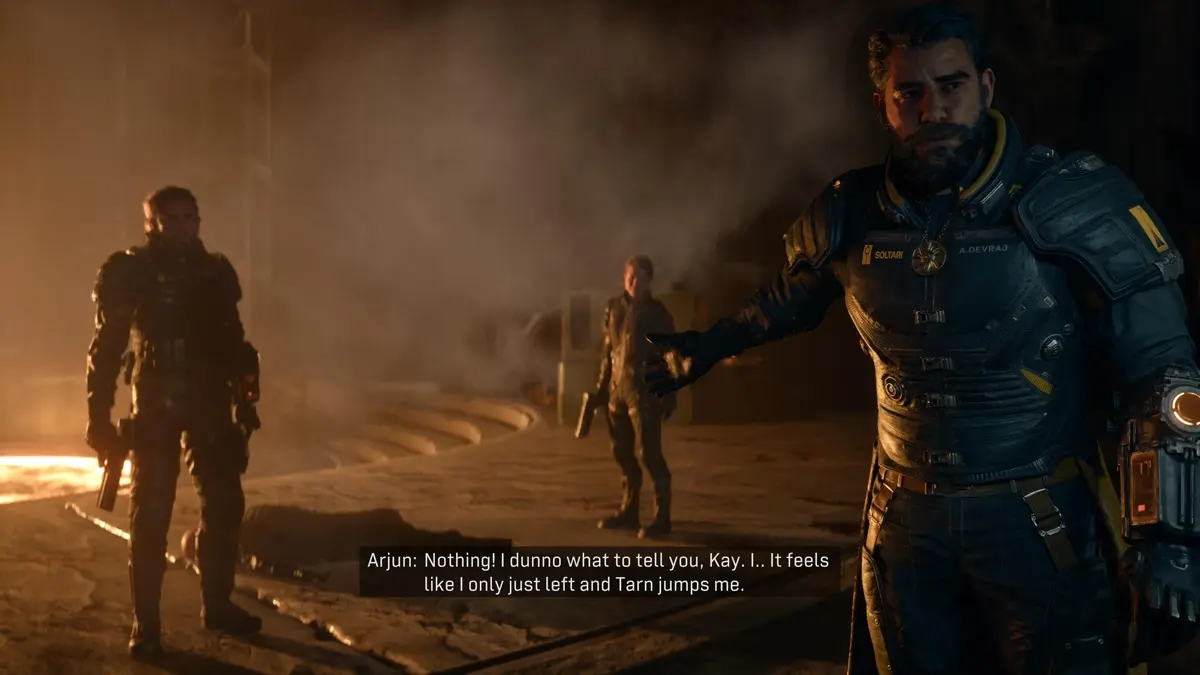
Saros’ main narrative is a compelling one, but it takes some time for its slow-burn mysteries to truly entice the player forward. Its opening hours are a tad banal if anything, dragged down by wooden dialogue, one-dimensional characters, and performances that feel more theatrical than they are believable. Actors gesticulate in a motion capture room, but their performances rendered in-game don’t quite hit as hard as they’re meant to.
That is not always the case, thankfully. As the narrative grows in intensity and veers towards the finish line, the actors behind Arjun (Rahul Kohli) and Nitya (Shunori Ramanathan, who largely appears in holograms) put on much more layered performances, as we learn more about these characters and their, at first, vague shared history. Saros’ story continues to change and take shape over its 15 hours or so of runtime, eventually becoming much more involved than its initial Silent Hill 2-like “tortured man looks for missing woman” narrative trappings might lead you to believe.
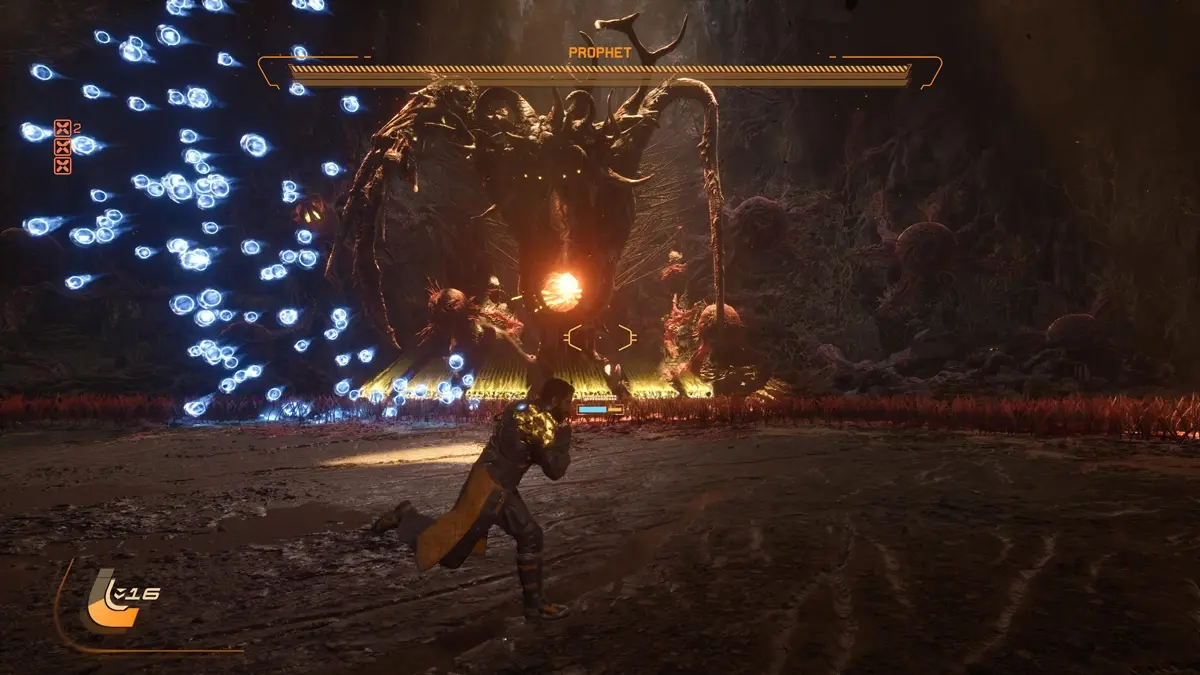
In other words, it takes some time for Saros’ story to get good. Once you move past the first two biomes, Carcosa’s many mysteries finally begin to open up to the player. The sci-fi universe that Housemarque has built up here is intricate and detailed, and lore fiends in particular will enjoy diving into the in-game Databank to trawl through a novel’s worth of lore text encompassing Carcosa, Arjun’s gadgets, and Soltari.
What is wrong with Carcosa’s sun? What happened to the lost Echelon crewmembers sent to colonise this planet? Where is Nitya, and what was her history with Arjun? The answers to these questions might not be quite as satisfying as one might hope, but Housemarque’s restraint in not spilling the beans from the get-go does culminate in some major narrative pay-offs and truly breathtaking combat setpieces.
Arjun’s story is massive and spectacular only when he’s fighting for his life in Carcosa. Saros makes these battles matter by lending them personal stakes, even if it takes some time for us to fully buy into them. It’s just a shame that the game doesn’t pay quite as much attention to Arjun’s colleagues, who dip in and out of the story without so much as an arc, and only lore notes to give them an inch of depth.
How do Saros’ combat and weapons work?
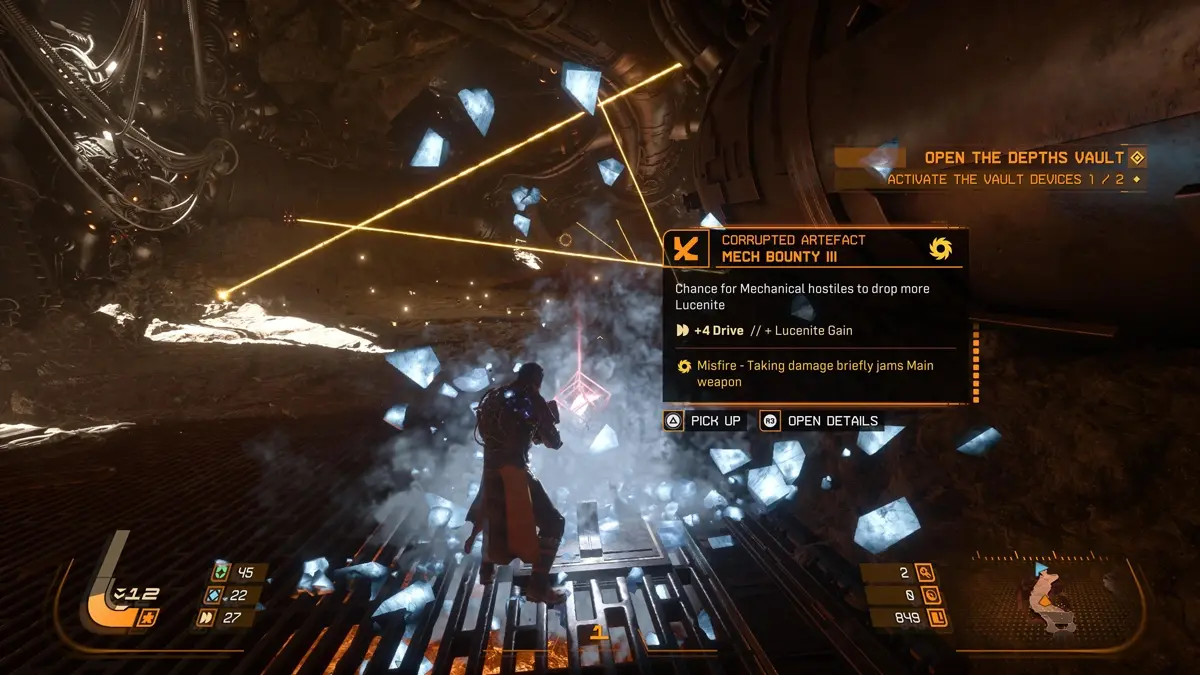
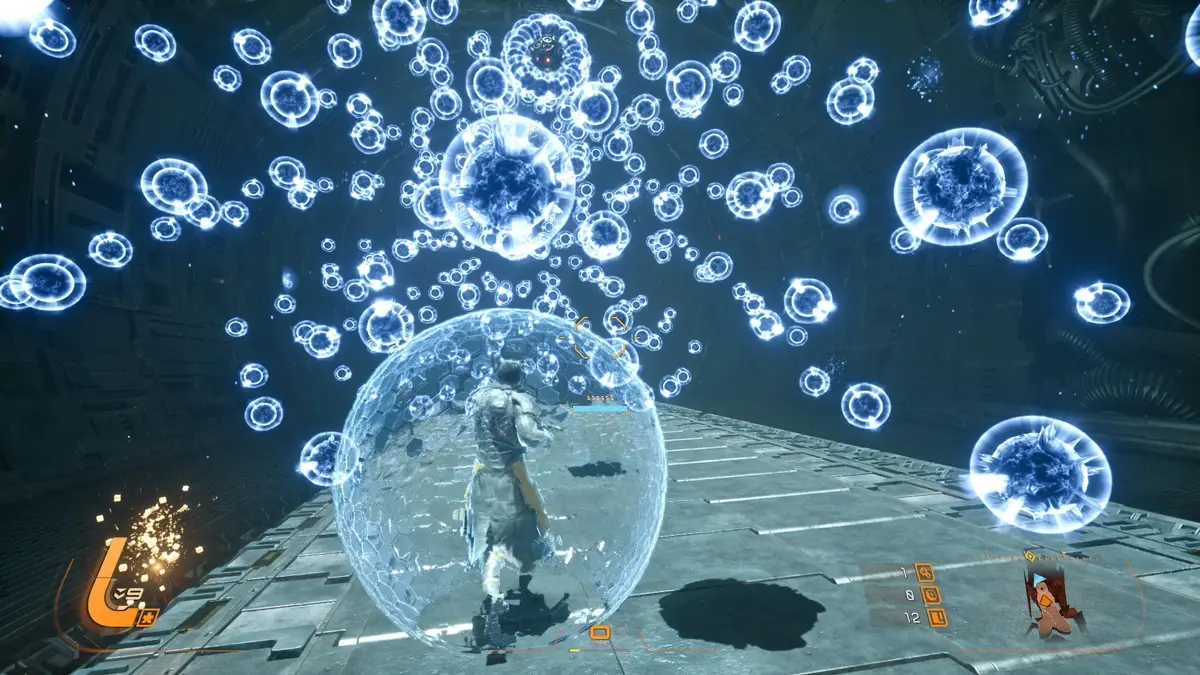
Saros’ combat loop will be familiar to anyone who has played through Returnal. Enemies spew bullet hell-like persistent projectiles and lightbeams at Arjun in combat, and he’ll have to duck and weave through them in order to stay alive. Players can either dodge these projectiles or hold the melee button to bring up a shield, which absorbs projectiles to build up Power. Power can then be used to unleash a Power Weapon, which can deal a huge amount of damage to the enemy at one go.
Saros’ combat loop is constantly feeding into itself in this way, with layers of mechanics that include attacks and special abilities that must be used in tandem to keep Arjun alive. For example, blue projectiles can be absorbed for Power, while red projectiles can be parried for a counter-attack. Yellow projectiles build up Corruption when they’re absorbed, building up Power at the cost of Arjun’s health. Numerous traversal abilities can also be used in combat arenas, allowing Arjun to zip around enemies with ease.
Despite the seemingly overwhelming level of chaos that each combat scenario presents to the player, they’re always more than capable of making it through unhurt. Enemy attacks are always readable despite the explosive masses of colourful particle effects, and weaving through Arjun’s abilities to dispatch enemies becomes surprisingly easy through muscle memory alone. Each run feels easier than the last–not because of the permanent upgrades or RNG (though that’s always a factor), but because you’re learning and getting better.
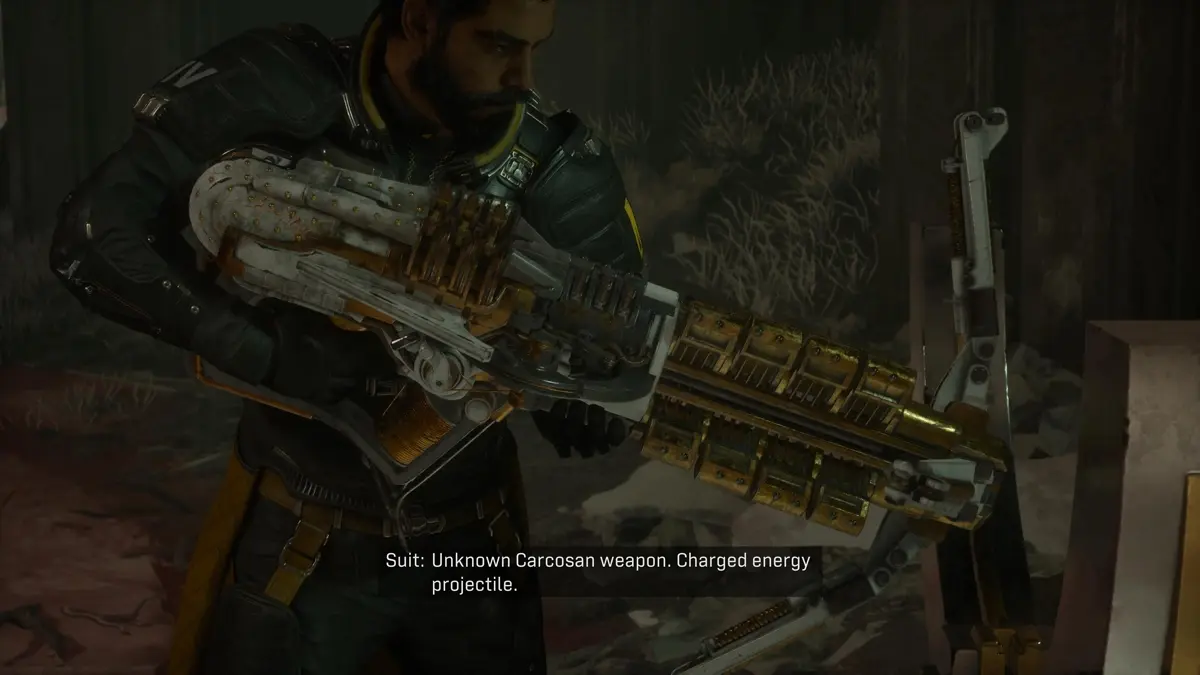
Saros also has a satisfying breadth of weapons and build types, which can change up your run entirely, depending on how lucky you get with each run’s random loot drops. These weapons have two fire types: push the trigger button all the way down for regular fire, or push it down halfway until you meet some resistance to use the alt fire. While it’s simple work to switch between both fire modes, they hardly interact with one another anyway, and thus don’t need to be used in tandem. It can get a little annoying trying to exert the precise amount of force needed to use the alt fire mode without your fingers slipping, so a button to toggle between modes might have worked better here.
All of Saros’ weapons can be extremely effective in combat depending on their upgrade paths, and you’ll likely go through a few of them before a run is over. I had a personal preference for some weapons, like a crossbow with homing projectiles and a pistol with ricocheting bullets for example, but it’s likely that everyone will be able to beat even the toughest bosses here with their own favourites. The weapons themselves feel great to use, and only become better over time, when more upgrades are unlocked during a run to really make them sing.
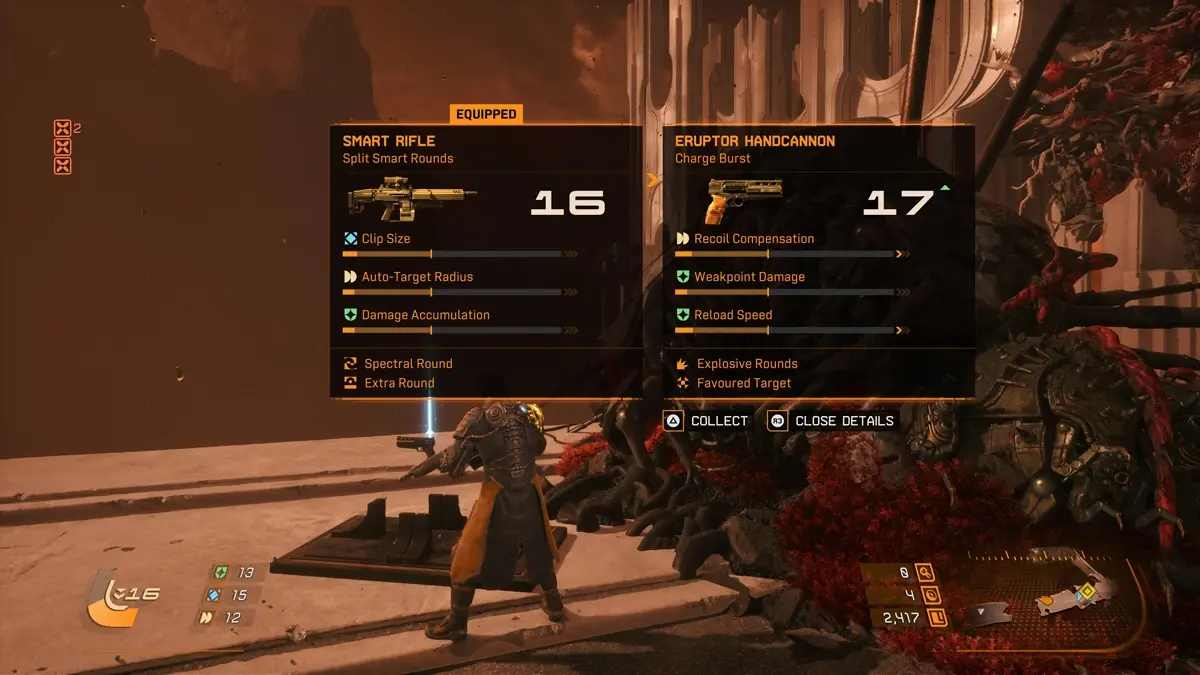
Unfortunately, there really aren’t that many choices to make during a given run in Saros. While different weapons posit different playstyles, their upgrade paths are pre-set depending on how much Lucenite the player has earned during a run. Lucenite is a common resource scattered everywhere in Carcosa, and the more of it that Arjun finds, the higher his weapon proficiency becomes. The higher his proficiency, the more upgrades are slotted into a weapon he finds. As such, it almost always makes sense to go after each new weapon you find, as they’ll be of a higher upgrade tier than the last, even if they might feel functionally worse to you.
Hence, progression during a run typically unfolds in a linear and predictable pattern: you pick up whatever the game gives you, and you move on. There are some exceptions, like re-rolling ability boons that you don’t like, or choosing between only one of two given items. If you’re the kind of person who enjoys messing around with different builds in roguelikes, you might be disappointed to find that they are practically non-existent here.
What are Saros’ roguelike progression systems?
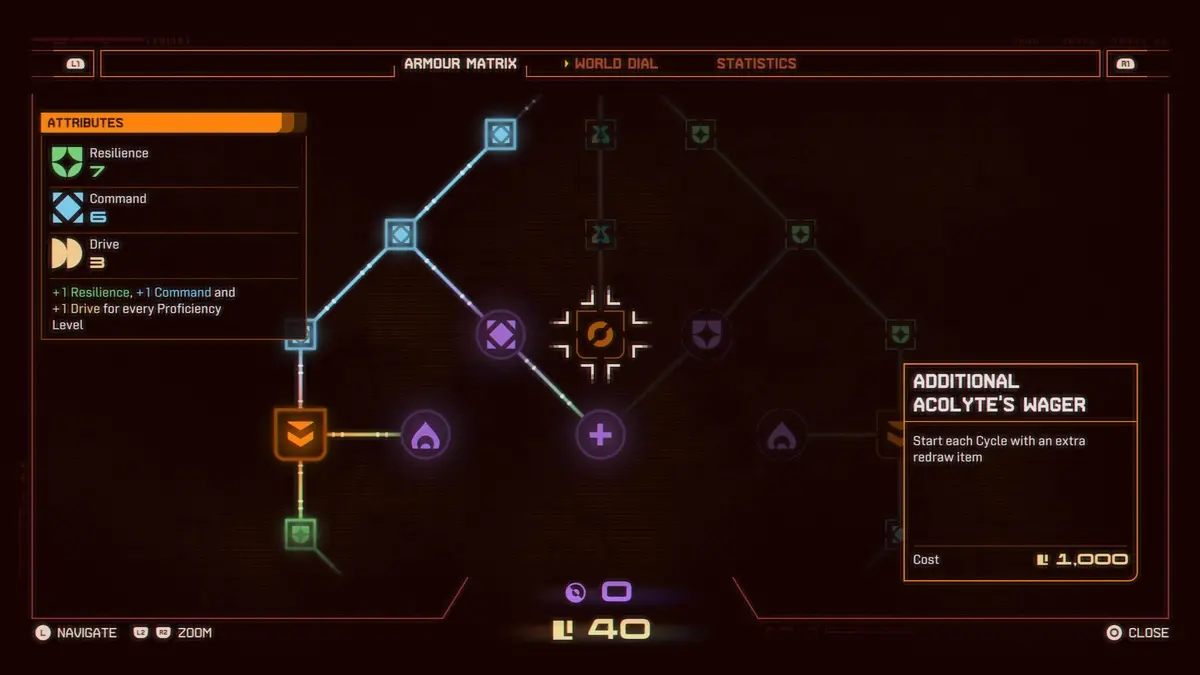
In Saros, every in-game death brings about a tantalising fresh start. When Arjun dies, he is reborn at a Soltari camp called the Passage, which functions as a player hub, with a chunk of the resources he earned during exploration remaining intact. These resources range from common Lucenite to the much rarer Halcyon, which can be brought back to the Armour Matrix in the Passage.
Here’s where things get interesting: the Armour Matrix is a sprawling skill tree that allows Arjun to purchase permanent upgrades like increased health, shields, or combat power in exchange for Lucenite and Halcyon. Parts of the Armour Matrix are gated behind specific bossfights, ensuring that you can’t just grind your way through the Armour Matrix to breeze through every biome immediately. As each boss is more difficult than the last, taking them on for the first time will always be a challenge in spite of these upgrades.
Nevertheless, they are significant for in-game progression. It’s hard to imagine taking on some of the game’s later bosses without wading deep into the Armour Matrix, as the increased power and survivability that it offers is key to your survival. The Armour Matrix also eventually affords more specific upgrades like getting more re-rolls, allowing players to pick and choose specific traits to prioritise upgrading in order to chart their own path through Carcosa.
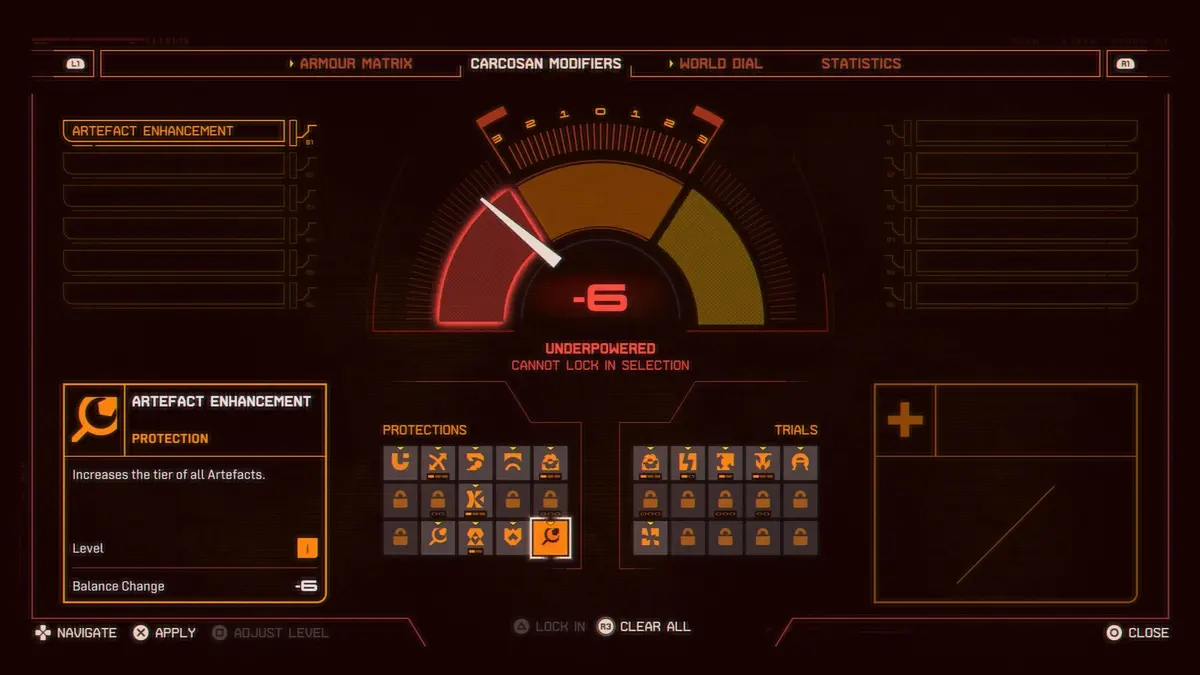
Saros also has difficulty modifiers, but they’re very different from traditional easy/normal/hard settings. Here’s how it works: the Carcosan Modifier screen gives the player access to easier run conditions like lower enemy damage, less Lucenite needed to upgrade proficiency, or the ability to use shields without Power.
Alternatively, players can also make things harder for themselves by choosing to remove the Second Chance ability (a revive mechanic), increasing enemy damage, or deactivating Armour Matrix upgrades entirely. These modifiers are allotted points, and players have to strike a balance between both easy and hard modifiers by getting the right number of points to “lock” the modifiers in for a run.
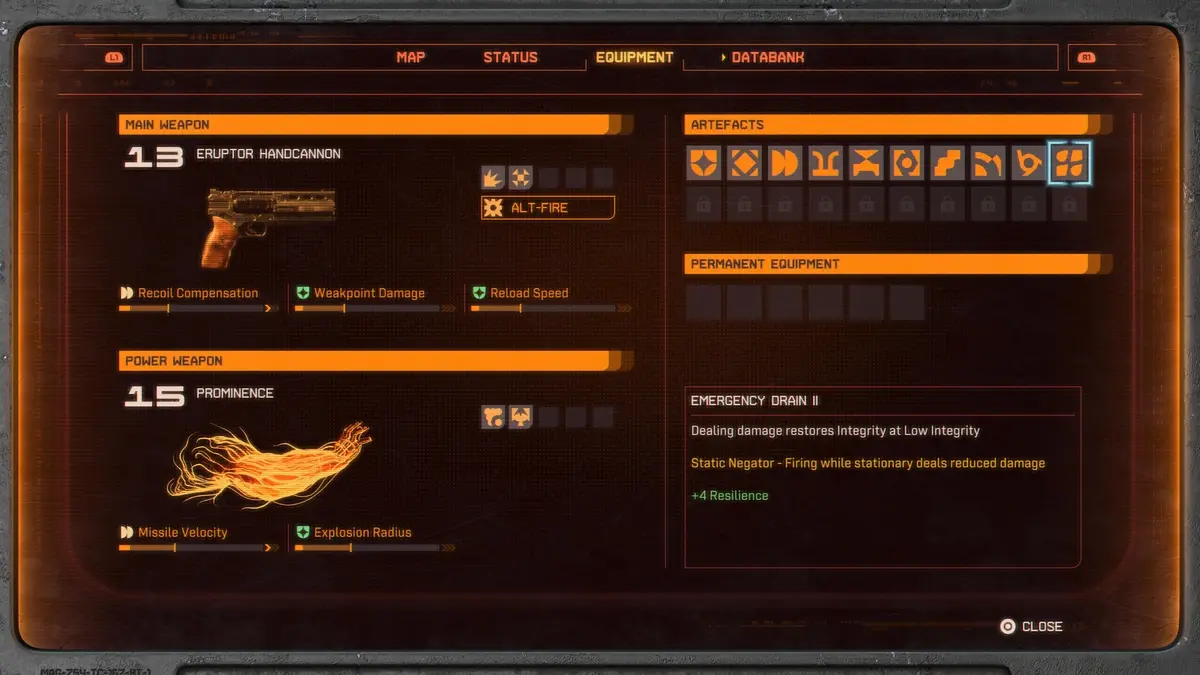
While I was initially surprised that Housemarque would include meta-progression systems in this game, following Returnal’s famously punishing gameplay loop, they do make Saros a much better and more addictive experience on the whole. The Armour Matrix makes it so that each run feels genuinely meaningful, while giving you the power fantasy of returning to a biome just a little bit stronger. The Carcosan Modifiers also keep the early biomes from getting stale in the game’s later half, as the player will have trivialised most of its content at that point.
While these meta-progression systems have a big impact on gameplay, I do wish Housemarque had also paid more attention to fleshing out the Passage as well. There’s really not much to do here in between runs, besides check for stray lore notes and have robotic chats with Arjun’s colleagues. It would have been nice to have a bigger hand in shaping the Passage in between runs, as opposed to it remaining this unnecessarily roomy and mostly static place for the length of the entire game.
What is Carcosa in Saros?
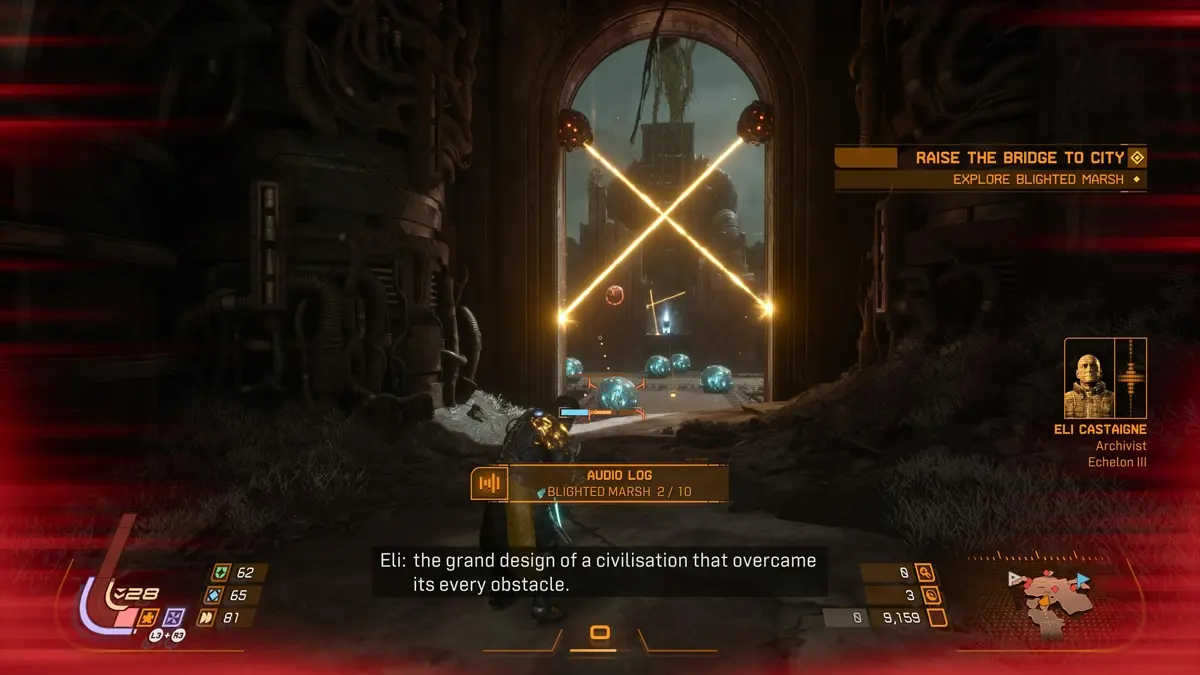
Carcosa is, in many ways, a key member of Saros’ main cast. The planet comprises multiple biomes, each taking the player to a unique slice of alien land teeming with dangerous monsters and winding detours. The biomes–of which there are many more in number than I was expecting–always culminate in an incredible bossfight, and typically take roughly 30–40 minutes to fully explore and complete.
Unlike other games in the roguelike genre like Hades 2, players won’t be expected to run through every single one of the game’s biomes in order to complete the story. A successful run in Saros typically involves beating just one biome before running into a story event, though late-game biomes can run longer without such interruptions. This ensures that you won’t be stuck repeating the same run too many times, and keeps the story flowing at a good pace.
Even if you end up in the same place for too long, it’s hard to imagine the novelty of exploring this planet’s crevices wearing thin. Carcosa is a truly awe-inspiring place to traverse at times, its biomes painted with a stunning tapestry of writhing tentacular lifeforms, machine-like industrial dungeons, and golden angelic temples.
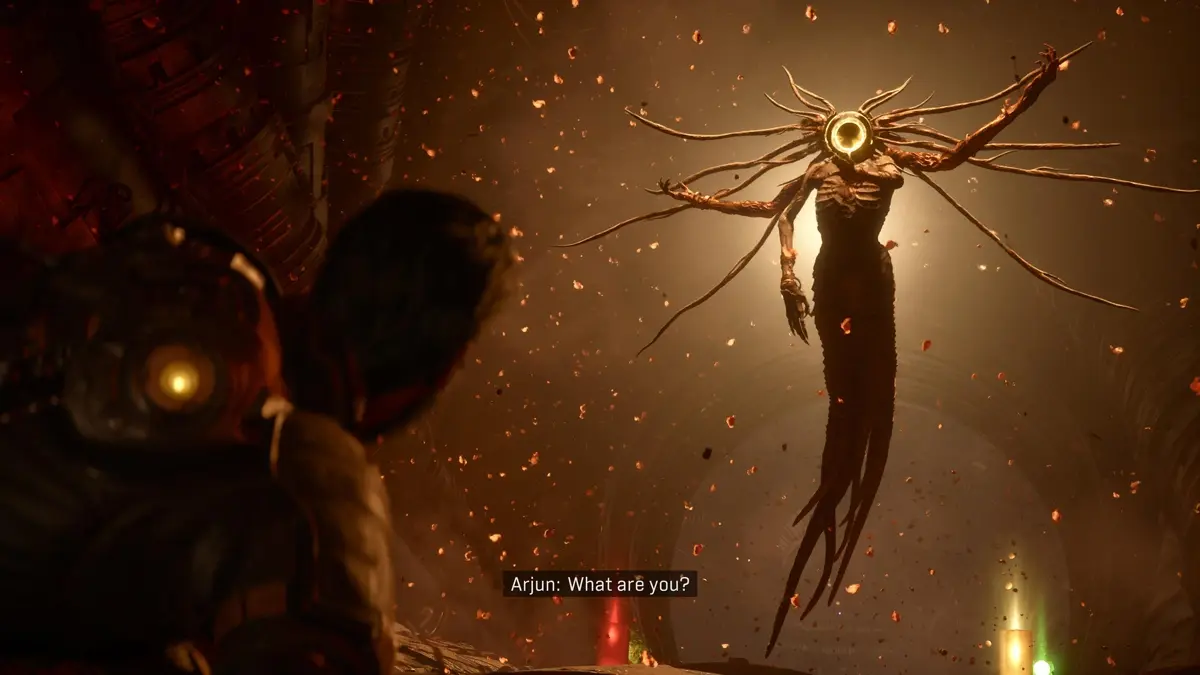
The game's bosses and diverse enemy types also enjoy the same level of conceptual detail, with enemies coming in different variations depending on the biome, and each successive boss seemingly keen on one-upping the last one in sheer spectacle. I’m not sure what they’ve been feeding the art design team over at Housemarque to come up with these gorgeously morbid alien visuals, but that team needs to be kept well-fed at all costs.
Carcosa also transforms when Arjun activates an eclipse, which can be done at various points while exploring a biome. Biomes change greatly upon the eclipse’s arrival, with the land seemingly coming alive just to make Arjun’s journey even more difficult. Enemies hit faster and harder, and ability boons now go hand-in-hand with banes. This also changes up a biome’s level design, sometimes drastically, forcing you to chart a new path amid environmental hazards. It’s always worth activating the eclipse, despite its many terrors, as Lucenite and reward drops are multiplied greatly upon doing so.
Housemarque has also done stellar work with Saros' sound design here. The game's weapon feedback and ambient sound design feel absolutely stellar with headphones on, immersing the player with the rich hums and rhythms that underscore life on this alien planet. Composer Sam Slater's soundtrack is fantastic as well, with swinging rock guitars coming into the fray when the eclipse is activated, and frantic fast-paced beats accompanying the more intense bossfights. I played the game on base PlayStation 5, and while the game doesn't have any performance modes available, it looks and runs smoothly.
The only exception is a game-breaking bug I ran into in a late-game boss arena, where I fell through the floor and was unable to trigger the fight. Starting another run fixed the issue, thankfully.
Verdict
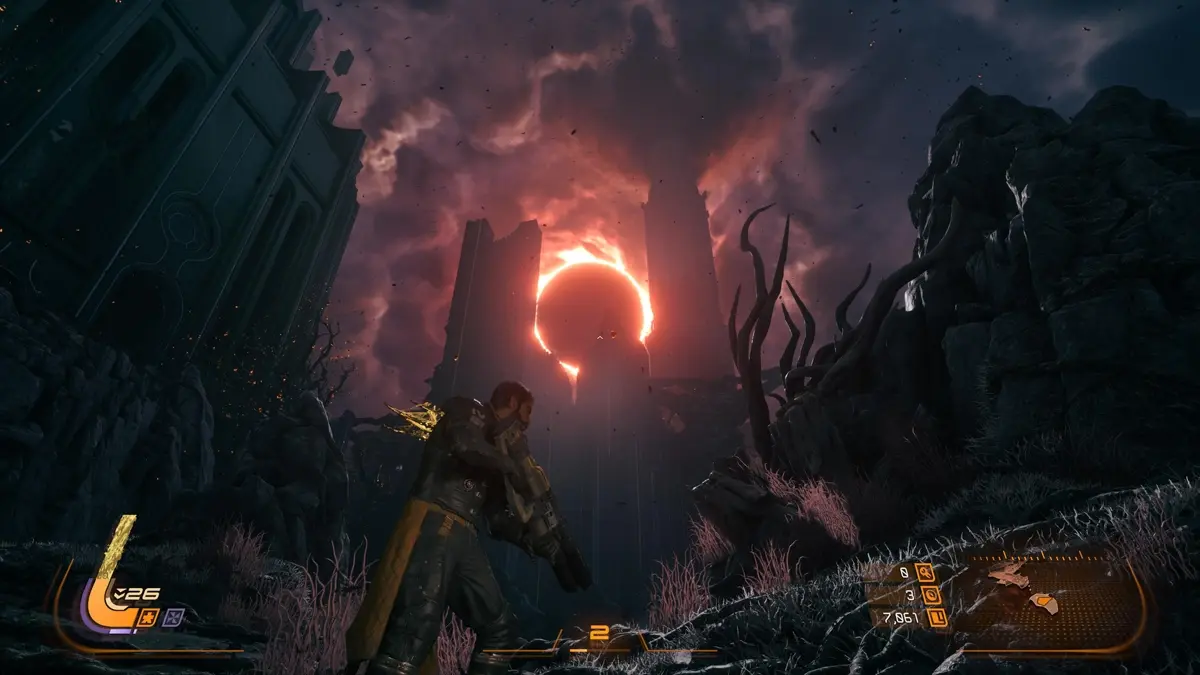
Saros is another roguelike triumph from Housemarque, proving that the studio has always been one of PlayStation’s most underlooked gems to date. The game’s incredible sci-fi visuals, intriguing mystery, and polished combat make for an addictive experience that one can’t help returning to again and again, even after getting repeatedly trounced by a challenging bossfight.
There’s something almost ineffable about this combination of frenetic action and meaty gunplay, that makes Carcosa’s many trials feel engaging rather than frustrating. Something that settles on you and guides your hand after learning attack patterns and traversal routes. Your runs get shorter, your health stays up, and you find yourself hurtling towards the finish line all of a sudden, as if you didn’t even try.
There is beauty in learning. Saros has many lessons to impart, chief of which is that you may die many times over, but you can only beat the game due to the unending perseverance of your past lives.
Saros launches on PlayStation 5, on 30 April, 2026 for US$69.99. We received a copy of the game for this review.
Who made Saros?
Game developer Housemarque, a Sony Interactive Entertainment-owned studio under the PlayStation umbrella made Saros. The studio previously developed Returnal, Matterfall, and Resogun.
When does Saros come out?
Saros launches on 30 April, 2026.
Is Saros a roguelike?
Yes, Saros is a roguelike. More specifically, it is a roguelite with upgrades for players to get stronger after every in-game death, similar to Hades.
Who is starring in Saros?
Saros' cast includes Rahul Kohli as Arjun Devraj, Jane Perry as Sheridan Bouchard, Ben Prendergast as Jerome Jackson, and Shunori Ramanathan as Nitya Chandran.