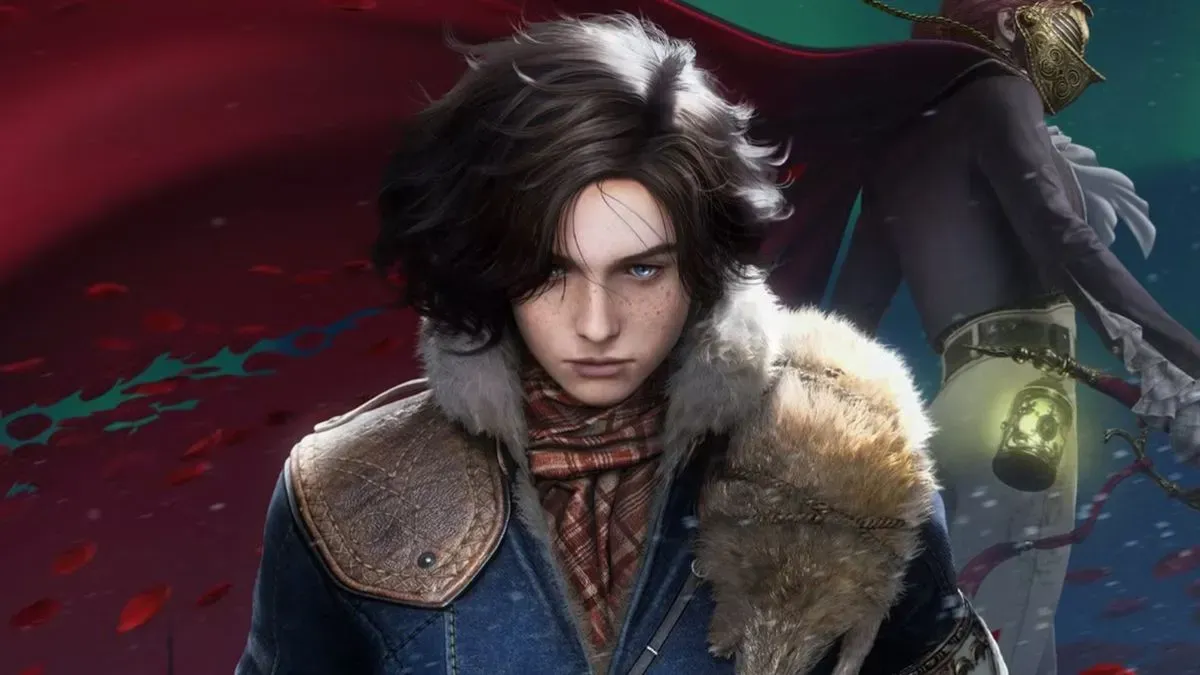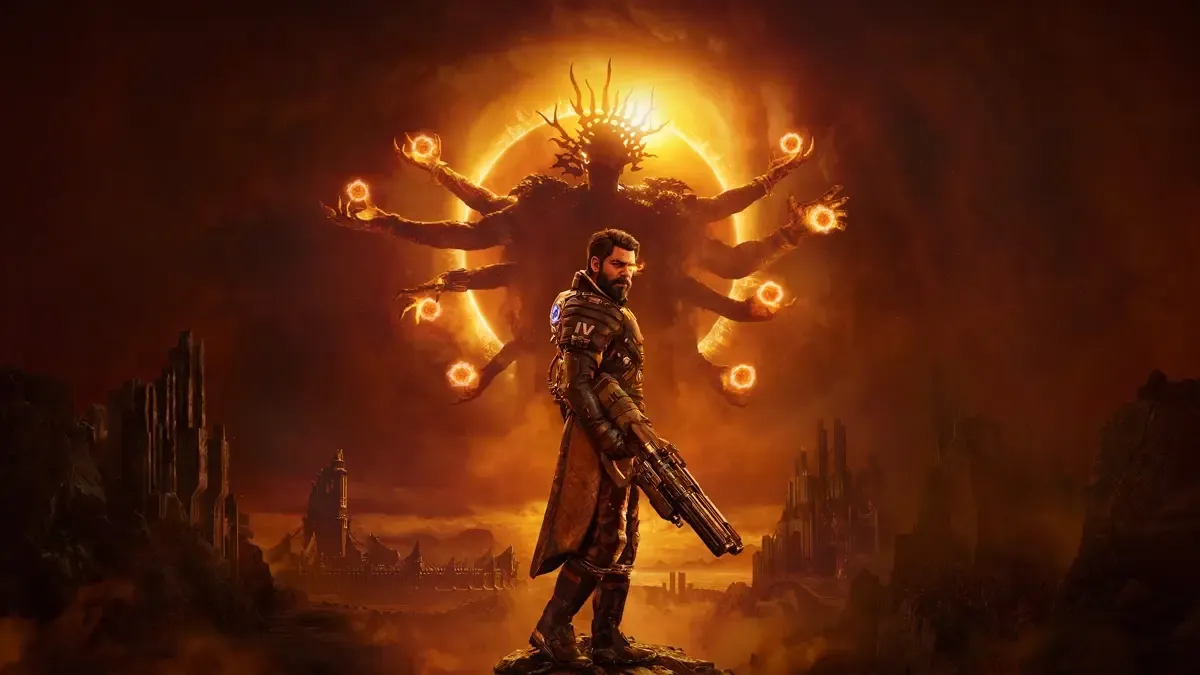
Saros feels like a mix between Returnal and Hades, in the best way possible.
Returnal maker Housemarque is back with another foray into the genre of roguelike bullet hell shooters: Saros. Back in 2021, Returnal turned heads thanks to its novel combination of over-the-shoulder bullet hell combat, atmospheric worldbuilding, and beautiful alien aesthetics.
After spending three hours with Saros yesterday (31 March) at a preview event, I was delighted to find that the upcoming PlayStation 5 exclusive appears to offer more of the same. This time, however, it comes with more freedom for players to explore its maps, and the addition of permanent upgrades to lend every death some much-needed meaning.
It’s too early to say whether Saros is a truly worthy follow-up to Returnal, but its opening hours alone are very promising.
Saros
Platform: PlayStation 5
Release date: 30 April, 2026
Price: US$69.99
What is Saros about?
During a PlayStation preview event held in Malaysia, I was able to play through the first three hours of Saros–featuring two main regions called Shattered Rise and Ancient Depths. Almost immediately, the game sets itself apart from Returnal: players are thrown into a fast-paced tutorial area set in a region they won’t step foot in again for quite some time, and their inevitable death triggers the game’s opening credits.
Slowly but surely, we pick up a few contextual clues about the game’s lead protagonist, Arjun Devraj. Arjun is an Enforcer from an enigmatic organisation called the Soltari, and has arrived on the foreign planet of Carcosa to search for a lost colony. At least, that’s what Soltari is here for; Arjun makes it quite clear that he cares little for the company’s plans despite being there on its dime. He’s here to search for a missing woman named Nitya, whom he shares a deep and personal–but frustratingly vague–relationship with.
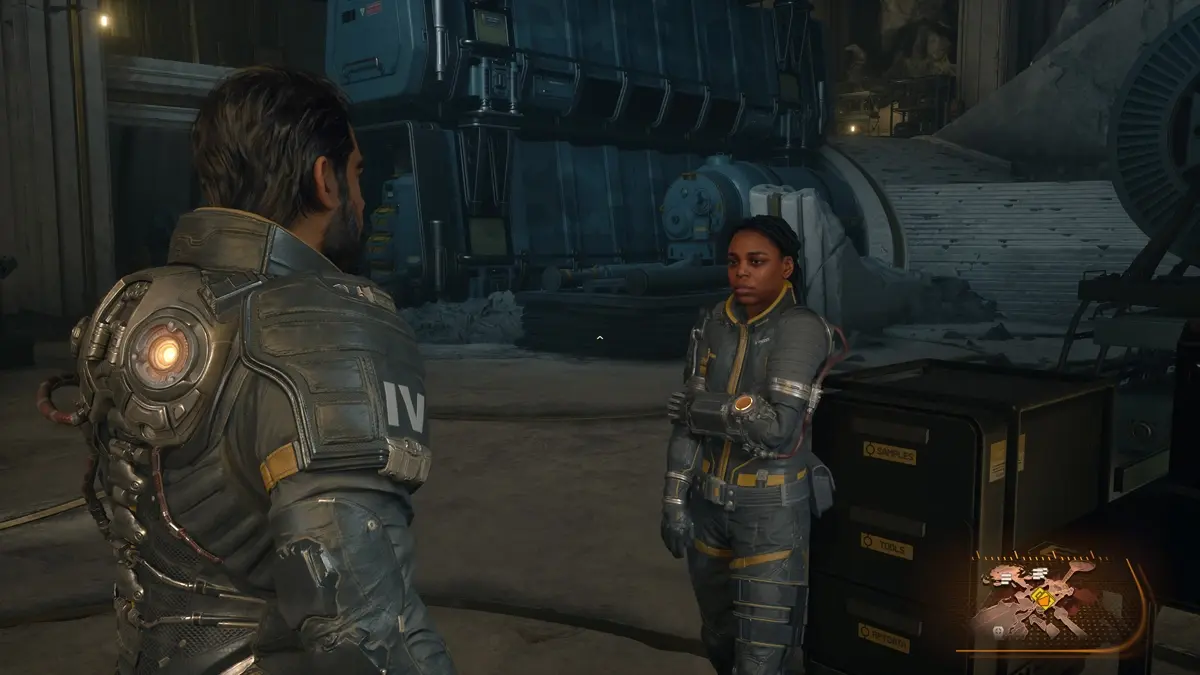
Unlike Returnal, Arjun isn’t exploring Carcosa alone. Although he has to fend for himself against the many threats this planet holds, he can also count on the rest of his Soltari crew for help: Kayla, Stack, Sheridan, and Jerome. The crew now shares an uneasy alliance with one another as they conduct their mission on Carcosa, as several of their dead colleagues now serve as a reminder that the planet is slowly manipulating their minds, and forcing them to turn on one another. The moment we meet them, the atmosphere is already tense; Carcosa’s deadly sun has turned Arjun’s late crewmate Tarn into a mindless monster who is quickly put down by the team’s leader, Sheridan.
It’s unclear where the rest of Saros’ story plans to take Arjun, but the hook is already there. In these early hours, I found myself trawling through scattered audio logs and lore text, in an effort to dig up more information on Nitya, Carcosa, and Arjun’s other missing teammates. Having crewmates chirping in Arjun’s ear throughout a run does take away from the sense of isolation that Returnal had going for it, but it’s clear that Housemarque is aiming to deliver a different tone with this story.
It feels more reminiscent of The Thing this time around, with a crew that has to work together amid the slow but creeping dread that any one of them could, in fact, be a wolf in sheep's clothing. Their environs aren't helping to soothe this tension, either. Shattered Rise's open plains and ruined buildings are beautiful to look at, save for the tentacular masses constantly reaching for the player in every crack and crevice of land, and the sun that can turn monsters into fearsome foes in a heartbeat.
Ancient Depths, the second region, is more dungeon-like in feel and paved with metal and machinery, suggesting that each region will provide a very different glimpse of this alien world.
Does Saros have the same combat as Returnal?
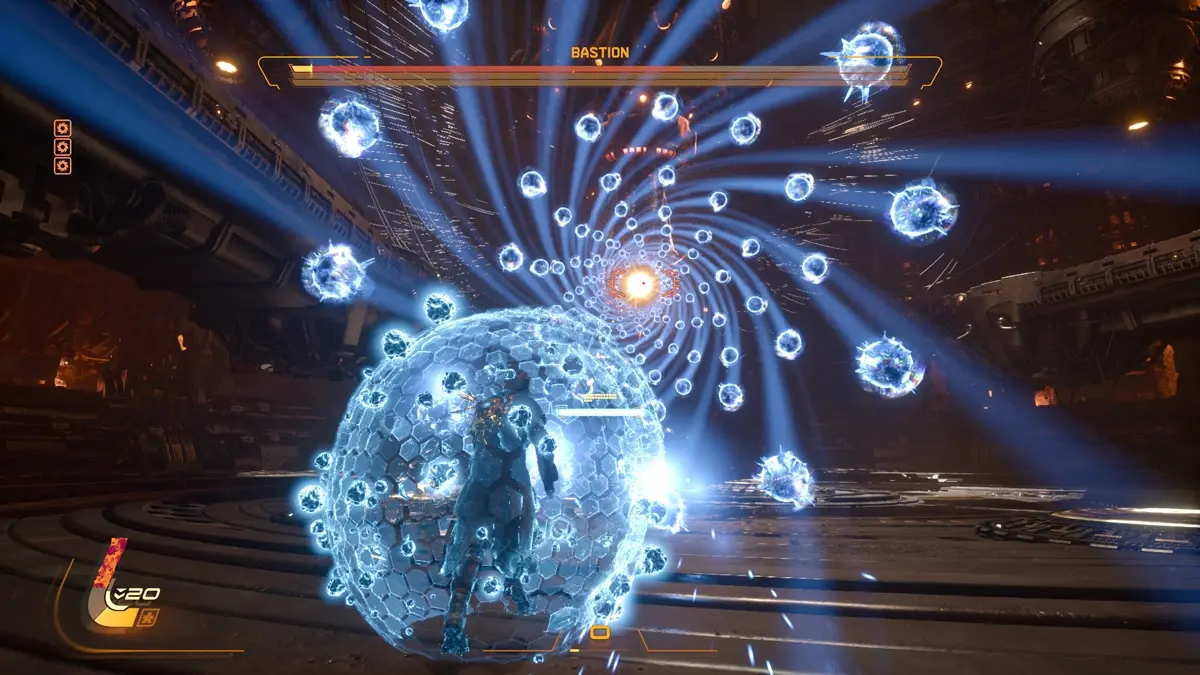
After fine tuning the slick bullet hell-heavy gameplay of Returnal, it’s no surprise that Housemarque has gone back for seconds with Saros. This game feels very much like Returnal 2 in all but name, with each run once again pitting players against numerous eldritch threats throwing down waves of deathly persistent projectiles and lightbeams.
Players are given plenty of tools to hold out against these abominations, thankfully. Arjun has a shield that he can bring up by holding the melee button, which can absorb enemy projectiles to fill up a Power meter. When the Power meter is full and turns blue, he can unleash a Power Weapon–a special ability that can deal devastating damage to enemies by holding down the aim button and firing. That does a funny thing to the combat loop, where the player ends up having to actively look for enemy projectiles to fuel their Power Weapon.
Much like Returnal, the game makes fantastic use of the DualSense controller’s adaptive triggers; simply pull the aiming trigger down halfway until you feel some resistance to unleash your chosen weapon’s alt fire mode. Push the trigger down all the way, and you’ll unleash your Power Weapon instead. In the heat of battle, however, this can be harder to execute than it sounds–I was constantly fumbling the buttons in a panic, and bringing up my Power Weapon when it had no ammo.
If Arjun dies in combat, he will be reborn at the Soltari camp all the way back at the beginning of the game. Hence, each run carries weight. Players must make it all the way to their next main objective, which typically lies at the end of a given region, without dying to progress through the story. Each region seems to culminate in a different bossfight–I faced down the Prophet in Shattered Rise, for example, but ran out of time before facing the Bastion at the end of Ancient Depths.
Does Saros have permanent progression unlocks?
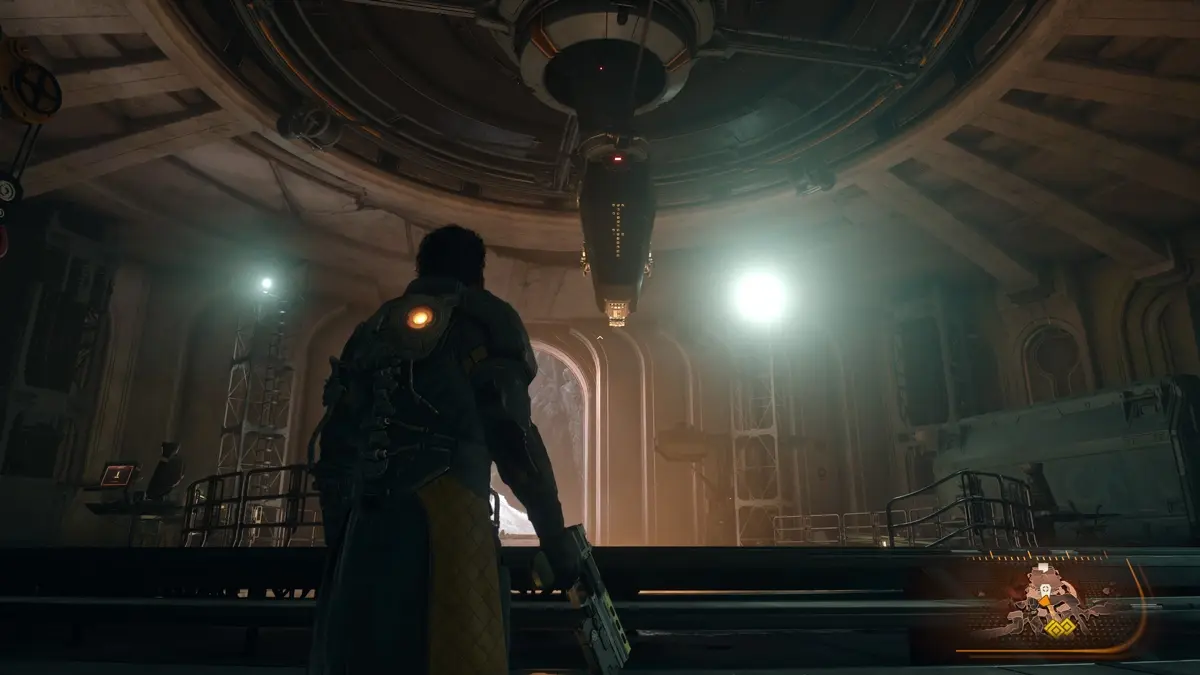
Unlike Returnal, dying is not such a bad thing in Saros. This is where the two games are most different from each other: Saros has an upgradeable skill tree in the form of the Armour Matrix, which offers a series of permanent upgrades for Arjun's combat kit. Arjun can permanently increase his health, shields, or combat power, for instance–simply by gathering resources like Lucenite or Halcyon (which is very rare).
Granted, that doesn’t mean you’ll be able to overpower everything in the game through death alone. Segments of the Armour Matrix are gated by Saros’ major bossfights, which means that you’ll eventually have to use good ol’ fashioned skill to gain access to more permanent upgrades. Nevertheless, these upgrades are powerful–I found myself breezing through the game’s first two regions, in comparison with Returnal, which gave me a lot more difficulty in its earlier hours.
Verdict
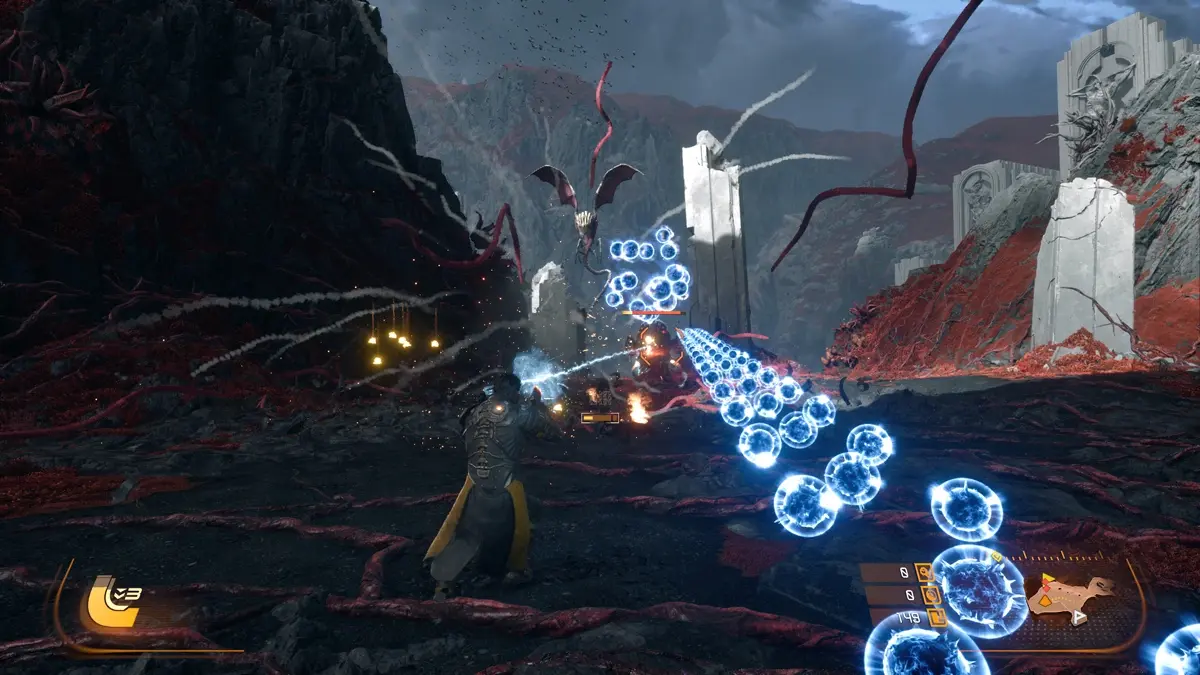
I’ll be honest: I had to tear myself away from Saros after its preview session concluded. I hadn’t expected the game to take the Hades 2 approach to roguelike gameplay, offering players meta progression options to keep every run feeling weighty and satisfying. While these progression options don’t seem nearly as complex as Hades 2's (for the first few hours, at least), they do offer an addictive reason to keep players coming back after each death.
It’s safe to say that the game does lose something in exchange for this higher level of accessibility, however. Returnal was isolating, cold, and punishing–but Saros feels much faster-paced, with a story that moves fast, and upgrades that come often and voluminously. Roguelike enjoyers might find that these new additions come to the game’s detriment, but me? I’m pleased as punch, and I genuinely can’t wait to dive back in for another run.
Saros launches on PlayStation 5, on 30 April, 2026 for US$69.99.
Who made Saros?
Game developer Housemarque, a Sony Interactive Entertainment-owned studio under the PlayStation umbrella made Saros. The studio previously developed Returnal, Matterfall, and Resogun.
When does Saros come out?
Saros launches on 30 April, 2026.
Is Saros a roguelike?
Yes, Saros is a roguelike. More specifically, it is a roguelite with upgrades for players to get stronger after every in-game death, similar to Hades.
Who is starring in Saros?
Saros' cast includes Rahul Kohli as Arjun Devraj, Jane Perry as Sheridan Bouchard, Ben Prendergast as Jerome Jackson, and Shunori Ramanathan as Nitya Chandran.