|
|













The open beta of Hearthstone is here, a new wave of players is coming and at the same time the meta is changing rapidly in typical Hearthstone fashion. Many of the guides and articles we wrote months ago are no longer relevant, and that includes our crafting guides for the common cards and beyond.
For that reason, in order to give a friendly welcome to the newcomers, we sat down to revisit our "best crafts" list. In a four-part series, we will cover the best neutral and best class cards everyone should consider crafting at one point or another.
We don't want you wasting that precious dust!
NOTE: Keep in mind that this is not necessarily a "priority" list, meaning that even though Earthen Ring Farseer is mentioned before Argent Squire, he's not always "better to craft".
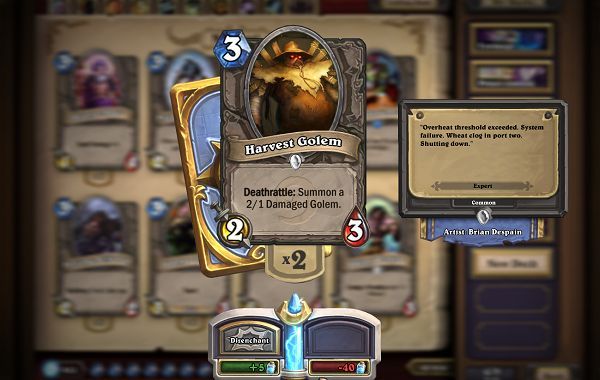
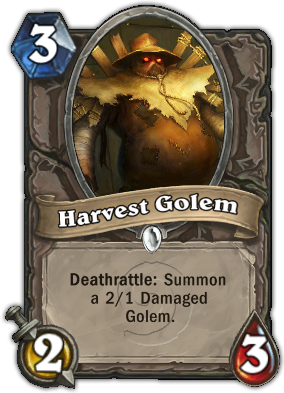 Between the first crafting guide we wrote almost three months ago and now, nothing has changed with the Harvest Golem and it remains one of the very best common cards in the game. It might look weak on first sight but that’s really not the case: Harvest Golem’s ability to spawn a 2/1 minion upon dying makes it a valuable 2-for-1 drop that’s often a pain to deal with. It’ll leave a body on the board after a sweeper like Flamestrike, bait several removals from the opponent or kill most of the 1-3 drops. In lower ranks players might even be tempted to use a silence on it, something that can save the late-game finishers.
The Harvest Golem fits almost all Hearthstone deck archetypes. It’s a go-to 3-drop for all control and mid-range decks (i.e. the slower ones out there) and only hyper aggressive builds like the Hunters avoid using it because of his low attack power.
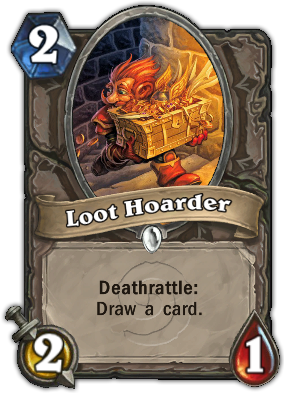 After the nerf to Novice Engineer (reducing his stats to 1/1 from 1/2), Loot Hoarder became the new popular card draw common for the early game. Although unlike the Engineer the Loot Hoarder doesn’t provide the instant cantrip, Hearthstone players are perfectly fine trading this little set-back for Loot Hoarder’s stats.
As a 2/1 body, the Loot Hoarder is real threat in the early game if not dealt with immediately. He shines against classes which can’t kill him with their hero power but he’s good even against the Druids, Mages and Rogues out there, who’ll often commit their T2 to clean him off the board, which will, of course, yield you a card – a win-win scenario.
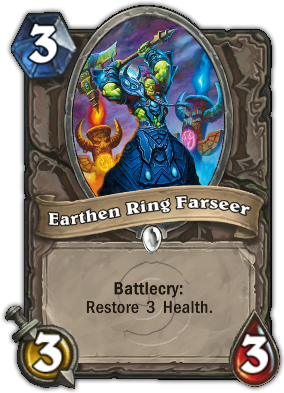 Earthen Ring Farseer is a card which gained popularity during test season one as it offered slower decks a chance to both put something on the board and heal the hero up, which is invaluable against the go-for-the face aggressive builds.
As the meta slowed down a bit, the Farseer has lost a part of its attractiveness but he remains a good and cheap minion for the control and mid-range decks. The lower ranks of the ladder are still infested with Hunters and a pair of Farseers really help to soften up the damage output of those rush decks. He’s often seen in those Druids who either don’t have all the necessary cards or still prefer the old, season one mid-range style of StrifeCro’s builds (many of the Druids seen today on the higher ranks of the ladder have dropped him for Chillwind Yetis as they rarely need the Farseer that much anymore). Healing Paladins also love him and so do some Shamans.
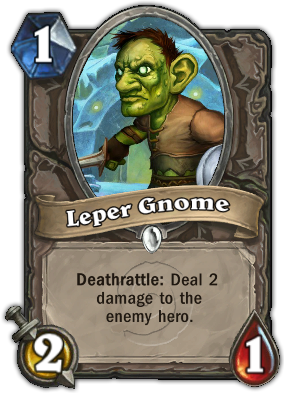 Leper Gnome is a card that will always have a place in the faster decks. One of the best neutral 1-drops next to Argent Squire, the Gnome will always deal two damage and in most cases he’ll swing for the face one time or trade with another minion before dying, totaling up to four damage for 1 mana.
Consider using Leper Gnome only if you’re leaning towards a heavily aggressive playstyle. He’s a core part of all aggro Hunter and Warrior decks but he’ll also fit nicely in faster Mage decks and Paladin miniatures.
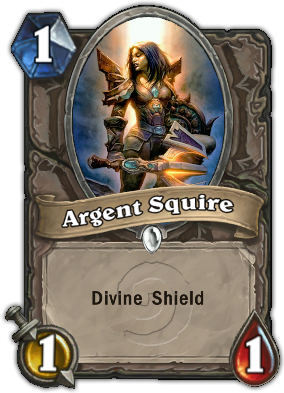 Speaking of great common 1-drops, meet Argent Squire, the divine-shielded 1/1 that’s in every aggro and mid-range deck as well.
As she will absorb the first damage dealt to her, the Argent Squire is an invaluable first turn minion. She needs two pings from Druids’, Mages’ and Rogues’ hero powers which makes her difficult to remove and she can safely trade with 1-health minions like Leper Gnomes, Loot Hoarders and Harvest Golems’ deathrattle.
The divine shield ability makes Argent Squire especially great when paired with buffing minions. T1 Argent Squire followed by a coined out Shattered Sun Cleric is a scary opening and most classes will have to dedicate more resources than they would want to clear the board. The Squire is also a good target for Dark Iron Dwarf/Abusive Sergeants to take out big threats without dying or with Defender of Argus to create a tough to kill 2/2 divine shielded taunter.
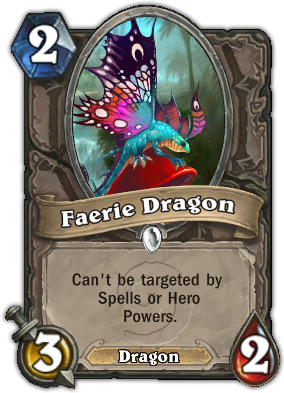 The Faerie Dragon is another minion one might consider crafting. A 3/2 body for 2 mana which is invulnerable to targeted removal spells or hero powers is very difficult to dispose of. Mages and Priests will have a pain dealing with it until they get their AoE spells (or kill it off with a minion) and if the Dragon is protected by other minions or spells it has the potential to beat down the opponent hard.
Because most classes will have to take it out by killing it with a minion, the Faerie Dragon is almost always a 1-for-1 trade as at 3 power it can take almost any early game minion. Beware of Rogue’s SI:7 Agent or Druid’s Claw or innervated Keeper of the Grove, though, as they can take out the Dragon without losing board presence.
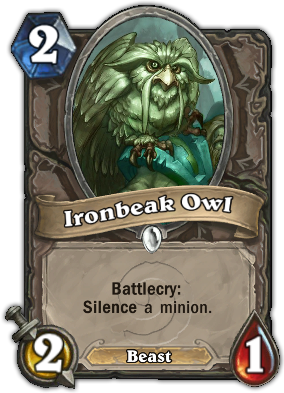
Ironbeak Owl is a great silencing card despite its somewhat poor stats. It’s especially cherished by aggressive Hunter decks as it shares the beast subtype (thus synergizing with Starving Buzzard and Kill Command) and is the cheapest taunt removal those decks can afford. Control Warlocks also use it to negate the potent deathrattle effects of Sylvanas and Cairne or, again, remove the taunts on the field and open the way for their Molten and Mountain Giants.
It’s important to note that silencing a minion removes all its buffs as well. The Shattered Sun’d Argent Squired goes down from a 2/2 divine shield to a mere 1/1. The 5/5 Blessing of Kings’d recruit that’s bashing your face is also down to a 1/1 token. That rich Rogue you’re facing has combo’d out a massive van Cleef – nope, back to 2/2. Granted, you will face a completely different when you climb up the ladder and you might not want to use Ironbeak Owl in every deck anymore but it remains a great card on the lower levels.
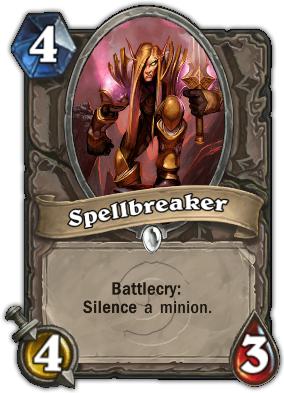 Similar to the Ironbeak Owl, the Spellbreaker is a card which can be used in most decks to neutralize the big threats. His stats are a bit weak for a 4-drop (at 3 health he’s an easy prey to Kill Commands, Wraths, Frostbolts or Hammers of Wrath) but he remains one of the better neutral 4-mana neutral commons, not to mention he’s in that 4-power sweet spot that Priests can’t remove.
The Spellbreaker can fit most of the slower, non-Druid decks (Druids will use Keeper of the Grove as a 4-mana silencer). Him and the Owl are also either-or’s: you’ll never want to stack too much on silencers so choose whichever better fits your deck.
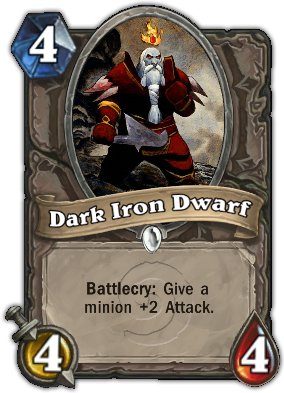 The Abusive Sergeant and Dark Iron Dwarf are two minions with similar purposes in different places of the curve. The +2 attack bonus until end of turn will allow smaller minions to trade with bigger ones, thus setting up trades that otherwise wouldn’t be possible (like killing the enemy Azure Drake, a 4/4 for 5 mana, with your Harvest Golem, a 2/3 for 3 mana) while putting a body on your side of the board.
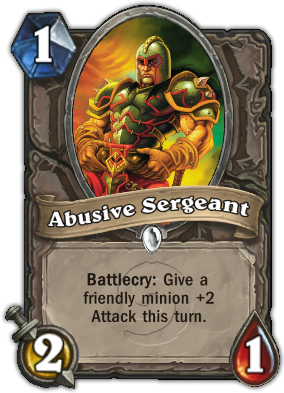 Similar to the Spellbreaker/Ironbeak Owl situation, most decks run either of Abusive Sergeant and Dark Iron Dwarf, rarely both. The Sergeant is always seen in charging Hunter decks or Paladin miniatures as he provides a cheap +2 damage and a 2/1 body for just 1 mana. After the 1/13 patch, he can give the bonus to enemy minions as well so you can use him to bring something into Big Game Hunter range. The Dark Iron Dwarf, on the other hand, is more expensive and is thus used in mid-range oriented decks like Rogues or board control Warlocks.
BONUS: Venture Co. Mercenary is an example of a card you will never play once you get your epics and legendaries but one that control players will love before that.
?
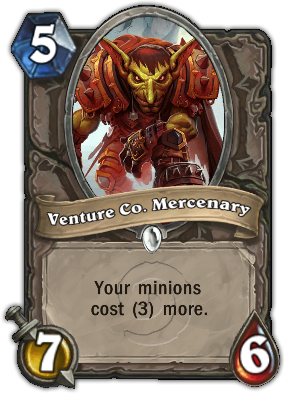
Although he’s a dead card before T5, Venture Co. Mercenary has the potential to do huge damage or draw at least one removal. As a 7/6 body (which is way too good for just 5 mana), the VCM is not easily killed by most direct damage spells (Fireball of the few exceptions) and unless targeted by something like Assassinate, Hex, Siphon Soul or Polymorph he will bait more than one card from the opponent (and if he does bait those, that’s one less hard removal your true finishers have to worry about).
If he survives, this minion will set-up a tempo game and if supported by a lot of spells to keep the enemy board clean, he becomes a lethal threat. Put him in a Mage deck and you will taste his full power – a 7/6 minion hitting the enemy in the face while the array of AoE and direct removal spells protect him is no laughing matter. Budget Priests and control Shamans also tend to run him as they can buff him up or use their removal arsenal to keep him safe.