Pokémon’s 30th anniversary booster packs are finally here, but getting your hands on the cards has proven to be a challenge of its own.
Pokémon trading cards have always been a hit, but the 30th anniversary edition has gotten dedicated fans in a twist. Nintendo has tapped into the market appeal of nostalgia, causing a higher demand compared to its previous releases. And now that the 30th anniversary trading cards have launched 16 September, dedicated fans find themselves battling against price hikes, resalers, scalpers, and long queues.
Why is demand so high for Pokémon’s 30th anniversary trading card booster packs?
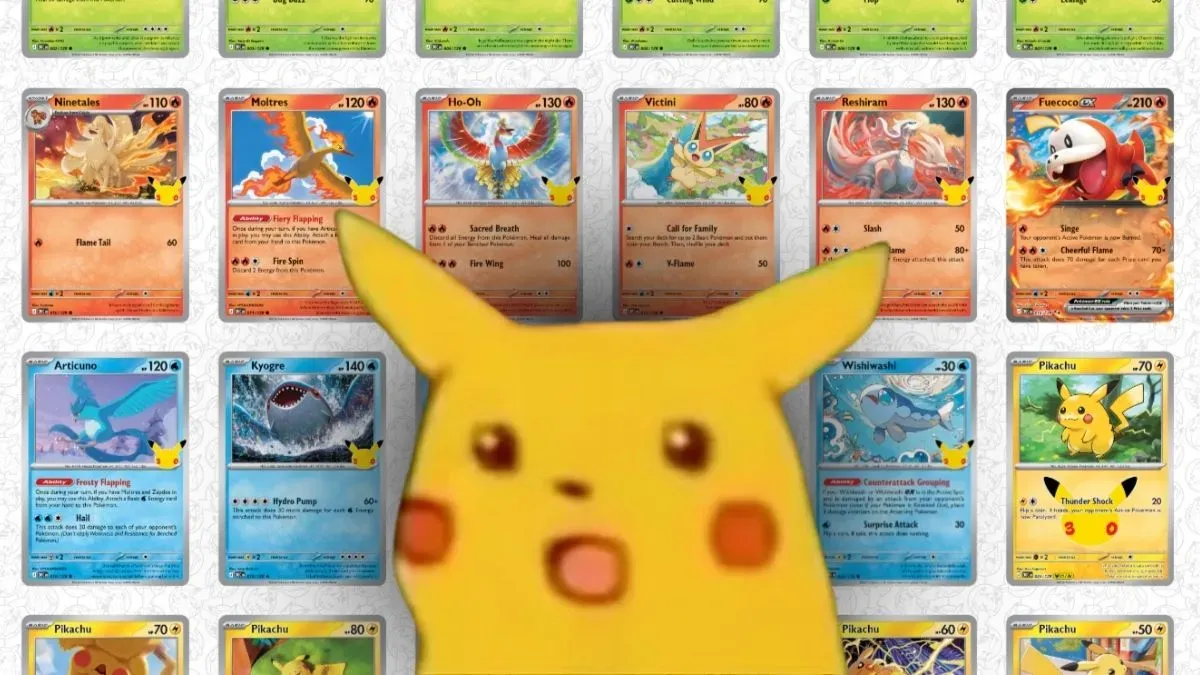
The 30th anniversary Pokémon trading card booster packs have massive appeal for older fans of the game, as each pack features all cards in foil, as well as a rare Pikachu card. The rare Pikachu card itself has 30 variations, with different artists providing various illustrations of the beloved mouse Pokémon.
The booster packs also include some of the “most iconic cards” of all time, like Charizard from Base Set, and Pikachu & Zekrom-GX from Sun & Moon—Team Up with a “stunning new foil treatment”, as well as “Day and Night” variations.
While futuristic rare cards designed by YOSHIROTTEN, featuring Mewtwo and Mew, are also included in the packs.
What problems are fans facing as Pokémon’s 30th anniversary trading card booster packs have launched?
With such a stunning lineup of cards waiting to be discovered, the release has attracted huge crowds and, according to a report by IGN, overnight queues in the U.K. and France. Other locations where the 30th anniversary edition merchandise are available around the world have also reported the same problem. Apparently, some fans have taken to pitching up tents and sleeping on camping chairs to “keep their spot in their queue.”
But the high demand and limited supply has proven to be a detriment. In the same report, claims of line reservations, dubbed “ghost chairs” have made the rounds online, stirring quite a controversy within the community. “Ghost chairs” are essentially people leaving out empty chairs (sometimes days in advance) to reserve their place in the lines.
Here's a look at what a ghost chair queue looks like:
But the snaking lines, camping tents, and ghost chairs are only part of the issue; as fans also have to face off against certain resellers and scalpers who hoard numerous numbers of packs, and later reselling these at exorbitant prices. This practice has become such a pain for Nintendo that the company had even employed facial recognition technology in its TCG stores in Japan. This new directive introduced stricter entry rules designed to stop customers from entering the same store multiple times in a single day to purchase trading cards.
Long lines, scalpers, what else? Fans also face against ridiculous price hikes from certain sanctioned retailers, with IGN reporting that America's GamesStop is cited as selling a US$49.99 Elite Trainer Box for triple its SRP, landing at a whopping US$169.99. While Polygon reports that another retailer, Dick's Sporting Goods, is selling the same package at US$119.99, which is still double its original value.
The Pokémon TCG has faced supply issues despite The Pokémon Company printing 10 billion cards last year alone. New releases frequently sell out, while rare cards continue to command high prices on the secondary market.
The 30th anniversary release is now the latest Pokémon TCG launch to face the combination of high demand, limited availability, and a collector market willing to pay a premium for sought-after cards.