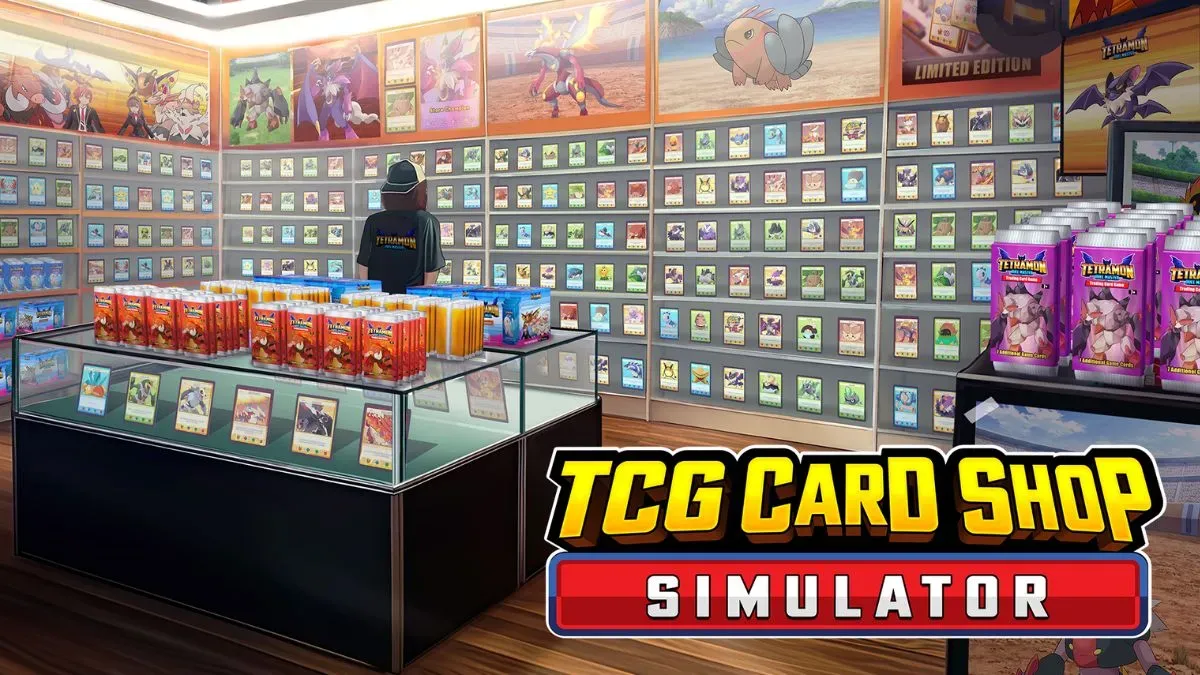
TCG Card Shop Simulator makes running a card store loads of fun, easy to grasp, and fulfilling, even if you’ve never built a deck in your life.
TCG Card Shop Simulator has finally moved out of Early Access after two years, arriving with Version 1.0 on 15 September 2026. The game first launched in Steam Early Access on 15 September 2024, and has since drawn more than four million players across Steam Early Access and Xbox Game Preview.
Developed by Malaysian studio O.P. Neon Games, TCG Card Shop Simulator was built from much humbler ambitions at first. Founder and creator Ding Shen Sia said the project began after he burned out from solo mobile game development and decided to try publishing a PC game on Steam, partly because he wanted to open “an infinite amount of TCG card packs” without paying real-world prices.
Sia originally hoped the game might sell 100,000 copies in a year. Instead, it reached that figure in just three days.
That makes its jump to Version 1.0 quite the turnaround for what started as a personal experiment. But numbers aside, what is it about TCG Card Shop Simulator that has kept millions of people playing, and is it worth anyone’s time?
We had the opportunity to test the latest end-game version of the game. I wouldn’t call myself a hardcore TCG player, but I’m familiar enough with the hobby to understand what makes it appealing. I follow different card games, occasionally buy cards myself, and can appreciate everything from the artwork to the excitement of opening packs, even if I’m not someone who spends every weekend building decks or playing tournaments.
That perspective turned out to be useful here. Despite revolving around a hobby that can seem intimidatingly deep from the outside, TCG Card Shop Simulator never assumes that players already know the ins and outs of TCGs. Its systems are approachable enough for newcomers to pick up without much trouble, while still capturing enough of the collecting, trading, deckbuilding, and pack-opening appeal to feel familiar to those who already know the hobby.
What surprised me most was just how addictive a time sink it became, no matter how simple the game initially seemed.
There really isn’t a deep story to the game. You’re a card shop owner starting from scratch with only a few items to sell and the hope of eventually expanding the business into something much bigger. And perhaps that’s part of the appeal. It doesn’t put you in someone else’s shoes so much as give you a chance to experience what running a TCG card shop might actually be like, without having to invest thousands of dollars in capital.
TCG Card Shop Simulator
Release date: 15 September 2024 (early access), 15 September 2026 (Version 1.0)
Platforms: PC (via Steam), Xbox Series X|S & One, PlayStation 5, Nintendo Switch, Nintendo Switch 2
Developer: O.P. Neon Games
TCG Card Shop Simulator visuals and design
The game isn’t flashy when it comes to its graphics or music. Some of the objects and character models remind me of older generations of The Sims, but everything does its job well enough without distracting from what actually matters: running the shop.
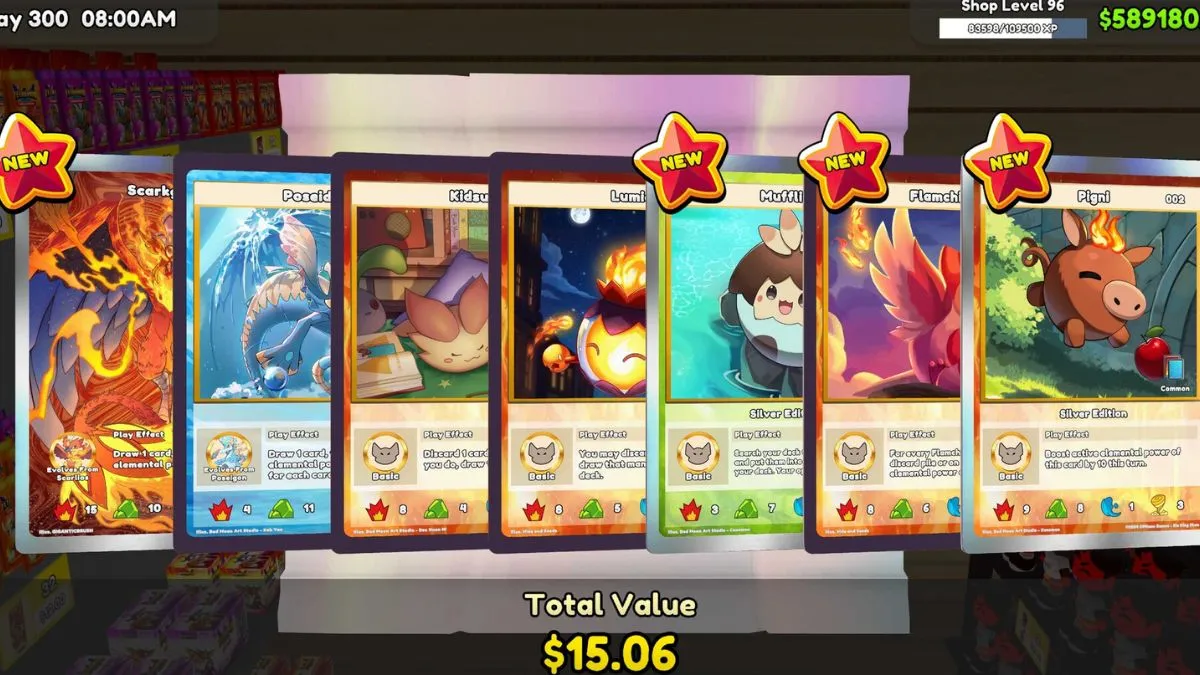
Where considerably more attention has been paid is to the cards themselves. There are several card sets in the game, including Tetramon, Destiny, Ghost, and Ascension, and the artwork across them is surprisingly varied. The artists do a good job of making them feel like something that could exist in a real-world TCG, complete with different rarities, foil treatments, full-art versions, and regular cards.
For me, some of the nicest cards were also among the rarest: the Ghost cards. These are split between black non-foil versions with deliberate splashes of colour and white foil cards that look deceptively simple at first, but have some genuinely beautiful line art.
TCG Card Shop Simulator gameplay
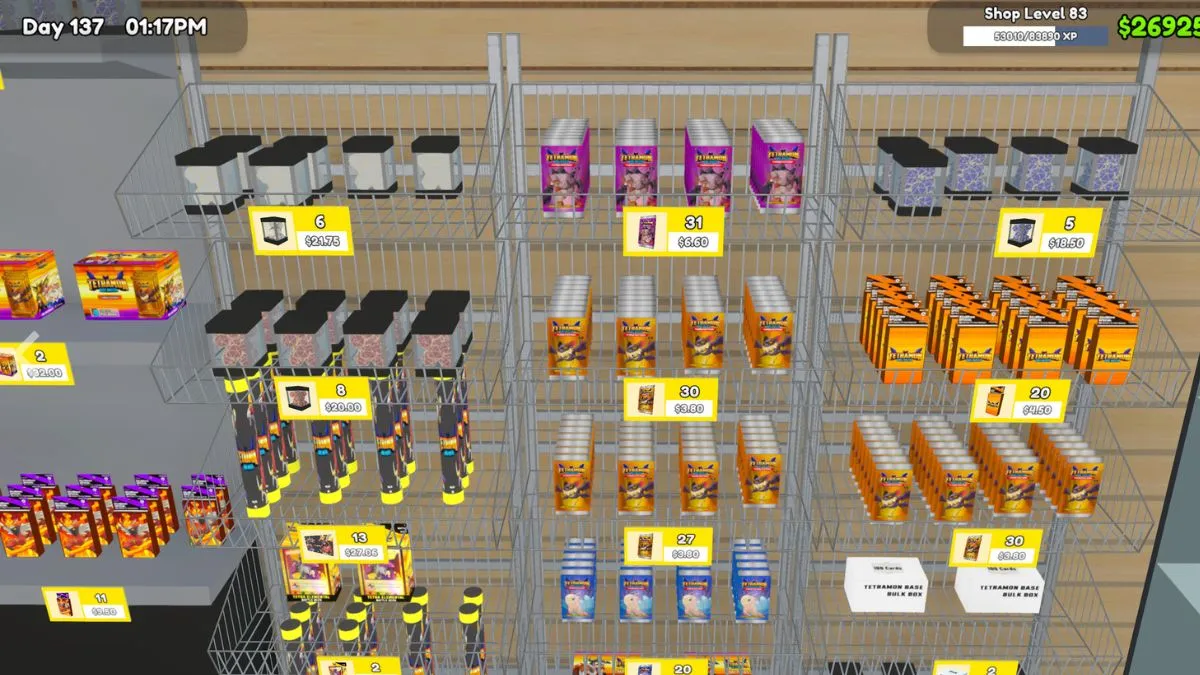
The gameplay looks simple and pretty straightforward on the surface. For the most part, you run a shop, sell TCG products and related merchandise, make upgrades, keep customers happy, and, hopefully, make money. The basic loop is easy to understand and quite satisfying, while the game gives you enough tools to make sure you’re not blindly pricing everything on the shelves.
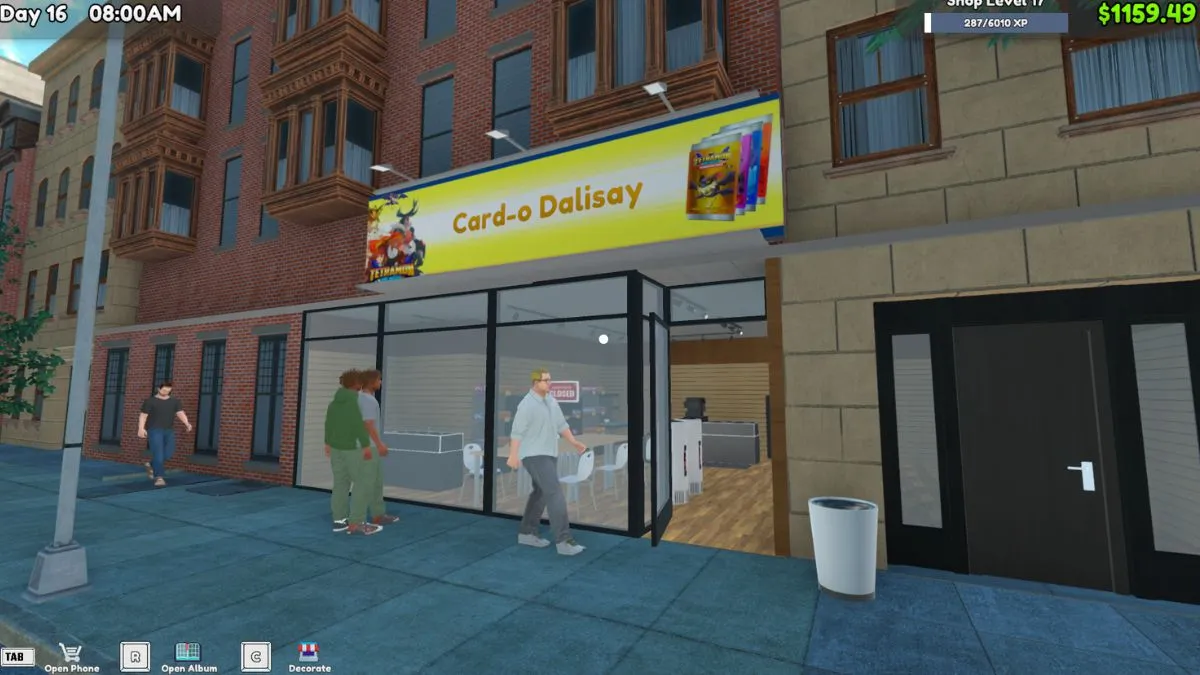
At some point, it started to remind me of the satisfying loop in Stardew Valley, once you reach that stage where you finally feel like you understand how everything works and can settle into the routine.
But quite a lot goes into that seemingly simple cycle of buying, selling, upgrading, and renovating. Prices fluctuate from day to day, with the latest market values available through your phone. As a shop owner, you also have bills to worry about, including rent, electricity, and employee wages once you start hiring staff. Then there’s the everyday responsibility of keeping the store stocked and making sure customers aren’t standing in a queue for half the day.
The other side of the game is where it starts feeling like a TCG player’s paradise. As the card shop owner, you can set aside a few booster packs from the stock you’ve purchased and crack them open yourself to see whether anything inside is worth more than the pack you just sacrificed.
And this is where the beauty is in the details. The rarity system mirrors plenty of things that will already be familiar to TCG players, with Base Foil, Base, First Edition Foil, First Edition, Silver Foil, Silver, Gold Foil, Gold, EX Foil, EX, Full Art Foil, and Full Art cards all in the mix.
Each card also has its own rarity percentage, so there’s an actual sense of anticipation every time a pack is opened. There’s something inherently exciting about tearing through one after another in search of the rarest cards, whether they’re destined for the collection or the display case. And the best part is that none of it is eating into real-world money.
There are now 4,436 cards to collect in the game, with 1,452 brand-new cards added through the Ascension set with the launch of Version 1.0.
The game also throws in some surprisingly believable situations, including smelly customers who need to be sanitised before they upset everyone else in the shop, and card traders who will happily try to lowball you or sell cards for considerably more than they’re actually worth.
Employees have their own strengths as well. Some are better suited to the cashier, while others are much more efficient at restocking shelves. Unfortunately, you’re still the best cashier in the building for quite some time, so until there’s enough money to hire someone genuinely fast, handling the queue yourself may still be the better option for the first twenty days or even longer.
Thankfully, the game stops short of becoming too realistic. There are no shoplifters or extremely aggressive customers to worry about. More importantly, there are no package thieves. Considering deliveries are simply dropped on the pavement outside the shop, those boxes would probably disappear almost immediately in some real-world cities.
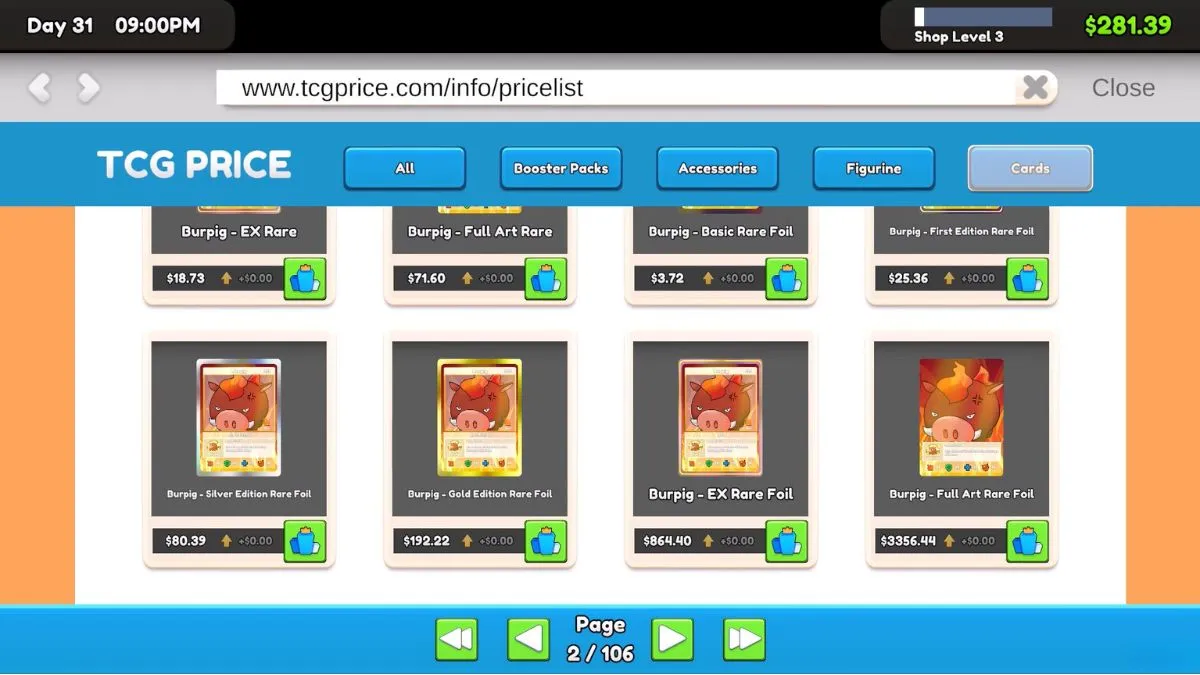
None of that happens here, though, which helps keep the entire experience relatively relaxing even when the shop itself starts getting busy.
Turning a profit also isn’t quite as simple as stocking the right products and watching the money come in. You have to keep an eye on how much you spend compared with how much you earn each day, make sure the shop has enough room for more customers and merchandise, and ensure that both you and your employees can keep pace with demand.
If anything, one feature the game could still use is a more efficient way of tracking exactly how much has been spent during the day. At the moment, that is something you largely have to keep track of yourself, and without a proper daily expenditure breakdown, it can be difficult to work out what your actual profit target should be.
Sometimes, that means overspending, especially when a tempting rare card shows up at the wrong moment. It stings a little when it happens.
Either way, profitable day or not, there’s still a considerable sense of satisfaction when the doors finally close and you can look back at what the shop managed to accomplish.
What are the biggest updates in TCG Card Shop Simulator Version 1.0?
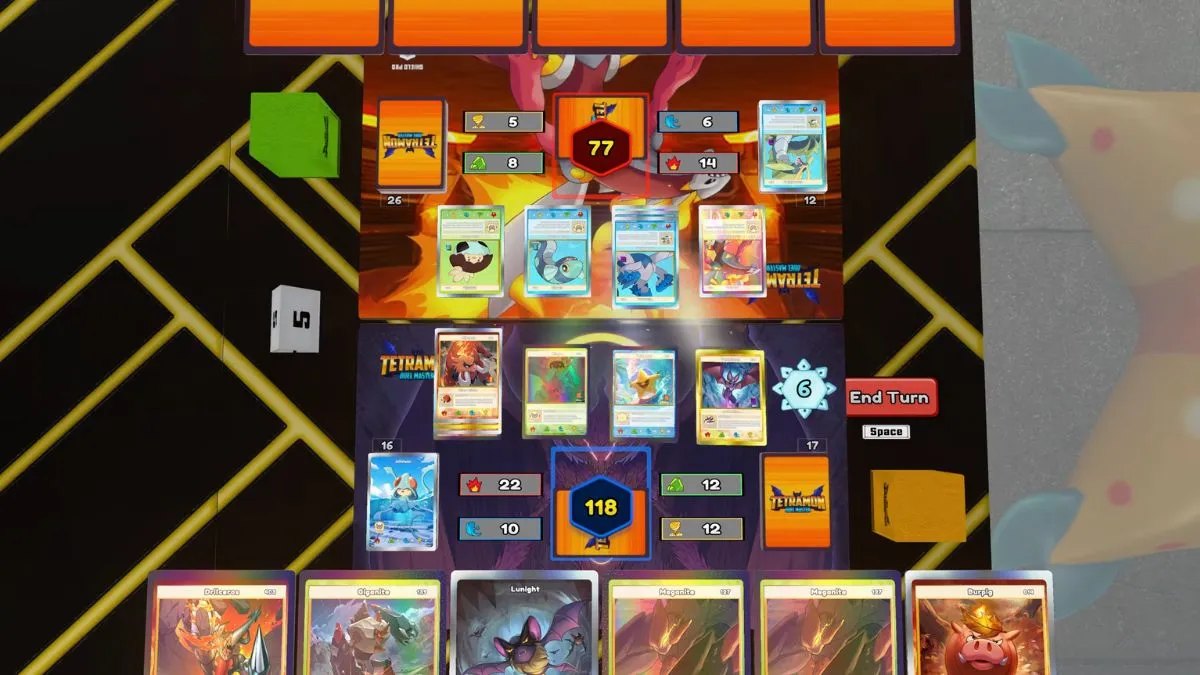
Version 1.0 is more than TCG Card Shop Simulator simply dropping its Early Access label. The update completes several of the game’s major systems, with the ability to actually play the card game itself being easily the most significant addition.
- You can finally play the TCG: Tetramon is now fully playable, with matches lasting around three to five minutes. Players can challenge customers waiting at play tables while the rest of the shop continues operating in the background.
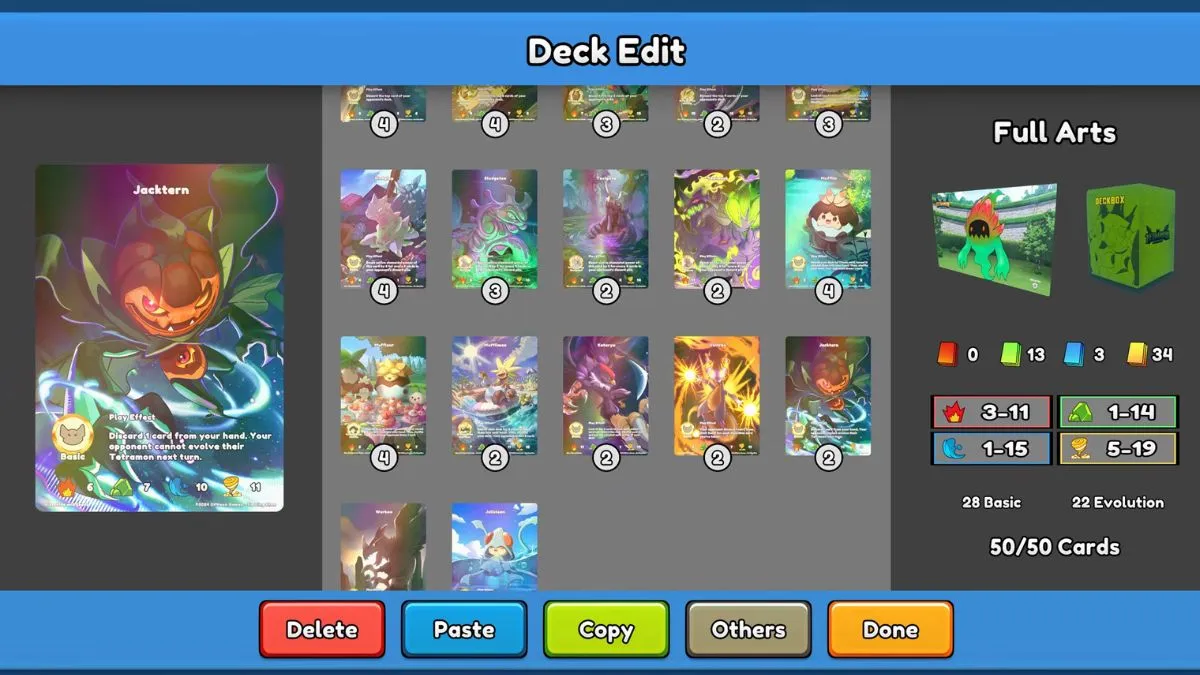
- Deckbuilding and the rulebook are now available: Once the Workbench unlocks at Shop Level 7, players can read through the full TCG rulebook and create or edit 50-card decks. Deckboxes and playmats can also be customised depending on the licences unlocked, while deck lists can be copied and shared.
- You can join your own tournaments: Hosting tournaments was already part of the game, but Version 1.0 now lets the shop owner actually participate and compete against customers for the prizes.
- Ascension adds another 1,452 cards: The new Ascension packs introduce fully illustrated Tetramon cards with detailed backgrounds, pushing the total number of collectable cards in the game to 4,436.
- Playing matches can earn you packs: Customers can now give the player gift packs after playing the TCG, providing another incentive to actually sit down and make use of the collection they’ve spent so much time building.
- The TCG itself received further improvements: Version 1.0 adjusts Tetramon card stats, updates stat icons and Play Effect text, and introduces new battle music. Five additional Steam achievements were also added.
- Performance received some attention too: Models and textures were optimised to help the game run more efficiently, overall memory usage was reduced, and several bugs were addressed.
- Version 1.0 also marks the game’s full multiplatform launch, bringing TCG Card Shop Simulator to PlayStation and Nintendo platforms alongside its existing PC and Xbox releases.
- The 1.0 notes also highlight just how much TCG Card Shop Simulator expanded over the course of Early Access. Across those two years, the number of items players can unlock and sell increased from 77 to 111, furniture types grew from 21 to 43, and the card collection expanded from 2,714 to 4,436. The game now also has 273 decoration options and 55 community fan-art posters.
Those aren’t all additions that arrived specifically with Version 1.0, but they do put into perspective just how much the game grew between entering Early Access and reaching its full release.
What is the end-game of TCG Card Shop Simulator?
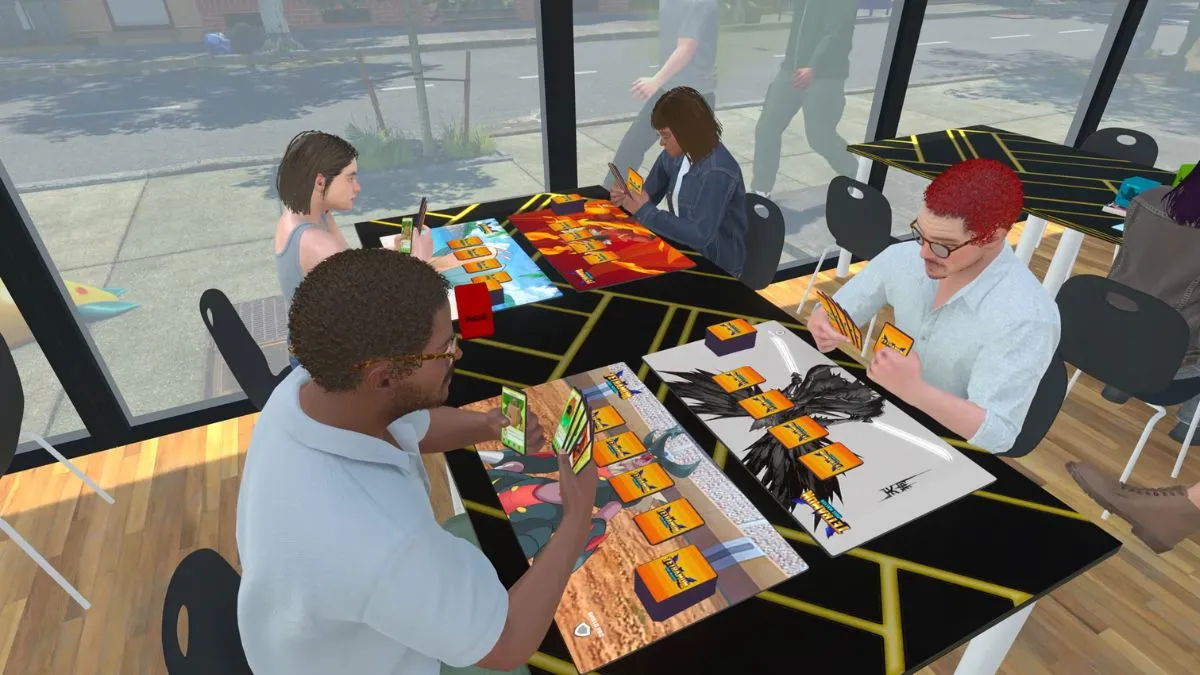
The end-game eventually gets you to the point where the shop has expanded considerably, multiple services are running, employees are handling much of the workload, and plenty of the day-to-day operation has become automated. Instead of spending most of the day trapped behind the cashier, you can finally enjoy the fruits of your labour a little.
That also means having more time to open packs at your leisure and slowly work your way through the thousands of cards needed to complete the collection. Well, isn’t that the dream life, even in real life?
But perhaps the most satisfying part of reaching that point is knowing exactly what it took to get there: starting from nothing, doing almost everything yourself, making plenty of operational mistakes along the way, and slowly figuring out how to turn a tiny shop into something that can practically run without you.
Verdict
Overall, TCG Card Shop Simulator deserves much of the hype surrounding it. The game isn’t interested in visual spectacle, nor does it have a deep underlying story pushing things forward. Instead, almost all of its attention goes towards fulfilling the fantasy at the heart of the game: running a TCG card shop while bringing together many of the things that make the hobby itself appealing.
That means not only buying and selling products, but also collecting cards, trading with customers, hosting tournaments, building decks, playing matches, and, of course, opening far too many booster packs in the hope that something rare appears.
At the same time, the game rarely piles unnecessary nuisances onto the player simply for the sake of making the simulation more demanding. There is enough responsibility involved in running the store to keep the loop engaging, but not so much that looking after the business becomes exhausting.
However, if you’re the type of player who wants multiple quests, a bigger world to explore, and a story constantly pushing you towards the next objective, the game is definitely not for you. Instead, TCG Card Shop Simulator is at its best for those looking for a pressure-free space to succeed, fail, experiment, and gradually lose themselves in the little TCG world it has built.
Frequently Asked Questions
How much is TCG Card Shop Simulator?
TCG Card Shop Simulator is priced a little differently depending on the platform.
- PC via Steam: US$19.99. With the launch of Version 1.0, the game is currently 15% off at US$16.99 for a limited time.
- Xbox Series X|S and Xbox One: US$19.99 for the Standard Edition and US$24.99 for the Deluxe Edition. The game is also available through select Xbox Game Pass tiers.
- PlayStation 5: US$19.99 for the Standard Edition and US$24.99 for the Deluxe Edition.
- Nintendo Switch and Nintendo Switch 2: US$19.99.
Which platforms can you play TCG Card Shop Simulator on?
TCG Card Shop Simulator is available on PC via Steam, Xbox Series X|S, Xbox One, PlayStation 4, PlayStation 5, Nintendo Switch, and Nintendo Switch 2.
Can you play TCG Card Shop Simulator via the Steam Deck?
Yes, TCG Card Shop Simulator plays exceptionally well on the Steam Deck, running at a smooth 30 to 60 FPS depending on the graphics settings.
Does TCG Card Shop Simulator have microtransactions?
No, TCG Card Shop Simulator does not currently have microtransactions. All spending in-game uses in-game currency, which cannot be purchased with real money.
Does TCG Card Shop Simulator have multiplayer?
The game does not have multiplayer. However, since the launch of Version 1.0, players can play the TCG against NPC customers at the gaming tables inside the shop.