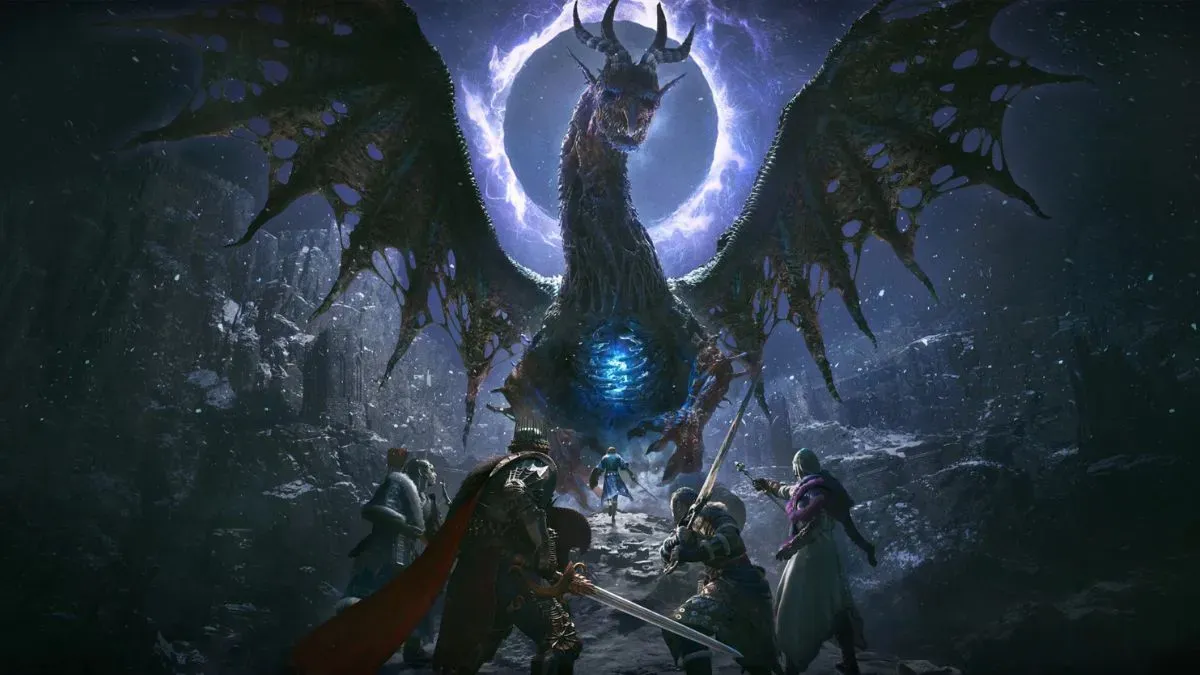
In an interview with GosuGamers, Monster Hunter Wilds: Ascendance's dev team said that Elder Dragons will feature prominently in the expansion.
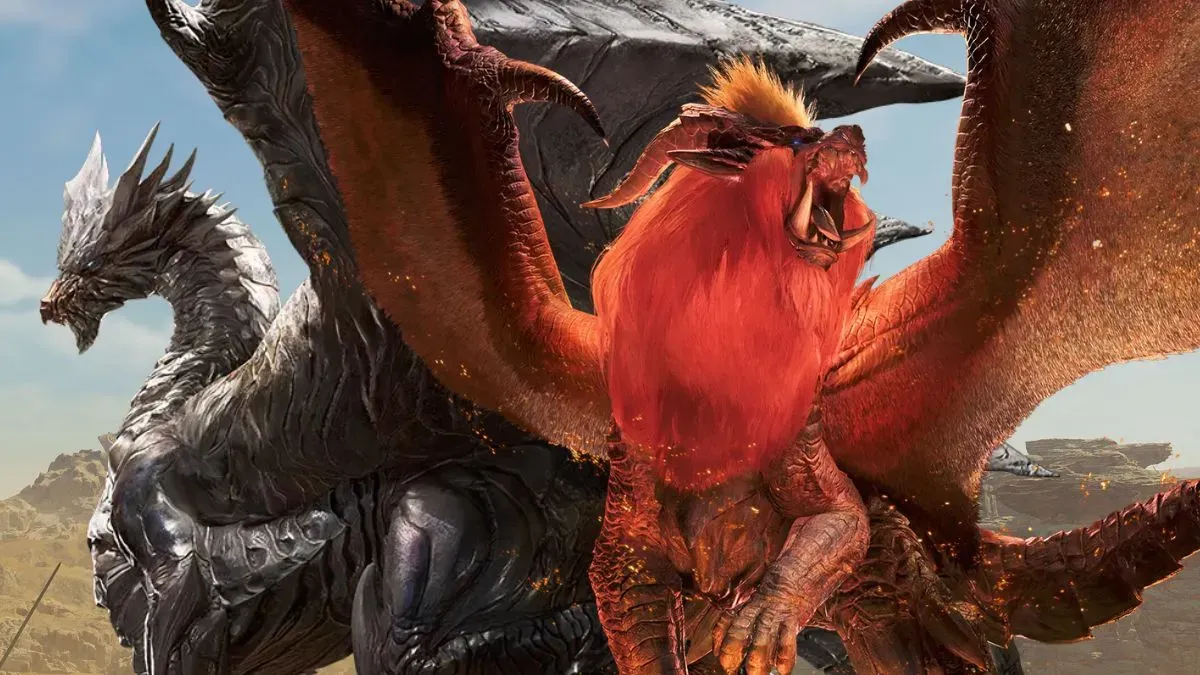
When Monster Hunter Wilds: Ascendance was first revealed back in June, two of the first monsters that were revealed to be coming in the expansion were returning Elder Dragons Kushala Daora and Lao Shan Lung. A second trailer earlier this month then the game's first original Elder Dragon: Gundoraja. And just before Tokyo Game Show 2026, Teostra was revealed to be the third returning Elder Dragon that will be featured in Ascendance.
That's a lot of Elder Dragons, especially when considering Monster Hunter Wilds launched without a single one. The base game only got its first Elder Dragon when Gogmazios was added alongside its fourth title update in December 2025.
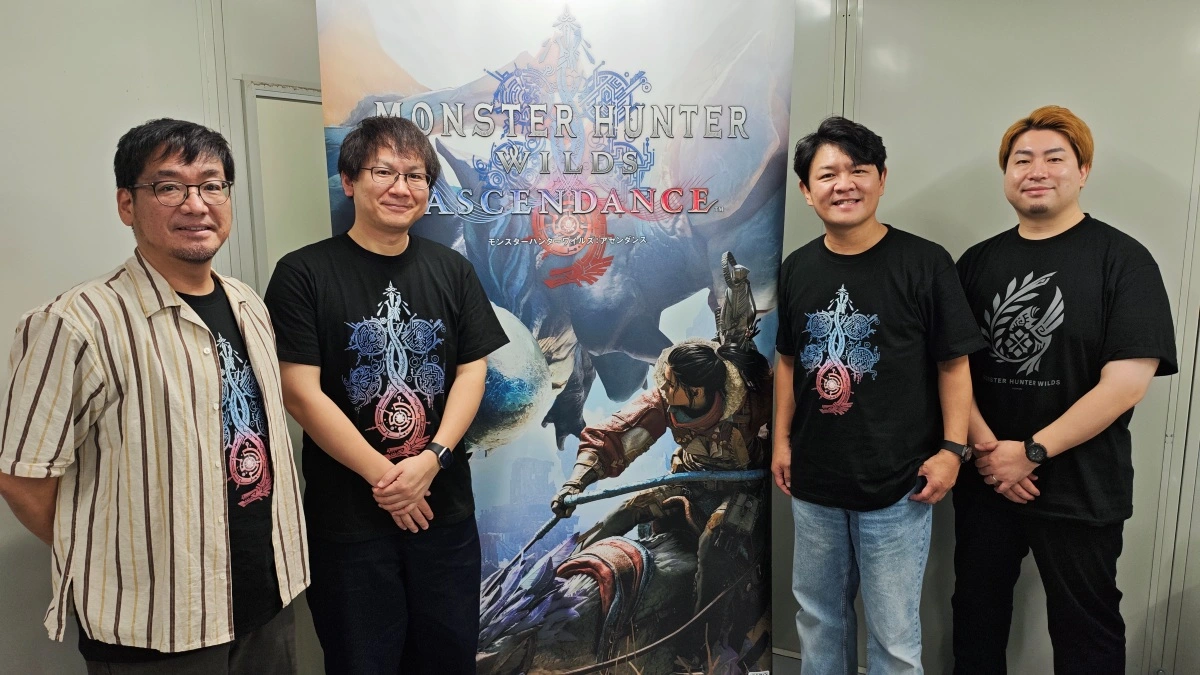
So, what's with all these Elder Dragons suddenly popping up everywhere? Members of the Monster Hunter Wilds: Ascendance development team revealed the reason in an exclusive interview with GosuGamers at Tokyo Games Show 2026.
“Thematically speaking, we really wanted to look at Elder Dragons and their history, how they came to appear in the world of Monster Hunter as a story theme," said Kaname Fujioka, who holds dual roles as the game's executive director and art director.
Elder Dragons ascend in Monster Hunter Wilds' expansion
In the world of Monster Hunter, the term ‘Elder Dragon’ is used to refer to a class of monsters with abilities and traits that defy how the series typically classifies monsters.
It's less of an actual taxonomical grouping and more so a catch-all term for when the people of the Monster Hunter universe see a monster conjure lightning out of nowhere or fly around with no perceivable means of flight. That's why the Elder Dragons in the series range from the unicorn-like Kirin, to the more ‘classic’ two-winged, four-limbed Elder Dragons like Kushala Daora and Teostra, to the massive cephalopod-like Nakarkos.
Another thing that makes a monster an Elder Dragon is their sheer destructive potential, as many of these beasts have supreme command over the elements. The mere presence of an Elder Dragon can endanger human settlements and upset the balance of whichever ecosystem they choose to invade.
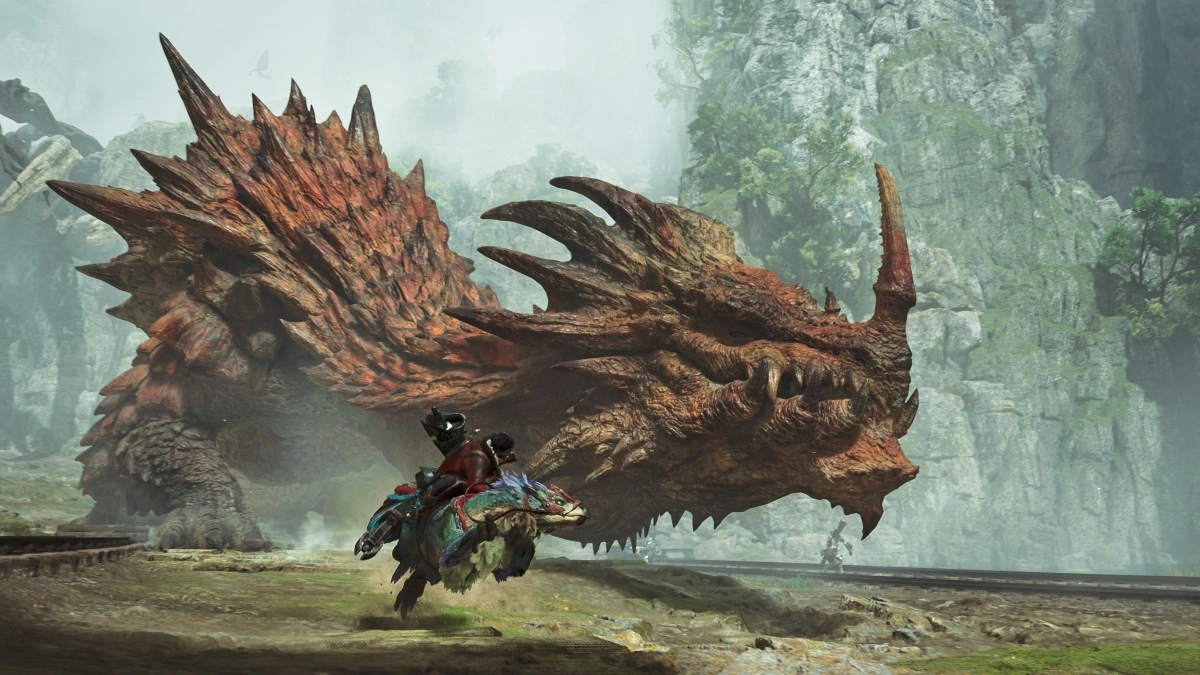
In the context of Monster Hunter as a game, the appearance of Elder Dragons is when players start encountering real challenges that require actual strategy to overcome. For example, Kushala Daora constantly emits powerful gusts of wind from its body that staggers nearby hunters trying to attack in melee and deflects projectiles from ranged weapons. To remove this wind barrier of sorts, hunters must either break Kushala Daora's horns, poison it, or equip armor with skills that negate wind effects.
And because every major expansion to a Monster Hunter title comes with a significant spike in difficulty, the developers thought it was as good a time as any to let these powerful beasts wreak havoc on the (Monster Hunter) Wilds.
"It's a very different approach from [what we did in] the base game. So combined with that, bringing back some of the most classic Elder Dragons back–which we knew would be great fan-favourites–it's not just fan-service. They would also be great, challenging monster fights, and bringing so many back at once just creates a very impactful sense of the amount of volume and challenge you can expect from this expansion,” said Fujioka.
Bringing back the classics
Of the four Elder Dragons so far revealed to be coming in Ascendance, three are returning ones that were first introduced during the first two generations of Monster Hunter games. Lao Shan Lung came with the first-ever Monster Hunter game in 2004, while Kushala Daora and Teostra were added in 2006's Monster Hunter 2.
While these three classic Elder Dragons have made plenty of appearances in multiple titles since their release, the developers hope that their inclusion in Ascendance will be like “meeting an old friend” for veterans of the series.
“When you think of Elder Dragons, maybe the first one you think of, the most symbolic or iconic one, is Kushala Daora. But also, I think Teostra is up there with the classic Elder Dragons. We felt that since we're introducing them in the storyline, going with the classic fan-favourites was a good approach. Just before Tokyo Game Show, we felt it was a good time to drop this news on fans, and then connect that directly to having the game at the show,” said Monster Hunter Wilds: Ascendance game director Takuro Hiraoka.
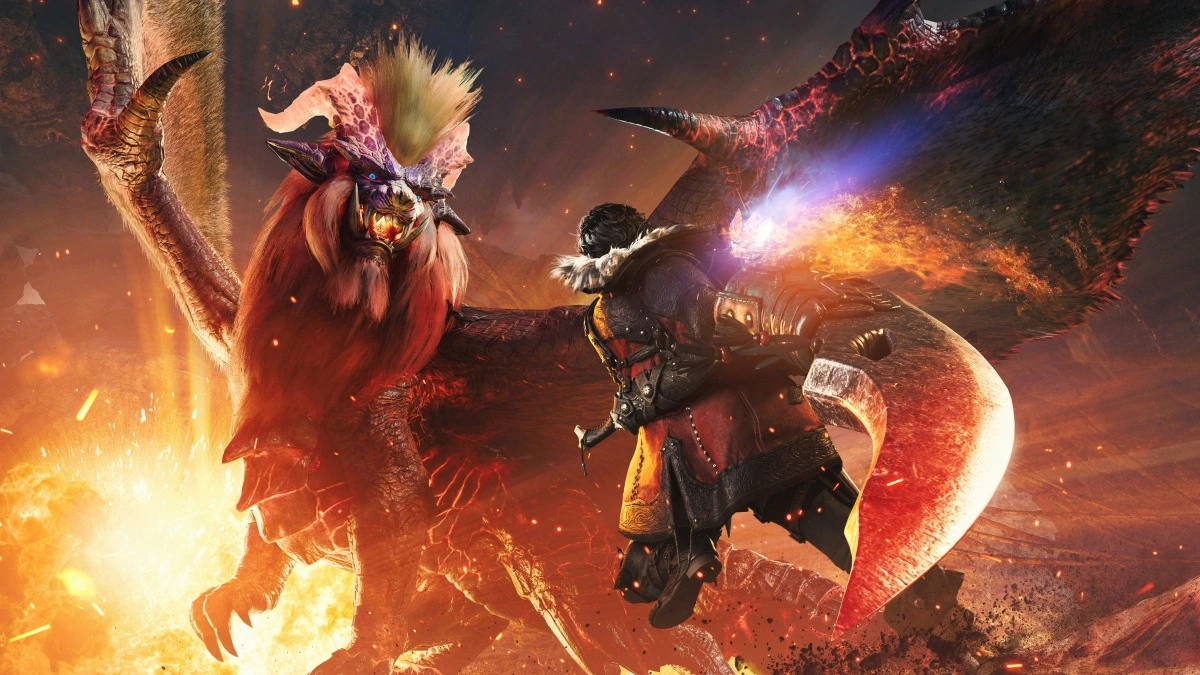
Of course, all three will have revamped looks and movesets to align them with the standards set by the more modern Monster Hunter titles. This effort has been most apparent so far with Teostra, who was made available as an ‘Expert’-level hunt in the Ascendance demos in this year's Tokyo Games Show.
The fiery Elder Dragon's most iconic attack, commonly known within the community as the “Supernova”, has it unleash a powerful explosion that covers a huge area. In Teostra's past appearances, wily hunters would retreat from the attack's area-of-effect, heal up or re-sharpen their weapons, then renew their assault once the dust clears. But in Ascendance, Teostra will have the ability to quickly follow up on its Supernova with other attacks, including a second Supernova.
The developers hope that these new twists to classic Elder Dragon hunts will provide an exciting challenge to veterans that might rely on “muscle memory” from all the times they hunted these monsters in past titles.
"By introducing new behaviours and new moves, I feel like you can't just rely on muscle memory. Up to a point, maybe that will get you somewhere, but it's going to surprise you with new behaviours. I've been watching people play the demo version here, and I can tell you that I've seen plenty of players be very surprised by the directions that the hunt goes in," said Hiraoka.
“In particular, I think the Supernova is one of the most iconic moves in Monster Hunter history, and if you show the Supernova in a trailer, the fans go, “Oh, it's a Supernova!” and they really like it. But actually, there's a whole new possibility beyond the Supernova, where Teostra can chain it into another move after that. It's going to be very surprising to veteran hunters if they think that the one Supernova is the maximum amount. So rest assured that regardless of your level of experience in Monster Hunter, I think you'll find this a very surprising, interesting, and challenging hunt.”
While the prospect of fighting mighty Elder Dragons and crafting equally powerful weapons and armor from their materials is already an exciting prospect for players, the developers added that delving into their mysterious origins–something the series has not really explored before–is something players should also look forward to.
Monster Hunter Wilds was already the most story-focused title in the series. With its introduction of the ancient civilisation of Wyveria, the base game has already delved into depths in the setting's lore that were merely background information in past titles. The mysterious origins of Elder Dragons will be one of the things Ascendance will explore, but the expansion will also focus on the people and cultures of the Forbidden Lands.
Ascendance's second trailer notably revealed that the expansion will take place years after the conclusion of the base game's story. This was made evident by characters like Nata and Nona, who were only children during the events of the base game, being teenagers by the time of Ascendance.
“We didn't really have too much of a chance to go deep into the lore of the background of the Forbidden Lands and the Wyverians, and all of that history. So for the expansion, I wanted to explore that aspect of the storyline, but I felt that we needed to have a little bit of time pass to allow Nata and Nona to grow up from being children or young teenagers into becoming teenagers or adults,” said Fujioka.
“You can see how their characters have grown in the meantime, and get a chance to catch up with them as they become the next generation of people within their society. We can also understand the relationship between the hunter character and this civilisation, which has never seen a hunter before. The effect that you have on the civilisation is difficult to understand if there's no time skip. So by letting a few years pass, we can show what's happened in the meantime and also go deeper into the background.”
Weapons to surpass an Elder Dragon
But for all its brilliant monster designs, from their ecologies to how they live in and affect the world around them, Monster Hunter is a series built on hunting them down. Each new title builds on the series' iconic brand of man-versus-monster fights, a finely honed dance of aggression where hunters must dodge or defend against monster attacks then find an opening to hit back. The expansions are designed to refine the formula introduced by their respective base games, alongside introducing a spike in difficulty to keep things interesting.
Ascendance's big twist to the series' combat formula is the ‘Boost Bracer’, a tool that lets hunters unleash new and more powerful attacks when activated. It rewards keeping up with the monster in the aforementioned dance, as the Boost Bracer requires hunters to first charge it up with successful attacks before it can be used.
It cannot be understated how much a hunt opens up for the player once the Boost Bracer is active. More than just giving access to new attack combos, it also gives all 14 weapons access to powerful ‘Offset Attacks’. First introduced in Monster Hunter Wilds, Offset Attacks are powerful moves that–when timed correctly–allows a hunter to essentially parry a monster's attack then stagger it, providing an additional opening for more attacks.
While Offset Attacks were only available to certain weapons in the base game, the developers thought giving all weapons access to them through the Boost Bracer in Ascendance was just a natural progression of their refinement of the game's combat systems.
"The gameplay of Monster Hunter is very much based on creating chances and exploiting opportunities for creating damage, and there's all kinds of ways to do this. It could be watching the monster's behaviour for when it's going to attack you, and you can dodge and then counter attack. Or it could be watching whenever it's going to be under a rockfall that you can trigger or other environmental gimmicks. Looking at its status, like is it enraged or is it tired? And when it's in those statuses, understanding its different behaviors and how to exploit those," said Hiraoka.
“So adding in the boost mode was intended to interact with those kind of systems since it's a way for you to both create and exploit windows of opportunity depending on when you activate the Boost Mode attacks. And so while we were working on adding in Boost Attacks to every weapon, it kind of became a natural follow-up that we needed to add Offset Attacks to all weapons as well because they interacted so easily together. So we didn't start with adding Offsets to all weapons, rather it felt to us that expanding offsets to include all 14 weapons was a natural extension of the new gameplay mechanics that are enabled by Boost Mode and it just gives you so many more windows of opportunity.”
While most players were definitely excited to see the addition of the Boost Bracer in Ascendance, some speculated that the developers giving them access to all these powerful attacks meant that the hunts in the expansion would be much more difficult in turn.
Aside from introducing new and returning monsters and Elder Dragons, Ascendance will increase the game's difficulty through the addition of ‘Master Rank’ level hunts. Master Rank hunts will feature monsters with more health as well as new and more powerful attacks compared to their Low Rank and High Rank versions.
While the developers were reluctant to get into the details of how difficult Ascendance would be, they said that the difficulty spike will be comparable to those seen in past expansions like Monster Hunter World: Iceborne and Monster Hunter Rise: Sunbreak.
“It's difficult to compare directly to past titles, but certainly, you can take the fact that we're adding Master Rank as an indication of the difficulty you can expect. And as you know, in Master Rank, it's not just the new monsters who are challenging, but the existing monsters in the base game who had Low Rank and High Rank variants will get a new Master Rank version applied to the quests that come in the expansion. Overall, I think it will be comparable to the difficulty jump that you feel going into Master Rank in previous games,” said Monster Hunter series producer Ryozo Tsujimoto.
What is Monster Hunter Wilds: Ascendance?
Ascendance will be the major expansion for Monster Hunter Wilds, adding a ton of new content to the base game in the same vein as Iceborne and Sunbreak for Monster Hunter World and Monster Hunter Rise, respectively.
One of the biggest additions coming with Ascendance is Master Rank, which introduces a higher tier of difficulty for monster hunts that lets players hunt stronger monsters from the base game and the expansion to craft new weapons, armour, and more. Existing monsters from Monster Hunter Wilds' base game will not be the only ones players can hunt in the expansion, as Ascendance is also set to add both new monsters and returning ones from previous games.
To help players face the more challenging hunts in Ascendance, the expansion also adds the new ‘Boost Bracer’ mechanic. Hunters can build up energy for the Boost Bracer through aggressive attacks, then activate Boost for new combos, enhanced attacks, and other weapon-specific actions.
When is Monster Hunter Wilds: Ascendance coming out?
Capcom did not reveal the official release date for Monster Hunter Wilds: Ascendance, only that the expansion is set to come out sometime in 2027 on PC, PlayStation 5, and Xbox Series X|S.