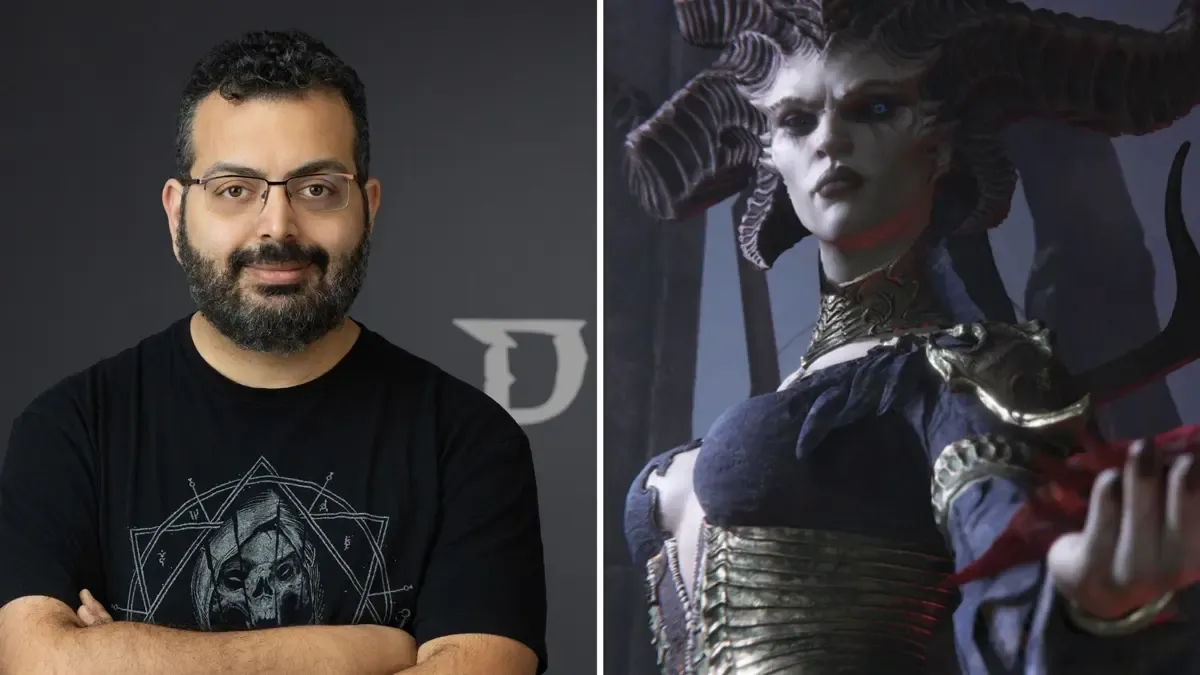
We spoke to Diablo IV: Lord of Hatred’s associate game director Zaven about that death–you know the one!
Diablo IV’s latest expansion Lord of Hatred arrives three years after the base game’s release. Fittingly, it ties up many loose ends from the original story in a neat bow. Chiefly, we see Mephisto’s story come to a massive climax, as Lilith returns to face her father. While the lore implications of this expansion are staggering, its gameplay additions are no slouch either. From two additional playable classes to a new endgame feature, there’s lots to dig into for returning players.
We had the chance to interview Diablo IV: Lord of Hatred’s associate game director Zaven Haroutunian about why certain characters met a tragic fate in this expansion, how the team plans to address negative War Plans feedback, and more. Here’s what Zaven had to say.
Note: this interview has been edited for length and clarity. Major spoilers for Diablo IV: Lord of Hatred will also be discussed in this interview.
Why did Blizzard kill Lorath in Diablo IV: Lord of Hatred?
Lorath, a surviving member of the Horadrim who first appeared in Diablo 3: Reaper of Souls, sadly perishes in Diablo IV: Lord of Hatred. This tragedy was one of the the expansion’s most memorable moments, largely due to the brutal fashion in which he falls prey to Mephisto’s schemes. It especially hurts due to Lorath’s longstanding partnership with players throughout the base campaign and this expansion, constantly and unerringly fighting on the side of good.
Thus, I had to ask Zaven: why did the team feel like now was the right time for Lorath to die? Here’s what Zaven had to say:
“So, you know, I think one of the very early ideas going into Diablo 4 was, you know, obviously we're going to defeat evil. It's not going to be a big surprise. But this is Diablo. This is Sanctuary. So, victory has to have a cost. There's got to be a steep price the world and its people pay.
“We didn't specifically start day one and say that Lorath is going to die. We're very character-driven with how we do our narrative. We had Lorath, we figured out what his character is, and we figured out what his growth had been since Reaper of Souls.
“And then as we developed the game, you know, the idea of [the Tree of Whispers] happened and things like that. We had to establish him as kind of a reckless Horadrim, he just wanted to get this done. You know, he's very focused on his duty to the order. It made sense for him to make that deal with the tree. And when he did that, it wasn't going to be a happy ending [for him].”
Interestingly, Zaven noted that some of Diablo IV: Lord of Hatred’s tragic twists and turns can be traced back to the base game’s opening prologue. He explained: “If you go back and you play the original prologue of Diablo 4, don't skip anything, just listen to the narration. It will tell you what our plans were the whole time. It's that far back.”
To summarise the narration, he added that “it's basically like: this is the story of the Horadrim and the creators of Sanctuary, and their downfall.”
Will Lord of Hatred be the last Diablo IV expansion?
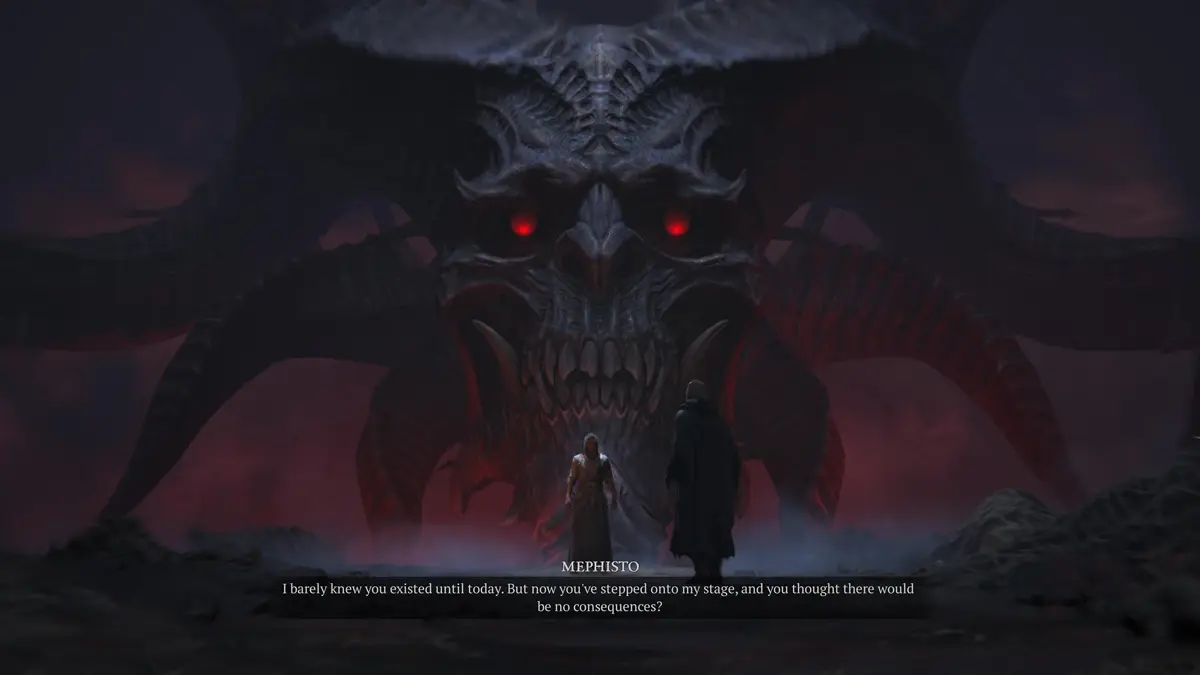
Diablo IV: Lord of Hatred hands Mephisto another crushing defeat at the hands of his daughter Lilith and the Wanderer. Seeing as his defeat was only assured thanks to a fatal sacrifice from Lilith, both of the game’s big bads now appear to be gone for good. That wraps up the game’s ongoing storylines rather neatly, but the question remains: what’s next?
With two expansions under its belt but plenty of gas seemingly left in the tank, players have wondered if the game even has future expansions to offer. We asked Zaven what Blizzard’s long-term plans for the game are, and here’s what he had to say:
“Nothing to really talk about, in terms of future expansions or anything like that. We will say that we wanted to make sure that we deliver closure, closure on the arc of Diablo IV, but also, you know, to your point about Lorath, he's from Reaper of Souls. So closure on him, closure on where Tyrael went and things like that. There's a lot of it. And it's actually a very unique thing in Lord of Hatred. I would say historically most Diablo expansions have not offered this level of closure. It was actually a very intentional thing to be able to offer that.
“It doesn't necessarily mean anything about the future, because we knew that the Age of Hatred arc was going to be ending with this expansion in particular.”
Why did Lilith return in Diablo IV: Lord of Hatred?
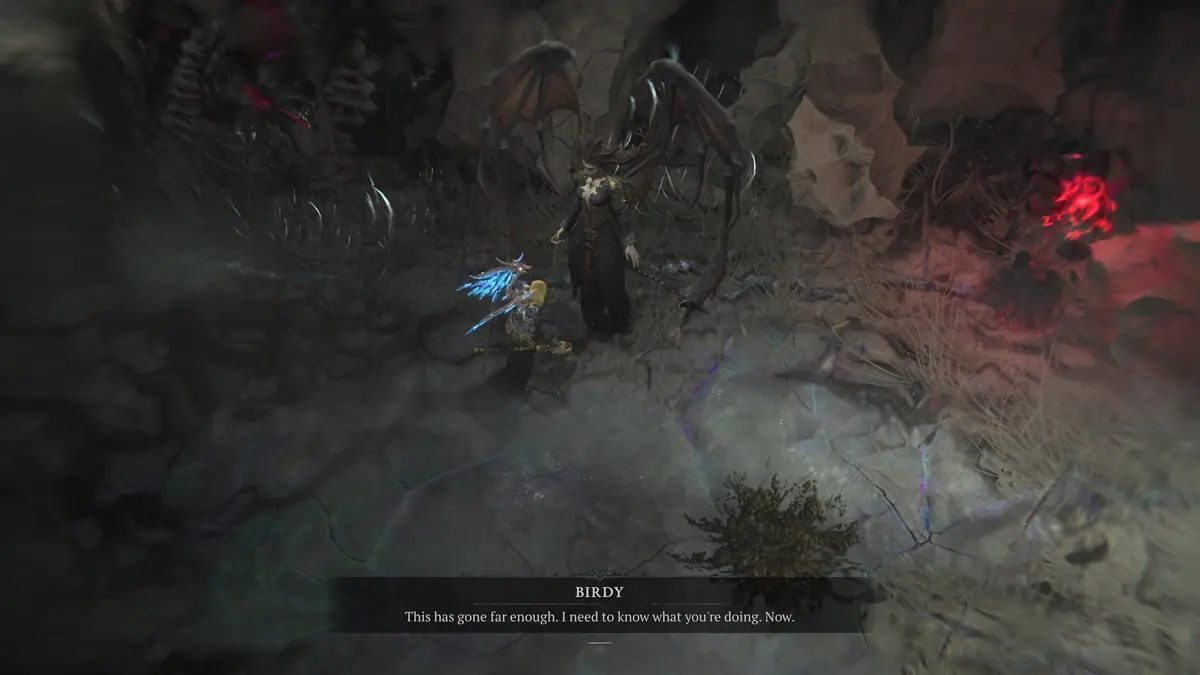
Lilith perished in Diablo IV, but her spirit persisted within the Wanderer. In Lord of Hatred, players see more layers to her character, as she and the Wanderer grow to understand each other better, while seeking to stop her father, Mephisto. By the end of the campaign, Lilith’s spirit sadly sacrifices herself to that end–seemingly bringing her arc to an emotional and totally final close.
We asked Zaven if Lilith’s return came about only for this expansion, but the developer surprisingly revealed that this was always part of the plan:
“[This was the] plan from day one. Again, we go back to the prologue. You know, I really encourage people to, after they finish Lord of Hatred, go back and actually play everything again. Just take it slow and you'll see that these are not sudden moves or pivots. The moment your character was fed blood petals in the original opening, you've had a connection to her. Her blood has been in you.
“It's something that we have repeatedly touched on in very subtle ways, that become more obvious if you look back all the way into Vessel of Hatred, and even a bunch of seasons where characters directly reference that there's something in your blood, right? Even in Season 2, right, with the vampires. They try to turn you into a vampire and they can't. And that's weird. And they even comment on it. It's like, yeah, because they're not going to overpower Lilith in your blood."
“This has been a common thread the whole time," Zaven affirmed. "It's been the plan.”
Why did Blizzard bring Tyrael back for Diablo IV: Lord of Hatred?
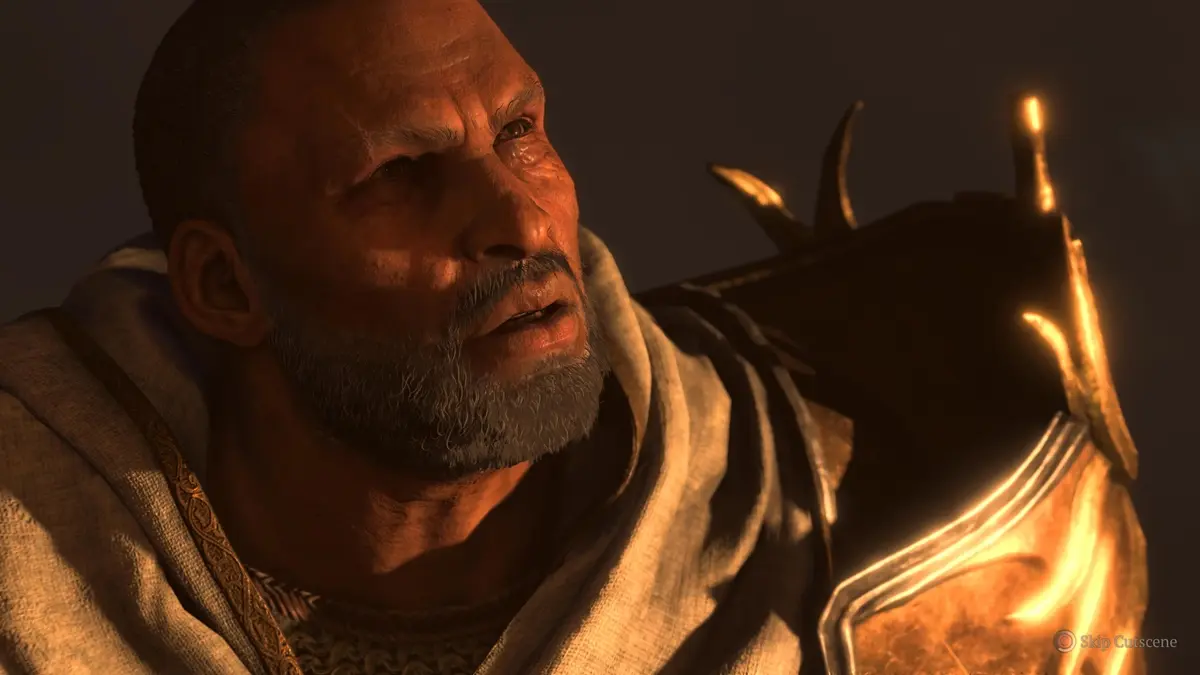
Diablo IV: Lord of Hatred also brought another big surprise to fans of the franchise: the return of Tyrael, an ex-angel who appears before his old friend Lorath in his time of need. Returning from Diablo II and III, Tyrael continues to play a role in the game’s post-game War Plans feature, helping players set up different ways to grind for loot in Sanctuary.
We asked Zaven why this felt like the right time to reintroduce Tyrael to the Diablo franchise. He explained that Tyrael’s “role is tied very directly to Lorath's arc, and it's tied directly to the Horadrim. He's the founder, the original founder of the order, back with Tal Rasha and those guys. So he's the first guy to start all this stuff back when he was still a full angel.”
Hence, the decision to bring him back into the fray “needs to fulfill a very clear role in the narrative, and in the overall kind of journey that we're going on.” Zaven argued that “if we just brought him back because he's cool, it would feel unearned and players would not have had the reaction they've had. In service to Lorath's arc, I think was the key thing to making it work as well as it did. I would have worried that it would have felt a little cheap, if we hadn’t done that.”
Will Diablo IV: Lord of Hatred’s War Plans progression be account-wide?
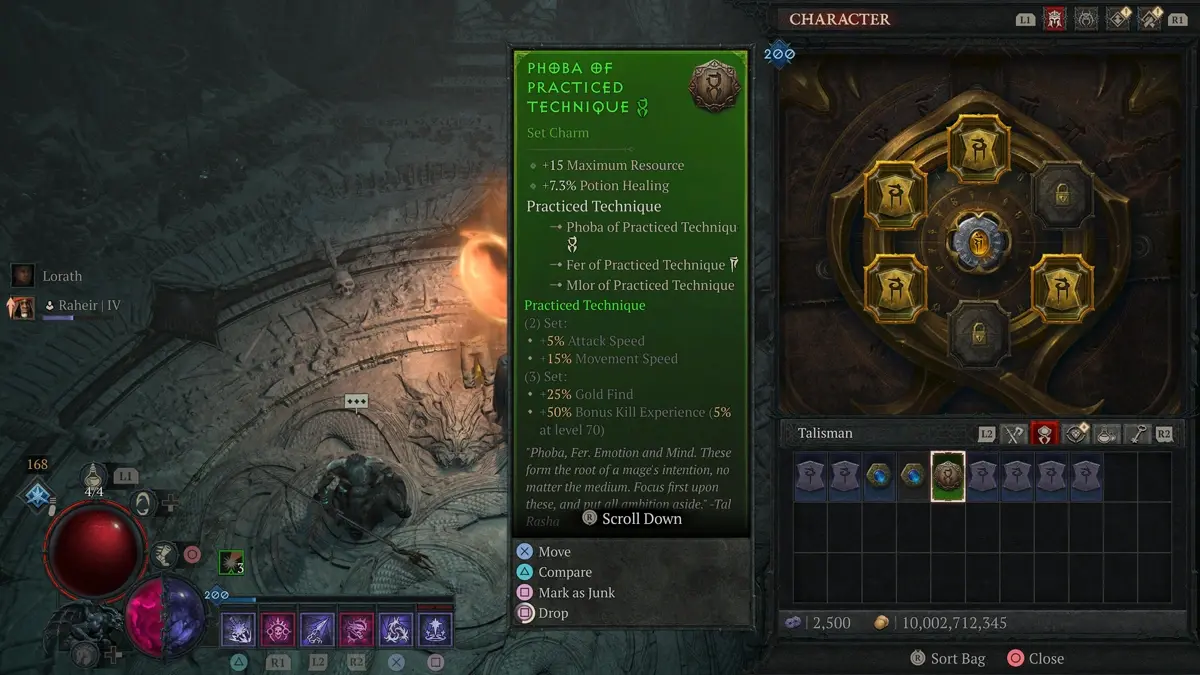
War Plans is Diablo IV: Lord of Hatred’s big new endgame feature, allowing players to set a playlist-like series of activities to grind through and earn good loot. The feature proved a tad controversial at launch, with some decrying the inability to progress through War Plans properly as a party (this was later patched out).
Others, however, argue that War Plans progression should be account-wide. Progressing through the mode yields great rewards, but those gains are currently limited to a single character. Players who create multiple characters for Lord of Hatred will thus feel severely impacted by the overwhelming grind of multiple rounds of War Plans playlists.
When we asked Zaven if Blizzard is planning to address this issue, he firstly confirmed that the issue players had in playing through War Plans was down to a simple bug:
“I'm not perfectly in the loop right now, but I believe what we've done is a hot fix to fix the reward chest. That was just a bug. The game used to give you 80% progress. I believe we just said, no, just make it 100%. Just make it nice and easy.”
As for the other concerns surrounding War Plans, don’t expect immediate fixes. Zaven noted that “we want people to tell us what they think so the details can evolve. We want the community to be part of shaping these things [...] hey, maybe a syncing feature coming as early as the next season.”
He continues:
“You know, just to make sure that we give it its time, we give players time to collect their thoughts and to give us their feedback as well. But, you know, relatively quickly after launch, making sure that we try to deliver something that's a bit more multiplayer friendly.”
Why does Diablo IV: Lord of Hatred add the Warlock and Paladin, instead of Skovos’ Amazons?
Diablo IV: Vessel of Hatred surprised players with the addition of the Spiritborn, a character class closely tied with the events of its story campaign, which was set in the class’ home region of Nahantu. Its successor Lord of Hatred immediately breaks expectations by adding the Warlock and Paladin, two classes which ostensibly have nothing to do with this expansion’s story content.
We asked Zaven why these two classes were picked for Lord of Hatred specifically, and he responded by noting that the Spiritborn is “actually the first time that we've had a class come from the region where the expansion goes. The Spiritborn also didn't just connect to the zone. It also connected to the Spirit Realm, supporting themes of the expansion.”
Zaven then pointed out how the two classes are, in fact, thematically tied to Lord of Hatred:
“While the Warlock and the Paladin don't have any direct links to Skovos, the land, they are very explicitly tied to the themes of the expansion. Our expansion is about heaven and hell, and humanity stuck in the middle. That is exemplified with those two classes being kind of the embodiment of both those sides.
“We don't actually see this as a requirement for a new class to come from the zone, we also don't care if we make a class whose zone we've already been to. We just don't think about it that way. It doesn't matter, right? Like, barbarians are from Arreat. It doesn't mean anything. We added that class because it was the right thing to add. And so there isn't a strict connection between classes we add and zones we go to, or anything like that. It's just not how we think about stuff.”
What were the design inspirations behind Skovos?
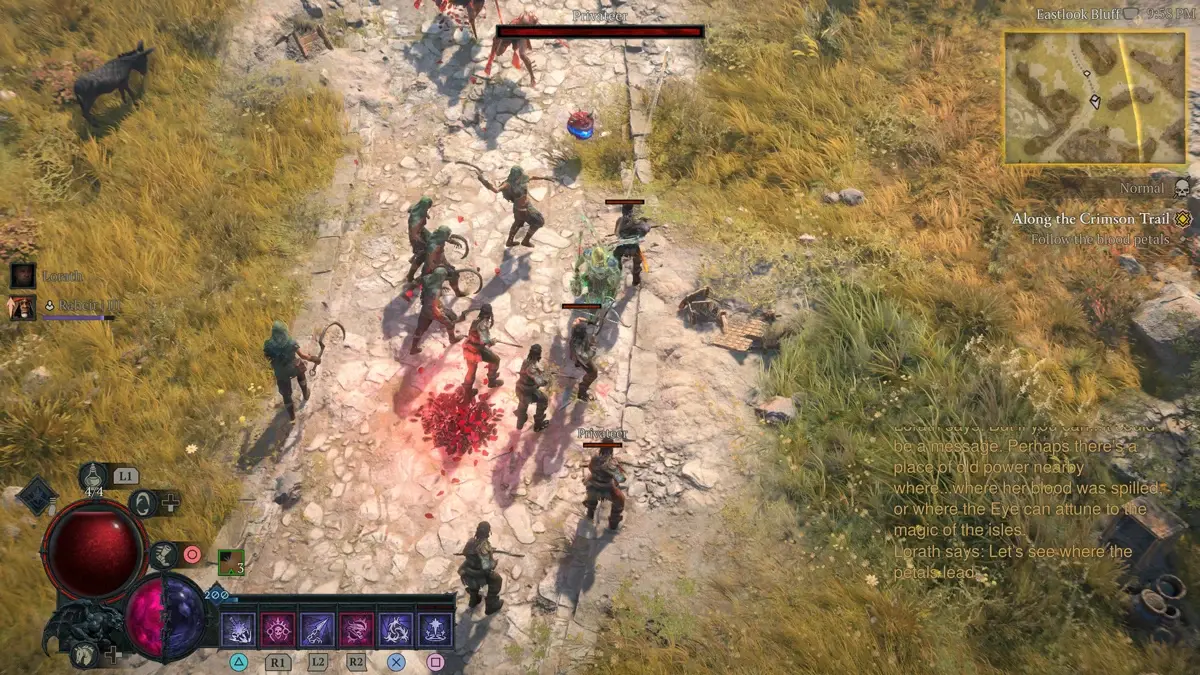
Skovos, the new region introduced in Diablo IV: Lord of Hatred, is rather diverse. The land consists of several biomes, including a volcanic area in which the expansion’s story campaign memorably culminates.
When we asked Zaven if this area was inspired by The Lord of the Rings’ Mount Doom, he laughed and said:
“You know, not at the outset. I'm sure the artist working on it took their inspiration from a lot of places. I don't know in specifics that they got it from Mount Doom, but I feel that stuff too. But, you know, maybe that's just because there's this undercurrent of how epic it is, and how much it's about the journey of the player against the volcano, and against the harshness of that environment, it is very reflective if you think about Tolkien-esque [environments], and things like that. So I can totally see where people can see that kind of being related.”
Alright, then. What were the design inspirations behind Skovos, exactly? All it took was the one question for Zaven to geek out over old Diablo II manuals:
“Anyone who read the Diablo II manual knows where Amazons are from. The old Diablo II manuals were hyper-detailed about this place that we've never been able to actually see. And so when we went into it, we wanted to make sure that we were paying homage to that.
"We were paying respect. We were respecting that source material as much as we can, with as much reverence as we had for it. But also knowing that if we just made this thing and it just felt like generic classical Greek environments, we wouldn't have done our jobs right. Everything had to go through the lens of Diablo.
"If it's angels and demons, the architecture should be reflective of that. That means the culture that grew up in this space should be understanding of that. And so a lot of this stuff is based off that original source material. And from there [we're] extrapolating what that might mean. Even in the manuals, the islands are described as very diverse.
“I would say the only thing that we've kind of… totally new-ly added was the idea of Atanos, right, as being this kind of sunken space. That was something that we felt very strongly made sense. It creates a literal bridge between the islands practically, but it also helps to really develop this culture more in this sort of mythological sense, of the ancient sunken land and things like that.”
When the interview was over, Zaven offered us some parting wisdom: “The campaign is awesome, but don't skip the side quests. They're also really good.”
Diablo IV: Lord of Hatred is now available on PlayStation 4, PlayStation 5, Xbox One, Xbox Series X|S, PC.