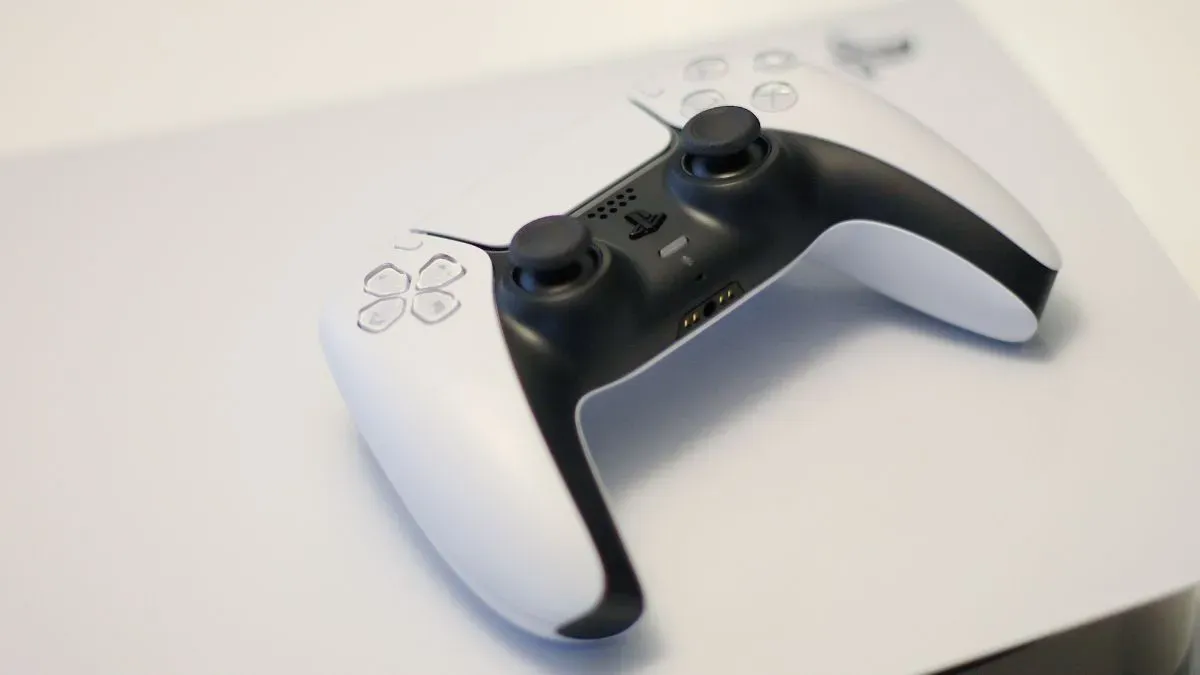
It looks like the next PlayStation is beginning to take shape.
Sony’s long-time hardware architect Mark Cerny has offered the clearest sign yet that the PlayStation 6 is in development. In a new joint presentation with AMD, Cerny spoke about technologies that are “still very early” in testing, but could define the next generation of PlayStation hardware.
The talk, released on the official PlayStation YouTube channel, was part of AMD’s ongoing developer series. It centres on Project Amethyst, a collaboration with Sony exploring machine learning and advanced GPU design. Alongside AMD’s senior vice president Jack Huynh, Cerny discussed new systems that promise to boost lighting, graphics fidelity and overall performance.
“I’m really excited about bringing them to a future console in a few years’ time,” Cerny said, stopping short of saying PlayStation 6 outright but leaving little room for doubt. He added that while the work “only exists in simulation right now,” the progress so far has been “quite promising.”
Sony’s ‘future console’ aligns with PlayStation 6 timeline rumours
Cerny’s latest comments build on an earlier interview with Tom’s Guide, published in July, where he confirmed he was already “preparing for the next generation of consoles.” At the time, he said his “time-frame is multi-year,” adding that he didn’t expect to discuss new hardware “for some years yet.”
That aligns neatly with current industry speculation pointing towards a 2028 release window for the PlayStation 6, a date that now looks increasingly plausible following his latest remarks.
Huynh added that the new hardware features will not be exclusive to Sony. “This isn’t just about silicon,” he said. “We want to make these technologies available to developers across every gaming platform.”
Radiance Cores and neural arrays could power the PS6 generation
Among the breakthroughs outlined were Radiance Cores, a dedicated hardware unit for lighting and ray tracing designed to remove bottlenecks in GPU performance. “The challenge is that the current approach has reached its limit,” Cerny explained. By moving ray traversal logic into hardware, he said, “a significant speed boost” can be achieved, alongside “further gains from having that hardware operate independently from the shader cores.”
Huynh elaborated that Radiance Cores will “free up the CPU for geometry and simulation, and let the GPU focus on what it does best: shading and lighting.”
The pair also discussed neural arrays, which would allow GPUs to “share data and process things together like a single, focused AI engine.” Huynh clarified that AMD isn’t merging the entire GPU into one “mega unit,” but rather “connecting computation units with each shader engine in a smart, efficient way.” This, he said, would lead to “better FSR, better ray regeneration, and new machine-learning features we’re just starting to imagine.”
Universal compression aims for faster and cleaner performance
A third technology, universal compression, could drastically improve how GPUs handle memory. According to Huynh, the system will “check every piece of data headed to memory, not just textures,” compressing information “whenever possible” to deliver “more detail, higher frame rates, and greater efficiency.”
Cerny added that he is eager to see “to what degree the effective bandwidth of the GPU will exceed its paper spec” once universal compression is in place.
While Sony hasn’t officially confirmed the PlayStation 6, the technologies presented under Project Amethyst hint strongly at its direction. For now, Cerny says these breakthroughs are “still years away,” but his excitement suggests that the next step in PlayStation’s evolution is already on the horizon.