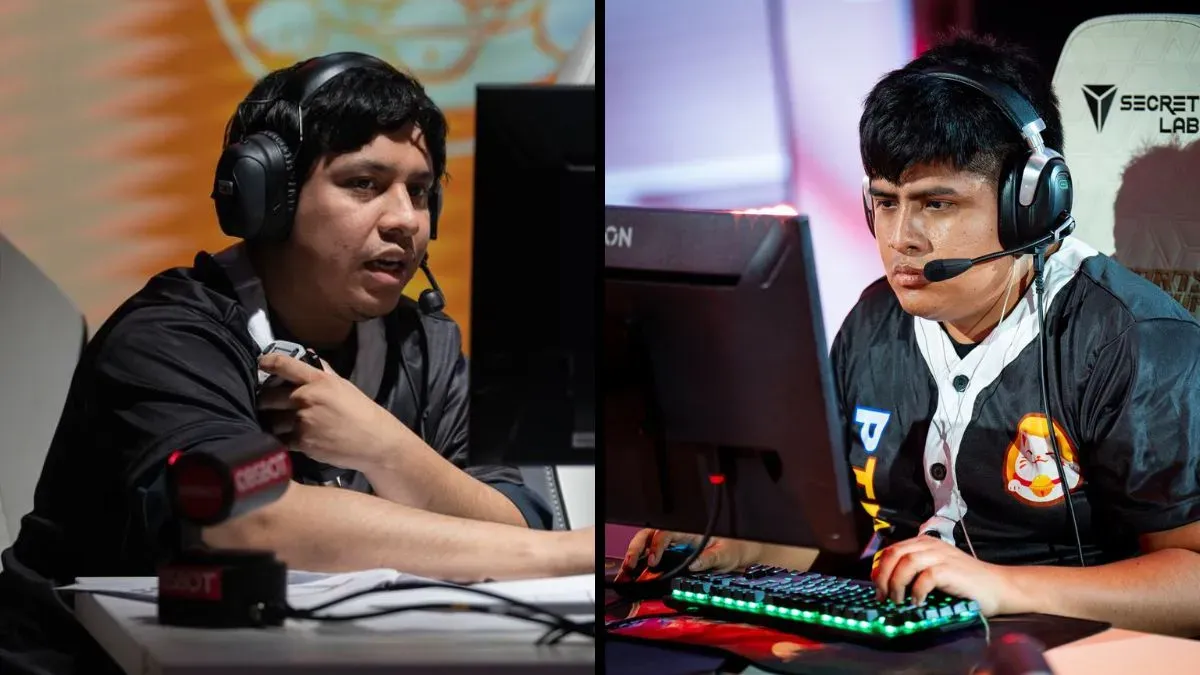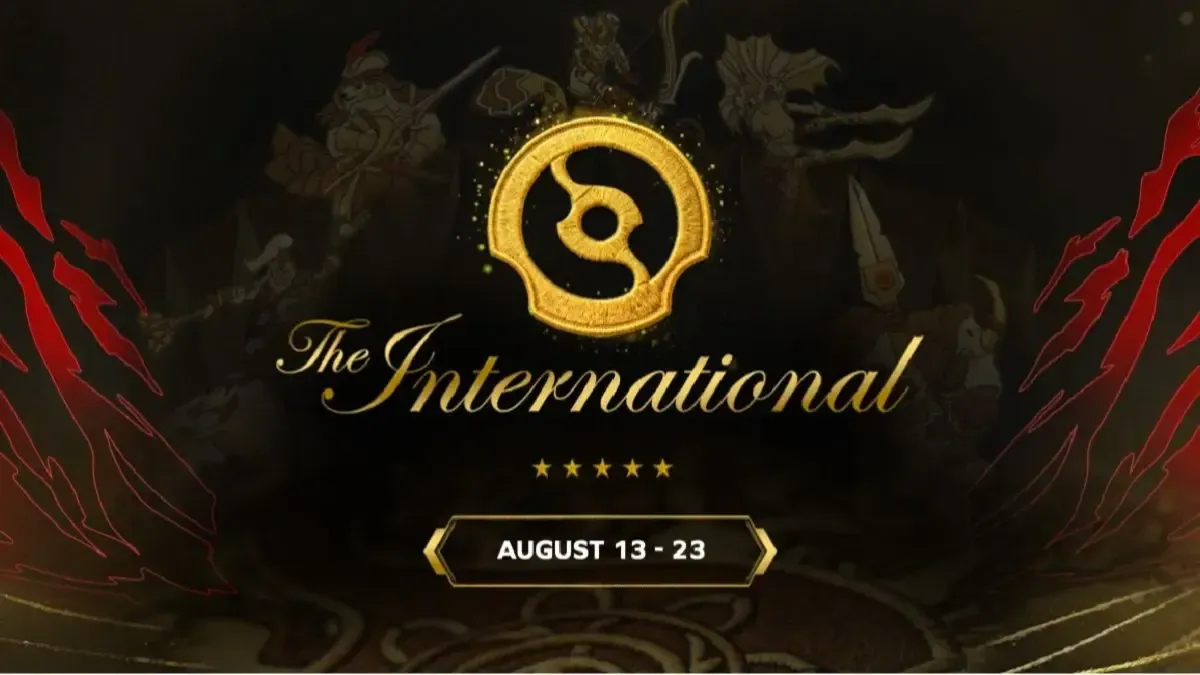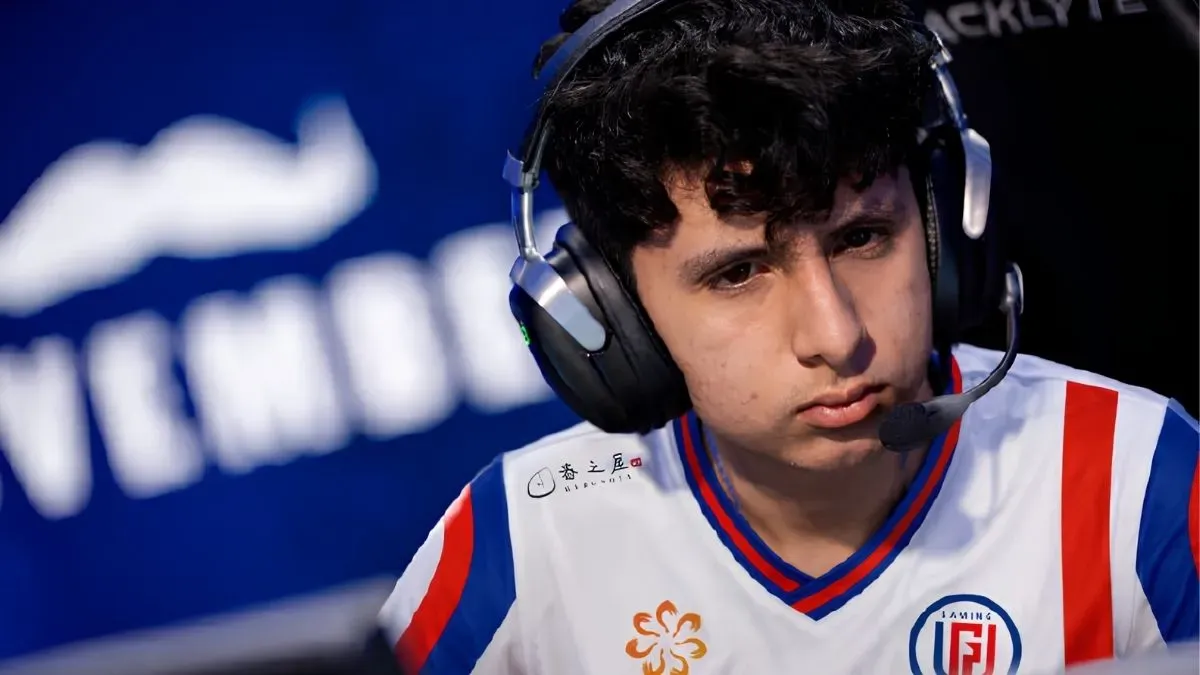
At just 16, TaiLung has everything it takes to become Dota 2's next superstar.
UPDATE: As of 9 August, TaiLung has been banned from competing in The International 2026 and any future PGL tournaments due to competitive integrity issues.
There is always something special about witnessing a wonderkid announce themselves on the world stage. Across generations, Dota 2 has seen countless prodigies rise through its fiercely competitive scene. Yet a player emerging from outside Europe remains a rare sight, particularly in an era where many have found it increasingly difficult to challenge the behemoth of a region.
That's why 16-year old South American sensation  Santiago “TaiLung” Agüero Gustavo, who will make his debut with
  LGD Gaming on the world championship stage at The International (TI) 2026 next week, deserves the spotlight. The player's meteoric rise has even drawn comparisons to iconic midlaners who reached the pinnacle at a young age, such as
  Syed Sumail “SumaiL” Hassan and
  Amer “Miracle-” Al-Barkawi. But TaiLung has his own legacy to build.
Here's everything you need to know about the young Peruvian midlaner, from his humble beginnings to his rapid ascent into Dota 2's elite tier. We'll also break down TaiLung’s playstyle, signature heroes, and what the community thinks of the South American prodigy.
How TaiLung rose to the top of the Dota 2 scene
Many of Dota 2’s top players share a similar path to the top, and TaiLung is no exception. Like many before him, he first learned the game from a family member and dreamed of becoming a professional player from a young age. What set him apart, however, was the way he got his foot in the door.
By 2024, at just 14-years old, TaiLung–then with the name Osito–had already caught the attention of the competitive scene. He surged to the top of the Americas leaderboard after securing 11,000 MMR and began competing in open qualifiers with local stacks.
At the time, there wasn't even a face attached to the name, but some already believed he was destined for greatness, including North American professional SammyBoy, who wrote: "This Osito kid from Peru gonna be a beast in a few years." It's safe to say that the post has aged well.
In 2025, TaiLung climbed into the Top 100 of the notoriously competitive European leaderboards despite playing from Peru on roughly 180ms ping. That level of dedication was enough to catch OG’s attention, which brought him onto their LATAM roster, marking his first step onto the high-profile radar.
Looking back on the experience, TaiLung said in an interview with rdy.gg:
When I started the MMR grind, it was really hard because the ping was really high. But with time, I started getting used to it, and it gradually became better. I think I only managed to get to around 80–90 on the ladder by playing from SA. Now, during our bootcamp in Europe for BLAST Slam VI, I actually managed to get to the top 20.
Although OG.LATAM ultimately struggled as a project and disbanded after just a month, TaiLung's momentum never slowed. A few months later, he qualified for his first Tier 1 tournament, DreamLeague Season 27, with a stack memorably named after the brainrot meme Chimpanzini Bananini.
It didn’t take long for South America’s top dog,  HEROIC, to grab the prodigy for themselves, signing the talented mid laner just a month later. It was with HEROIC that TaiLung truly began to flourish, helping the team secure an impressive run of results in just three months: a Top 6 finish at BLAST Slam VI, another Top 6 finish at PGL Wallachia Season 7, and a decent Top 8 finish at PGL Wallachia Season 8.
HEROIC shockingly disbanded soon afterwards, a mystery the community can’t quite figure out yet. But the roster did not remain without a home for long. In one of the year's biggest surprises, LGD returned to the scene by signing the entire lineup.
With LGD, TaiLung achieved the best result of his young career, finishing runners-up at BLAST Slam VII in June after falling only to Team Yandex in the grand final. It came as little surprise when TaiLung and LGD then cruised through the South American qualifiers for The International 2026, setting the stage for the biggest tournament–and the biggest test–of the 16-year-old's career.
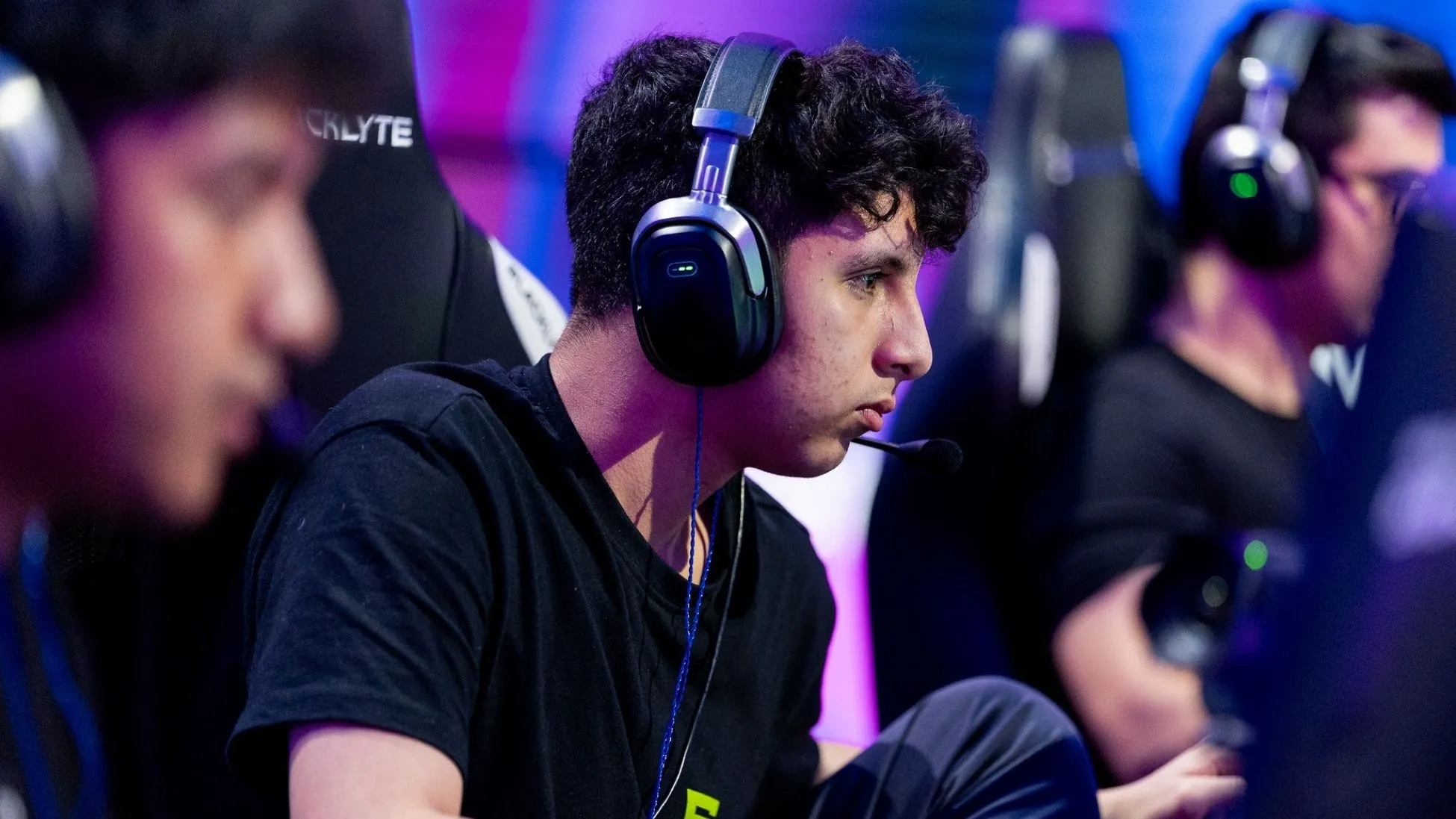
TaiLung’s playstyle, strengths, and signature heroes
TaiLung appears quiet and down-to-earth, however, his presence in-game is nothing short of a menace. For a 16-year-old, his mechanical skill and laning prowess are already incredibly elite. He rarely loses his lanes, often outclassing even the most established midlaners or, at the very least, holding his own in difficult matchups.
His greatest strength, however, lies in the mid game. Once TaiLung has a few key items, he constantly looks to create opportunities across the map, relentlessly moving from lane to lane to pressure the opposition. His teamfight impact is immense, frequently posting some of the highest hero damage per minute among his peers.
His aggression is of course enabled by his team drafting decisions. LGD Gaming would often draft self-sufficient heroes for the carry and offlane roles, allowing both supports to rotate with their midlaner and create space around the map. Despite shouldering much of the team's tempo, TaiLung doesn’t neglect his own farm, usually keeping up with last/hits and a solid net worth.
While he might not go for flashy plays most of the time, he still produced some unforgettable moments. Against Aurora Gaming at BLAST Slam VII, TaiLung's Zeus set an astonishing record by dealing 276,000 total hero damage in the deciding third game of the series. The match lasted 111 minutes, with the opening 80 minutes swinging back and forth before gradually tipping in LGD's favour. TaiLung's Zeus began stacking multiple Divine Rapiers while exploiting Enchanter's Bauble to maximise cooldown reduction. It was absurd, entertaining, and ultimately so influential that Divine Rapier received a nerf in Patch 7.41e, released just two weeks before The International.
What makes TaiLung such a valuable asset to LGD is also his diverse and wide hero pool, making him exceptionally difficult to draft against. According to Dota Pro Tracker, his most frequently played heroes in recent months have been Puck, Viper, and Ember Spirit. Across his entire career, however, Pangolier remains his most-played hero, followed by Ember Spirit, Puck, Storm Spirit, and Sniper. The former three all boast win rates above 60%.
He is also willing to step outside the conventional mid lane hero pool and experiment with unfamiliar heroes. During BLAST Slam VII, he flexed both Kez and Largo. We also learned that TaiLung took on the challenge of mastering Razor after coach  kaffs encouraged him to do so–a leap of faith that ultimately paid off.
As a result, he's grown into one of the most diverse players in top-tier Dota 2 currently. According to Spectral Stats, TaiLung had the widest hero pool of any player in BLAST Slam VII, while also recording the highest lane win rate, outranking every member of Yandex and PARIVISION.
The community’s thoughts on TaiLung
While TaiLung might not be in the conversation as much as leading and established stars like  Alan “Satanic” Gallyamov and
  Illya “Yatoro” Mulyarchuk, many in the community only have praises for the young player.
A Reddit user highlighted his Ember Spirit performance in the recently concluded 1win Essence II, praising his ability to control the game.
“The way he controls the pace from mid and keeps constant pressure on the map is actually crazy. It's not just highlight moments–the whole game feels fast once he gets going. Fights especially stood out, really good positioning and spell usage throughout.”
The excitement surrounding TaiLung has also been emanating from months ago, when HEROIC signed him in January. At that time, some in the community were already convinced they were witnessing the rise of a special talent.
"Dude was third on the Americas leaderboard at that age lmao, i've been watching his pub games and this kid is insane on invoker and storm,” a user posted.
Just a month later, another Reddit thread singled him out once again. “He is insane. Have not seen a breakthrough young talent since the introduction of [PARIVISION] - Satanic.”
Another reply drew comparisons to some of Dota's greatest prodigies: “He just dumpstered every lane & middle game I watched him play wtf. Actually gave me deja vu of the first times I watched Miracle/Suma1l & Ana (on carry lol) play.”
His current achievements may not yet put him alongside the GOATs of Dota 2, but TaiLung's ceiling remains incredibly high. With plenty of room to develop, he has already shown the potential to be the next big thing in the scene and potentially put South America on the top-tier map in the near future.
Catch TaiLung as he makes his debut at The International 2026 next week with LGD Gaming, representing South America as the region's sole representative and entering the tournament as its youngest player at just 16 years old. Fans will be watching his performance closely, but there should be little pressure on the young star. After all, simply reaching this stage is already a remarkable achievement in itself.
What is The International 2026?
TI 2026 will be this year's iteration of Dota 2's annual world championship tournament, taking place in August in Shanghai, China. As with previous iterations of the tournament, TI 2026 will feature a total of 16 teams that earn their spots in the tournament by receiving direct invites or earning slots through regional qualifiers.
The list of directly-invited teams to TI 2026 include Aurora Gaming,
  BetBoom Team,
  Team Falcons,
 Team Liquid,
  1w Team,
  Xtreme Gaming, and
  Team Yandex. Meanwhile, the teams that earned their spots through the regional qualifiers include European qualifier winners
  Team Spirit,
  TEAM VISION (aka PARIVISION),
  HULIGANI, and
  Nigma Galaxy, North American qualifier winner
  GamerLegion, Southeast Asian qualifier winner
  OG, South American qualifier winner LGD Gaming, as well as Chinese qualifier winners
  Vici Gaming and
 Team Resilience.
TI 2026's main event will be hosted in the Oriental Sports Center in Shanghai. Valve first announced that Shanghai will host TI 2026 during last year's world championship tournament, where Team Falcons claimed the Aegis of Champions after defeating China's Xtreme Gaming in the five-game grand finals.
This will mark the second time that Shanghai will host TI after TI 2019, where Western Europe's OG became the first-ever two-time TI champions after defeating Team Liquid in four games to claim the grand prize of US$15.6 million, out of the US$34.3 million prize pool.
TI 2026 will be split into two phases: the ‘Road to The International’ and ‘The International’ main event. The Road to The International will be a Swiss-style Group Stage from 13 to 16 August, where the 16 teams will be cut down to the final eight that will play in the game's biggest stage from 20 to 23 August in Shanghai's Oriental Sports Center.
While Valve have yet to reveal the details on TI 2026's prize pool, the tournament is expected to follow last year's prize pool format with a US$1.6 million base prize pool. The prize pool will then be boosted through sales of the TI 2026 Compendium.

For Dota 2 match results and updates on the go, don't forget to check out our Telegram channel.