Welcome, guys, to another episode of “The Hearthstone Classroom”. It is I, Nydra, the Hearthstone overlord of GosuGamers, ready for another lecture on card game fundamentals. In the first episode, we talked about what “archetypes” are and how they behave in the world of Hearthstone. Today, we’re tackling another core principle – card advantage.
Before we start dissecting and explaining the concept of “card advantage”, however, there’s one thing we have to clear up first:
Cards cost more than their mana
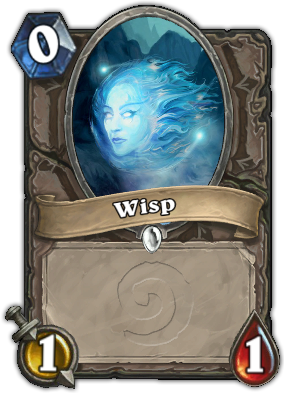 It’s a common misconception that the cost of a card starts and ends with the number on the top left. Each card in fact also costs, well, a card, and that means more than you might think. Just like life or mana, cards are a limited resource you have at your disposal through which you must win the game. In Hearthstone, you have a total of 30 cards available throughout the game. You start each game with a limited number of cards in your hand and each time you cast a spell or play a minion, in addition to the mana you pay for it, you also spend one of those 30 cards.
Understanding this is essential to get a grasp of what card advantage is and how it is earned. It is also a good way to identify good cards from bad cards. For example, novice players will often wonder why [card]Wisp[/card] is never included in any deck: After all, it costs nothing and gives you a 1/1 minion.
If we take what we just learned, however, we now know that [card]Wisp[/card] is not a free minion and it actually costs 0 mana and 1 card. This means you reserved a slot in your deck to put it in and also wasted one draw phase to get it in your hand. If [card]Wisp[/card] didn’t require you to pay the “card” resource – i.e. if you could produce a 1/1 minion for 0 mana out of thin air, through a hero power, for example – that would be a case of an actual free minion, and also a broken one. As it is, a sane player will never spend one of its only 30 card resources on a 1/1 minion with no abilities.
Time to move on, though, and let [card]Wisp[/card] never be played in peace.
Basics of card advantage
To put it simply, you have card advantage when you effectively have more cards than your opponent over the course of the game. While card advantage manifests itself through multiple ways, it really does come down to which of the two players has more cards available--having more cards means having more options. If both players have nothing on the board and ten cards in the deck but Player A has five cards in hand and Player B has just two, then Player A is winning the card advantage game.
Though it is one of the most fundamental concepts in card games, generating card advantage is primarily associated with slow, control decks. As these decks are reactive rather than proactive, obtaining as many card resources as possible - and thus have enough answers to threats - is a core part of their playstyle. Aggro decks, on the other hand, will often play with card disadvantage, sacrificing card resources in favor of quicker depletion of their enemy’s life resources.
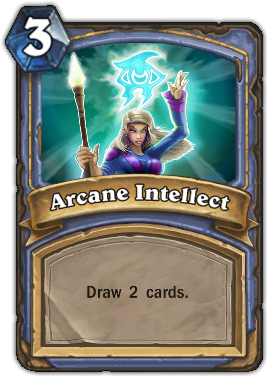
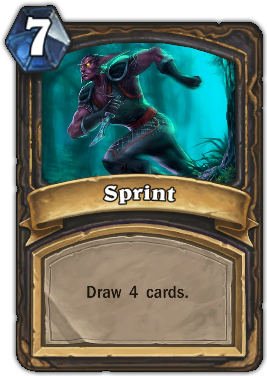
There are several ways to generate card advantage and the simplest, most obvious one is to play cards that draw you more cards. Mage’s [card]Arcane Intellect[/card] is a perfect example: you spend one card to get two in return and now have more resources in your hand than before. It is the same when you cast [card]Sprint[/card] or [card]Nourish[/card] for its second effect.

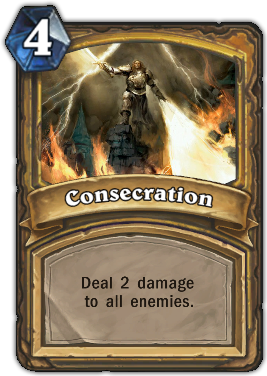
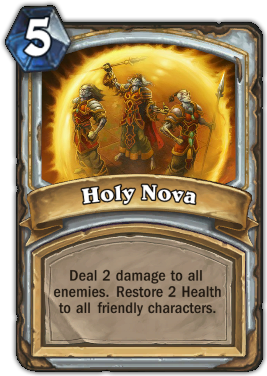
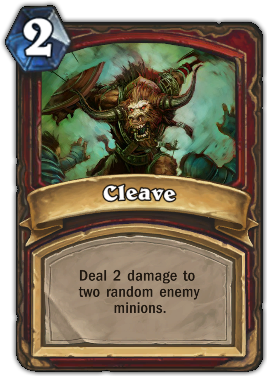
The second way is to be card-efficient, e.g. spend one card to eliminate multiple cards of your opponent. Spells which damage and potentially kill multiple minions like [card]Consecration[/card] and [card]Holy Nova[/card] are the bread and butter of this method. If you [card]Cleave[/card] to wipe a pair of [card]Flame Imp[/card]s, you’ve generated card advantage. If your [card]Wild Pyromancer[/card] plus [card]Equality[/card] combo makes your opponent lose more cards than you did, you’ve also generated card advantage. Weapons also fit in this category as they will often kill more than one card, though at the expense of life points.
In Hearthstone, a very common tool to generate card advantage is the hero powers. Life Tap is the obvious example as for zero cards spent you get to draw one card, but most other hero powers also function in a similar way. If you Fireblast a Leper Gnome, you’ve come one card ahead, because what you did was spend a refillable resource (mana) to destroy an non-refillable resource (card) without wasting a card yourself.
In games like Magic: The Gathering, another way to gain card advantage is to make your opponents lose cards from their hand or deck, (e.g. you cast Mind Rot to discard two enemy cards for the cost of one). In Hearthstone, hand disruption is non-present but deck disruption – or milling – can occasionally be observed. A good example in this case is [card]Coldlight Oracle[/card], which usually doesn’t generate card advantage because its effect is mirrored, but will do so if the two cards your opponent draws burn out due to full hand, while you safely get yours.
Virtual card advantage/disadvantage
Creating card advantage doesn’t end with the examples described above. While they are the most apparent processes, there’s more to the concept that meets the eye.
Virtual card advantage is one of the more subtle ways to get ahead in the race for card resources. In short, virtual card advantage is obtained when you effectively gain more cards than your opponent without actually eliminating his resources. Confused? Don’t worry, it’ll become clear in a second.
Example 1: You’re playing an aggressive Hunter and are facing a Druid. You have a couple of [card]Bloodfen Raptor[/card]s and a [card]River Crocolisk[/card] and are confidently pressuring your opponent when a 5/10 [card]Ancient of War[/card] with taunt hits the field. Suddenly, you can no longer attack because your wimpy beasts will just die to the mighty ancient. In the face of the huge wall, your minions have essentially become unusable. Even without attacking and killing cards, the [card]Ancient of War[/card] will generate a virtual card advantage for the Druid as long as it stays in the way.
Example 2: You’re on control Warrior and your hand is chock full of removal spells when a [card]Troggzor the Earthinator[/card] joins the minions on the opposite side of the board. Its effect scares you. You haven’t lost your removal spells but now you don’t want to play them anymore because Troggzor will spawn more minions for your enemy. Once again, virtual card advantage has been gained for the Troggzor player, as a number of cards become “jailed” without really dying. If you have a minion which can kill Troggzor, however, things will go back to where they were.
Example 3: If you have a card which you cannot use at the moment, you’re in virtual card disadvantage. These cards are often referred to as “dead”, a term which you will encounter often while watching Hearthstone matches. [card]Execute[/card] without an enabler is a dead card. [card]Flamecannon[/card] is a dead card if there are no minions on the enemy board. [card]Feign Death[/card] is useless until you have a Deathrattle minion on the board. All these cases put you in a virtual card disadvantage until you meet their criteria.
With all that said, the best way to describe a virtual card disadvantage is to imagine drawing [card]Ragnaros the Firelord[/card], [card]Cenarius[/card] and [card]Dr Boom[/card] in your opening hand. On paper, you have three cards. In reality, you have zero because you can't use any of those until very late in the game.
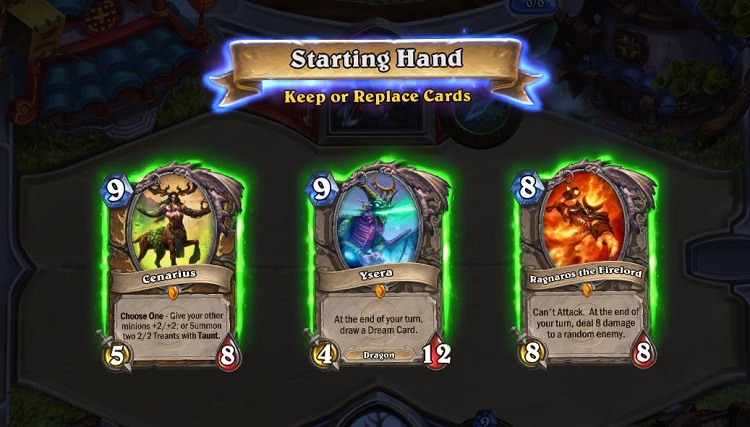
If that's what you get after a mulligan, you're efficiently at -3 cards before the late turns
Shattering misconceptions and further dissection
There are many misconceptions about what generates card advantage and what doesn’t so those ought to be cleared up. Take cantrips, for example.
Cantrips are cards that have a minor effect while drawing a card in the process, essentially replacing themselves and thinning out the deck. Despite the draw component, however, cantrips usually generate zero card advantage. Why is that?
Let’s take the most basic cantrip of Hearthstone, [card]Novice Engineer[/card]. You might think that if you get a 1/1 body in addition to drawing a card, you’ve come ahead, but that’s only on the face of it. In reality, you have the same number of cards in hand as you did before playing the Novice Engineer, so nothing’s been gained there. The only way to turn this cantrip into a card advantage is if you actually get to kill something with [card]Novice Engineer[/card] and in reality that will never happen because 2-mana minions are generally stronger. If your Novice Engineer dies without killing anything, which is the likely case, you’ve wasted one card to draw one card, thus arriving at a card advantage of 0.
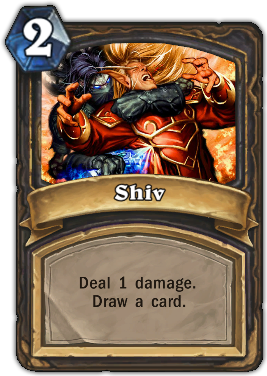
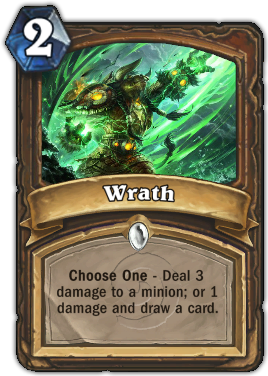
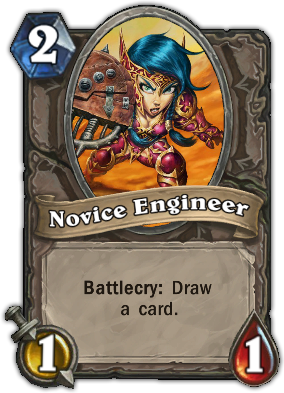
Unless these cards actually get to kill something, they're not generating card advantage
Other cantrips, however, are cooler and can generate if not actual than at least virtual card advantage. [card]Tracking[/card], for example, replaces itself in the hand so it works much like a cantrip but the fact that you can decide what to draw makes it stand out. If you were facing an army of minions and you could “choose” to top-deck a [card]Sludge Belcher[/card], thus taunting up your face and locking down the enemy board, than you’ve generated a virtual card advantage through a cantrip that would’ve usually netted you no card advantage at all.
Bounce effects like [card]Sap[/card] are also not a card advantage mechanic. In fact, they’re exactly the opposite, because you spend a card without killing a card. Bounce effects are instead tightly associated with tempo, a concept we’ll examine in future episodes.
Killing a good card with a worse card doesn’t lead to card advantage as well. Whether you [card]Assassinate[/card] [card]Ragnaros the Firelord[/card] or kill a [card]Knife Juggler[/card] with [card]River Crocolisk[/card], it’s still one-for-one trade, regardless of how good it feels. However, there are exceptions to the last two example. In the Ragnaros situation, if it was cast through a pair of [card]Innervate[/card]s and then got [card]Sap[/card]'d or [card]Assassinate[/card] that would net a card advantage of +1 or +2, respectively.
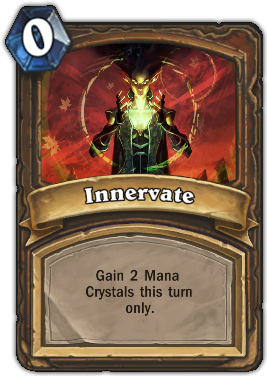
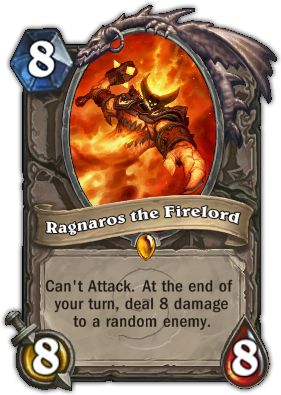
If you do this and then lose your Rag to a single card, you're in card disadvantage because your Innervates are now wasted
Finally, life gain can be a card advantage generator in special cases, particularly when playing against spell-focused burst decks. Imagine you’re a Priest or Paladin and are facing a Shaman deck whose damage mostly comes from direct damage spells and for every X points of your life total, he has to pay a card: 3 hp cost one [card]Lightning Bolt[/card], 5 hp cost one [card]Lava Burst[/card], and so forth. If you as a class with healing mechanic can mitigate that burn with fewer cards, you’ve generated card advantage. If you cast Holy Touch on yourself twice, you’ve negated that 4-damage [card]Crackle[/card] to the face while generating card advantage. If you cast [card]Holy Light[/card] after a double [card]Lightning Bolt[/card] you’ve done the same – you’ve spent less cards than your opponent and you’re not in a worse position than before. This is also how cantrips like [card]Shield Block[/card] can generate card advantage: if you out-heal a direct damage spell with the armor gained, you're ahead.
Needless to say, card advantage is not an isolated concept that exercises dictatorship over all Hearthstone matches, and it is in fact in tight relations with other fundamentals of the game like tempo and management of other resources (i.e. time and life). Nevertheless, understanding the basics of it is pivotal for becoming a better player. Next time you lose that tense Priest mirror and you have no idea why, remember this lecture: it’s very likely that the other guy just had more stuff than you did.
Appreciate the lesson? Follow me on Twitter.