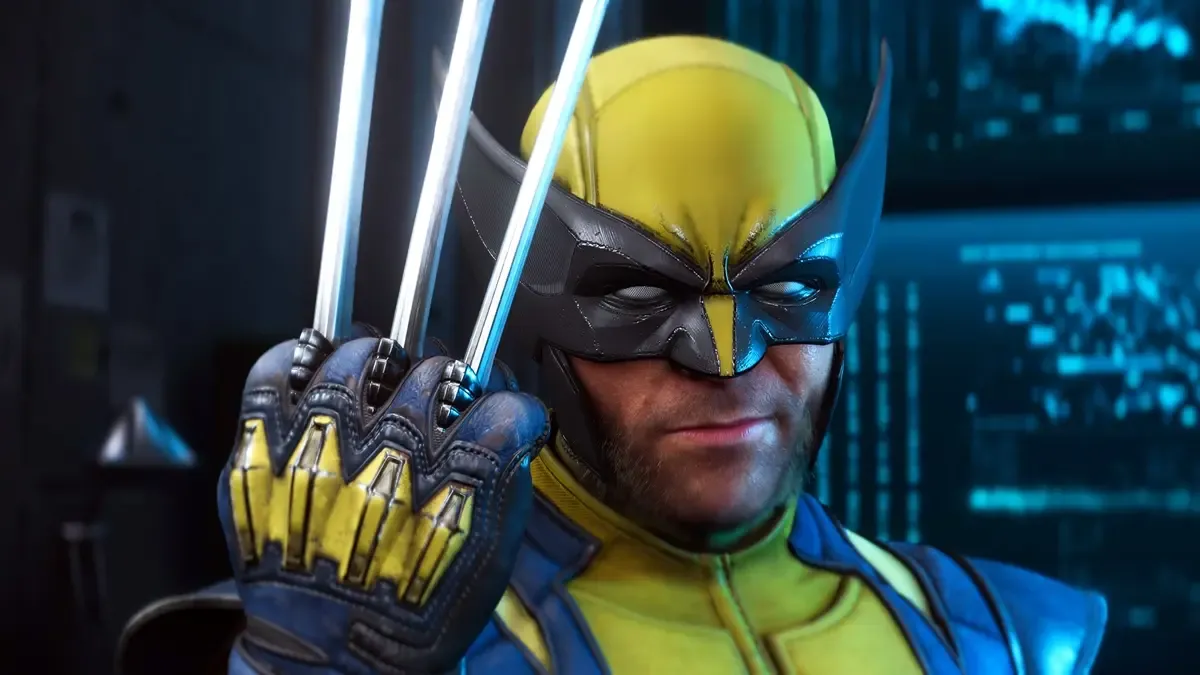
Marvel’s Wolverine is a promising start for the future of Insomniac’s take on the X-Men.
It’s been a long time coming, but Insomniac Games’ long-awaited Wolverine game has finally arrived. This is the fourth game in a Marvel universe that is now three Spider-Man games deep, but it seems far more interested in carving its own path forward. Sure, we see a few elements from the Spider-Man games here–via a few small references I won’t spoil–but the game is poised to be its own launchpad for a brand-new world; one where mutants have entered the fray.
Marvel’s Wolverine might pale in comparison to Marvel’s Spider-Man in the level of freedom it affords the player, but its narrative, strong performances, and penchant for violence set it apart in the Insomniac library. While I wound up wishing that the game’s combat held more depth overall, it’s hard to deny that Insomniac understood the assignment. This is as Wolverine as a Wolverine game can get.
Marvel’s Wolverine
Release date: 15 September, 2026
Platform: PlayStation 5
Developer: Insomniac Games
Price: US$79.99
What is Marvel's Wolverine's story about?

Marvel’s Wolverine follows the titular Wolverine–AKA James “Logan” Howlett, played by Liam McIntyre (Spartacus: Vengeance, Gears 5), in a very different setting compared to typical X-Men adaptations. Here, a homeless and amnesiac Wolverine was not groomed into committing feats of heroism by Charles Xavier–but instead reformed by a very British man named Nathaniel Essex (played by Troy Baker, though you might not recognise him based on voice alone).
Essex is patriarch to a team of freedom-fighting mutants named Team X. The X-Men do not exist in this universe, and Xavier himself is nowhere to be seen. The status quo of mutants remains largely intact however, as they are aggressively persecuted by the Reavers, a faction of armed and cybernetically-enhanced militia led by certified mutant hater Bolivar Trask. Trask intends to wipe out all mutants to keep humanity safe, with only Team X standing in the way of his devilish schemes.
Team X is largely composed of antiheroes and outright villains, ranging from Sabretooth to Mystique, which allows Wolverine to fit in rather well, considering his talent for lavish violence. While it may at first seem that Insomniac is taking a few too many liberties in bringing these iconic Marvel characters to life, fans of the comics need not worry; the studio is simply finding creative ways to reshape their origins rather than reinvent their entire personalities. In fact, I'd go so far as to say that the game only becomes more faithful to the X-Men saga as its story progresses.

It’s a tricky tightrope for a Marvel creative to walk–in such a massive comic book universe, how do you tell new stories without retreading familiar ground? Insomniac opts to do so by remixing classic X-Men events without totally sacrificing the core of these characters, in an effort to surprise fans rather than alienate them.
The Wolverine you see in-game has a very different backstory compared to the Wolverine you see in X-Men ‘97, for example, but all the traits that have made him a pop culture icon are still well-represented. Part of that comes down to Liam McIntyre’s fantastic performance as Logan, cementing himself as a definitive take on the character, and one I would genuinely love to see make its way into other games, à la Yuri Lowenthal’s Spider-Man. Yes, his gravelly line delivery and battle roars are all trademark Wolverine fare, but it’s the vulnerability that he brings to Logan in the game’s cinematics that really impresses. When the mask comes on, McIntyre comes across as undeniably perfect casting.

This is Insomniac’s darkest game in a long time. While it still oozes superhero cheese–at this point, it comes part and parcel with the genre–the story takes some unexpectedly dark twists and turns, and doesn’t hold back on putting Logan’s indomitable will to survive to the test. His dynamic with the rest of Team X calls to mind Arthur Morgan’s journey in Red Dead Redemption 2; one where the protagonist finds themselves in a time of great change.
That is to say, Wolverine himself is easy to root for; his morals are very much in the grey, but they remain steadfast despite his shifting circumstances. I can’t say the same for the rest of the game’s cast of characters, however. His relationship with Jean Grey is a major focal point of the story, one that moves so rapidly that it’s difficult to buy into at first, but is eventually recontextualised in a way that ended up working for me.
Other key characters in the story–Mystique, Sabretooth, and Essex, in particular–were the opposite, somehow becoming less interesting as the story went along, behaving in ways that left me puzzling over their motives.
How is Marvel's Wolverine different from Marvel’s Spider-Man?

Wolverine's campaign presents a refreshingly brutal change of pace for a developer often criticised for the overly saccharine tone of recent Spider-Man entries, and it certainly comes with the level of action-packed spectacle and cinematic splendour one has come to expect from Insomniac. Multiple campaign acts serve to divvy up the story’s varied locations and storylines, which keeps the pace smooth while building up to a bigger climax. However, as shocking as its final twists and turns are, it all still lacks the bombastic punch of Marvel’s Spider-Man (2018).
Perhaps this is because the game has a much shorter runtime (it took me roughly 17 hours to beat, and I was taking my time), or because it has a lack of truly inventive boss fights. There are surprisingly few bosses in general for a Marvel game of this magnitude, and they are scattered far apart. The ending stretch certainly feels like it could have used more room to breathe, as it plunges Logan’s world into chaos without giving players the time needed to fully absorb its implications.

The game’s cinematics are top-tier, however, and its climax teases a surprisingly bold path forward for Wolverine and the world of mutants. Some of its exposition-laden dialogue I could do without, but there’s a very promising setup for the X-Men here that feels wholly unique to Insomniac.
My main gripes with the story lie in the way Team X is ultimately handled. Logan’s dynamics with Mystique and Sabretooth are interesting, despite their collective background not being outright spelled out to the player. It’s clear that there’s a level of trust buried under years of resentment that the game could have done more with, but the campaign feels far more interested in telling Jean and Logan’s story, to the point that everyone else in Logan’s life simply falls to the wayside.
How does Marvel's Wolverine's combat work?

In gameplay, Marvel’s Wolverine is a very different beast compared to Insomniac’s past work. Where Spider-Man and Ratchet & Clank are blessed with a bevy of gadgets and tools, the entire core appeal of Wolverine as a playable character rests on his simplistic approach to problem-solving: stabbing people. That demands its own style of combat, and for the most part, Insomniac’s take works well here.
Wolverine has a skill tree that can help lengthen and vary his combos, which include a mix of hack-and-slash attacks and leap attacks, the latter of which help close the distance between him and the enemy. Eventually, players can begin unlocking additional different hero abilities which operate on a cooldown, only four of which can be equipped at a time. These abilities can also be upgraded to give Wolverine more crowd control or ranged capabilities.
Wolverine’s healing factor is also dealt with in a rather creative way. His Rage meter, which is filled up by defeating enemies in battle, can be used to heal and even revive himself, when it’s full enough. The Rage meter also unlocks instant takedowns when it’s almost maxed out, putting Wolverine in a berserker-like state temporarily.

There’s a satisfying level of enemy variety to keep players on their toes, especially in the game’s second half. What weighs the combat down is that it just doesn’t evolve very much over the course of a playthrough, leading to many of the game’s combat encounters feeling samey, if not outright homogenous, by its end. Wolverine’s skill tree unlocks nifty new avenues for combos, but there’s very little space left for players to mix and match the abilities they favour for a more stylised combat experience.
This leaves the game’s combat feeling frankly stale towards the end of the game. Yes, Wolverine isn’t known for his creativity, but a few additional ability options and skill tree unlocks would have gone a long way to keep this combat system feeling fresh and exciting in the second half. Far more interesting is the game’s Aptitude system, which gives Wolverine an array of perks like gaining Rage more quickly, though only a few perks can be equipped at a time. At least then, you’re actually given the choice to modify Wolverine’s kit in a more granular way.
The saving grace is the game’s brutal gore system. It’s no surprise to anyone who has played X-Men Origins: Wolverine, but watching enemies get dismembered and Wolverine himself get worn down to his Adamantium-coated bones does a lot to make combat feel visceral and impactful.
Marvel’s Wolverine progression and exploration

While Marvel’s Wolverine is a markedly linear game compared to Ratchet & Clank: Rift Apart and Marvel’s Spider-Man, it might actually surpass both games in its sheer level of detail. The game comprises several locations from both the pages of Marvel Comics and the real world, and at certain points in the story, Wolverine is allowed to explore them on his own time.
Levels set in Japan and the Southeast Asian-inspired Madripoor are a genuine delight to explore. There’s an almost frivolous level of detail with which Insomniac has brought the world of the X-Men to life, from a faithfully-recreated Kabukicho (complete with a Devil Dinosaur-like knock-off version of Hotel Gracery’s Godzilla head) to the NPCs going about their routines in Princess Bar. I found myself standing in one place for five minutes just to watch a bartender restock limes and check for bowls behind the counter at one point, and I'm not even sure why. Linearity aside, this game has some of the most immersive locations Insomniac has produced to date.

Wandering off the beaten path won’t get you very far, but it will lead to the discovery of collectible materials to unlock new suits (which can increase health), whiskey bottles to increase aptitude, and Nightmare Doors to unlock challenges. There are also plenty of Easter eggs and references to classic X-Men characters for fans to uncover, usually buried in notes and lore text scattered around the game’s environments.
If the story quests and collectibles are the game’s meat and potatoes, the Nightmare Doors are its undercooked brussel sprouts; you’ll eat them because you have to, not because you want to. These usually involve parkour and combat challenges, with levels that reuse assets from existing locations to make up a bite-sized mission that’s pretty easy to pick up and put down. Unfortunately, these challenges only expose the lack of depth in the game’s combat and parkour systems, rather than highlight any vigour they might have had.
They’re far less interesting than Ratchet & Clank: Rift Apart’s pocket dimension challenges, for example, and that’s because Ratchet (and Rivet) had far more robust kits to play with than Wolverine. Hence, the Nightmare Doors simply feel half-baked in their current form.

On the subject of technical performance, I played Marvel’s Wolverine on a base PlayStation 5 and found that it ran smoothly for the most part. It’s a little buggier than I’m used to Insomniac’s games being, specifically with certain animations not triggering correctly in battle, leading to Wolverine hovering in the sky or being repositioned in mid-air to fly at an enemy. That didn't bother me too much, however, and some of these issues may get patched out before launch. Otherwise, it’s a beautiful game with some of Insomniac’s most detailed locations to date.
The game also has a really lovely suite of accessibility and performance options to fiddle with, including the welcome addition of VRR support. PlayStation Studios continues to be one of the most accessible game publishers around, with their titles including a variety of impactful gameplay modifications available to fine tune your gameplay. It’s really gratifying to see that tradition continue.
Marvel's Wolverine review verdict

Marvel’s Wolverine may be an imperfect addition to Insomniac Games’ stellar games library, but it’s one that will undoubtedly whet the appetite of Wolverine fans all the same. The absolute carnage that players can bring to their unfortunate foes is fantastic, and the journey Logan takes throughout this story is dense and twisty; ultimately leaning melancholy, as all the best character-driven superhero outings tend to be.
The game’s grounded approach to the Marvel universe feels a lot more immersive than the Spider-Man series, which typically sees players soar right over its finer details. I wish that the combat ultimately had more to offer, and that some of the game’s more likeable mutants had not been thrown to the wayside by the end of the story. Still, this is an interesting piece of a larger puzzle that Insomniac seems to be building with the X-Men, and I’m here for wherever it takes Logan next.
Marvel’s Wolverine launches on 15 September, 2026, on PlayStation 5 for US$69.99. We received a copy of the game for this review.
Who made Marvel's Wolverine?
Insomniac Games, the developer behind the Marvel's Spider-Man and Ratchet & Clank series, made Marvel's Wolverine.
Does Marvel's Wolverine have multiplayer?
No, Marvel's Wolverine is a single player game.
Who plays Wolverine in Marvel's Wolverine?
Liam McIntyre (Spartacus: Vengeance, Star Wars Jedi: Fallen Order) plays Logan AKA Wolverine, in Marvel's Wolverine.