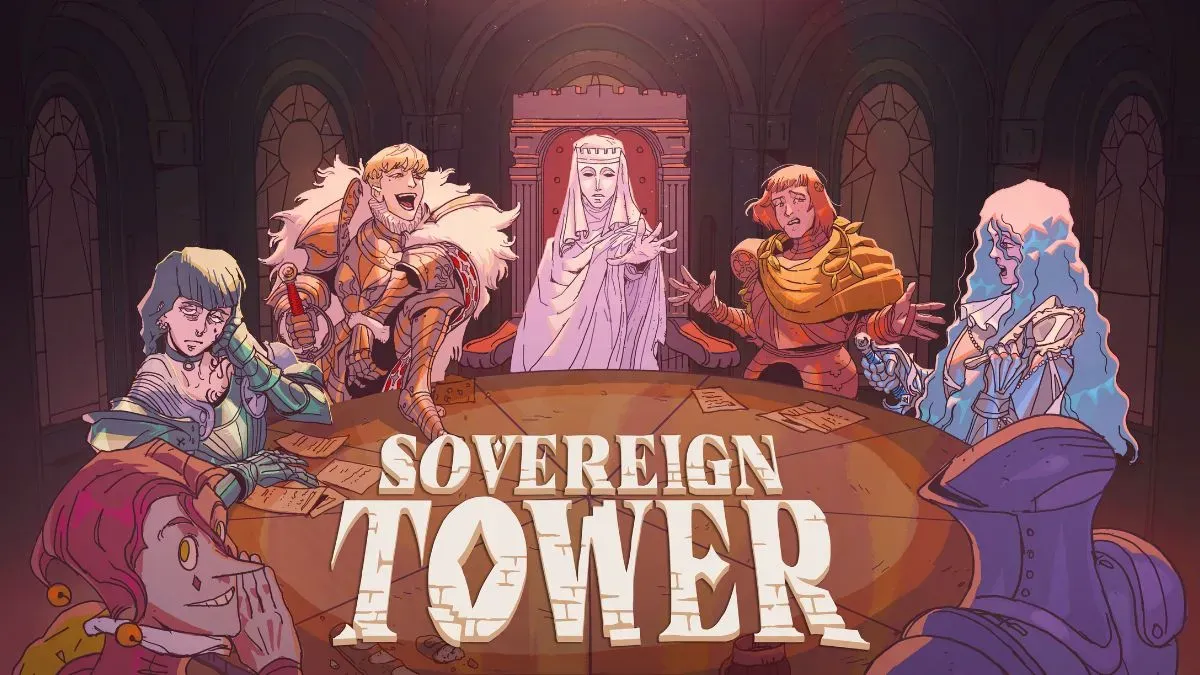
Who said ruling a kingdom was going to be cosy? Sovereign Tower certainly didn't.
I went into Sovereign Tower thinking that it would be a cosy little medieval game where I could roleplay as a kind and benevolent ruler, make a few royal decisions and generally have a pleasant time lounging on my throne.
I was very, very wrong.
Sovereign Tower is certainly a roleplaying game, but ruling its kingdom is anything but cosy. There are knights to manage, subjects demanding answers, factions to keep happy, and quests that can end very badly when choosing the wrong person for the job. Just when I thought I had figured things out, the game would find another way to complicate my reign.
Heavy is the head that wears the crown, after all.
Sovereign Tower
Release Date: 6 August, 2026
Platforms: PC via Steam
Developer: Wild Wits Games, Curve Games
What is Sovereign Tower?
Released on 6 August, 2026 by Wild Wits Games and Curve Games, Sovereign Tower is a dark medieval fantasy management RPG and visual novel with a rather unusual solution to making terrible decisions: turning back time.
You play as the Sovereign, although you weren't exactly born into royalty. Before opening the doors of a mysterious magical tower and unexpectedly finding yourself sitting on its throne, your character was an itinerant leper. With the help of your advisor Arlin, you suddenly find yourself responsible for a fragmented kingdom inspired by Arthurian legend.
That means dealing with eccentric knights, hearing the grievances of your subjects and making decisions that can affect practically everyone around you. Your realm is divided among several groups, including the people, nobles, merchants, and scholars, and your choices can either raise or lower their satisfaction.
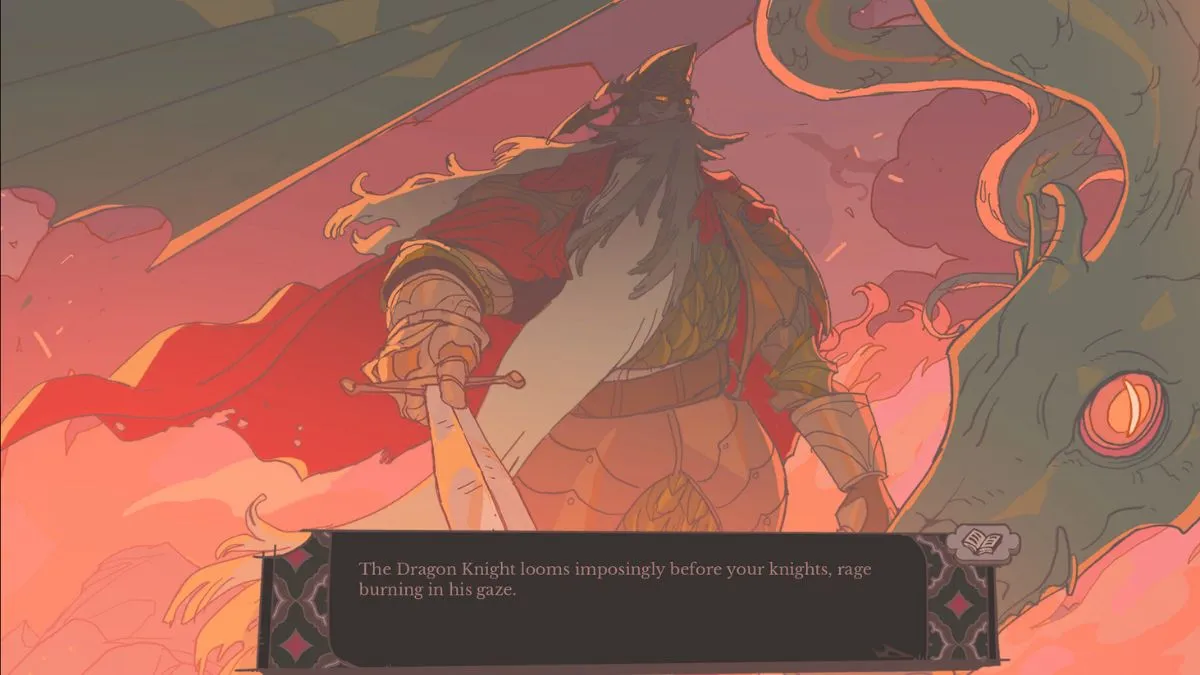
I originally thought I'd be able to shape my Sovereign into someone benevolent who always sided with the people, but it quickly became obvious that ruling wasn't going to be that simple. Different groups want different things, and doing what seems right for one can easily upset another.
Dialogue choices can seem fairly limited at first, but their consequences don't necessarily play out immediately. Someone you dealt with earlier might return to your audience later, with a previous decision changing how that encounter unfolds. So while you might only have a few answers in front of you, you're potentially setting up larger events than the immediate conversation suggests.
How does Sovereign Tower's gameplay work?
Most days in Sovereign Tower follow a similar rhythm. You hold court, meet commoners, diplomats, rulers, and whoever else has decided to make their problems your problems, then make decisions before sending your knights on quests around the kingdom.
Between keeping the different groups in your realm satisfied, managing your knights and developing the tower itself, there's considerably more to running the place than simply picking dialogue options.
Choosing the right knight isn't that simple
Each quest tests a combination of abilities such as strength, agility, charisma, luck, magic, and wit, but only some of what you'll need is revealed to you. A manticore hunt might obviously call for a strong sword arm, for example, so naturally you send your strongest knight. Easy enough, right? Not necessarily.
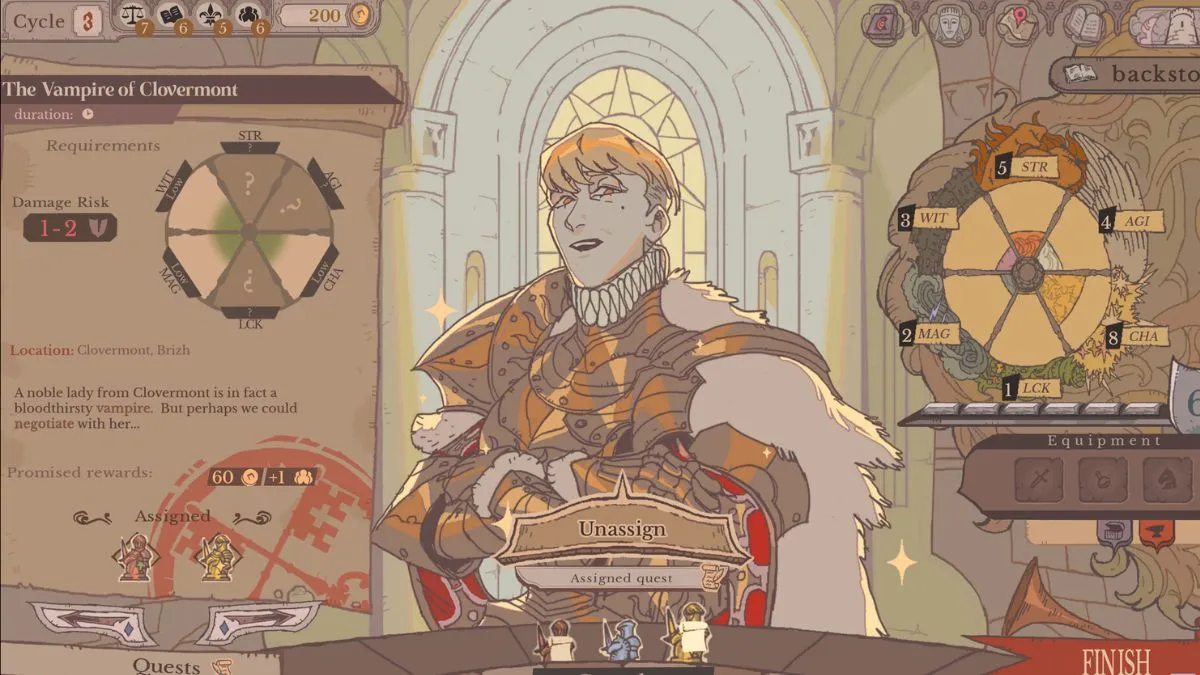
The knight management system is somewhat reminiscent of Dispatch, where choosing who to send on a mission similarly means weighing up each character's strengths. Sovereign Tower adds another complication by initially keeping many of its knights' traits hidden, so the person who looks best for the job on paper might not actually be your best choice.
Every knight also has positive and negative traits that can affect their chances of succeeding. Someone might love water, fear crowds or have some other quirk that suddenly makes them much better or considerably worse for a particular assignment. You don't know all of these traits from the beginning. Instead, you gradually discover them as you get to know your knights, or you can send one of your advisors to do some less-than-chivalrous snooping on your behalf.
Knights also have their own preferences. These don't necessarily determine whether they'll succeed on a quest, but they can affect their satisfaction. Send someone who is afraid of the dark and hates hunting into a gloomy forest to kill wolves, for example, and there's a good chance they'll fail and be rather unhappy with their Sovereign for sending them there in the first place.
You can still make them go. You're the Sovereign, after all. Equipment can boost their abilities enough to give them a better chance of succeeding even when some of their traits are working against them.
Your knights aren't the only thing you're managing
Quests are only one part of running the kingdom. During audiences, you're also dealing with requests and problems from the people around you, and your decisions affect the satisfaction of the different groups in your realm: the people, nobles, merchants, and scholars.
That made my original plan of simply becoming a benevolent, for-the-people Sovereign much harder to stick to than expected. There are usually other interests to consider, and helping one side out doesn't necessarily leave everyone else cheering your name.
The tower itself can also be expanded, with new rooms opening up more options to improve things for you and your knights. Between the kingdom, your Round Table and the tower, there's always some other part of your reign begging for consideration.
Failure is where the Demon comes in
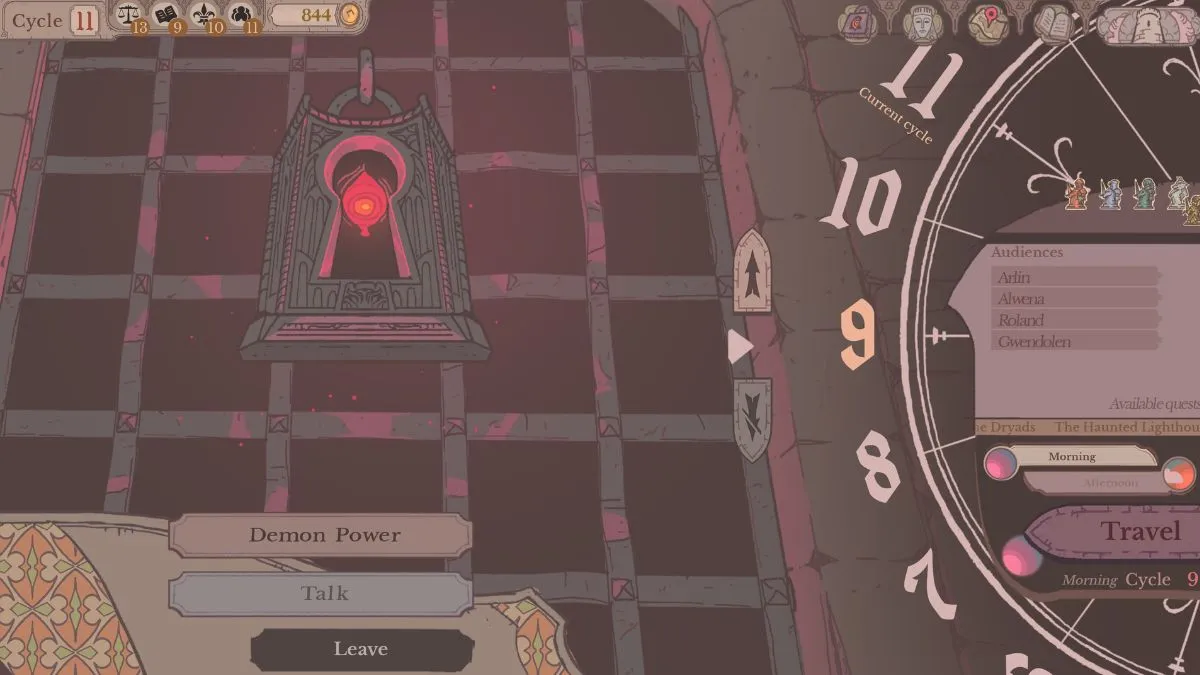
This uncertainty is also why I initially didn't enjoy Sovereign Tower very much. I don't particularly enjoy failing right out of the gate, and the game deliberately begins with so much information hidden from your view. You don't know your knights particularly well, you don't completely understand how certain decisions will play out, and a bad call can mean losing a favourite knight, or even failing a test that brings your reign to an abrupt end.
That's where Demon Power comes in. Deep beneath the tower is a demon with the power to rewind time as often as you need. You can return to an earlier point while keeping the knowledge you've gained, meaning that even a disastrous attempt can give you information to work with the next time around.
Rewinding isn't only there to let you redo a mistake, either. It can unlock different story paths, knights, adventures and dialogue options, giving you reasons to approach events differently rather than simply trying to reproduce the perfect run. Making repeated deals with the demon living underneath your tower doesn't exactly sound like the wisest royal policy, but sometimes it can feel like your only option. Whether the Demon is actually helping you out of the goodness of its heart is something you'll have to discover for yourself.
Turns out, ruling actually takes some thought
Once I understood what Sovereign Tower actually expected from me, I started approaching its problems differently. Small interactions, quest details and what you've learned about your knights can all affect your chances of success, so charging straight towards the most obvious solution won't always work. Sometimes the strongest knight isn't your best choice, and sometimes there isn't one straightforward answer at all.
It challenged me to step outside my usual way of thinking, and at times I genuinely felt like it was sharpening my wit. More than anything, though, I liked how many different considerations could sit behind what initially looked like a simple decision. There's also, strangely enough, a decent lesson about leadership underneath all the medieval absurdity. You won't always have complete information, different people will have competing interests, and sometimes there simply isn't a solution that keeps everyone happy. Who knew ruling a kingdom would be so much work?
Sovereign Tower characters and knight recruitment
The characters in Sovereign Tower are probably one of the most colourful bunches I've encountered in a game in recent memory. And it isn't just the knights: the servants, commoners, nobles, and practically everyone else you meet has some sort of flavour to their character, so very few of them feel typical or trope-y.
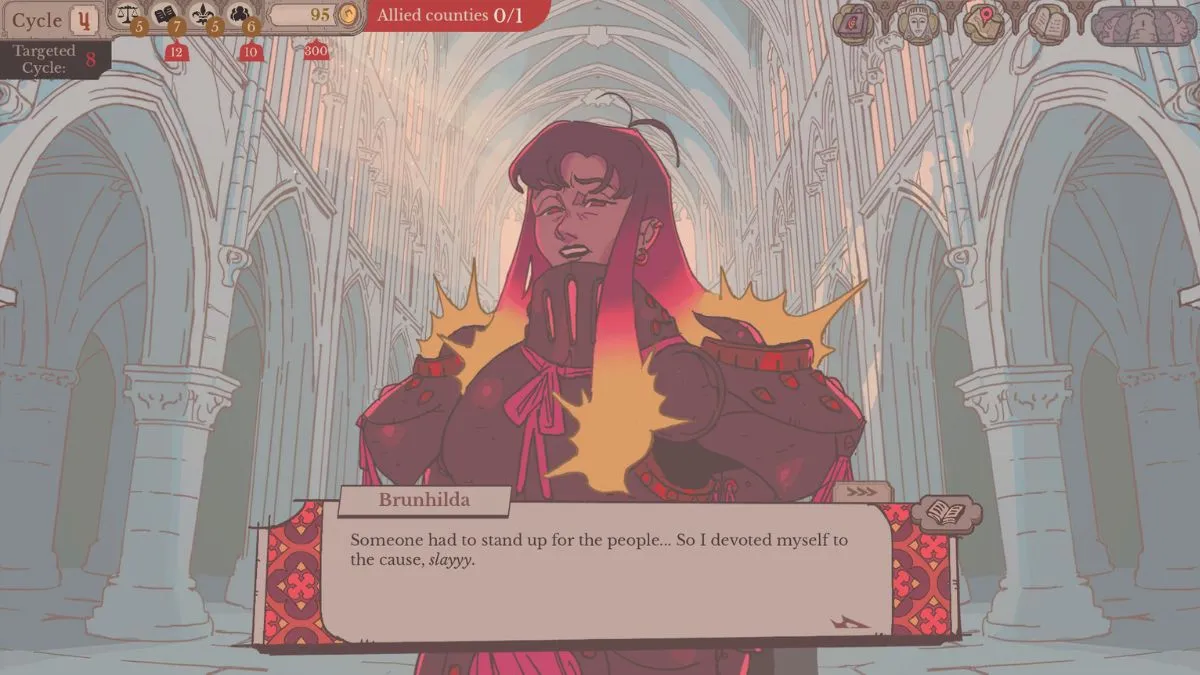
This is especially true of the knights, whom you gradually get to know beyond whatever first impression they give you. A stoic loner might turn out to love music, while someone who initially comes across as arrogant can reveal completely unexpected sides to their personality. You can't simply take one look at them and assume you've figured out their whole deal.
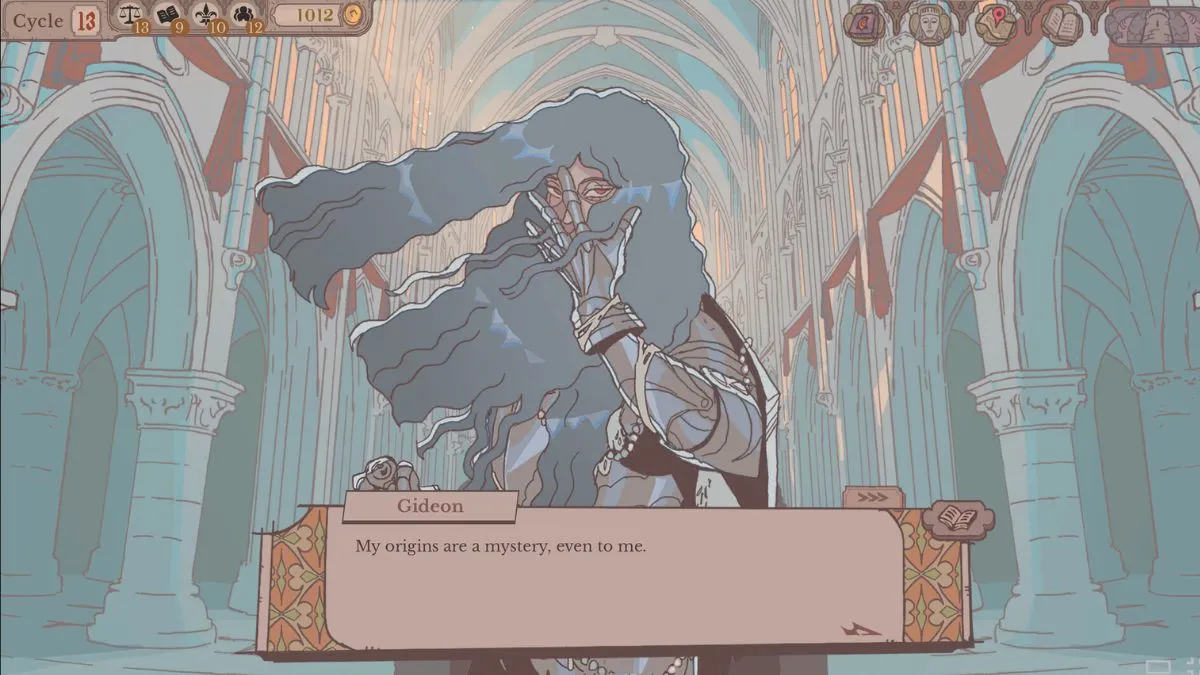
There's also more to consider when recruiting knights than simply accepting everyone who asks for a seat at your Round Table. Bringing someone into the fold can potentially work against you, while turning them away means losing whatever abilities or advantages they could have brought to your court. Apparently, even medieval HR is a complicated affair.
Sovereign Tower art style, music, and sound design
Sovereign Tower's art immediately sells its medieval setting. The illustrations aren't excessively elaborate or the kind that will make your jaw drop, but good art doesn't always have to be. The game is genuinely pretty, with its drawings, decorative frames, and other visual elements all working together to give it a strong medieval character.
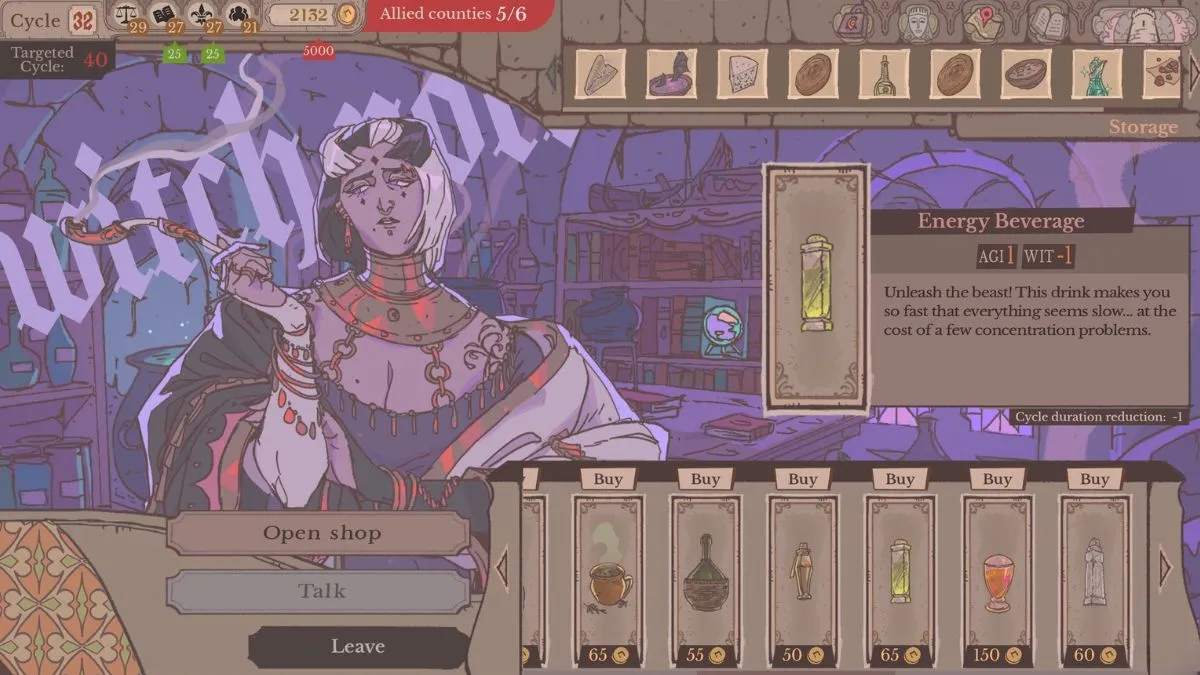
The character designs add another layer to that presentation. Nobody looks completely ordinary, with some characters sporting leaves or similar accoutrements depending on their personality. Even with the stranger and more fantastical touches, everything still feels like it belongs in the same world, rather than looking unusual simply for the sake of it.
Nothing is particularly gaudy or trying too hard to impress, but that's part of why the art works so well. Every element feels purposeful, and together they give Sovereign Tower a distinct visual identity without needing to overwhelm you with detail.
The same less-is-more approach carries over to the music and sound effects. Neither is particularly elaborate, but both are used smartly and do exactly what they need to do. The music supports the medieval atmosphere without overpowering what's happening on screen, while the sound effects give interactions and moments around the tower a little more character.
Sovereign Tower doesn't need to constantly demand your eyes and ears to make an impression. Its presentation is simple, pretty and cohesive, and sometimes that's more than enough.
Verdict
Sovereign Tower is a deceptively simple game with layers that gradually unfolds the longer you play. A bit like exploring the tower itself, what first looks like a straightforward loop of holding court, making choices and sending knights on quests keeps opening into something more complicated, with character quirks, competing interests and branching consequences stacked behind seemingly simple decisions.
Its colourful characters and pretty medieval presentation give all of that plenty of personality, while running the kingdom asks for much more thought than I expected going in.
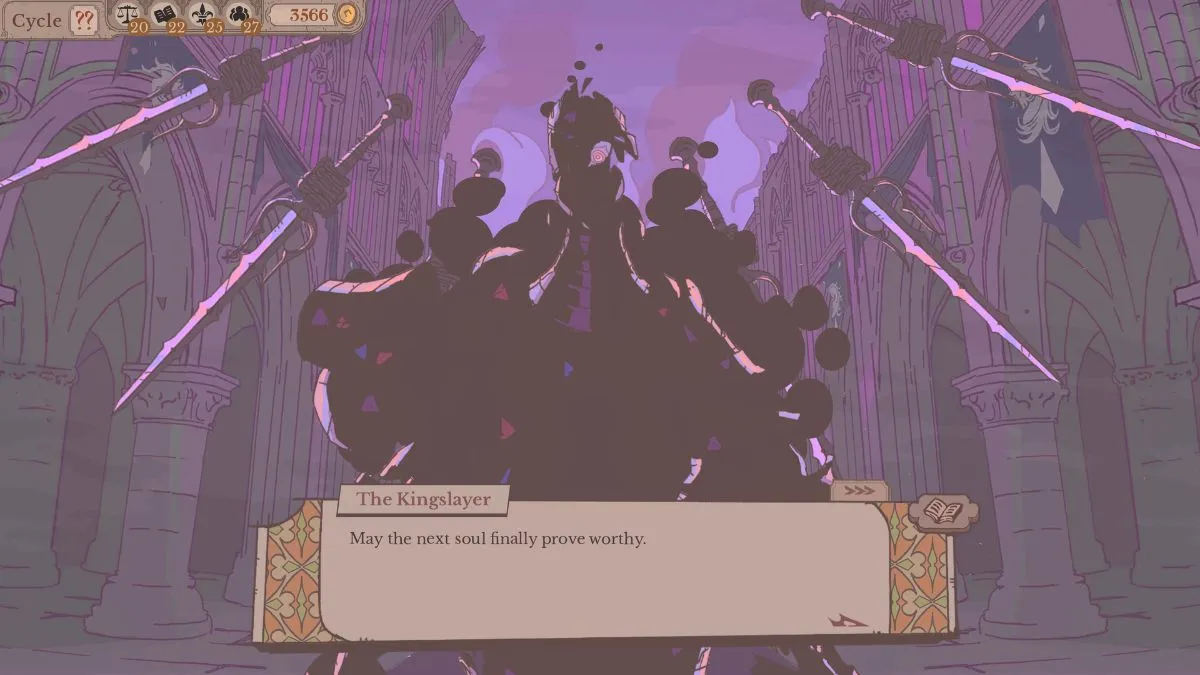
It is, however, not for everyone. Sovereign Tower plays slowly, requires plenty of deliberation. It isn't afraid to let you fail. Rewinding also means encountering repeated dialogue, and some stretches can drag even with the option to skip certain conversations.
But if you enjoy roleplaying, experimenting with different choices and actually having to think about how you're running your kingdom, there's plenty here to sink your royal teeth into. It's more than a visual novel, asking you to take an active hand in shaping the fate of your knights, your subjects and the realm itself. Just don't expect wearing the crown to be comfortable.
Sovereign Tower is now available on PC via Steam for an introductory price of US$16.99 until 20 August, and will be sold at US$19.99 afterward. We received a copy of the game for this review.
Frequently asked questions
How much is Sovereign Tower?
Sovereign Tower has an introductory price of US$16.99 until 20 August. After which, it will sell at US$19.99.
What platforms can play Sovereign Tower?
Sovereign Tower is available on PC via Steam.
Can Sovereign Tower play on Steam Deck?
Yes, you can play Sovereign Tower on the Steam Deck.
Does Sovereign Tower have multiple endings?
Sovereign Tower has multiple endings, depending on the choices you make in every Day Cycle.
Does Sovereign Tower have multiplayer?
No, Sovereign Tower is a single-player game.