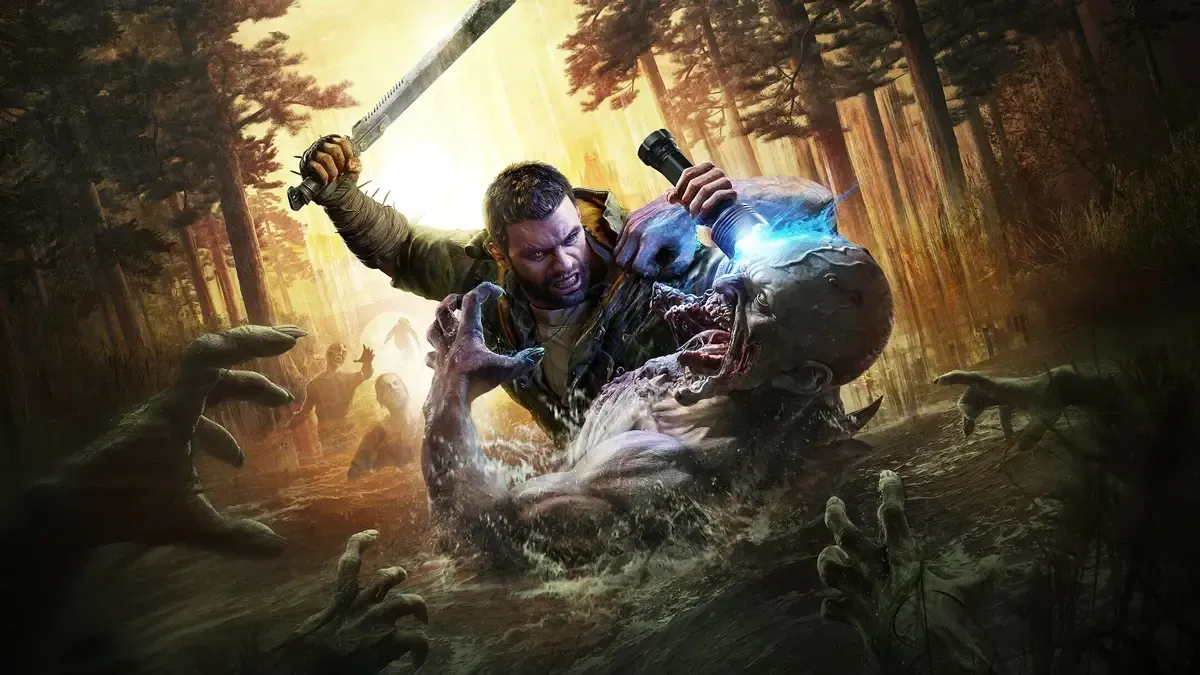
Techland learned “a lot” while developing Dying Light 2: Stay Human.
While speaking to GosuGamers at Thailand Game Show x Gamescom Asia, Dying Light’s franchise director Tymon Smektala explained that the experience of making Dying Light 2: Stay Human heavily informed development on its successor, Dying Light: The Beast.
Smektala said that “We took some steps that took us away from the Dying Light formula with Dying Light 2: Stay Human,” causing the studio to approach a “community-driven design process” for its newly-released sequel.
Techland gets candid about Dying Light 2: Stay Human's mixed player reception
Game developer Techland had a hit on its hands when it released the survival horror game Dying Light in 2015. When it started marketing a sequel for the game, Dying Light 2: Stay Human, it quickly became clear to fans that this was going to be a slightly unusual follow-up.
Instead of doubling down on the action, weapons, and parkour elements players loved in the first game, Techland decided to expand on its RPG elements instead. Choices and consequences were a bigger part of the story campaign, which also featured more in-depth cutscenes and questlines.
This genre shift proved to be controversial among players, who craved a return to the more fast-paced gameplay loop of the first game. That proved to be foundational for Techland, as the studio took its players’ feedback and channeled it into making a back-to-basics sequel called Dying Light: The Beast. The sequel also stars Kyle Crane as a protagonist, who returns from the first game.
When we asked Smektala about how Techland innovated on the franchise without straying away from its beloved formula, he answered:
“We decided to basically look at everything that we have done so far, and do like the best of everything. Because, to your point, we took some risks that took us away from the Dying Light formula with Dying Light 2: Stay Human.”
However, Smektala was quick to affirm that the sequel isn’t seen internally as the black sheep of the Dying Light family:
“We love this game. We learned a lot from this game. It was a very successful game, but what we realised is that we wanted to change too much at the same time, too early, and [we were] not really prepared for that. We realised very quickly, unfortunately, after launch, why those weren’t the best steps. Because our community, the players, told us.”
The developer acknowledged that “not every decision was the best decision,” and that “we shouldn’t be trying to do so much experimentation.” When development on Dying Light: The Beast began, the studio “tried to take every lesson–the good ones, the things that players like–but also the not-so-good ones, the things that players were telling us: ‘This doesn’t work. We don't want that in the Dying Light series.”
He continued:
“This is how we formed our design process for Dying Light: The Beast. And I think this is also something that's very important to us, as a studio, to approach this community-driven design process.”
Smektala ended by driving home Techland’s new player-first approach in game development. “You could say, hey, but this is your game. Why don't you follow your heart? Just listen to the players. But for us, actually, we don't think it's our game. When it's released, we share the game with millions of players, and they have the same stake in the game as we do, so that's why we try to listen to our community as much as possible.”
We also got to attend a one-on-one interview with Smektala at Thailand Game Show (also known as Gamescom Asia), where we asked him about Dying Light: The Beast’s new limited-time rewards. You can read that interview here.