"For instance, while the western world argue that they lack the discipline and mindset shown by the eastern world (so said Black^ [photo] in a interview), the eastern world claim that they lag behind in creativity and innovation (just remember what DC said when EHOME was crushed by DTS at WDC."
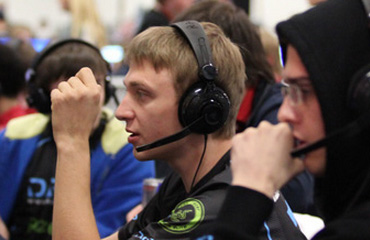
"In this game, the clash of playstyles is decided in the first pick phase. LGD got massive team-fight, while DARER [photo] still kept their plans open, opting for burst damage and map control. In this specific game, I give a small edge to DARER because LGD picks make their lanes predictable."
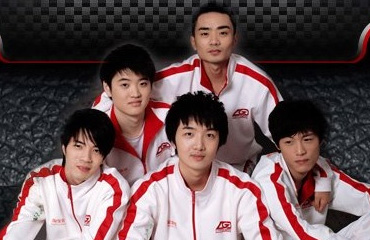
LGD [photo] is all about growing strong and force team-fights, while DARER is all about using the laning advantage they got from the picks and grab control on the game and use to force LGD off-balance before they're strong enough to force team fights.
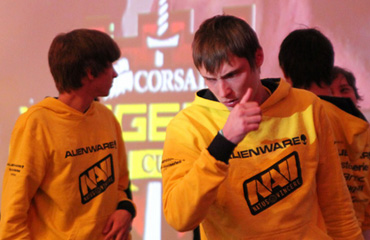
Look at Na'Vi, for example. They love to team-fight and recognize that the endgame is very volatile. So, their choice of playing is to take towers early and press an advantage before the game reach the dangerous, volatile stage where anything can happens.
 LGD LGD |  Darer Darer | |||||||||||||||||||||||
| BANS (LGD with first ban/pick) | ||||||||||||||||||||||||
   |    | |||||||||||||||||||||||
  |   | |||||||||||||||||||||||
| PICKS | ||||||||||||||||||||||||
   |    | |||||||||||||||||||||||
  |   | |||||||||||||||||||||||
The exchange period between the western and eastern world (SMMs, WDCs and other major tournaments should come into mind) are the point of maturation for the DOTA competitive scene. By facing opponents from the other side of the world, DOTA players were saved from subjective obscurity, escaped from solipsism and discovered exactly where are their place in the DOTA world and how they play the game. And, in the end, everyone sees that there's a lot to learn. For instance, while the western world argue that they lack the discipline and mindset shown by the eastern world (so said Black^ in a interview), the eastern world claim that they lag behind in creativity and innovation (just remember what DC said when EHOME was crushed by DTS at WDC. The dialogue between different worlds promoted a huge evolution for the competitive scene.
Now, a good DOTA game is no longer that game where you pick a hero because he's "imba", but because he fits in a plan, in a playstyle. While the bad player whines about balance, the good player quickly recognizes that every hero (or almost every hero) is viable as long your gameplan is sound. And thanks to this, the teams got stronger identities. Back in the past, everyone would simply pick an "imba" hero (hello Bristleback!) and do it all the time. Today, you can actually stick to the way you like to play the game, because different playstyles are viable. The International 2 will be another moment where a huge exchange between east and west is going to happen. In this article, I want to discuss a little about playstyles and show you a clash of playstyles in a match between LGD and DARER on Beyond the Summit' World Tour.
What are the factors that decide a team's playstyle? From the beginning, personal preferences plays a big role: some teams like to push; other teams favors gank, and others enjoy farming and turtling. No 'metagame' decides what teams likes and dislikes. The word 'metagame' is overly used by people to describe what's trending in the scene right now, to the point the word means nothing at all. There's no 'push meta' ongoing. Dendi is so correct when he says that there's no such thing and that is all excuses. Teams play metagames when they force other teams into playing in a way they want and feel comfortable, and not when go for push strategies. After all, push is only one aspect of the game. In a game of DOTA you'll always find three things: Push, ganks and farm. Every game of DOTA is about mixing these three elements and finding a strategy. Look at Na'Vi, for example. They love to team-fight and recognize that the endgame is very volatile. So, their choice of playing is to take towers early and press an advantage before the game reach the dangerous, volatile stage where anything can happens. In this case, pushing towers favors Na'Vi preference for team-fights, as the enemy gets tempted into engaging to defend the towers.
For some months, mTw played a solid game based on control and dominance instead of sheer aggression. What they aim is to control the map, force the enemy into their base and farm on all the lanes and both jungles, overwhelming the enemy with farm and items. Every team has their ideas and conceptions about the game and this plays a lot into how they play, but nothing keeps them from changing everything for a game. In the end, getting to the game with pre-conceived ideas makes you predictable, and every game has its own truth. To push quickly might be the key to get advantage in a game, but, in another one, is only a way to give free farm to the opponent.
Hero choices obviously tells a lot about how a team is going to play. Of course you can turtle for 90 minutes with Lycanthrope, but to not use his potential to put towers down is a waste of potential. Because the hero choice makes obvious how you're going to play, versatility and secrecy plays a big role here. Leshrac is often first-picked over heroes like Nature's Prophet because of his versatility and ability to fit in different lanes and different plans. Also, in a game of incomplete information like DOTA, the last pick is the closest you get from having perfect information. And, obviously, the enemy no longer has any picks to answer the last pick. This is a big deal that should and will be explored by teams. According to Dota-Academy, Morphling and Mirana are the heroes that got fifth-picked the most. Pick order plays a big role into getting predictable or unpredictable roles, and this can give teams small edges in the games.
Other details also decides how teams play. For example, somedays you're just feeling like playing Pudge. In online competitions, even lag can decide how a team plays a match, as some heroes are easier to manage than others when you're lagging. All kinds of details can impact the playstyles. Let me show you an example where being true to their playstyles decided the outcome of the game. It's game 2 between LGD and DARER played at Beyond the Summit' World Tour.
In this game, the clash of playstyles is decided in the first pick phase. LGD got massive team-fight, while DARER still kept their plans open, opting for burst damage and map control. In this specific game, I give a small edge to DARER because LGD picks make their lanes predictable. A carry Tidehunter is situational and nothing tells us that LGD will favor him instead of Queen of Pain and Naga Siren. Tidehunter is likely going to support. On DARER side, they can run a lot of different lanes, from having someone on the jungle to a dual lane mid. Because of the picks, we have a clash between team-fights and split-push. LGD will be superior in massive team-fights, while DARER will be stronger in smaller skirmishes. LGD plan is to get a solid early game and force team-fights, while DARER wants to be aggressive in the early game to throw the opponent off-balance and exert pressure all around the map.
In the second pick phase, both teams try to strengthen their plans. In team-fights, initiation and control is a big deal, so LGD got themselves Shadow Shaman, banking that they'll get him a well timed Blink Dagger, and Tinker, to control where the creepwaves will be. On DARER side, Kunkka gives the europeans a huge control in any lane if sided with Shadow Demon, and Sand King (with Blink Dagger) can start ganks anywhere from a long range. Once again, LGD picks make their lanes predictable: it's hard for them to do an agressive trilane because they don't have the heroes for it; Tinker or Queen of Pain will need to fight in that hard lane.
LGD is all about growing strong and force team-fights, while DARER is all about using the laning advantage they got from the picks and grab control on the game and use to force LGD off-balance before they're strong enough to force team fights. In fact, this clash of playstyles tells a lot about how different are the west and the east. DARER is all about being forceful and agressive, while LGD is all about growing strong with solid and patient game. DARER is like a man using science to shape the nature and make things as they want, forcing nature to adapt instead of adapting; LGD is like a farmer from the classic world cultivating rice and preparing it to endure the bad weather that's coming. This "passive" and patient game find echoes in the classical chinese philosophy: The principle of "no action" (wu wei in chinese) from Daoism can be explained as not forcing unnatural situations. It's all about trying to be as natural as possible, without being forceful, without making strenuous and overcommiting efforts.
This game is not about which team have the most "imba" heroes. it lies on a superior stage: it's all about baiting the opponent team into playing outside their playstyle.
At this point, what DARER should've done is to keep the pressure up and take all the towers down to continue damaging LGD's economy and improve theirs. But DARER went to a precocious Roshan while LGD still had an important T2 tower on the bottom lane. Of course Roshan gives you gold, experience and the aegis, but exchanging it for map dominance is a bad trade for them. Instead to sticking to their dominant and forceful playstyle, they retreated to Roshan. This allowed LGD to feature Naga Siren's strongest ability: she's a popular ban/pick because she's excellent at contesting Roshan. The range of her ultimate allows her to pop it and walk in, setting up chaos. DARER ended wiped out and even lost towers, getting LGD back into the game. This situation is like contemplating a blossom with naked eyes. It's so slow that you think nothing is happening, but then you distract youself a second only to discover, when you look back, that the flower is flourishing, beautiful and exuberant. When it happens, it already happened.
This game is an example of teams that got into difficult spots when they abandoned their playstyles. A lot can be learn in this game about staying true to your team and lineup's nature. But the most important thing to be learn from this game is how DOTA is just like life, or like a rollercoaster. Today, you're on the top. Tomorrow, you're down to the bottom. And after tomorrow? Only god knows (but I suspect he doesn't). One day, you play against a fragile team and wins, convincingly.But, on the other day? You're the fragile team being demolished. A game of DOTA is like a book of the old testament. You may begin as a brother of Cain, but, watch out, for the hand that applauds is the same that occults the ultimate stone.
Now, a good DOTA game is no longer that game where you pick a hero because he's "imba", but because he fits in a plan, in a playstyle. While the bad player whines about balance, the good player quickly recognizes that every hero (or almost every hero) is viable as long your gameplan is sound. And thanks to this, the teams got stronger identities. Back in the past, everyone would simply pick an "imba" hero (hello Bristleback!) and do it all the time. Today, you can actually stick to the way you like to play the game, because different playstyles are viable. The International 2 will be another moment where a huge exchange between east and west is going to happen. In this article, I want to discuss a little about playstyles and show you a clash of playstyles in a match between LGD and DARER on Beyond the Summit' World Tour.
What are the factors that decide a team's playstyle? From the beginning, personal preferences plays a big role: some teams like to push; other teams favors gank, and others enjoy farming and turtling. No 'metagame' decides what teams likes and dislikes. The word 'metagame' is overly used by people to describe what's trending in the scene right now, to the point the word means nothing at all. There's no 'push meta' ongoing. Dendi is so correct when he says that there's no such thing and that is all excuses. Teams play metagames when they force other teams into playing in a way they want and feel comfortable, and not when go for push strategies. After all, push is only one aspect of the game. In a game of DOTA you'll always find three things: Push, ganks and farm. Every game of DOTA is about mixing these three elements and finding a strategy. Look at Na'Vi, for example. They love to team-fight and recognize that the endgame is very volatile. So, their choice of playing is to take towers early and press an advantage before the game reach the dangerous, volatile stage where anything can happens. In this case, pushing towers favors Na'Vi preference for team-fights, as the enemy gets tempted into engaging to defend the towers.
For some months, mTw played a solid game based on control and dominance instead of sheer aggression. What they aim is to control the map, force the enemy into their base and farm on all the lanes and both jungles, overwhelming the enemy with farm and items. Every team has their ideas and conceptions about the game and this plays a lot into how they play, but nothing keeps them from changing everything for a game. In the end, getting to the game with pre-conceived ideas makes you predictable, and every game has its own truth. To push quickly might be the key to get advantage in a game, but, in another one, is only a way to give free farm to the opponent.
Hero choices obviously tells a lot about how a team is going to play. Of course you can turtle for 90 minutes with Lycanthrope, but to not use his potential to put towers down is a waste of potential. Because the hero choice makes obvious how you're going to play, versatility and secrecy plays a big role here. Leshrac is often first-picked over heroes like Nature's Prophet because of his versatility and ability to fit in different lanes and different plans. Also, in a game of incomplete information like DOTA, the last pick is the closest you get from having perfect information. And, obviously, the enemy no longer has any picks to answer the last pick. This is a big deal that should and will be explored by teams. According to Dota-Academy, Morphling and Mirana are the heroes that got fifth-picked the most. Pick order plays a big role into getting predictable or unpredictable roles, and this can give teams small edges in the games.
Other details also decides how teams play. For example, somedays you're just feeling like playing Pudge. In online competitions, even lag can decide how a team plays a match, as some heroes are easier to manage than others when you're lagging. All kinds of details can impact the playstyles. Let me show you an example where being true to their playstyles decided the outcome of the game. It's game 2 between LGD and DARER played at Beyond the Summit' World Tour.
In this game, the clash of playstyles is decided in the first pick phase. LGD got massive team-fight, while DARER still kept their plans open, opting for burst damage and map control. In this specific game, I give a small edge to DARER because LGD picks make their lanes predictable. A carry Tidehunter is situational and nothing tells us that LGD will favor him instead of Queen of Pain and Naga Siren. Tidehunter is likely going to support. On DARER side, they can run a lot of different lanes, from having someone on the jungle to a dual lane mid. Because of the picks, we have a clash between team-fights and split-push. LGD will be superior in massive team-fights, while DARER will be stronger in smaller skirmishes. LGD plan is to get a solid early game and force team-fights, while DARER wants to be aggressive in the early game to throw the opponent off-balance and exert pressure all around the map.
In the second pick phase, both teams try to strengthen their plans. In team-fights, initiation and control is a big deal, so LGD got themselves Shadow Shaman, banking that they'll get him a well timed Blink Dagger, and Tinker, to control where the creepwaves will be. On DARER side, Kunkka gives the europeans a huge control in any lane if sided with Shadow Demon, and Sand King (with Blink Dagger) can start ganks anywhere from a long range. Once again, LGD picks make their lanes predictable: it's hard for them to do an agressive trilane because they don't have the heroes for it; Tinker or Queen of Pain will need to fight in that hard lane.
LGD is all about growing strong and force team-fights, while DARER is all about using the laning advantage they got from the picks and grab control on the game and use to force LGD off-balance before they're strong enough to force team fights. In fact, this clash of playstyles tells a lot about how different are the west and the east. DARER is all about being forceful and agressive, while LGD is all about growing strong with solid and patient game. DARER is like a man using science to shape the nature and make things as they want, forcing nature to adapt instead of adapting; LGD is like a farmer from the classic world cultivating rice and preparing it to endure the bad weather that's coming. This "passive" and patient game find echoes in the classical chinese philosophy: The principle of "no action" (wu wei in chinese) from Daoism can be explained as not forcing unnatural situations. It's all about trying to be as natural as possible, without being forceful, without making strenuous and overcommiting efforts.
This game is not about which team have the most "imba" heroes. it lies on a superior stage: it's all about baiting the opponent team into playing outside their playstyle.
"DARER is sticking to its playstyle, and LGD is unconfortable because they don't have space to develop all their heroes, but only two or three at best."
DARER goes ahead, because Tinker can't be patient against Shadow Demon and Kunkka, getting utterly crushed. At the top lane, ArtStyle rushed Boots of Speed, so blinking away isn't enough for Queen of Pain to avoid death. The only thing LGD got from the laning phase is farm on Naga Siren. Even the creep pulls were disturbed by Furion. DARER also got two towers down at the top lane without answer from LGD, and this gives the europeans a lot of space and freedom. Now they can trade towers as they wish, and they'll naturally end with two towers ahead. Suddenly, DARER is all around the map and LGD doesn't have space for all their heroes to farm. Shadow Shaman will not get his dagger and will lag behind. DARER is sticking to its playstyle, and LGD is unconfortable because they don't have space to develop all their heroes, but only two or three at best.At this point, what DARER should've done is to keep the pressure up and take all the towers down to continue damaging LGD's economy and improve theirs. But DARER went to a precocious Roshan while LGD still had an important T2 tower on the bottom lane. Of course Roshan gives you gold, experience and the aegis, but exchanging it for map dominance is a bad trade for them. Instead to sticking to their dominant and forceful playstyle, they retreated to Roshan. This allowed LGD to feature Naga Siren's strongest ability: she's a popular ban/pick because she's excellent at contesting Roshan. The range of her ultimate allows her to pop it and walk in, setting up chaos. DARER ended wiped out and even lost towers, getting LGD back into the game. This situation is like contemplating a blossom with naked eyes. It's so slow that you think nothing is happening, but then you distract youself a second only to discover, when you look back, that the flower is flourishing, beautiful and exuberant. When it happens, it already happened.
"This game is an example of teams that got into difficult spots when they abandoned their playstyles. A lot can be learn in this game about staying true to your team and lineup's nature."
But LGD couldn't keep patient. They greedily tried to get another team-fight instead of developing Shadow Shaman to ensure even more control on the team-fights, to the point you can simply force it without fail, and ended wiped out by DARER. The europeans recovered control of the game and now they have the items to don't lose it: Kunkka is critting like Phantom Assassin, Nature's Prophet is all around the map and Leshrac is following him around with Boots of Travel. Even LGD picking off Kunkka alone weren't enough for the chinese to return to the game.This game is an example of teams that got into difficult spots when they abandoned their playstyles. A lot can be learn in this game about staying true to your team and lineup's nature. But the most important thing to be learn from this game is how DOTA is just like life, or like a rollercoaster. Today, you're on the top. Tomorrow, you're down to the bottom. And after tomorrow? Only god knows (but I suspect he doesn't). One day, you play against a fragile team and wins, convincingly.But, on the other day? You're the fragile team being demolished. A game of DOTA is like a book of the old testament. You may begin as a brother of Cain, but, watch out, for the hand that applauds is the same that occults the ultimate stone.