The ruling draws a new line for game leaks in China, where massive reach can now carry consequences far beyond a copyright takedown.
Two people have received prison sentences in China after leaking unreleased footage from Genshin Impact and other HoYoverse games, in the country's first criminal game leak case under newly updated judicial guidelines.
The miHoYo Legal Department (米哈游法务部) announced the sentences on 5 August in a video posted to its official Bilibili account. The company said two Bilibili users, identified by their surnames Su and Wu, were found guilty of copyright infringement, with Su sentenced to one year and two months in prison with a suspended sentence. Wu was sentenced to one year in prison, also with a suspended sentence.
The pair had repeatedly uploaded unreleased gameplay footage, including character demonstrations and skill animations, with Su's videos drawing more than 600,000 views and Wu's videos drawing more than 300,000.
Those view counts ultimately put both leakers well above a new threshold for criminal investigation in China. In a machine translation of the miHoYo Legal Department's Bilibili announcement, the company called it "the first criminal case involving game leaks following the release of the new judicial interpretation" and said the case "clarifies the boundaries of criminal liability for game leaks."
Why were the Genshin Impact leakers sentenced to prison in China?
The case dates back to July 2025, when miHoYo discovered the two accounts during routine monitoring. According to Chinese news outlet Guancha Syndicate (观察者网), Su and Wu had repeatedly uploaded unreleased footage from Genshin Impact, Honkai Impact 3rd, and Zenless Zone Zero without authorisation.
The leaks included character demonstrations, skill animations, and other gameplay content that had yet to be officially released. In a statement reported by CNA, miHoYo described the footage as "unreleased game content including yet-to-be-released characters, skills, and gameplay designs" that had "not yet been officially unveiled to players".
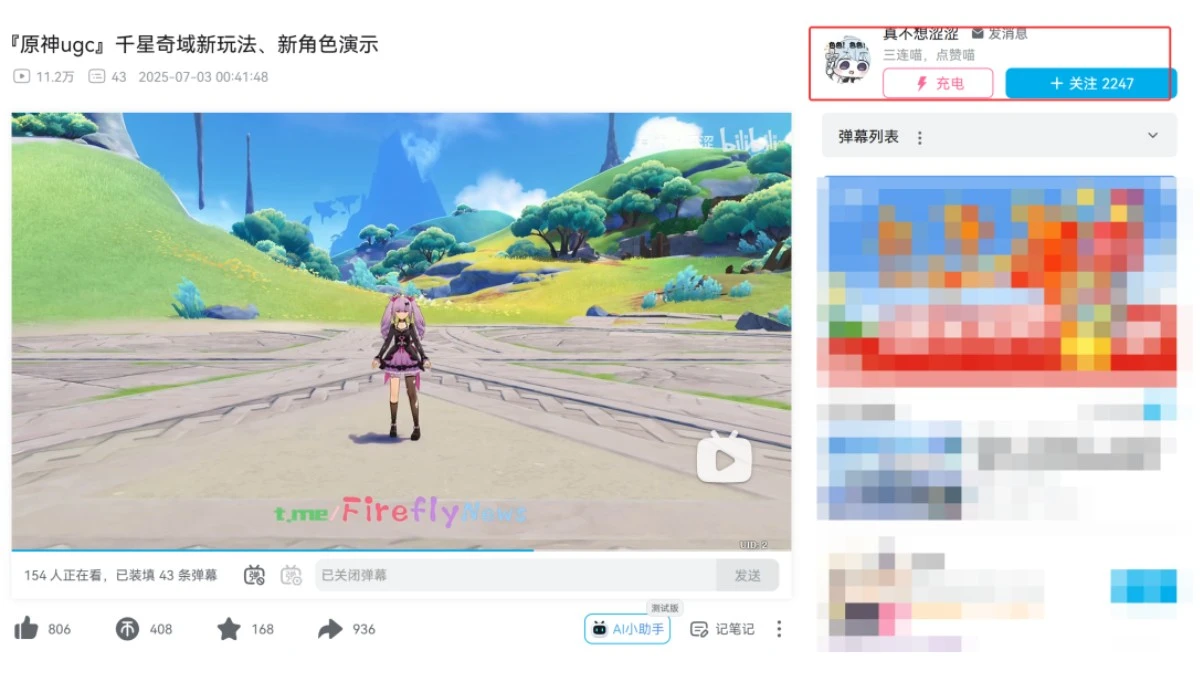
The company also said the leaks affected more than its plans for revealing upcoming content. "Large-scale premature leaks not only rob players of the anticipation for new content but also severely disrupt miHoYo's normal version release schedule and commercial arrangements," miHoYo said in the statement, adding that unauthorised leaks had also "harmed the company's copyright interest".
After discovering the uploads, miHoYo reported the case to public security authorities. An investigation was opened, and the two people involved were later arrested.
The case was publicly heard on 24 April, 2026 during China's National Intellectual Property Publicity Week, with the court delivering its first-instance verdict on the same day.
What are China's new criminal rules for video game leaks?
The new judicial interpretation is key to why the scale of the Bilibili leaks could result in criminal prosecution.
According to City News Service, Shanghai police said criminal cases under the previous rules typically required illegal proceeds exceeding 50,000 yuan (US$7,292) to be filed. In this case, however, police said the suspects' illicit gains were relatively modest, with their actions primarily intended to demonstrate technical skills and attract online traffic.
The new judicial interpretation introduced additional thresholds based on how widely infringing material is distributed. Shanghai police said criminal investigation can now apply when someone distributes more than 500 infringing works, provides more than 10,000 downloads, amasses more than 100,000 views, or operates a paid membership service with more than 1,000 users.
That put both Bilibili users comfortably above the viewership threshold, with Su's leaked videos exceeding 600,000 views and Wu's surpassing 300,000.
For miHoYo, the case also comes down to what is lost when unreleased material reaches players before its intended reveal. "Every frame of unreleased game content represents the design and craftsmanship of the development team, as well as the anticipation that every player holds for new updates," the company said in its statement reported by CNA.
The same message carried into the miHoYo Legal Department's Bilibili announcement. In a machine translation, the company said its stance is to "protect every player's anticipation and excitement for new content".
"But we will never tolerate: Unauthorized distribution of unpublished game content for profit, crossing the line of criminal liability," miHoYo added.