New gameplay details show how Daito's life, surroundings, and day-to-day activities evolve over the decades.
RGG Studio has given its clearest look yet at what players will actually be doing across the different eras of Stranger Than Heaven. During a livestream on Wednesday (16 September), main producer Hiroyuki Sakamoto, co-director Ryosuke Horii, and executive director and writer Masayoshi Yokoyama took a deeper dive into several stages of Daito's life, showing how his surroundings, activities, and opportunities change as he grows older.
The stream also opened with the first few minutes of the game, with the main character Makoto Daito accused of murder and trying to escape the police. After fighting off his pursuers, he misses the ship he was supposed to board. Another vessel eventually appears offshore, prompting Daito to swim towards it before the demo cuts off. From there, the developers moved into Kokura, Kure, and Osaka, giving a much closer look at how each period actually plays.
Stranger Than Heaven
Release date: 15 January, 2027
Platforms: PlayStation 5, Xbox Series X|S, and PC (Windows via Steam)
Developer: RGG Studio
Stranger Than Heaven follows Daito through five eras of his life
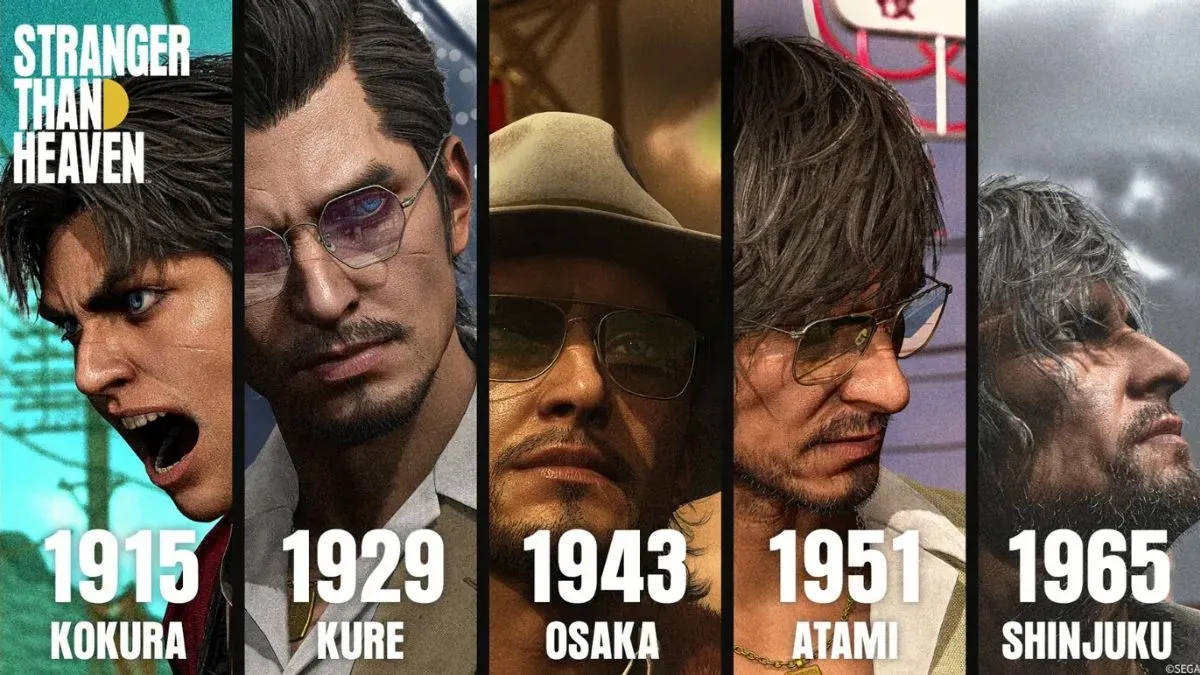
Stranger Than Heaven will follow Makoto Daito's journey across five different periods and places: Kokura in 1915, Kure in 1929, Osaka in 1943, Atami in 1951, and Shinjuku in 1965.
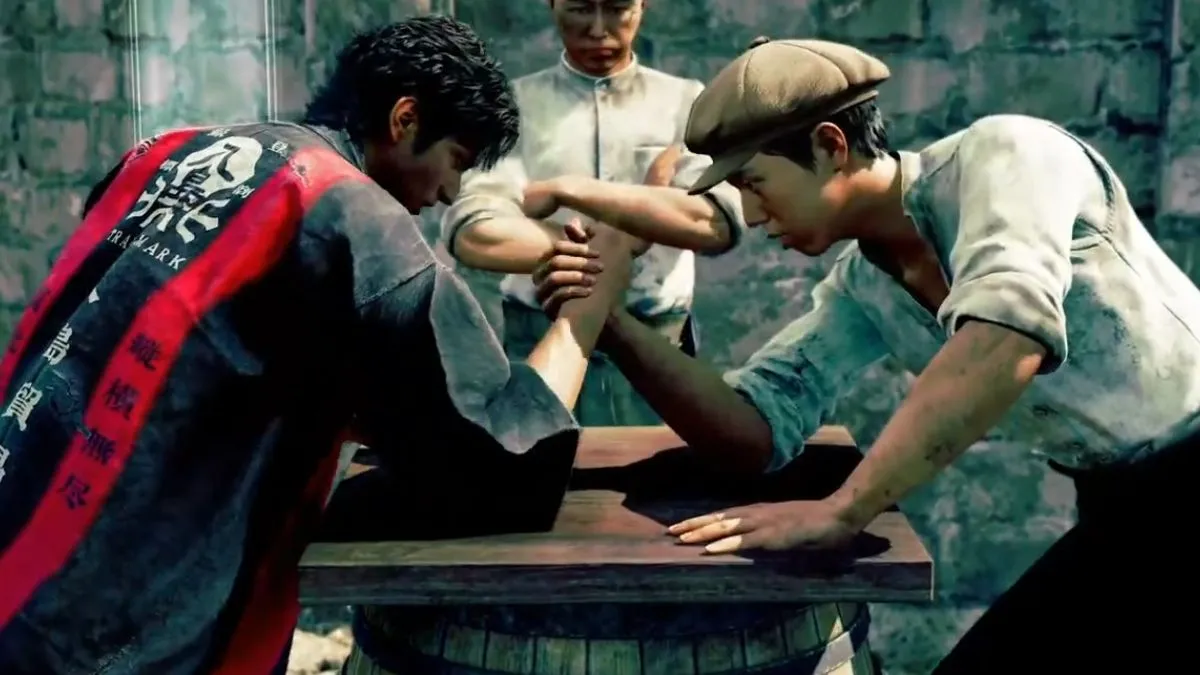
Rather than simply jumping between historical settings, the game is built around experiencing both Daito's life and the changes happening around him through his eyes. He grows older as the decades pass, while the cities, cultures, activities, and people surrounding him change as well. Kokura in 1915 shows Daito while he is still very young, and some of the systems introduced during this period reflect that. His stamina can increase as he runs around the city, with Daito becoming more physically capable the more time he spends exploring and taking part in activities.
Those activities include karuta, the traditional card-slapping game, and arm wrestling, among other things Daito can find around the city. The gameplay showed several ways Daito can grow simply by spending time in each location, rather than tying all of his development to combat or story progression.
Stranger Than Heaven's 1929 Kure changes as Daito becomes an adult
By 1929, Daito has grown from a boy into a man, with the game moving to Kure, Hiroshima. The winter setting already gives it a different look from Kokura, but the city itself also has a distinct identity, with Kure serving as a port town where the navy has a strong presence and foreign cultures are beginning to make their way into the area.
The available activities change with the setting as well. Karuta is still around, but Daito can also take part in a game where spinning tops are pitted against each other.
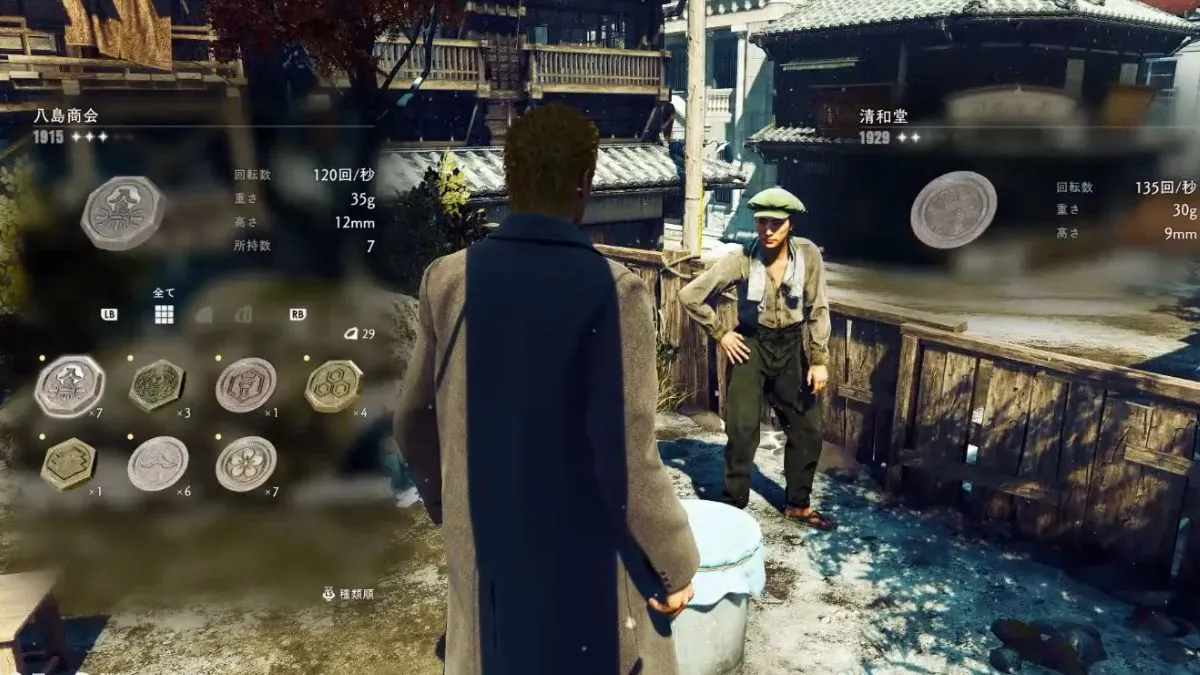
More importantly, the developers repeatedly pointed towards Kure as a significant period in Daito's life. He has various encounters during his time there, including with people whose language he does not yet understand, and what happens in Kure will have an impact later on. That gives the time jumps more weight than simply swapping one city for another. Each period represents a different stage of Daito's life, with some of the encounters he has continuing to matter long after he leaves.
Stranger Than Heaven's 1943 Osaka introduces SHOWBIZ gameplay
The jump to Osaka Minami in 1943 brings a much flashier city than the earlier areas shown during the livestream, with modern buildings, theatres, bright lights, and different cultures filling its streets. At the same time, tensions are high, and the developers also pointed towards an underworld beginning to emerge beneath the city's lively exterior.
It is also where SHOWBIZ becomes a major part of the game. By this point, Makoto Daito has become an industrialist and promoter, with the developers comparing his role to what would now be called a producer. Players can use that position to put together their own productions, combining performers, songs, and stage elements in an attempt to draw a crowd.
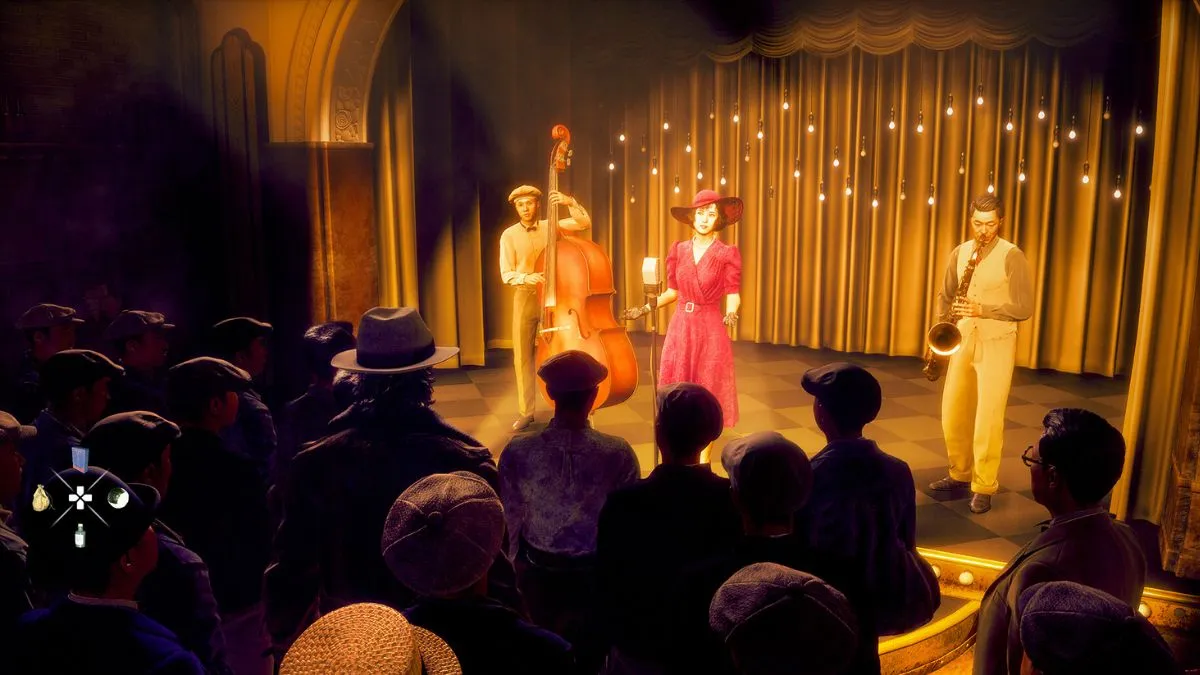
Despite all the music involved, SHOWBIZ is not a rhythm game, with preparation instead forming the biggest part of the system. Daito can find inspiration for songs while exploring Osaka, recruit talent, compose songs around different moods, choose singers and performers, and decide what effects and other elements should be added to the stage.
Putting together a bigger production also means spending more money. The developers showed a gauge that grows as more is invested into the show, with that spending reflected in what eventually appears on stage and how many people turn up to watch. Audiences are not guaranteed, either. If a production struggles to attract customers, players can change their approach for the next one, including putting up more posters around the city to build interest before the show begins.
Successful productions then feed back into the rest of Daito's life. Money earned through SHOWBIZ can be spent on food, weapons, and other needs, with the developers describing it as the best way to make money during the Osaka era. There should also be plenty to work with. The producers and directors stressed that the game features a large number of songs, while around 15 singers were mentioned during the presentation. Different eras will also feature different music rather than relying on the same selection throughout Daito's life.
Stranger Than Heaven reveals the roles of Ado, Tori Kelly, and Snoop Dogg
Ado, Tori Kelly, and Snoop Dogg were already confirmed for Stranger Than Heaven, but the livestream gave a clearer idea of how some of them fit into Daito's journey. Ado plays Keiko Shirai, one of the singers connected to the game's musical side, while Tori Kelly will play Suzy Day, who is also one of the the performers featured across its different eras.
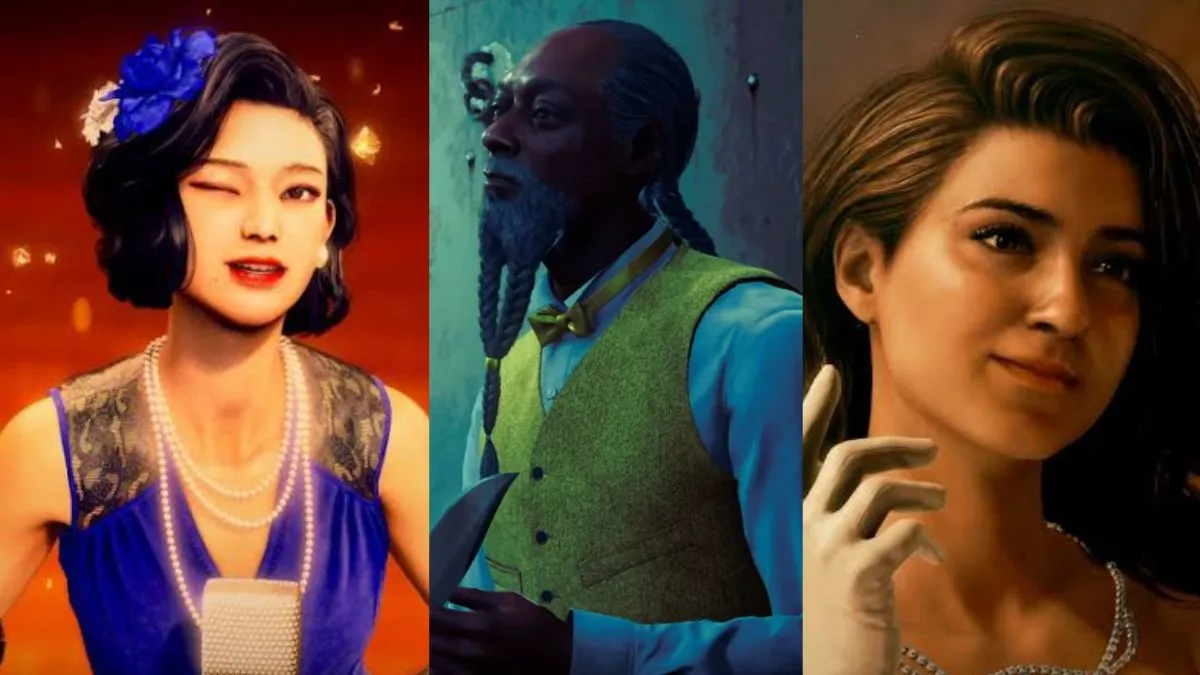
Snoop Dogg, meanwhile, plays Orpheus, and the developers revealed that the character has a direct connection to how Daito becomes involved in entertainment. Orpheus is effectively the inspiration behind Daito's move into SHOWBIZ, giving him the idea that eventually develops into productions of his own.
Orpheus was only mentioned during this part of the livestream and was not shown alongside the Osaka gameplay, so exactly when Daito meets him was not detailed.
Atami in 1951 and Shinjuku in 1965 were also not showcased during the presentation, leaving the later decades of Daito's life largely untouched. Even so, the deeper look at Kokura, Kure, and Osaka gave a much clearer idea of how Stranger Than Heaven plans to use its time jumps, with Daito's age, surroundings, activities, and opportunities all changing as the years pass.
More gameplay will be showcased at Tokyo Game Show 2026, which runs from 17 to 20 September, where attendees will also have the chance to play Stranger Than Heaven themselves. The game is set to launch on 15 January 2027 for PlayStation 5, Xbox Series X|S, and PC, with Xbox Cloud Gaming and Game Pass support also planned.