Steam Deck and Linux users also have issues in launching the game.
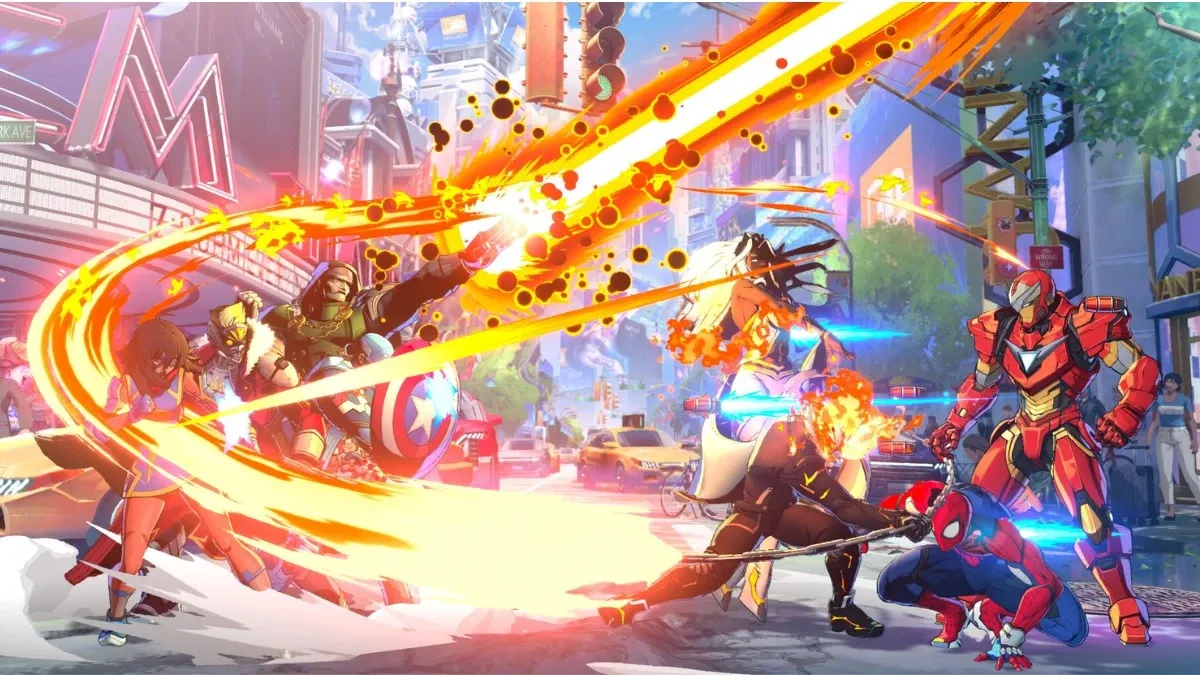
It seems like Arc System Works hasn’t fully resolved the PC performance issues of Marvel: Tōkon Fighting Souls, with players reporting multiple problems during the game’s launch day.
This comes two weeks after the game’s troubled beta weekend on PC, where the developers promised fixes before the game’s day-one launch. On Steam, the game’s overall rating is Mixed, with only 43% of players giving the game a positive rating. Plenty of other players also voiced their grievances.
Marvel Tōkon: Fighting Souls
Release Date: 6 August, 2026
Platforms: PlayStation 5, PC
Developers: Arc System Works
What are the known PC performance issues for Marvel: Tōkon Fighting Souls?
PC players have flagged several technical problems with Marvel: Tōkon Fighting Souls, with complaints ranging from persistent micro-stutters during matches to launch failures, and Linux players being unable to get into the game at all.
One of the more detailed breakdowns comes from Reddit user DavidsSymphony, who says the PC version suffers from regular micro-stutters regardless of hardware or graphical settings. The player pointed out that Marvel: Tōkon Fighting Souls is Arc System Works' first Unreal Engine 5 game, following previous UE4 releases such as Guilty Gear Strive, Granblue Fantasy Versus, and Dragon Ball FighterZ.
To demonstrate the issue, DavidsSymphony used frame-time graphs, where a locked 60fps game should ideally produce a relatively flat line. In Tōkon, however, the graph reportedly shows regular spikes even when a character is standing still, with each spike corresponding to a visible stutter.
Those skips can also be spotted without monitoring software. The player suggested watching static background objects, such as traffic lights, while moving Captain America from side to side, where small jumps appear at regular intervals. While some players may be more sensitive to stuttering than others, DavidsSymphony argued that the underlying problem is still present across PCs.
The bigger concern is what those stutters could mean during online matches. According to the post, each stutter is accompanied by dropped frames, which can cause problems with rollback and affect both players. DavidsSymphony called it “a HUGE reason why the game feels like shit to play online.”
Throwing more powerful hardware at the problem apparently does not solve it either. The player claimed the stutters can still occur on a GeForce RTX 5090 paired with a Ryzen 7 9800X3D at the lowest settings, while completing the game's full shader-warming process does not eliminate them.
External frame-rate limiters such as RTSS or Nvidia's tools can make the frame-time graph appear flat, but DavidsSymphony said the visible skips remain when performing the same side-to-side movement test. In other words, the workaround may clean up what the graph shows without actually fixing what players see during gameplay, leaving it as something Arc System Works would need to address.
Steam reviews have highlighted other problems with the PC release. Gourmet described Marvel: Tōkon Fighting Souls as “such a fun game,” but said the port “plays miserab[ly]” and that “the settings don't even display correctly.” The player also criticised the PSN requirement. Despite the complaints, Gourmet later admitted they would still play it, writing, “will [I] play this game because [I'm] stupid and [I] like shiny new things and am a fan of arcsys games? unfortunately yes,” although they maintained that they could not recommend it.
For Lameme14, the problem starts before a match can even load. “Was very excited for the game, but as is I can't reccomend it; [on] grounds that I can't actually launch the damn thing,” the Steam user wrote. Lameme14 said the anti-cheat instead opened a completely black window while pushing their CPU hard, alongside multiple instances of the PlayStation PC SDK attempting to run.
Linux users have reported an even more straightforward roadblock. Steam user vestige said the game has “decided to stoop low to straight up block any Linux player from even LAUNCHING the game.” Vestige compared the situation with Dragon Ball FighterZ, another Arc System Works fighting game that uses Easy Anti-Cheat, but said Tōkon does not allow Linux players to launch the game at all, including for offline play. “No offline play, nothing at all,” the player added.
Does Marvel: Tōkon Fighting Souls work on the Steam Deck?
Marvel: Tōkon Fighting Souls does not currently run on Steam Deck, with the handheld caught up in the same Linux compatibility issues affecting the PC release. Steam user JACKTOONZ is among the players who have complained about the lack of Steam Deck support, reporting that the game does not run on the handheld at launch.
The issue has also drawn complaints on Reddit, particularly over how the lack of Linux support has been addressed. Reddit user rinnekaton pointed to comments allegedly made by the game's community manager on Discord, writing, “The best part is the community manager on Discord saying that, ‘Asking for Linux support is like asking for a Switch port.’”
Rinnekaton disputed that comparison because Marvel: Tōkon Fighting Souls uses Easy Anti-Cheat, or EAC, which already supports Linux. The player also pointed to Valve's own documentation describing Linux support for EAC as something developers can enable, arguing that getting the anti-cheat working on Linux is not comparable to developing an entirely separate Nintendo Switch port.
That matters for Steam Deck because Valve's handheld runs SteamOS 3.0, a Linux-based operating system. With Tōkon's current problems preventing Linux users from launching the game, Steam Deck players are affected by the same compatibility barrier.
Marvel Tōkon: Fighting Souls day-one patch notes
It is still unclear whether Arc System Works plans to address Marvel Tōkon: Fighting Souls' Steam Deck compatibility, but the developer has already rolled out a sizeable day-one patch targeting several of the PC version's performance problems. The patch notes were detailed in the official Marvel Tōkon: Fighting Souls Discord group.
The update reduces CPU load by cutting unnecessary character animation updates, and easing the demands of UI updates. It also addresses major performance drops when using overlays or video capture, specifically mentioning OBS Studio's Game Capture and Discord overlays and video capture.
Graphics settings have also been adjusted. The automatic graphics quality option can now select an appropriate anti-aliasing setting based on performance, while a bug that enabled unintended anti-aliasing plug-ins such as DLSS, FSR and XeSS has been fixed.
Players using custom graphics settings can now change how frequently background characters are updated through the effect quality options. Setting this to medium or low reduces their update frequency, slightly lowering CPU load.
Shader warm-up has received two changes as well. The prompt asking players whether they want to perform shader warm-up at startup is now enabled by default, making the option easier to find, while a separate bug that could cause shader warm-up to run unintentionally at startup has been fixed.
For online play, the Steam version received a fix for delayed input data being sent during matches, which Arc System Works says should improve online performance. The PS5 version also received additional measures designed to mitigate input lag.
Elsewhere, the patch fixes the game automatically switching between monitors on multi-monitor setups, players becoming invisible in Online Lobbies after viewing Ranked Mode rankings, and Ranked Mode screens becoming distorted when displaying a large number of digits.
Server communication stability has also been improved, while another fix targets crashes caused by moving the mouse too quickly through menus. The update additionally addresses significant performance drops when large amounts of text appear on screen, particularly when playing in Arabic or Thai, as well as an issue that could make the game unplayable if the player's connection dropped during the Challenger Alert screen.
The patch also makes a couple of gameplay adjustments. Input prioritisation has been changed to make →↓↘ attacks activate more accurately when using →↓↘→ after ←↙↓↘→. Danger's ground dash input handling has also been revised, allowing players to cancel a ground dash into a skill and reducing the chances of accidentally triggering an aerial special move.
Players have yet to report whether the patch notes have significantly improved the experience on PC.