Yes, players can now stick to the same civilisation throughout their game.
Sid Meier's Civilization VII released Update 1.4.0 (or better known as Test of Time Update) yesterday, adding free content for everyone who owns a base copy of the game. Ever since its release, I have been attempting to win the game with the new leader Alexander the Great, who also comes free with the update. In doing so, I've managed to play through a couple of the game's all-new changes and features; some of which have certainly been a long time coming.
Sid Meier's Civilization VII
Release date: 11 February, 2025
Platforms: Xbox Series X|S, macOS, PC, PlayStation 5, Nintendo Switch
Developer: Firaxis Games
Price: US$69.99
What is the Test of Time Update?
The Test of Time Update promised a big and rather highly-requested change for Civilization VII: allowing players to stay as one civilization throughout the different ages of the game. When Civilization VII was first released last year, the developers wanted to break the wheel, and introduced a new Age system where players change civilisations after the conclusion of each Age.
That was a huge departure from the core identity of Civilization games of the past, and players were not too enthused about the new change. The game received mixed reviews on Steam, with many of the complaints aimed at the new Age system.
For better or worse, the team at Firaxis Games has heard the players’ feedback, and players can now choose to stay at the same civilisation during each Age transition… which then begs the question: why wasn't this implemented from the first day of release?
Nonetheless, I gave the game a try again after only playing roughly 30 hours last year, and I have to say that the new update is well worth playing for one more turn.
What are the biggest changes to Civilization VII?
While the biggest touted change was the transition of the Age system, I personally think the biggest change to the game is the new unique score system for each Victory’s play style, and how the game scores these new points.
This makes the path to a Victory a lot clearer to the player, allows for more flexibility in the midgame to change Victory paths, and it just feels more like a natural progression from Civilization VI.
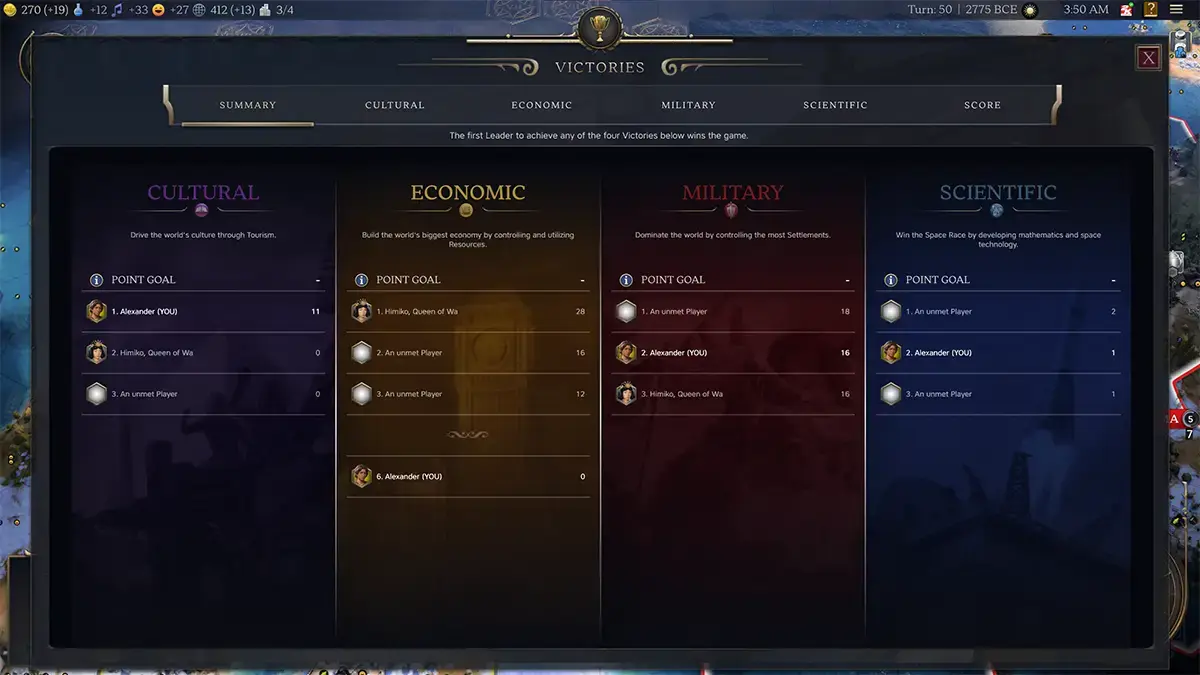
With the new Alexander the Great leader, I was aiming for either a Cultural or Military victory because of the strengths of the new leader. From the get-go, the new (and frankly, quite well done) Victories page shows you what you need to do. The different paths to a Victory are still the same: Cultural, Economic, Military, and Scientific. If no one is able to win through any of the paths by the end of the Modern Age, an overall score is used to determined a winner instead. And no, you still cannot have a Victory in the Antiquity Age.
The neat part about the new Victory system is the threshold needed to win the game. Starting from the middle portion of the Exploration Age, players can start to win, and their ability to win is determined by remaining at a certain threshold over the second-placed player.
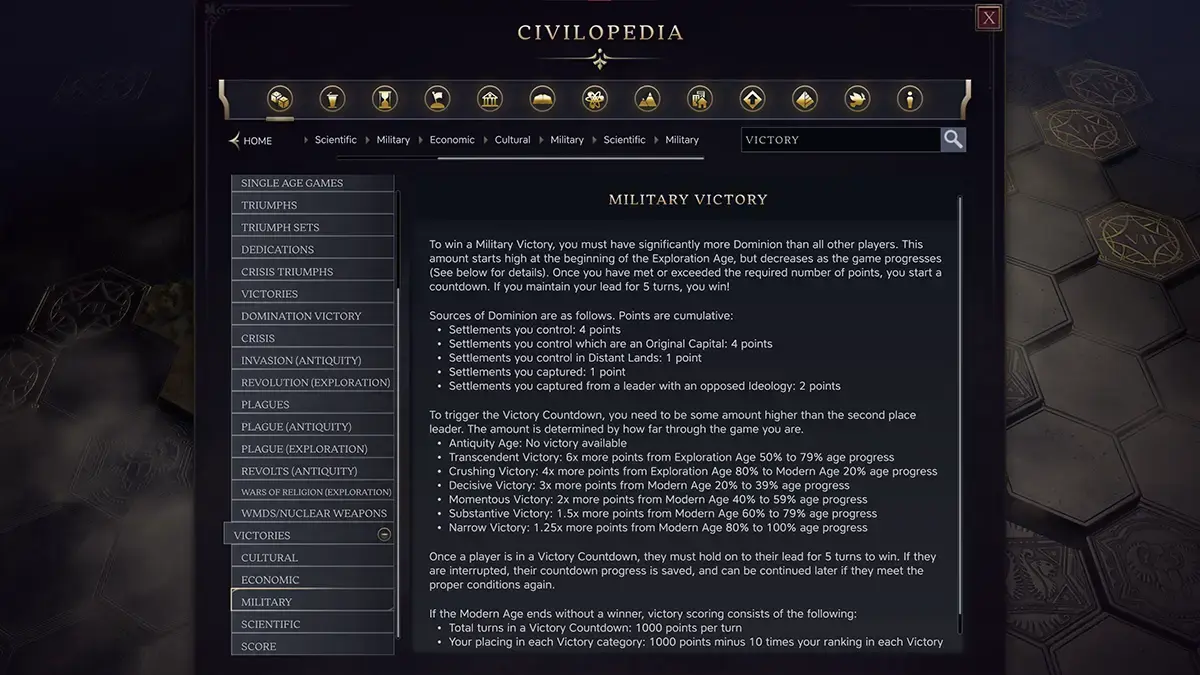
The threshold changes as the game progresses, meaning the threshold is sky-high during the Exploration Age, but becomes a lot more manageable (i.e. the threshold lowers) as the game progresses further. Players will also get a huge notification when the threshold lowers, so you do not have to manually track the threshold every now and then!
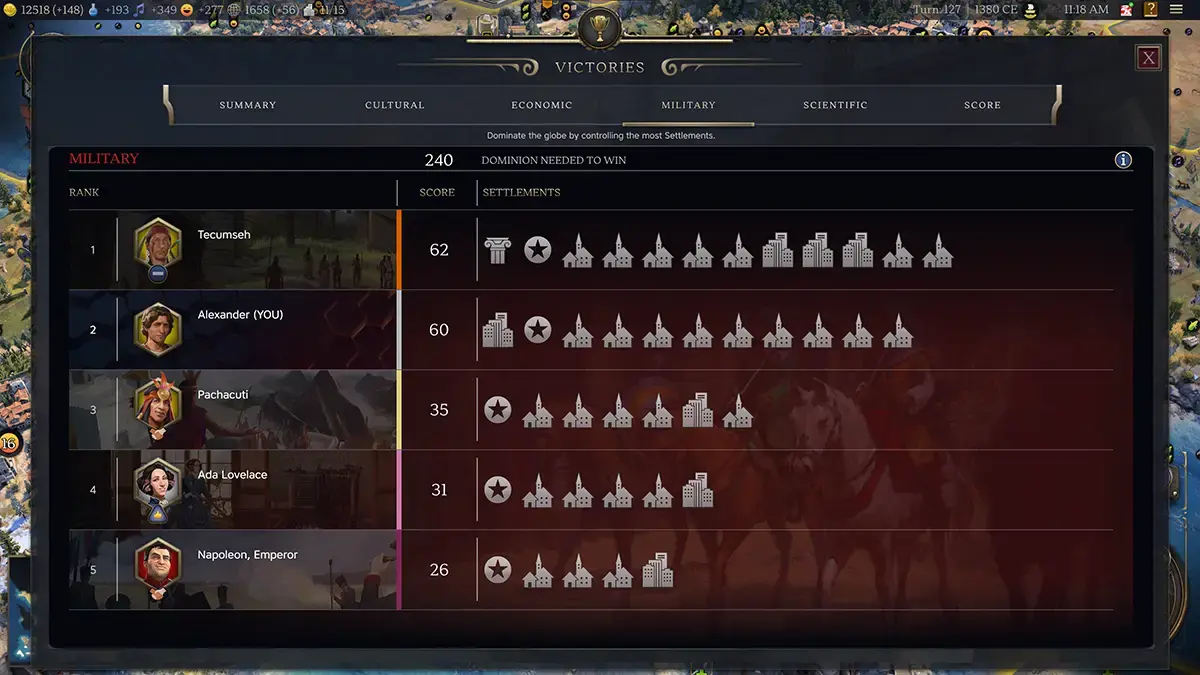
This makes the idea of a late game win a lot more feasible, and players who can dominate at the start of the game can get more fulfillment too (imagine winning at the start of the Exploration Age with a 6x threshold lead).
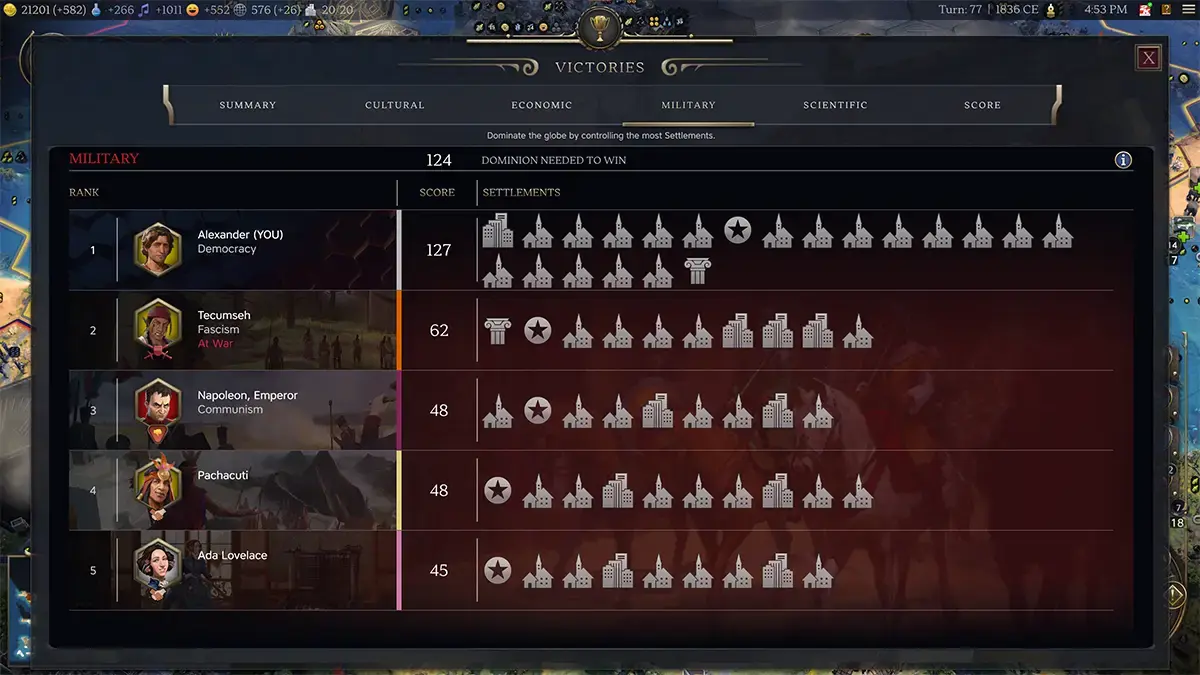
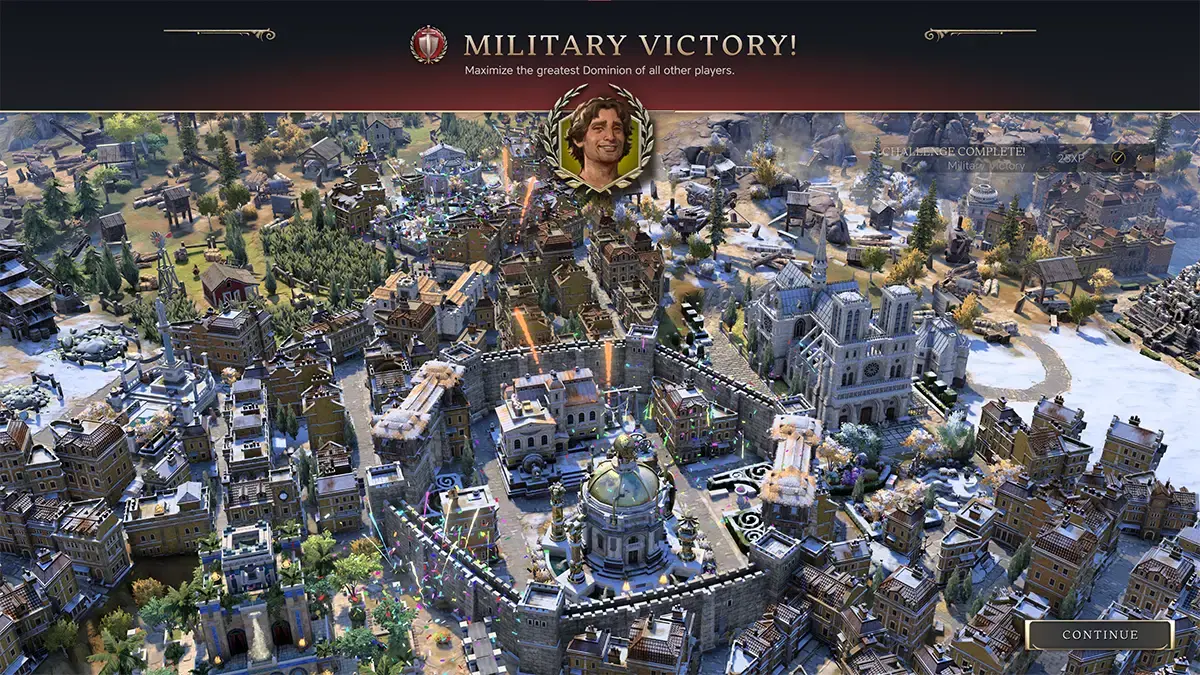
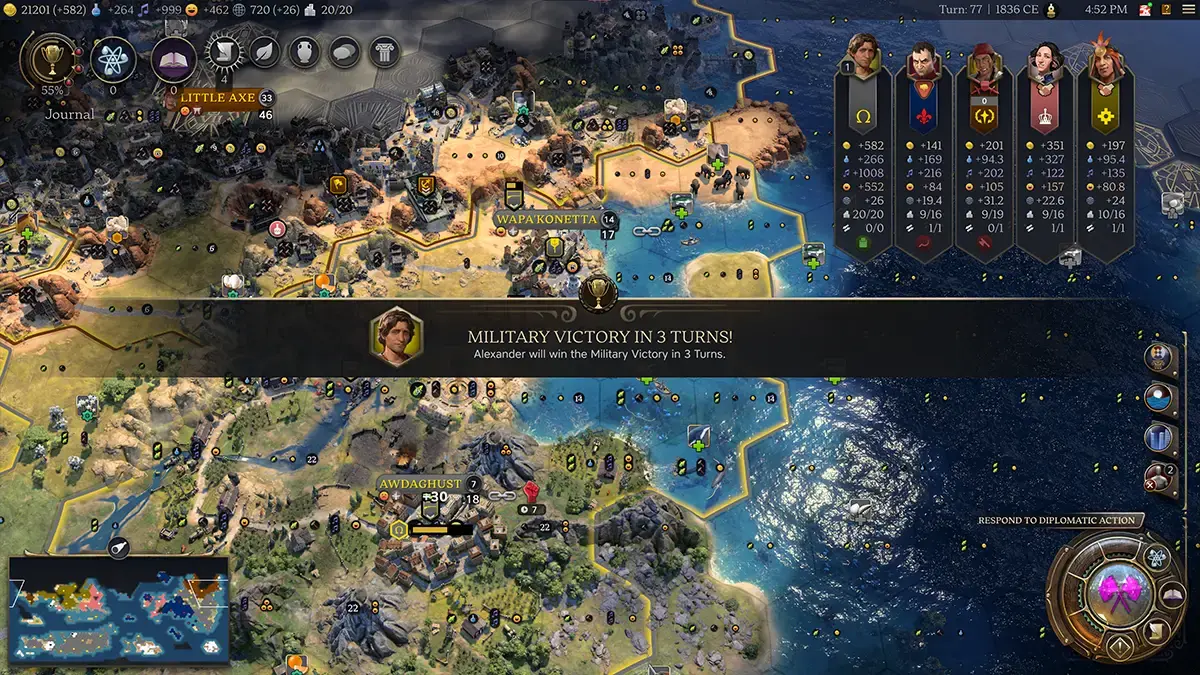
I managed to win through a Military Victory in the Modern Age, and the new system showed me exactly why it was needed: my opponent Tecumseh managed to catch up by the start of the Modern Age despite my early dominance, and I had to resort to conquering Tecumseh to avoid losing the game.
What else changed in Civilization VII?
The next interesting thing the Firaxis team has added is Triumphs, which replaced the old and sometimes confusing Legacy Paths. These Triumphs reward players when they reach certain milestones in the game, and they come in two forms: Minor Triumphs and Major Triumps.
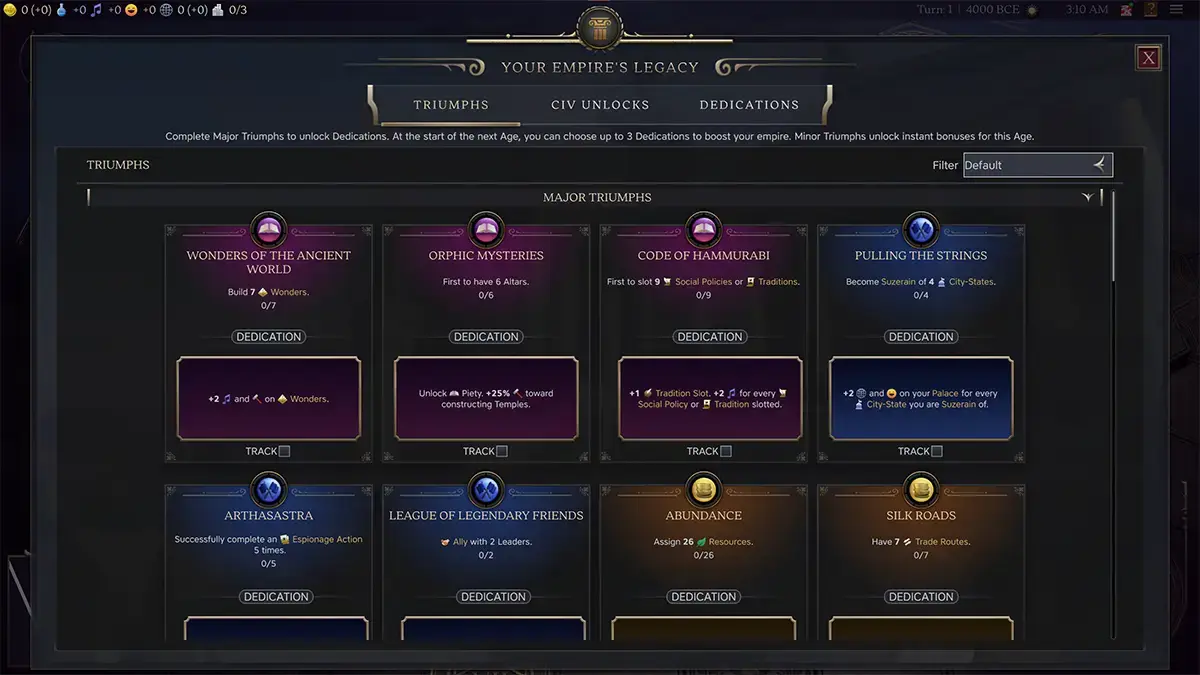
Minor Triumphs are relatively easy to reach, and they give instant bonuses, but Major Triumphs assist you in your Victory path, and they also give you Dedications (which replace the old Legacy Cards) for your next Age!
Similar to Dedications in Civilization VI players receive at the change of each era, there are now default Dedications, and new Dedications to unlock for use when players transit to a new Age. These Dedications give buffs, so it’s always good to have more options at the start of a new Age.
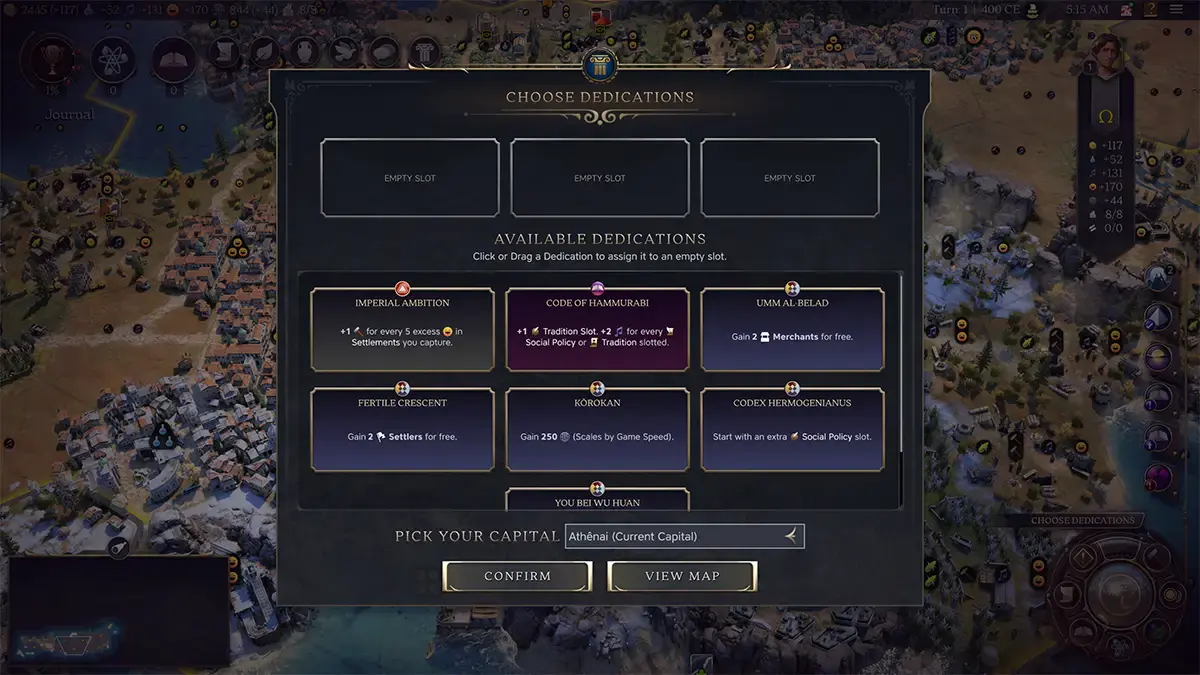
Finally, I decided to stay as Greece (the civilisation Alexander the Great is paired with at the start of the game) throughout my campaign to test the biggest change of the game, and the game went relatively well. The combination of Alexander the Great and Greece seemed to have an emphasis on the early game, and the transitions between each Age are no longer as disruptive as they were at launch.
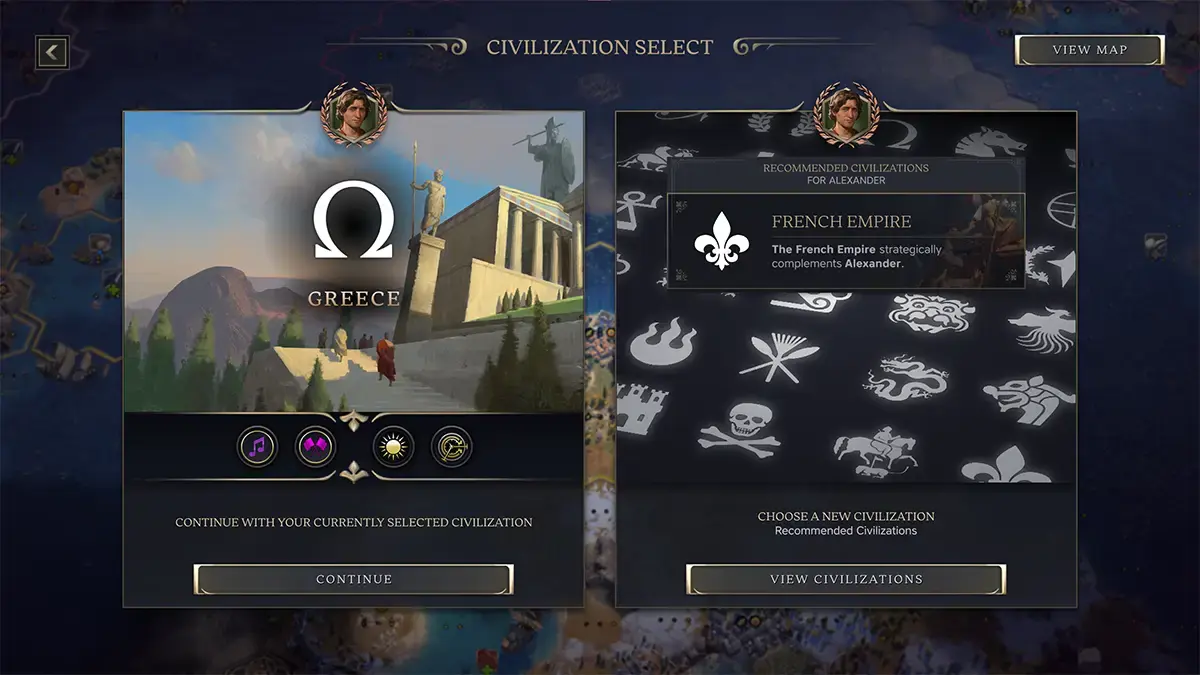
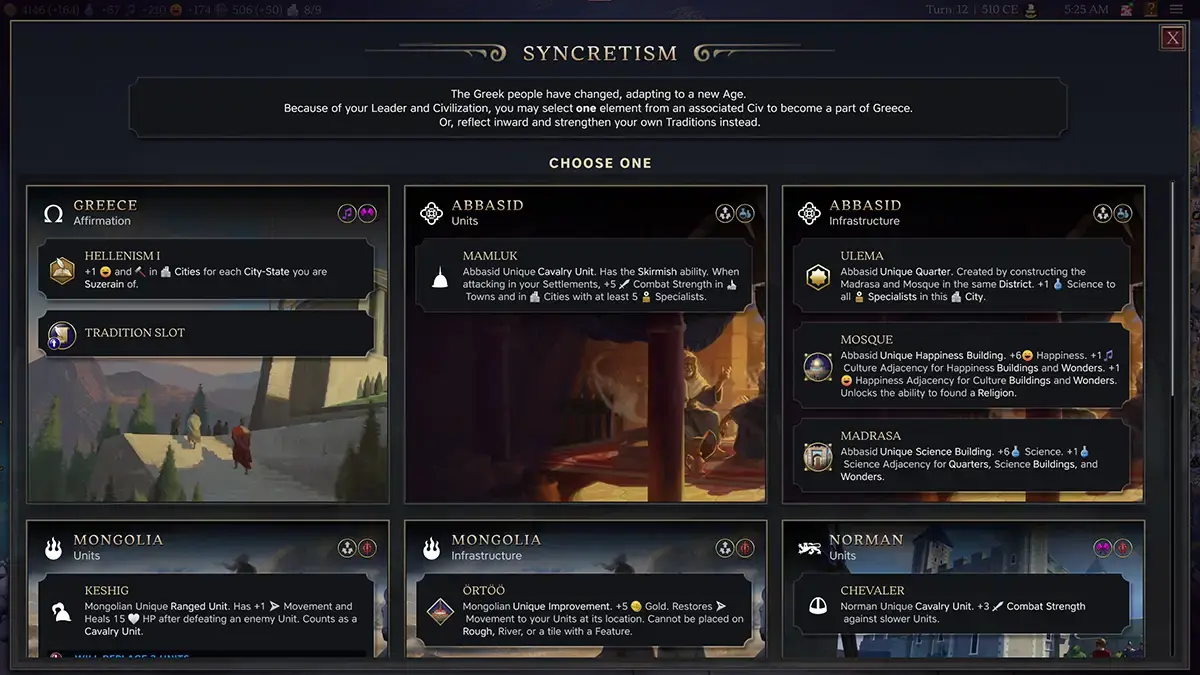
Staying as Greece with Alexander the Great allowed for a better sense of history in gameplay (yes, I am aware this is very much a work of fiction), and the game now also introduces a new Syncretism node in the Civic tree where you can still opt to have foreign elements from other civilisations in your game, or double down on your own culture when you stay as the same civilisation throughout the game!
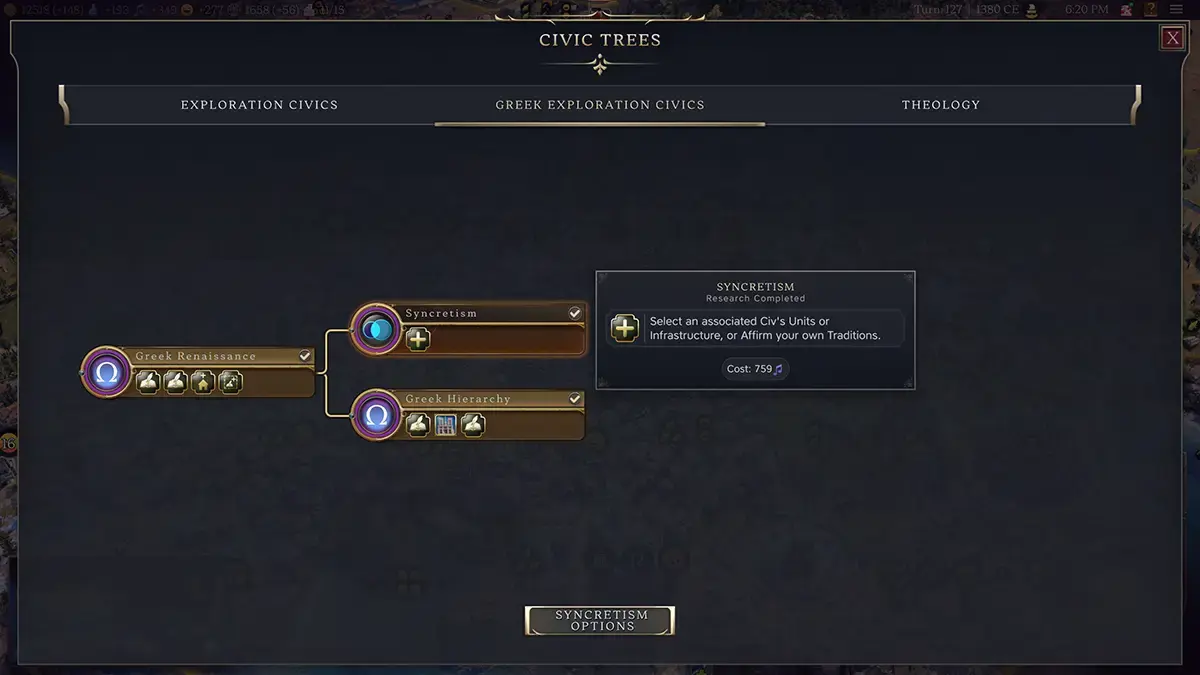
The Syncretism node is in your civilisation’s unique Civics tree, so you will need to invest some Culture to get there, and it can be rewarding to either affirm your own culture, or adopt one small thing from another civilisation.
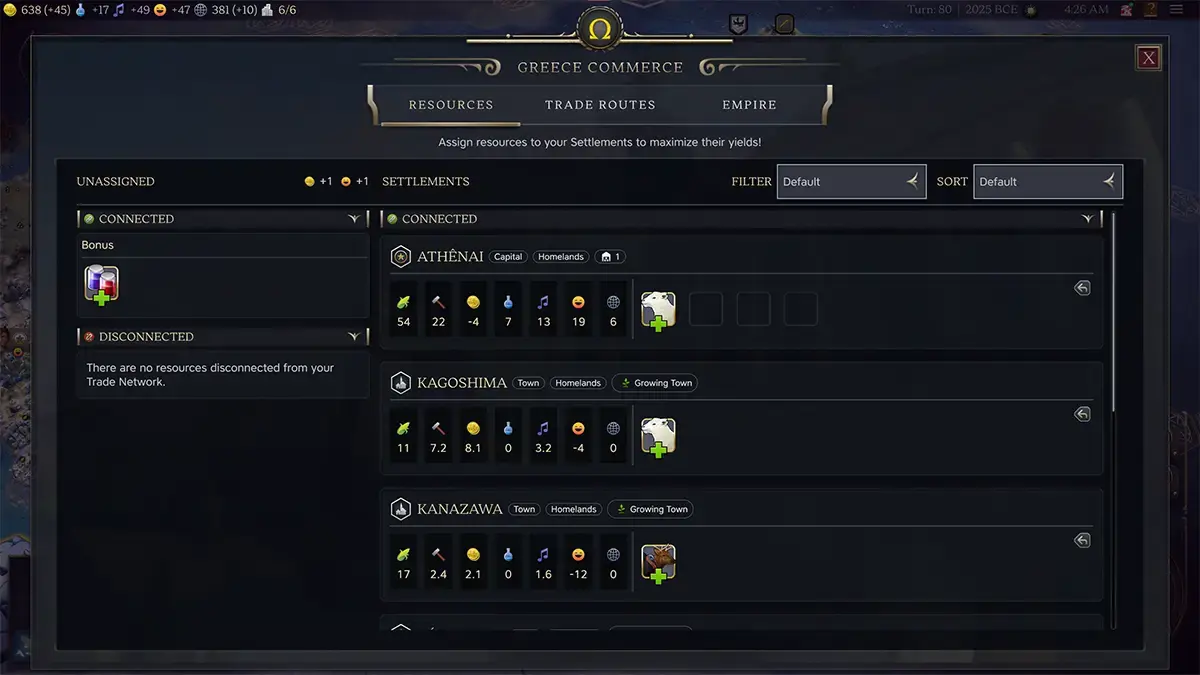
There are many more things I enjoy about the update, like the revamp of certain UI/UX features (I really enjoyed the Resources page for example), and I found myself a lot more invested in the game than I was when the game first launched.
What did Test of Time not address?
Civilization VII is most definitely a different game now (that can actually be said about the post-launch trajectory of almost all Civilization games). However, there are still noticeable gaps in Civilization VII's gameeplay loops, especially when comparing the title to previous entries in the franchise.
Where’s the new Age after the Modern Age? For one, it seems a little peculiar that an additional Age after the Modern Age still does not exist, given that the Modern Age in Civilization VII ends at the middle of the 20th century, leaving out more than half a century of history from the game itself. Civilization VI also had the Information and Future Eras after the Modern Era, so there are some expectations that Civilization VII should follow a similar trajectory.
I am also still not sold on the importance of religions in Civilization VII, unlike in Civilization VI where an army of never-ending missionaries could threaten to win the game. While I was never a fan of Religious Victory in Civilization VI, religions instead play a part in determining a Cultural Victory in Civilization VII.
However, religions almost always feel superfluous in Civilization VII. The new Triumph system does not adequately reward players who spend a lot more time with religion than, say, building Wonders, and the bonuses provided by religions never seem appealing to me.
Is Civilization VII worth playing now?
Despite some of these lingering qualms (which I also did question last year), the new update has proved to bring back the fun I have always associated with Civilization games, but it does feel a little ironic that Firaxis Games has to do a complete 360 for me (and presumably other players) to feel like they are playing a Civilization game all over again.
Well, I guess it is better late than never. The game is decidedly more fun to play now with many issues of the past ironed out, making it an ideal time for prospective players to jump into the game if they were undecided last year.
Will Civilization VII ever top Civilization VI or even Civilization V? It is hard to say, but the Test of Time update feels like a baby step in the right direction.
For more on Test of Time, check out the official patch notes here.
Sid Meier's Civilization VII was released on Xbox Series X|S, macOS, PC, PlayStation 5, Nintendo Switch on 11 February, 2025 for US$99.99. We received a copy of the game for this review from 2K Games.
Who made Sid Meier's Civilization VII?
Firaxis Games developed Sid Meier's Civilization VII, and they have been the developers for the Civilization franchise ever since Sid Meier's Civilization III.
What kind of game is Sid Meier's Civilization VII?
Sid Meier's Civilization VII is a 4X (Explore, Expand, Exploit, Exterminate) turn-based strategy game which involves building an empire (or civilisation), and players in Sid Meier's Civilization VII can win through one of the four Victory paths: Cultural, Economic, Military, and Scientific. If no one has has won through any of the Victory paths by the end of the Modern Age, an overall score is used instead to determine victory.
How many leaders are there in Sid Meier's Civilization VII?
The game has a total of 29 playable leaders, including the new Alexander the Great. Not all leaders, like Ada Lovelace, are available in the base game, and would require the addition of DLCs to unlock them.
How many civilisations can you play in Sid Meier's Civilization VII?
There are a total of 43 civilisations in Sid Meier's Civilization VII:14 in the Antiquity Age, 15 in the Exploration Age, and 14 in the Modern Age. Just like leaders, a small amount of these civilisations are only available with the addition of DLCs.