Nvidia’s DLSS 4.5 can now generate extra frames using AI, helping supported RTX cards run 4K games smoother than ever.
NVIDIA has announced DLSS 4.5, the latest update to its AI-powered upscaling technology, alongside expanded Multi Frame Generation (MFG) features for RTX Blackwell graphics cards. The reveal was made at CES 2026 on Tuesday (6 January).
Bryan Cantazaro, VP for Applied Deep Learning Research at NVIDIA shared that the team has been hard at work at improving DLSS since the release of DLSS 4 last year.
The company says that the update is designed to enable smoother 4K gaming at refresh rates of up to 240Hz, even in visually demanding path-traced titles.
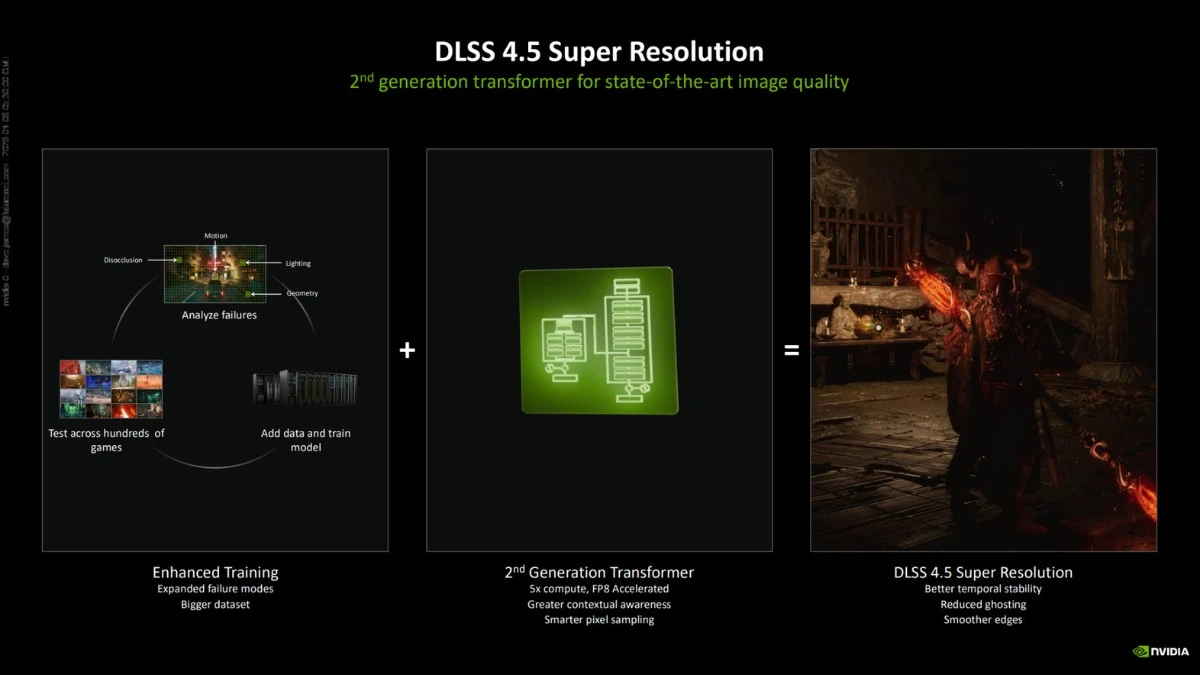
DLSS 4.5 is built around a second-generation transformer AI model, which NVIDIA says improves image stability while reducing common visual issues such as ghosting, flickering, and blurred edges. The update also increases Multi Frame Generation support to as much as six AI-generated frames for every traditionally rendered frame on supported hardware.
NVIDIA says its new AI model allows higher frame generation levels without increased visual artefacts
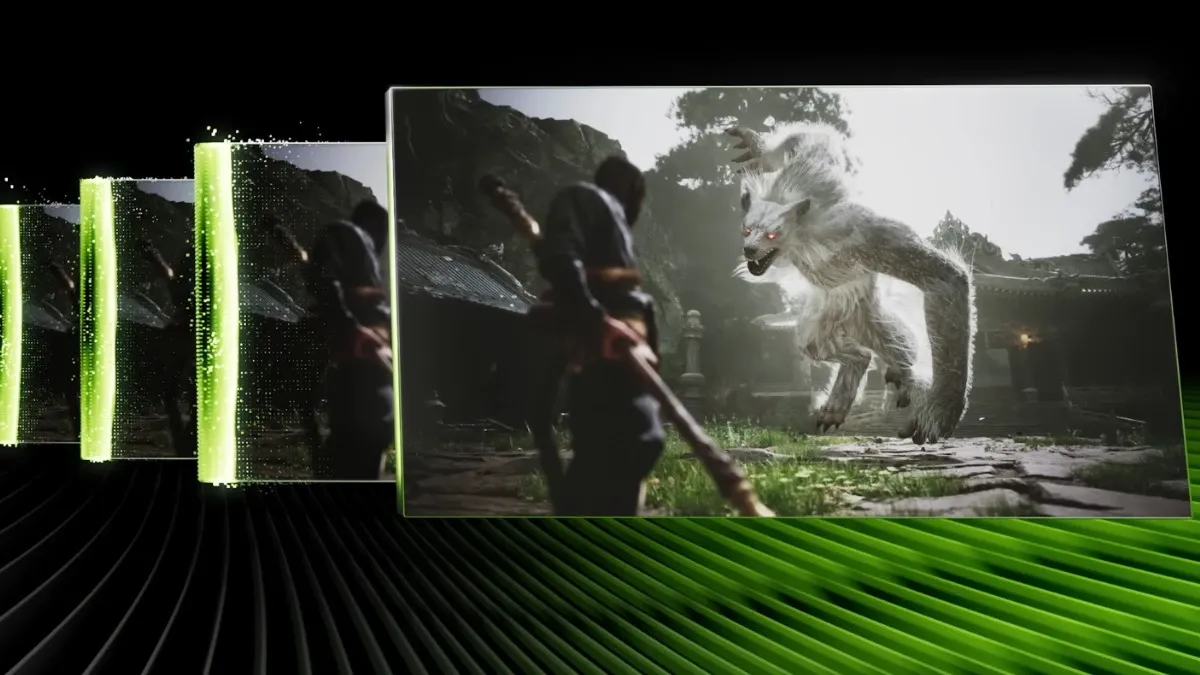
Multi Frame Generation expands on NVIDIA’s existing DLSS Frame Generation by using AI to insert additional frames between rendered ones, increasing perceived smoothness without fully rendering every frame. With DLSS 4.5, NVIDIA says it can now insert up to five extra frames between each rendered frame, making 4K 240Hz gaming possible in select path-traced games.
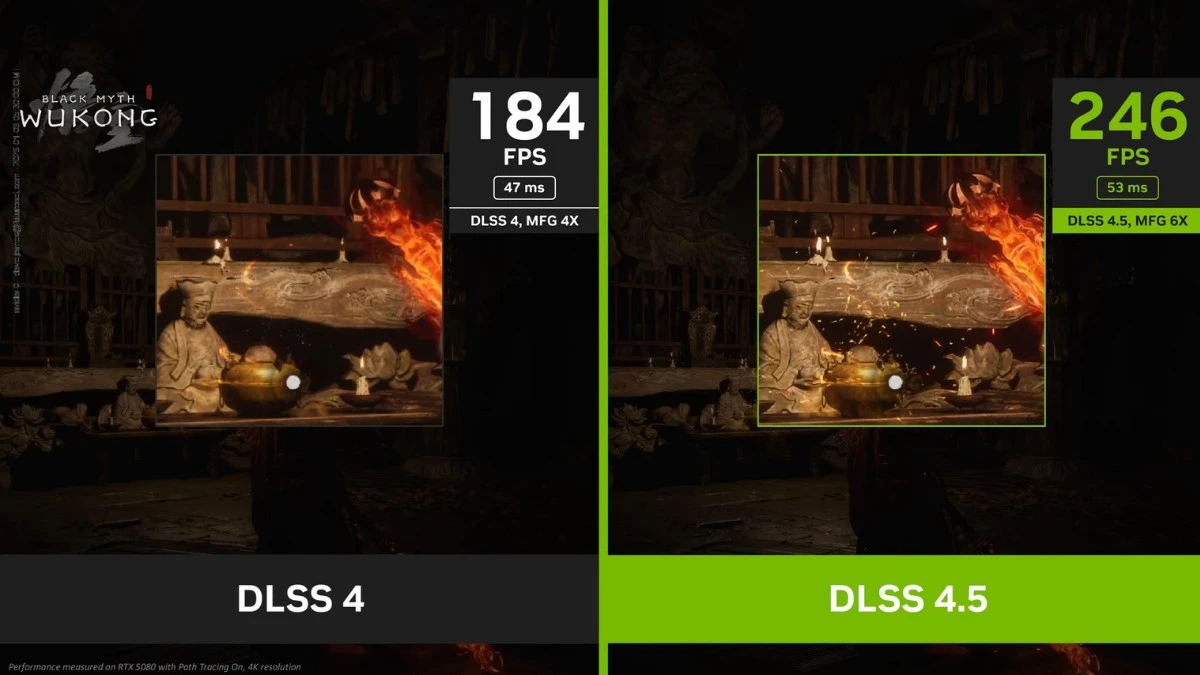
To support higher levels of frame generation, NVIDIA has introduced a new AI-based optical flow model in place of dedicated hardware, alongside improvements to its display engine to help maintain consistent frame pacing. The company says these changes help limit visual artefacts when frame generation is pushed further than before.
The second-generation transformer model also replaces older convolutional neural network (CNN) approaches previously used by DLSS. According to NVIDIA, transformer models are better at analysing fine detail and motion-heavy scenes, allowing the AI to focus computing power where it is most needed. This is intended to improve temporal stability and overall image quality across supported games.
DLSS 4.5 is rolling out across all RTX GPUs, while newer cards gain extra frame generation tools
NVIDIA confirmed that DLSS 4.5 Super Resolution will be available on all RTX graphics cards, not just the RTX 50-series. Through the DLSS Override feature in the NVIDIA App, more than 400 games are now supported by the feature.
RTX 50-series users will also gain access to Dynamic Multi Frame Generation, which is set to arrive via the NVIDIA App later this spring. The feature automatically adjusts frame generation levels, based on a display’s refresh rate or a custom target. NVIDIA demonstrated the system using an RTX 5090 running Black Myth: Wukong at 4K with path tracing enabled, showing frame rates above 240fps with a reported system latency of around 53 milliseconds.
NVIDIA notes that high levels of frame generation still require strong baseline performance. The RTX 50-series GPUs will need to deliver around 60fps natively in path-traced games for the feature to work effectively, as low base frame rates can lead to increased latency regardless of frame generation.
To access DLSS 4.5 Super Resolution right now, GeForce RTX users simply need to head over to the ““DLSS Override feature - Model Presets” in the Graphics tab, and choose the “Latest” option. That will set them up with the new Model M, unless they wish to try Model L under “Custom” for Ultra Performance Mode-optimised gameplay at 4K.