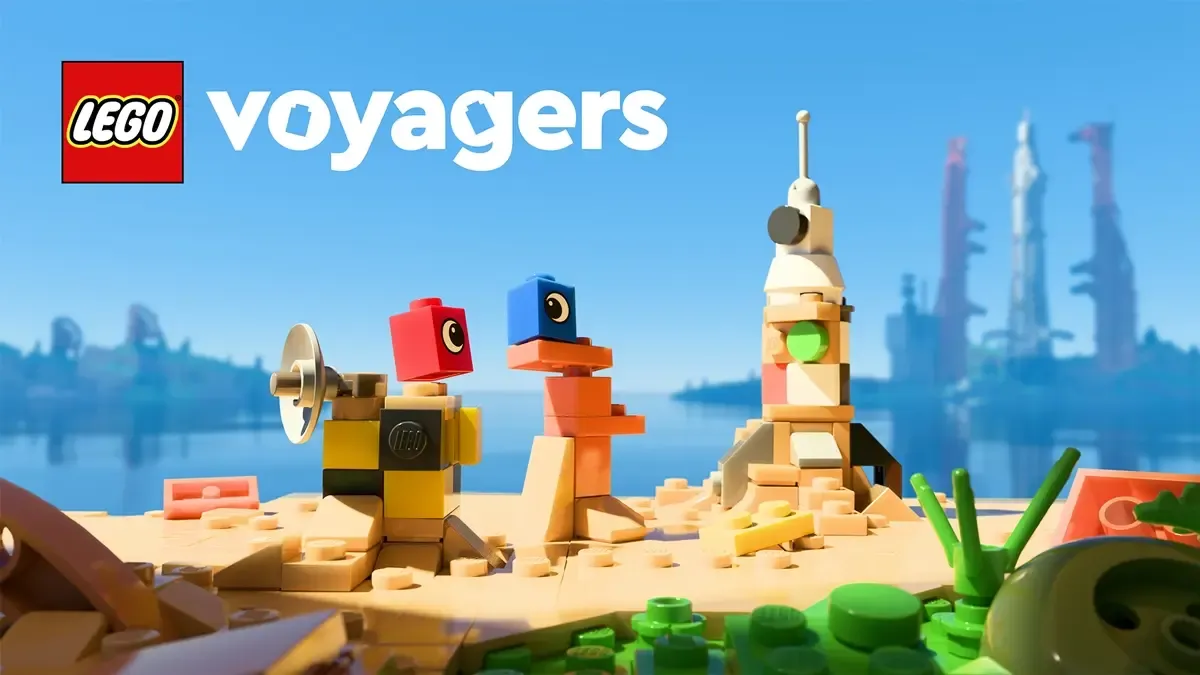
Don’t skip Lego Voyagers if you’re a fan of co-op games.
Annapurna Interactive popped up at Summer Game Fest earlier this year to show off a rather intriguing new puzzle game: Lego Voyagers, a co-op multiplayer game that has two players control cute little 1x1 Lego bricks who dream of becoming space explorers. The game comes from Lego Builder's Journey maker Light Brick Studios, but aesthetically takes after 2024’s Lego Horizon Adventures’ brick-built dioramas.
Don't get it twisted, however: this is a very different kind of Lego game. Instead of pun-filled dialogue and arcade-y combat, Lego Voyagers uses a bevy of puzzles to build out the tale of Red and Blue, the two little bricks that could. This might be a short and sweet adventure, but it has quickly become one of the most memorable experiences I’ve had in gaming this year.
Wait, no dialogue?
From adventure games like Stray to cosy games like Wanderstop, Annapurna Interactive has carved out a niche for itself in the games industry by publishing unique story-focused indies. Lego Voyagers is no different, moving away from Traveller’s Tales IP-fuelled open-world Lego games by telling a short story with original characters on a more intimate scale. There are no puns or superhero cameos here–just two adorable 1x1 bricks going on an adventure together.
Players assume the roles of either a red or blue 1x1 Lego brick (we’ll call them Red and Blue for simplicity), who live together on a small island and dream of becoming space explorers. The entire story unfolds wordlessly, save for the unintelligible singing they use to communicate. We only know that Red and Blue appear to be children in this brick-built world, and that they rely only on each other to get by.
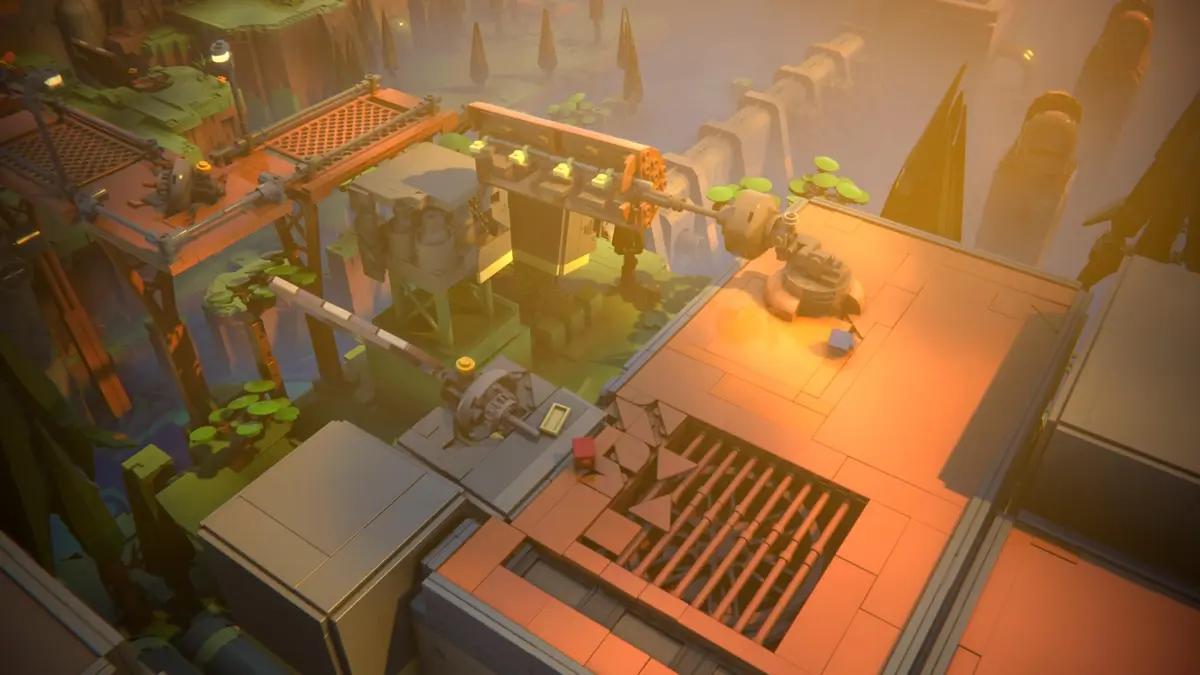
Red and Blue’s adventure begins when they witness a rocketship launch go terribly awry, and set out to find its crash site. Their adventure takes them across multiple biomes, ranging from forests and deserts, to aeronautics facilities and factories. Despite their far-flung travels, the game’s cast never expands–we only follow Red and Blue all the way through, and thus it becomes difficult to avoid getting attached to the endearing duo. It’s not that their designs are overtly adorable–they’re just one-eyed bricks–but watching them roll around, clamber over platforms, and do their best to overcome challenges together does tug at one’s heartstrings.
The campaign is short and sweet, only taking roughly five hours to beat even for completionists, but its minimalistic plot hits hard all the same. Red and Blue’s story is one of friendship and adventure, told with all the poignancy of a Pixar movie. Granted, I’m a sucker for saccharine stories like these–but I was a wreck by the time the credits rolled.
I would be remiss not to mention the game’s enthralling score, composed by Henrik Lindstrand, to which the story owes at least some of its charm. Its mix of lush synths and cosy acoustic strings elevate an already sweet and moving story, shouldering the burdens of its wordless script to give players a better sense of Red and Blue's emotional journey.
Rolling, rolling, rolling
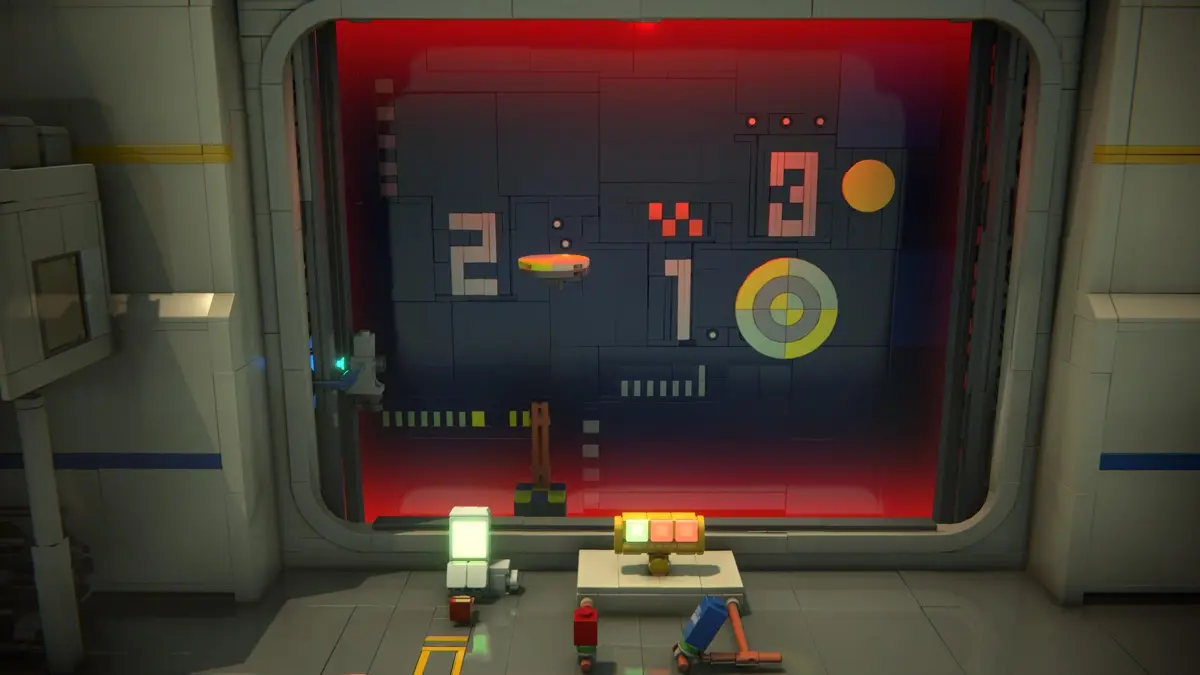
Red and Blue are mere 1x1 Lego bricks, which means that they don’t have the same abilities as, say, the average Lego Batman. Instead of smashing through obstacles or building vehicles out of a pile of bricks, players have to think small to solve Lego Voyagers’ puzzle-platforming challenges. The game starts with a few simple puzzles, teaching players how to build small structures out of various Lego pieces with Red and Blue to cross bridges, climb up walls, and so on.
Do not be fooled by how deceptively simple the first hour of this game is. I was pulling my hair out during the game’s later challenges, where co-operating with your multiplayer partner and using precise timing becomes pivotal to progress through increasingly tough puzzles. Some of them are rather creative too, forcing players to move in tandem to pilot vehicles, build structures, or operate machinery.
It brings to mind Hazelight’s efforts in Split Fiction, a game which rarely repeats the same trick twice to keep players engaged to its co-op challenges. Unfortunately, Lego Voyagers’ efforts are less consistent in this regard; while some of the puzzles in the later half of the game shine with innovation, others ask players to repeat themselves one too many times by building their umpteenth bridge in order to progress.
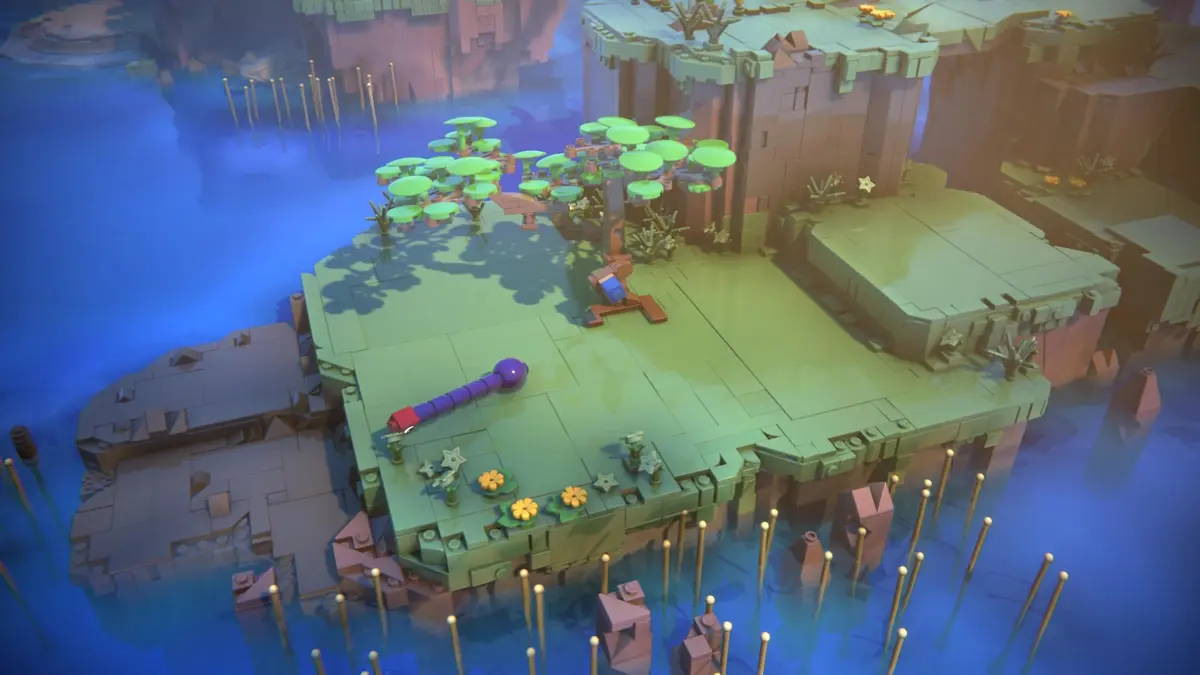
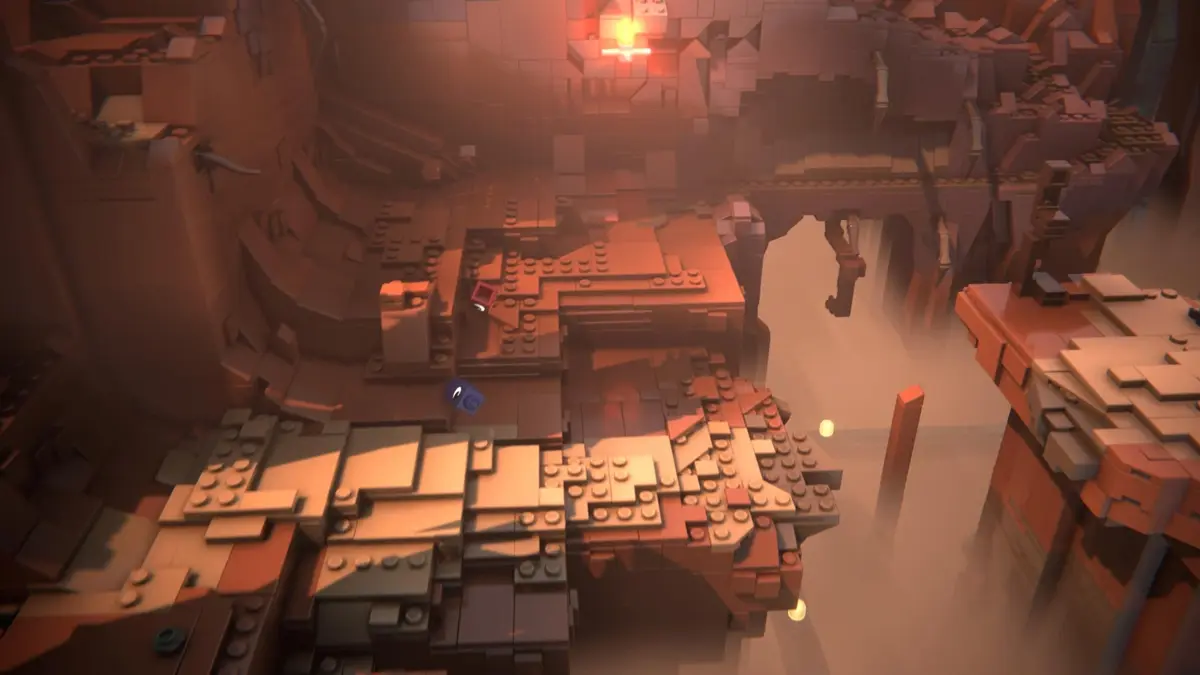
Each of the game’s brick-built levels is rendered with gorgeous photorealism, adhering to the aesthetics and functionality of real-life Lego pieces. Rolling around as Red and Blue to connect to bricks and attach them to structures feels incredibly satisfying thanks to the realistic in-game physics as well, and it’s just a lot of fun to see little Lego pieces be reimagined as insects and flowers to fit into the game’s world.
While most of the game’s levels offer a linear sequence of puzzle-solving challenges, there are a few open areas to break up the pace of gameplay. It does feel like every time a sense of fatigue begins to set in over a specific location or puzzle gimmick, the game immediately pivots to something fresh–keeping you glued to the controller in order to see what it’s going to throw at you next.
Verdict
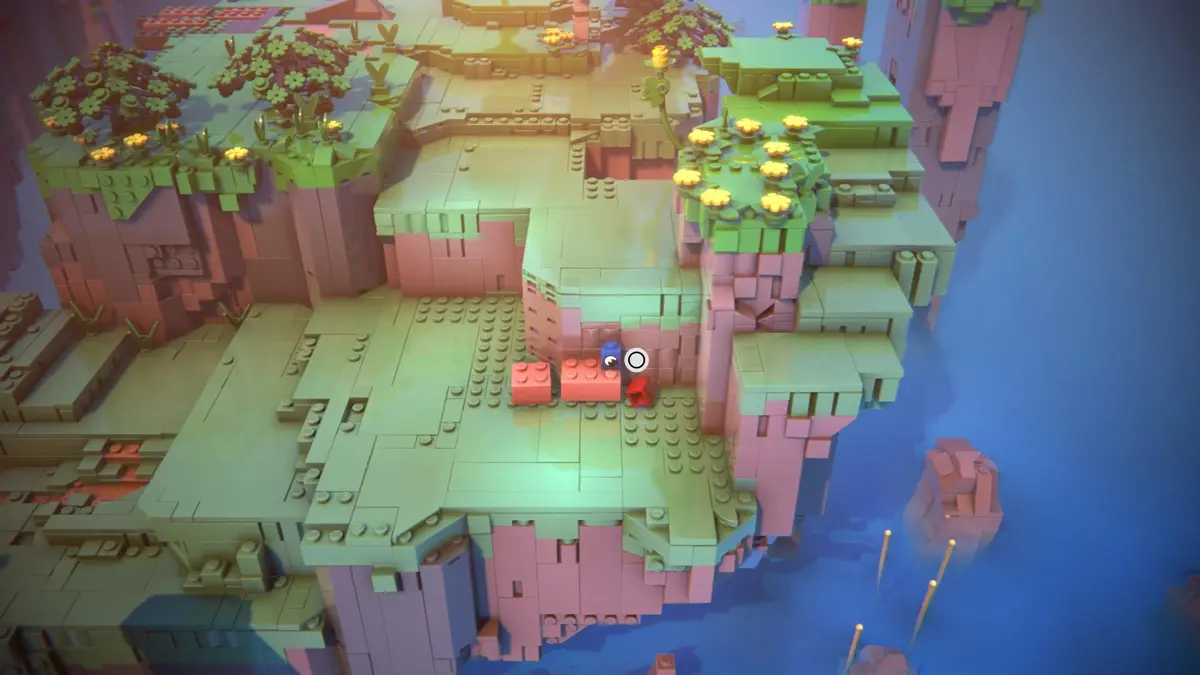
Lego Voyagers is an unexpectedly fresh co-op offering from Lego, a brand that has already made its name on puzzle-solving multiplayer games. By scaling things down to just two lovable protagonists with big dreams, however, its story only feels that much more compelling. With beautiful brick-built visuals, inventive puzzles, and a short runtime, this game is perfect for a couch co-op playthrough on the weekend.
Just remember to be patient with your co-op partner of choice while solving the game’s harder puzzles, lest you pay for it in real life. Learned that one the hard way.
Lego Voyagers is now available on PC, Nintendo Switch, Nintendo Switch 2, PlayStation 4, PlayStation 5, Xbox One, and Xbox Series X|S for US$24.99. We received a copy of the game from Annapurna Interactive for this review.