Organised, comforting chaos is possible in Lost and Found Co.
There’s no shortage of hidden object games out there. The problem is that many of them start strong and slowly turn into eye-straining marathons. What begins as a relaxing search for cleverly hidden items can quickly spiral into squinting at an overstuffed room for far too long, wondering if that pixel in the corner is the object you need. Cosy often turns into tiring, and that slow shift is what usually pushes people away from the genre.
That’s what makes Lost and Found Co. different. Instead of overwhelming players with visual noise or difficulty spikes, it leans into comfort, humour, and thoughtful design. It’s the kind of game you boot up to unwind, not to prove anything or chase a leaderboard, but to settle in and enjoy the process.
Developed by Bit Egg, Thailand’s largest independent game studio, Lost and Found Co. is described as a hidden-object adventure set in a cosy, immersive world. It fits that description, but it also feels more deliberate than the average entry in the genre. It doesn’t simply rely on clutter and colourful art. It builds personality into every corner, and that makes all the difference.
A light-hearted story that knows exactly what it is
You play as Ducky, a duck transformed into a human by the nearly forgotten dragon goddess Mei. The Dragon goddess Mei is fading because fewer people believe in her, and in an effort to restore that faith, she and Ducky establish Lost and Found Co. The goal is simple: help people recover their lost belongings and, in doing so, gradually rebuild belief in the goddess.
It’s a straightforward setup, and the story doesn’t pretend to be anything else. The plot is predictable in the best way. You can see the emotional beats coming, but that predictability feels comforting, rather than lazy. It’s the narrative equivalent of knowing how a feel-good film is going to end, and enjoying the ride anyway.

Where the game really shines is in its humour and character writing. Ducky isn’t brooding or overly enthusiastic, and Mei is initially framed as a lazy, drama binge-watching deity who cares more about her own comfort than divine responsibility. Their interactions are playful and openly comedic, setting the right tone from the start.
The neighbours, clients, and minor NPCs lean fully into their quirks. Many of them are exaggerated caricatures, but that only adds to the charm. Each one is memorable, and packed with personality that makes every encounter feel distinct. Even the animals, the foxes and cats scattered throughout the world, have their own little behaviours and reactions when you interact with them. Clicking on them or observing their antics adds another layer of humour and life to the environments. Nothing here is quiet or subtle; everything is colourful, lively, and brimming with character.
Hand-drawn spaces that feel lived in
Visually, Lost and Found Co. could easily have fallen into the genre’s biggest trap: overwhelming clutter. Every location is packed with detail, and there are hundreds of objects layered into each scene. But it never feels chaotic in a frustrating way.
The key is layout. Instead of randomly scattering props across the screen, the environments feel curated. There’s logic to how objects are placed. A convenience store looks like a messy minimart mid-shift, rather than a jumble of unrelated items. A record shop doesn’t just contain vinyl records; click on one and you’ll hear a quick tune. Customers for each store have different personalities: a gacha shop will be full of nerdy tropes that are awfully relatable, and A bookstore have some bookworms (literal ones), and customers looking for a fantastical adventure. Small touches like that turn static scenery into something interactive.

One standout example is a convenience store level where, instead of the usual silent cashier and a few idle customers, you’re greeted by an overwhelmed employee and a store that needs all the help it can get, with angry customers in line and puddles of chaos. The employee constantly needs help to progress and that whole mess shows a glimpse of someone's everyday life in the game's world, and it feels like a place people actually exist in.

That attention to detail gives the game an interesting duality. Each stage focuses on a relatively small area, such as a shopfront or a single strip. Yet within those spaces are mini-rooms, hidden nooks, Easter eggs, and tiny jokes are everywhere, so even a small space can keep you exploring for minutes. The world feels compact but layered, cosy but rich. You’re not travelling across sprawling open maps, but you are peeling back layers within tight, carefully designed environments. There's a focus on intimate design, rather than expansive design.
Gameplay is familiar and easy to follow
Mechanically, Lost and Found Co. sticks to the familiar hidden object formula, and it doesn’t need to do more. Each level presents a list of lost items for you to find, encouraging careful observation and interaction with the environment as you click, search, and explore.
The core objective in each stage is simple: find the lost items scattered throughout the environment. On top of that, there are optional tasks that add extra layers to the experience. These might involve spotting additional objects, triggering quirky interactions, or solving light environmental puzzles. Completing them often leads to small, satisfying payoffs, such as a humorous animation, an unexpected interaction, or a tiny piece of environmental storytelling. None of these tasks are mandatory, but they add personality and depth to each location, rewarding players who take the time to explore without penalising those who just want to complete the main objective.

Perhaps most importantly, there is no time pressure. There’s no ticking clock or forced urgency, so you can take your time scanning each scene at your own pace. For a cosy game, that freedom is essential, letting you explore and engage with the environment without stress.
Beyond the main story stages, Lost and Found Co. also receives client requests. These side jobs take you to smaller locations focused on specific items. They break up the main progression nicely and give you the sense that the company is actually functioning within its world.
The mix of the main story and client requests makes the game approachable and relaxing, without ever feeling mindless. There’s enough interactivity and optional objectives to keep you noticing new details and staying engaged, but nothing ever feels forced or stressful.
Decorating and steady progression
As you complete levels and fulfil requests, you earn rewards and occasional gifts from neighbours sent via mail. These items can be used to decorate your space.
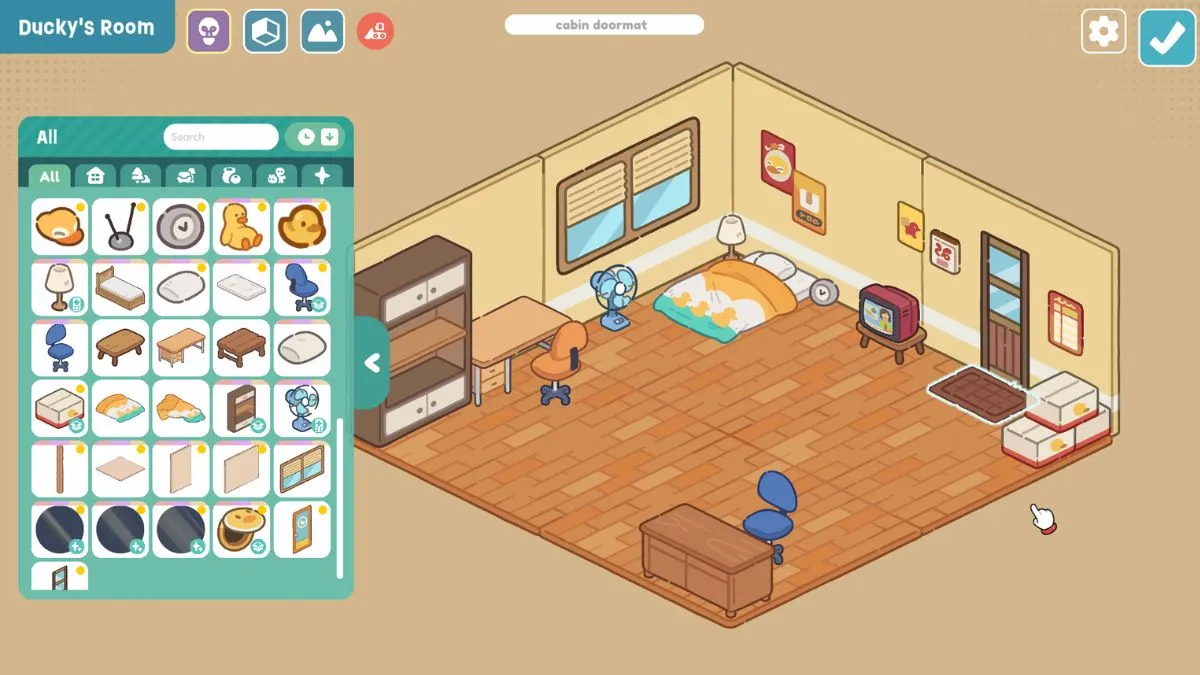
The decorating system isn’t complex, but it doesn’t need to be. It provides a sense of ownership over the hub area and makes progression feel tangible. Instead of returning to a static menu, you come back to a space that gradually reflects your time spent in the game. It reinforces the central loop in a subtle way, with small acts adding up over time.
Playtime and overall scope
Lost and Found Co. is fairly short. The main story can be completed in a reasonable number of hours, and some players may wish it lasted longer. However, its brevity works in its favour. There’s no artificial padding, no recycled stages disguised as new content, and no sudden difficulty spikes to stretch playtime. The game knows what it is and delivers that experience without dragging.
Because it never becomes overwhelming, it also avoids burnout, something that plagues many hidden object titles. You’re unlikely to walk away feeling drained from staring at the screen for too long. Instead, you leave wanting a little more, or take a little pause to come back later.
Verdict
Lost and Found Co. takes the hidden object formula and refines it. Frustrating clutter is replaced with carefully arranged environments, and the pacing stays steady and comfortable. The story is predictable, but it remains enjoyable thanks to its humour, warmth, and well-timed interactions. Each area feels small but packed with detail, simple on the surface yet layered with discoveries.
Cosiness doesn’t mean dull here. The game is relaxing without ever becoming sleepy, light-hearted but full of personality, and easy to pick up while still rewarding attention to its small, thoughtful touches.
For anyone looking to unwind without completely switching off, Lost and Found Co. hits the sweet spot. It focuses on comfort, charm, and playful design that respects your time, giving players a satisfying experience without relying on difficulty or spectacle.
Lost and Found Co. will release on 6 March at 4:01 PM SGT / 12:01 AM PST. The game will be available on PC via Steam for US$17.99. A copy of the game was provided for this review.