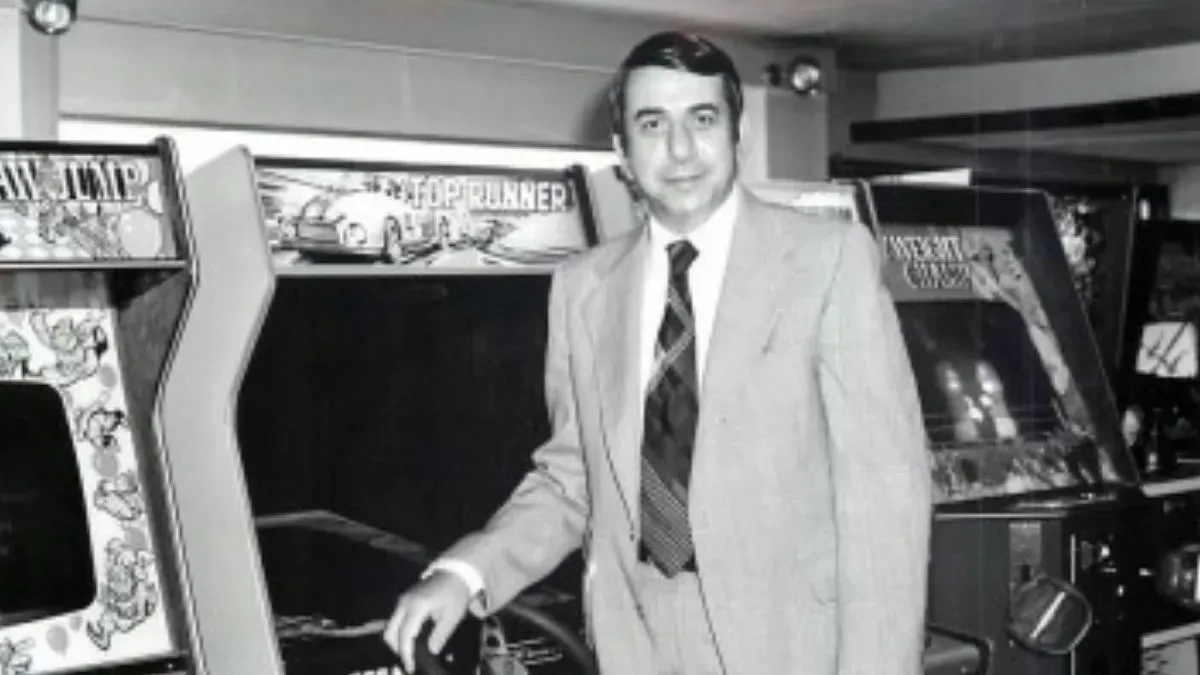
Rosen played a defining role in Sega’s rise and the early arcade boom.
David Rosen, the co-founder of Sega and a key figure in the early arcade business, is dead at the age of 95.
Rosen died on 25 December 2025 in Los Angeles. His death was confirmed in early January, with RePlay Magazine reporting that he passed away peacefully while surrounded by his family. His funeral was held on 2 January at Inglewood Park Cemetery, marking the end of a career that helped shape the foundations of the modern video game industry.
Best known for helping establish Sega during the rise of coin-operated entertainment in Japan, Rosen’s work came at a time when arcades were still experimental rather than mainstream. His decisions in the decades following the Second World War would quietly influence how video games developed into a global industry.
Born in New York, Rosen later joined the United States Air Force and was stationed in Japan, a move that would prove pivotal. While living there, he identified a growing demand for commercial amusement machines in a recovering economy.
In the 1950s, he founded Rosen Enterprises, a business that imported and operated coin-operated machines. At a time when arcades were still uncommon in Japan, the company helped establish the foundations of a growing amusement industry.
In 1965, Rosen Enterprises merged with Service Games to form Sega Enterprises. Rosen took on the roles of chairman and chief executive officer, guiding the company through its earliest and most formative years.
Rosen helped transform Sega from a small arcade business into a global name
Under Rosen’s leadership, Sega released several early arcade successes, including Periscope in 1966. The title was notable for its large, immersive cabinet and is often credited with helping popularise arcade machines around the world.
Rosen also oversaw Sega’s expansion beyond Japan, playing a key role in the creation of Sega of America and helping the company navigate multiple ownership changes while maintaining its creative direction.
Beyond Sega itself, Rosen contributed to the wider industry. He served as the first chairman of the Japan Amusement Association, helping to shape standards and practices during a period of rapid growth for arcades across the country.
Rosen retired from Sega in 1996, leaving behind a legacy that helped lay the groundwork for the modern video game industry. His influence continues to be felt across arcades, consoles, and gaming culture worldwide.