The Outer Worlds 2 sees Obsidian Entertainment expand on its original sci-fi RPG.
After wowing players with the now-beloved middle child of the Fallout franchise, Fallout: New Vegas, Obsidian Entertainment first attempted to replicate its success in the third-person action-RPG genre with The Outer Worlds in 2019. The sci-fi game quickly garnered praise for its satirical themes and RPG-heavy gameplay, even if it felt a little too limited in scale to be compared to Fallout: New Vegas in a positive light.
The Outer Worlds 2 changes that. This is a full-fat sequel to a now-pivotal sci-fi IP under Obsidian’s belt, with even more jokes to let fly about capitalism and bureaucracy, and a much larger world to explore. While not all of its bigger-is-better attempts to expand upon the original game work out, this is an ambitious sequel that will whet the appetites of RPG fans looking for a campy space adventure.
Arcadia ain't looking so good
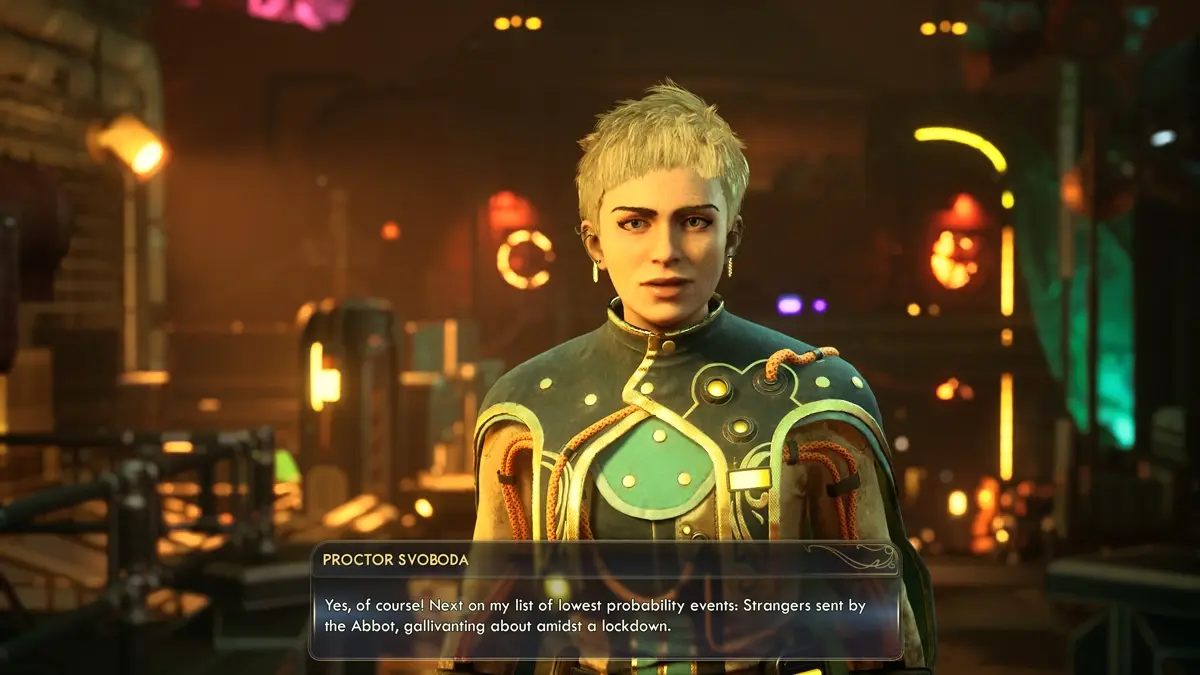
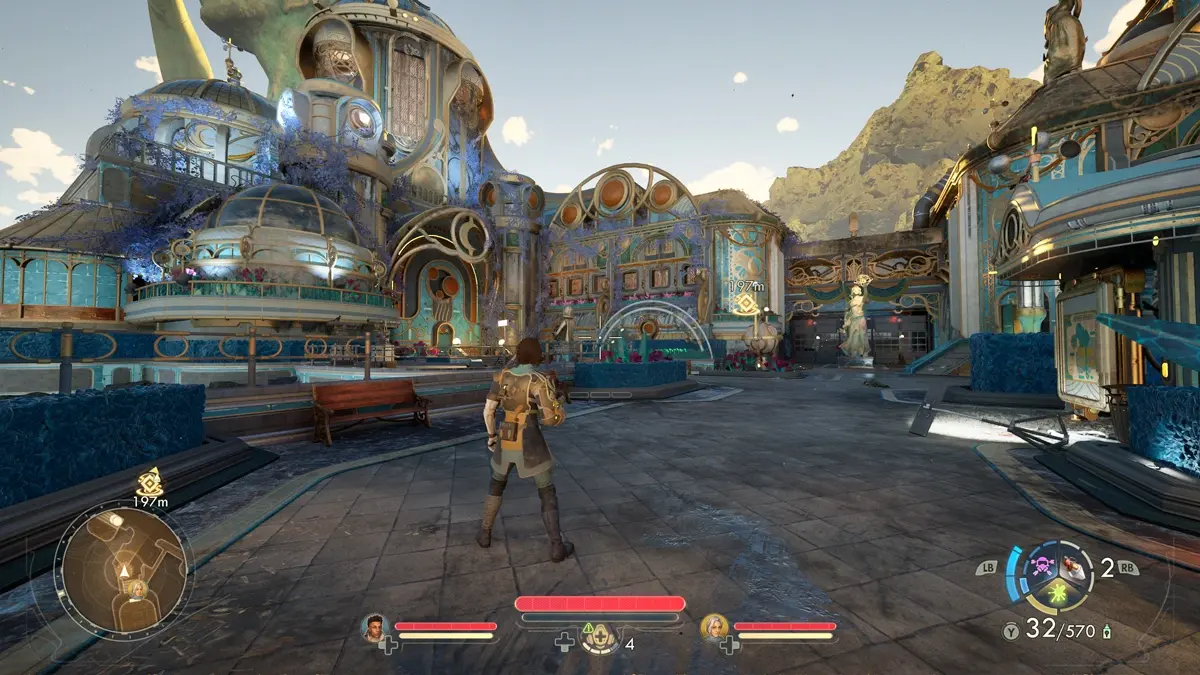
If you haven’t played The Outer Worlds yet, worry not; while the original game was set in the colony of Halcyon, its sequel takes place in a different part of the galaxy, in a colony called Arcadia. Different factions have emerged here, stirring up political troubles for those scattered across its many planets. If it’s not elitist politicians mucking about and making life harder for the less fortunate people of Arcadia, it’s megacorporations like Auntie’s Choice looking to squeeze them for all they’ve got.
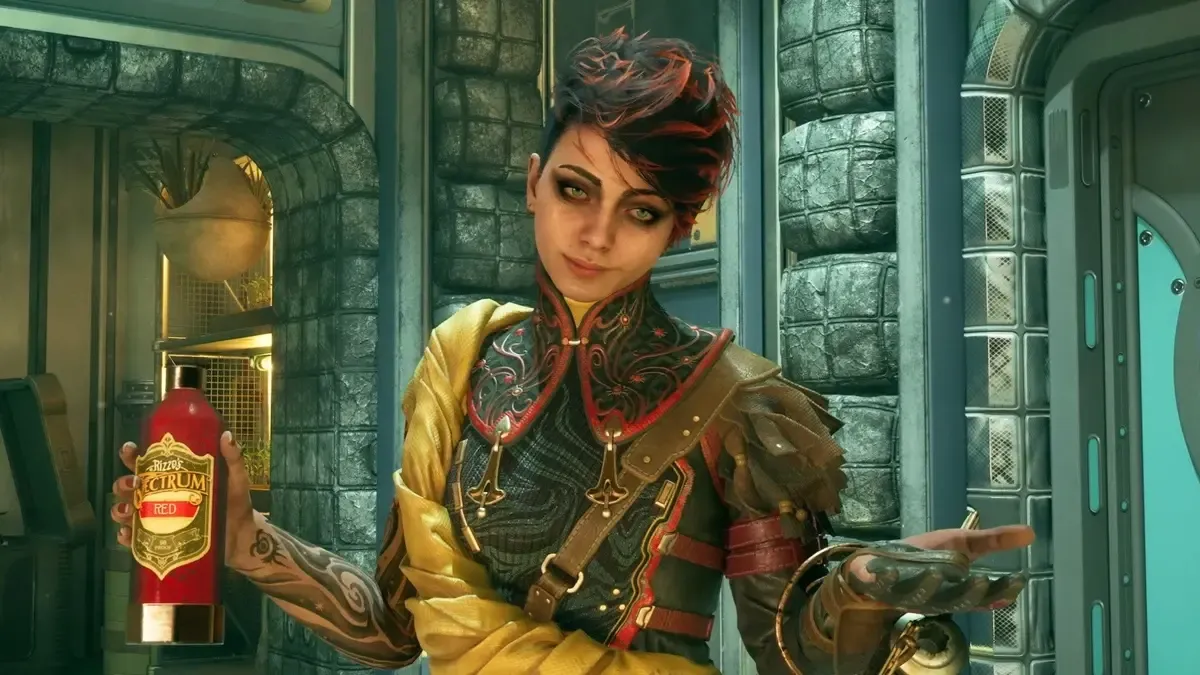
This might sound like a rather grim setting for players to step into, but it’s all about presentation. The Outer Worlds 2 has caught a lot of flak in the months leading up to its release thanks to a rather on-the-nose ironic marketing campaign, with a live-action focus group trailer repeating the phrase “big sequel energy” just being one example of its controversial advertising strategy. However, it’s precisely this complete refusal to play things straight that works in the narrative’s favour.
The Outer Worlds 2 follows a member of the Earth Directorate being sent to Arcadia, where sudden rifts in spacetime have begun cropping up to cut colonies off from Earth entirely. A sudden betrayal then causes the player to cryofreeze for years, only to be reawakened in an even more chaotic version of Arcadia, which threatens to fall apart without their intervention.
The main plot is long and winding, mostly concerning the player’s hunt for an apparent terrorist named Augustine de Vries, who is in the middle of a grander scheme revolving around Arcadia’s rifts. Admittedly, I was frequently lost and confused while making my way through its story; with hordes of NPCs, settlements, and factions tied to separate quests and choices to keep track of, this plot felt markedly more obtuse to follow than that of the first game.
Thankfully, it’s hard to stay bored for long in Arcadia. Thanks to the game’s penchant for silliness and its labyrinthian choices for players to navigate, it doesn’t feel like a dealbreaker that the main plot isn’t all that compelling. Punchy dialogue and genuinely great writing take turns to share the spotlight with wild misadventures, high-stakes arbitrations, and cartoonishly funny questlines.
When it all comes together under the shadow of absolutely dystopian levels of capitalism, it starts to feel like The Outer Worlds has carved out a rather unique identity for itself as a franchise. That’s a compliment, despite how it sounds.
Let's get those damage numbers up
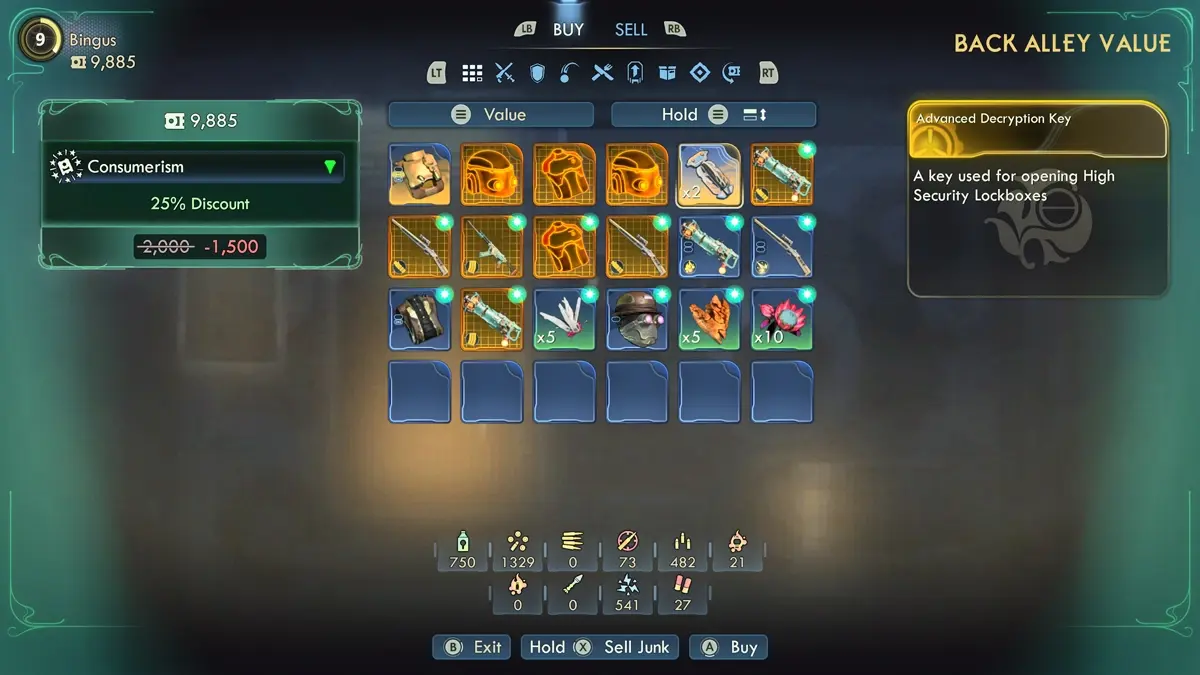
A colourful variety of weapons with different ammo types allow players to find their own combat playstyles in The Outer Worlds 2, and melee combat has seen an upgrade as well. While meleeing enemies to death still doesn’t feel nearly as good as blasting them to death with science weapons, melee weapons do boast more weight and impact across the board, making clobbering enemies to death feel crunchy and satisfying.
That being said, the combat system could use quite a bit of fine tuning still, before Obsidian can truly rest on its laurels. Ammo pickups are strangely rare in the open world, leaving players to rely on constant Workbench detours to craft more ammo, if they even have the resources for it. Different weapon types affect enemies differently; for example, plasma weapons can practically melt humans but won’t do the same for machines. With monsters, humans, and machines all out for the player’s throat, it’s important to rotate your weaponry as needed.
This means that ammo becomes a problem rather quickly, as different ammo types will be required as you find stronger weapons. The modding system allows you to make specific weapons stronger, but it’s largely unnecessary until you find a high-rarity weapon that you actually like–and those can be few and far between, depending on how slowly you progress through the story. Guns themselves simply don’t feel great in battle, largely due to poor audio and visual feedback when firing off rounds at distant enemies. It just doesn’t feel as good as it should to shoot a stream of acid at enemies, when it doesn’t sound or feel like actual liquid.
Combat isn't the only aspect of this game that suffers from strange audio FX, however. Audio effects can either be too muddled or too sharp throughout gameplay, even for persistent sounds like the player's footsteps. When walking around in circles to explore small surroundings, you'll often hear the high-pitched click-clack of tap-dancing shoes, which can get irritating after tens of hours of gameplay.
The RPG is RPG-ing
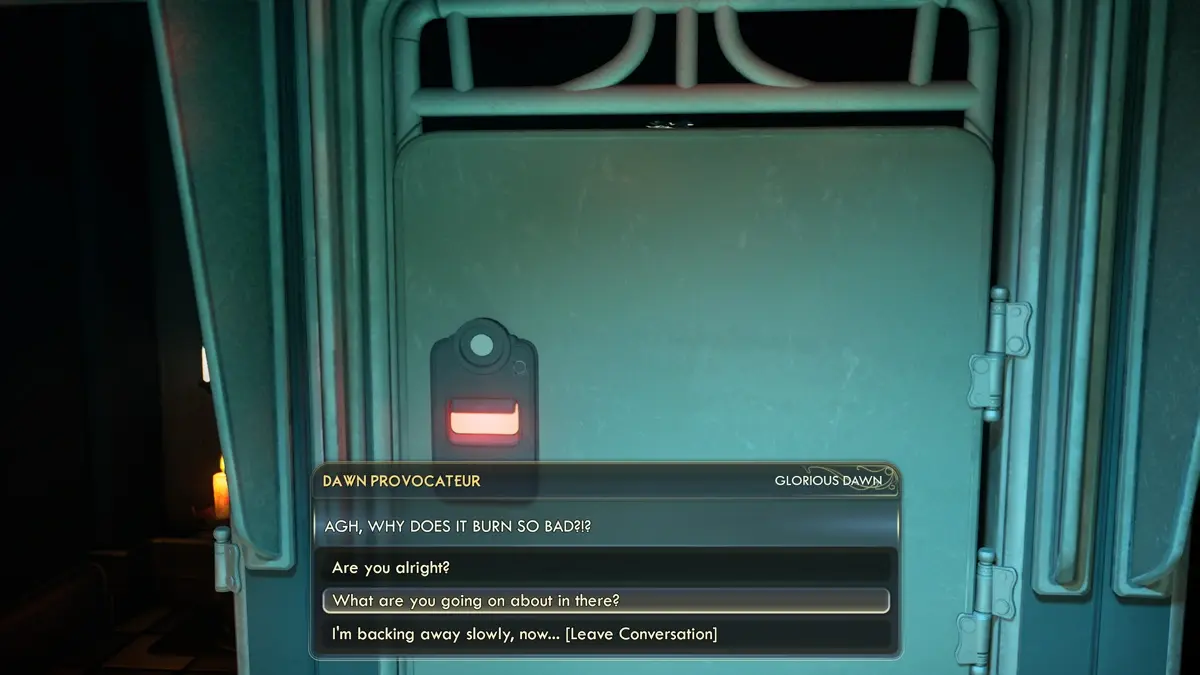
The Outer Worlds 2’s first trailer teased that this sequel was going to be bigger than its predecessor in every way, and that holds true upon release. Players are given a bounty of options to pursue in ticking off their objectives, whether it’s to find a secret weapon, defeat a boss, or get through an enemy base. Obsidian has made it possible for players to talk, fight, or stealth their way through most of the game’s questlines.
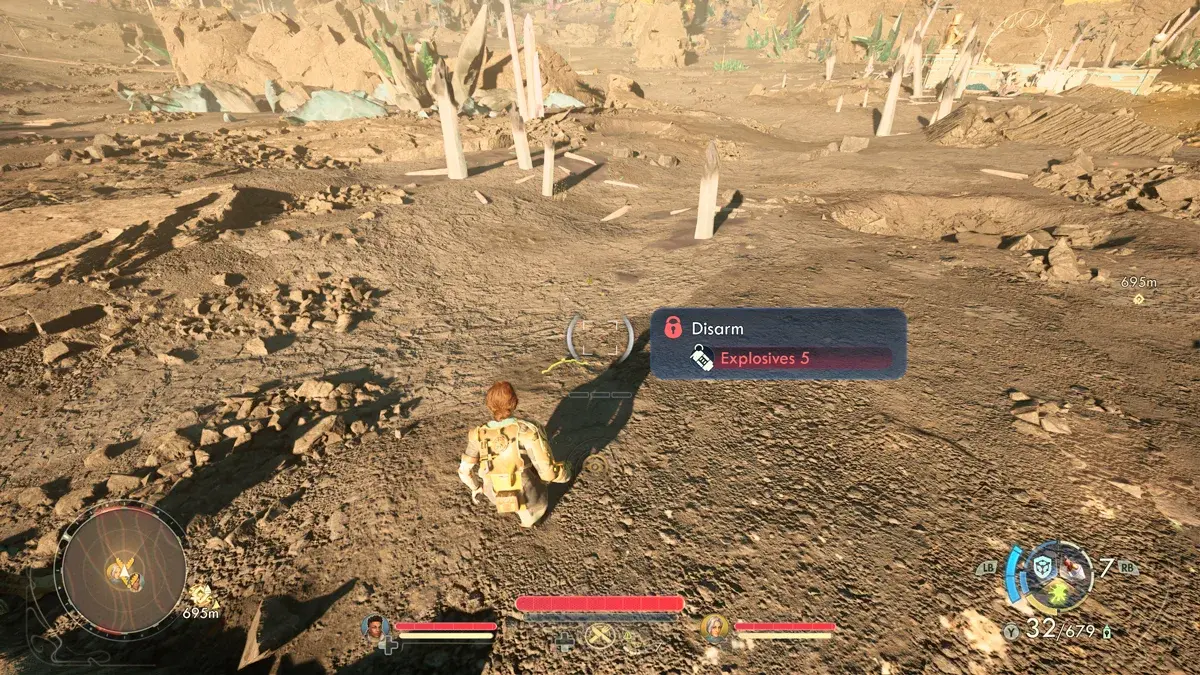
A wide spread of usual-suspect RPG skills like Speech, Observation, and Leadership allow players to shape their playthrough in different ways. Putting more points into combat-specific skills will allow you to get through most combat encounters easily, though you might have a more difficult time talking your way out of a sticky situation. Likewise, putting all your points into stealth and speech might allow you to bypass entire bossfights–though you might lose out on some XP and items.
This give and take has some strong appeal to it, since The Outer Worlds 2 encourages players to specialise in specific skills to bypass high-level skill checks throughout their playthrough. You can't just pour all your points into speech without flopping critical skill checks for hacking, lockpicking, and so on. Each new skill point feels meaningfully spent as a result. That makes your playthrough feel unique and interesting, and with the addition of backgrounds and traits, the roleplaying potential here is strong.
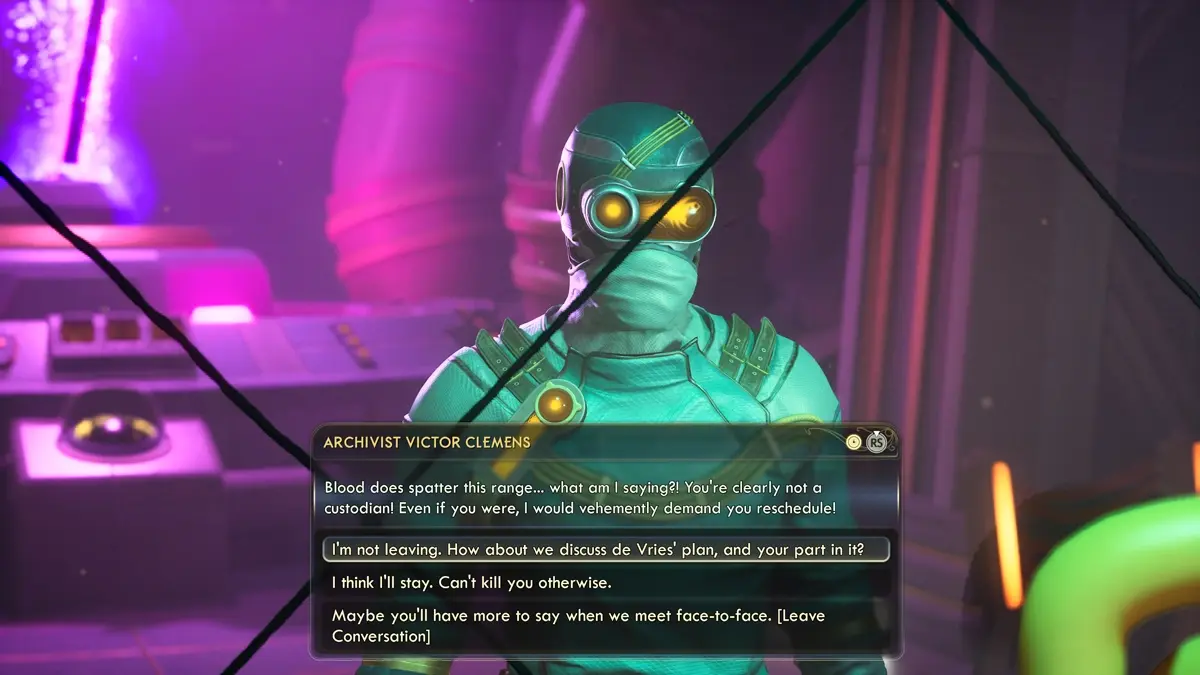
I played the game as a Roustabout–an unwitting leader under the Earth Directorate who seems to always fall upwards into power despite themselves, and consequently into dangerous situations. Speccing towards a speech-heavy build allowed this background to shine, and my character was able to turn on their charm to bring peaceful resolutions to almost every conflict. The game additionally rewards players with key dialogue choices, so long as they take the time to snoop and explore for new information during quests, which makes you feel like you’re carving your own path through the story simply by being a nosy Nellie.
The Outer Worlds 2’s setting feels deeply reactive to the player’s choices throughout the campaign. Small dialogue choices made while speaking to companions can influence what they do much later on, and key story quests can manipulate the fates of entire settlements and NPCs upon their resolution. It all depends on how you approach the story; will you play as a hero here to save the day, a bumbling idiot with access to heavy weaponry, or the ol' fan favourite: a maniacal supervillain?
The player’s choice is Spacer’s Choice
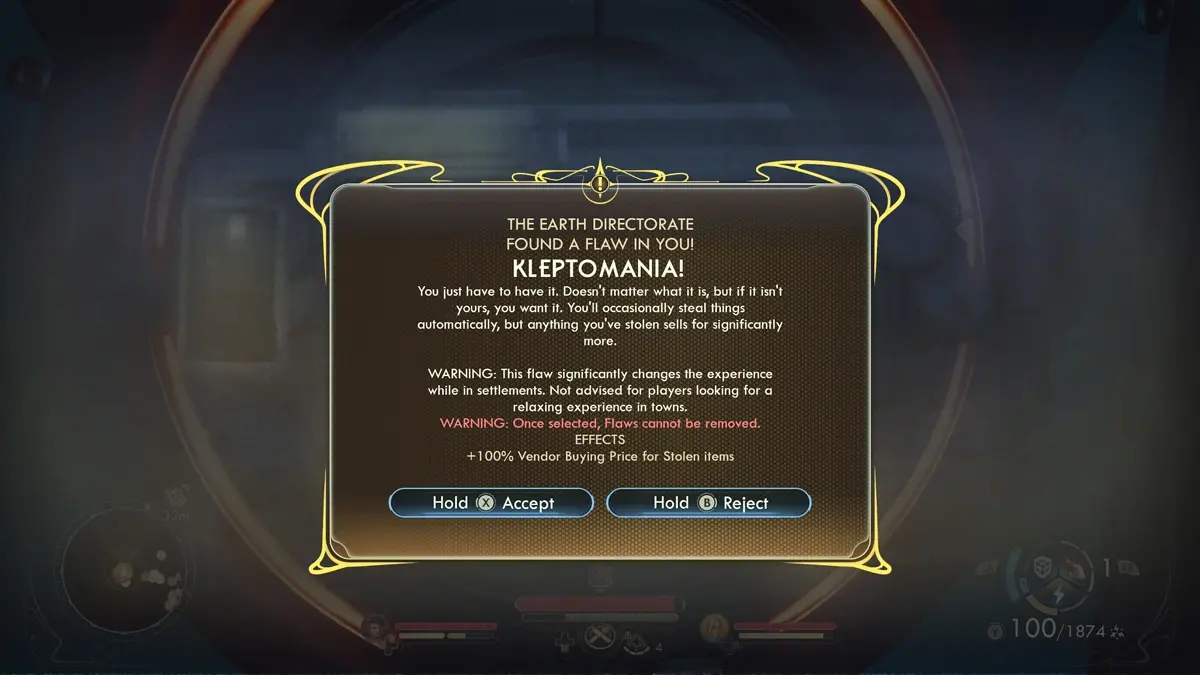
Obsidian also adds another layer of role-playing with the addition of Flaws. Flaws are powerful perks given to players solely based on their in-game behaviour, though they come with an equally powerful cost. For example, the well-documented Bad Knees Flaw gives players faster moving speed while crouching, with the caveat that their knees will make a loud popping noise when they stand back up, alerting everyone within the vicinity of their presence.
It’s a fun little way of acknowledging player behaviour that I haven’t seen before in a video game, and I do hope that more games pick up on it down the line. These Flaws can alter gameplay in truly unhinged ways, from the Kleptomaniac Flaw that has players automatically steal anything they see, to the Compulsive Liar Flaw, which makes you lie to everyone you meet. It’s a genuine treat whenever one of these Flaws pop up during gameplay, simultaneously chiding you for your predictable behaviour while offering you a little treat on the side.
The game gives the keys to its world to the player, and is all the better for it. While its main story may run out of steam all too quickly, it’s the way these quests and characters unfold at the player’s touch that will keep you coming back.
A note about companions in The Outer Worlds 2
I would be remiss if I ended this review without touching on the game’s companion system, which comes across as shockingly listless compared to its predecessor. The Outer Worlds 2 has six companions in total, a few of whom are missable if the player doesn’t pursue specific sidequests during their journey. These companions come with their own abilities for players to activate during combat, and will often provide their own perspective on events that crop up throughout the story.
The companions are pretty evenly spread out across the game’s many factions, and thus can provide meaningful commentary on the state of Arcadia and its people during certain questlines. They’re also pretty acquiescent on most of the player’s choices, unless the player chooses to outright murder important members of their specific faction. In essence, they don’t get in your way very much throughout the story, though I would argue that this is precisely why they fail mechanically.
The main issue here is that these companions are so completely devoid of personality, that your experience would hardly differ if you didn’t bring them into the field at all. They pipe up with the occasional one-liner during quests, sure, but quite a few of them just don’t have anything interesting to say.
Characters like Inez and VALERIE (who, admittedly, is a robot) completely fade into the background when new companions like Aza (a murderous cultist) and Tristan (a blunt authoritarian) come into the fold. Even then, they seem just as surface-level as their ostensible beliefs and motivations; if Tristan is such a Judge Dredd-type, why is he so quick to commit to a life of pacifism at your side? The same goes to the supposedly cold-blooded killer Aza, who spent most of her time watching me leave my enemies unharmed.
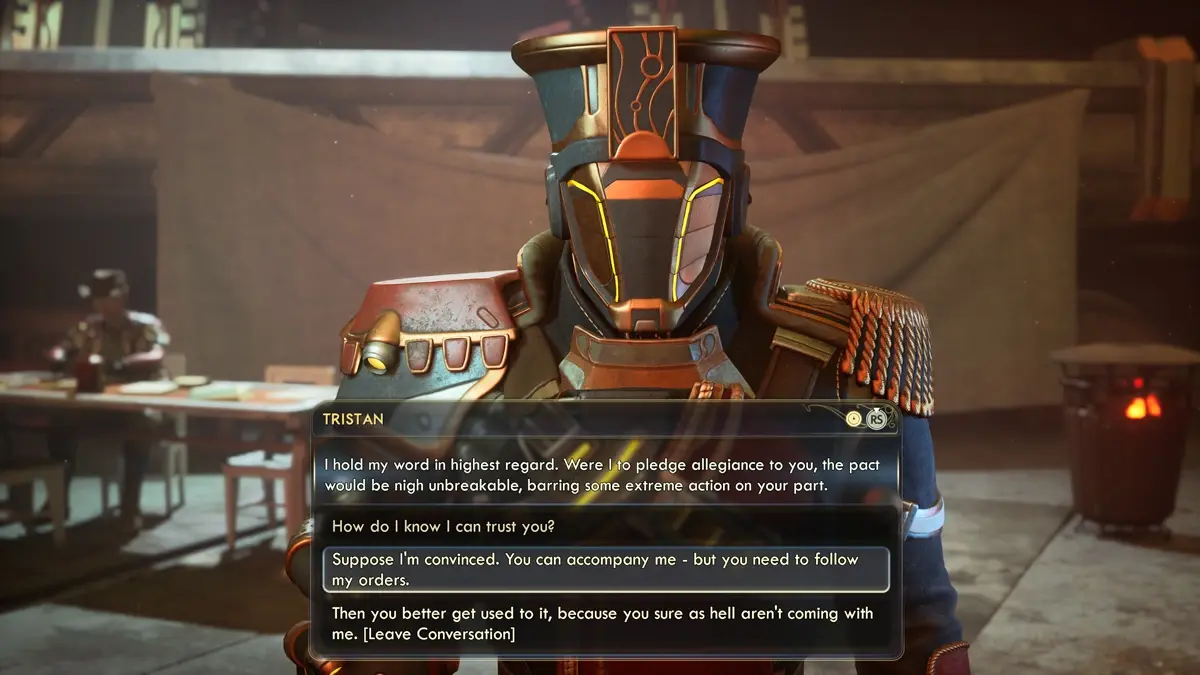
These companions have a total lack of agency compared to The Outer Worlds, which infamously had companions like Parvati constantly pipe up to keep players on the straight and narrow. Sure, it’s annoying when players are forced to play a certain way depending on their companions of choice–but it feels outright boring when companions have nothing to bring to the table besides random quips and worldbuilding flavour. There is a middle ground here that seems to have gone completely unexplored.
These companions hardly grow and change, nor do they interact with each other outside of the party in particularly interesting ways. In The Outer Worlds, the player’s ship felt warm and lively, largely because companions were constantly interacting with each other and moving about the living quarters of their own accord. They offered interesting, and often low-stakes quests for players to engage with, allowing them to learn more about their true beliefs and motivations.
The Outer Worlds 2 feels like a downgrade in that aspect, with companions who don’t feel nearly as fleshed out or interesting to explore Arcadia with, and who spell out their entire ideologies to players from the get-go.
Verdict
While The Outer Worlds 2 may disappoint with a poor selection of companions and unremarkable gunplay, the level of agency it gives players in influencing the fate of its world and characters is worth a playthrough on its own. There’s a wide swathe of choices players have to make throughout the course of this story campaign, and it’s genuinely impressive how far-reaching their consequences can become even towards the endgame.
The game’s writing and humour help make some of its darker elements more palatable, though its story becomes most compelling when it drops the irony altogether. It’s clear that Obsidian isn’t going to return to the world of Fallout anytime soon, and that’s okay. The Outer Worlds is proving to be a more than worthy successor, if only spiritually.
The Outer Worlds 2 is out now on PlayStation 5, Xbox Series X|S, and PC for US$69.99. We received a copy of the game for this review.