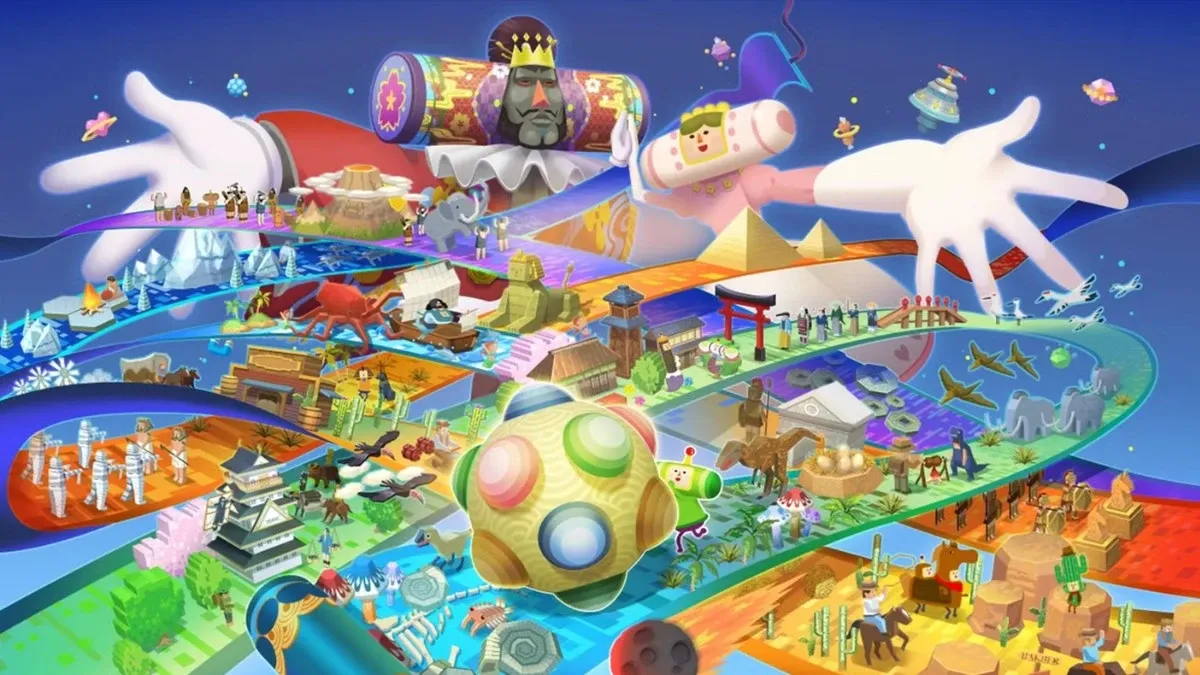
Turns out, rolling up the universe still feels absurdly good.
It’s been years since players last got to roll around the universe in proper Katamari fashion. Sure, the remasters and mobile spin-offs kept the dream alive, but nothing quite captured the same magic. Now, Once Upon a Katamari has finally brought the series back with a full helping of joy, nonsense, and objects that definitely shouldn’t be rollable, but somehow are.
For long-time fans, that’s already enough to get them rolling in with excitement. For newcomers, however, this is an easy entry point into one of gaming’s most wonderfully weird franchises.
A fresh coat of cosmic chaos
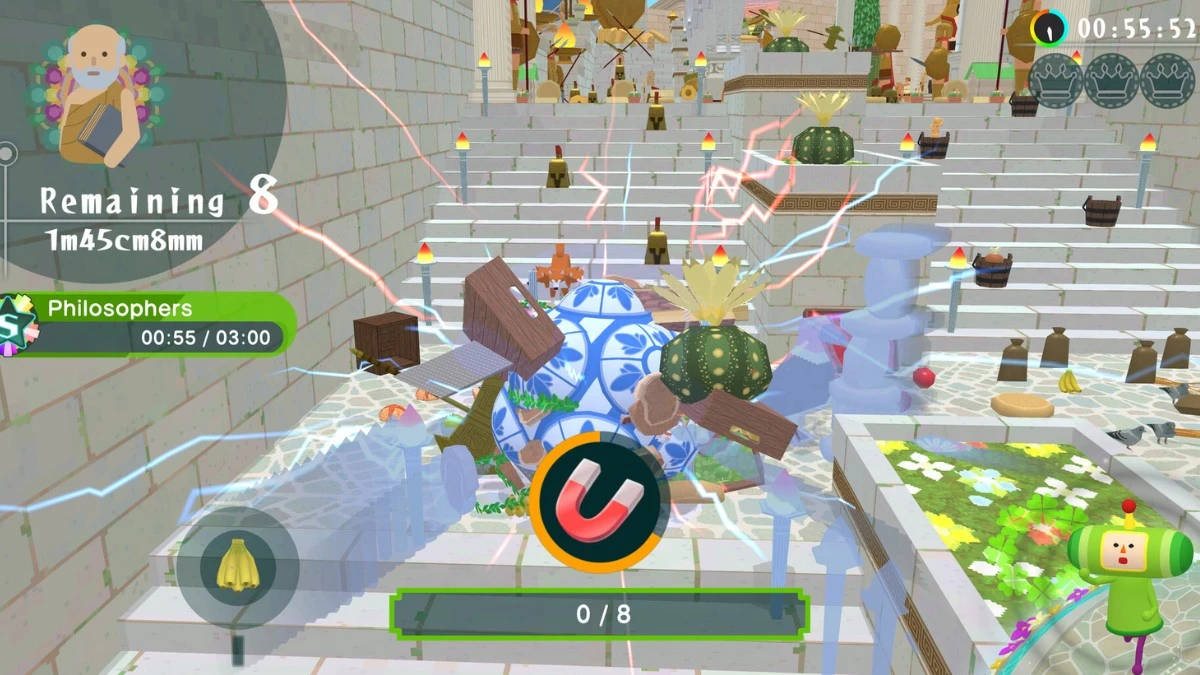
While most modern games chase realism, Once Upon a Katamari proudly sticks to its colourful, blocky roots. Everything looks like it’s been plucked straight from a PS2 fever dream, jagged edges, candy-coloured cities, and all. The angular humans, polygonal cows, and absurd household clutter all look better than ever thanks to clean, high-definition polish for modern platforms. It’s retro charm rolled up with modern precision, proving Katamari’s art style never needed a glow-up, just a roll-up.
The soundtrack, though, absolutely steals the show. It’s packed with high-energy J-pop, jazzy beats, and the kind of joyful chaos that defines the series. Every song makes you want to keep rolling long after your timer runs out. It’s the kind of earworm-packed soundtrack that lives rent-free in your head, and might just have you humming or singing “Get your star, get yo-get-yo-get your star” while doing chores, which is about as Katamari as it gets.
Royal Blunders return, with the Prince and his cousins in tow
The King of All Cosmos is back, and so are his questionable life choices. In a rare moment of tidying up, he finds a mysterious scroll, gets distracted, and somehow launches it into space, destroying the stars and Earth in the process. Once again, the Prince has to clean up Dad’s cosmic mess, one roll at a time.
This time, the adventure spans time itself. From the Ice Age to Ancient Greece and the Edo period, you’ll roll your Katamari through nine distinct eras instead of just new locations, and that twist keeps the experience feeling fresh.
Each era captures its own personality, and while you’ll spot some familiar themes, like food markets, schools, and urban chaos, they’re reimagined through new historical backdrops to make every roll feel different.
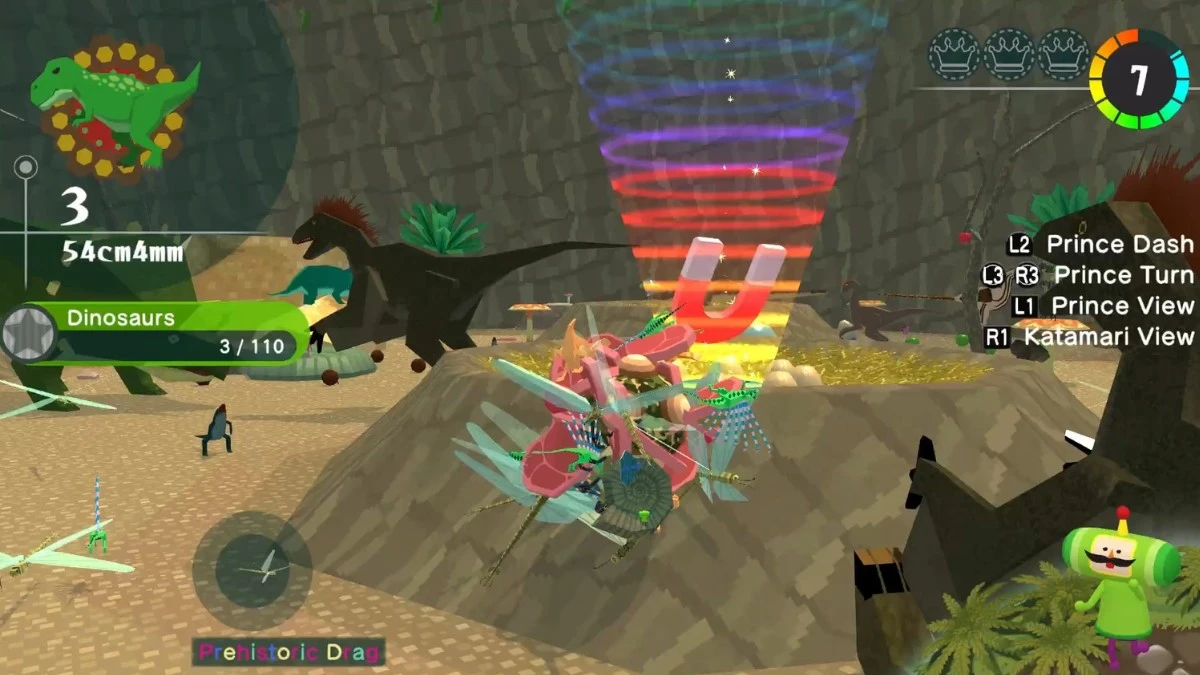
The Prehistoric era is an early standout, letting you scoop up dinosaurs, fossils, ancient plants, and, well, people, until your Katamari becomes a literal ball of evolution. The Frontier map, with its rustic wooden fences, tumbleweeds, and cowboy flair, is equally charming and proves the series hasn’t lost its knack for whimsy.
The combination of old and new makes this Katamari feel like a proper journey through time, not just another round of familiar junk. Your home base, the S.S. Prince, acts as a hub where you can decorate your quarters, design your own cousins, and prepare for the next roll. It’s small, silly, and exactly the kind of nonsense that gives Katamari its charm.
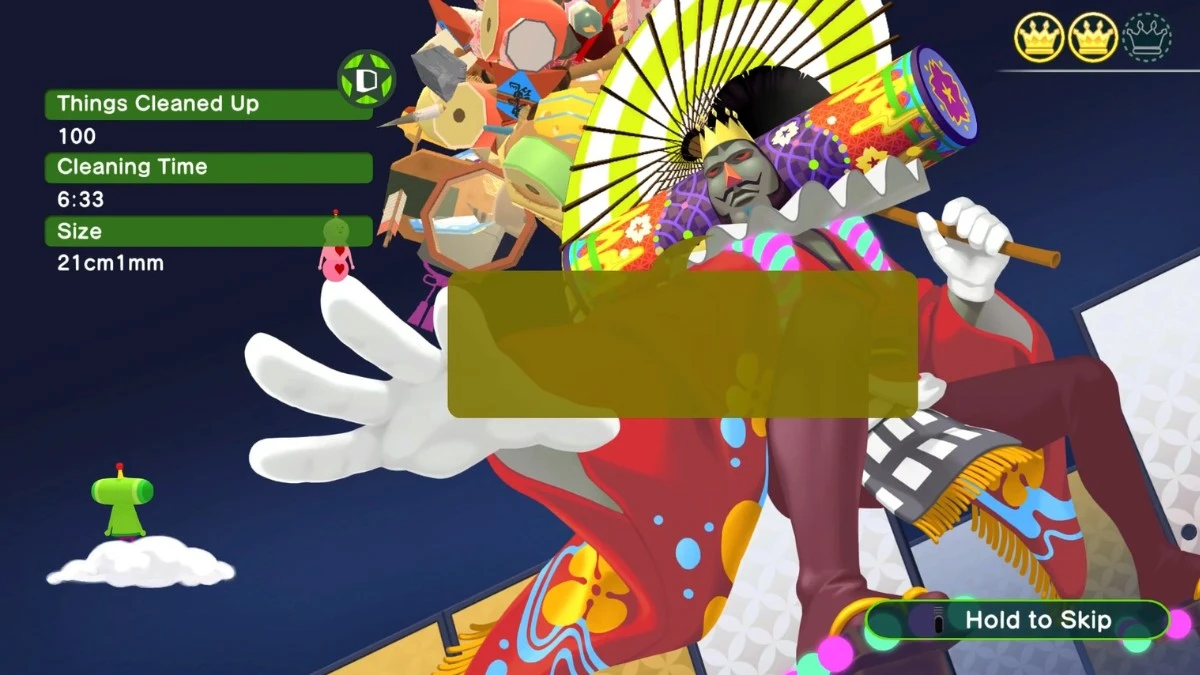
And of course, the humour is still perfectly absurd. The King’s dramatic monologues, the Prince’s quiet suffering, the fourth-wall-breaking asides; it’s all here, neatly rolled into one cosmic comedy.
How this Katamari keeps you rolling
For anyone new to the series, the goal is simple. Roll up everything you see: pencils, dogs, skyscrapers, and continents, until your ball of junk is big enough to turn into a star. It’s the purest kind of fun, and Once Upon a Katamari doesn’t mess with the formula too much.
The twin-stick controls feel smoother than ever, and there’s even a simplified option for beginners. The physics are spot on, the rolling feels weighty but responsive, and the frame rate stays buttery even when you’re collecting half a city. It’s proof that Katamari’s gameplay, like the universe, just keeps expanding in the right direction.
Each stage ties cleverly into its era, giving you not just new environments but new props to scoop up, from ancient relics and dinosaurs to samurai armour and cowboy hats. Despite the variety, the game never feels like it’s recycling ideas. Every level throws in something unexpected, whether it’s the way the layout unfolds or the bizarre mix of objects you end up rolling together.
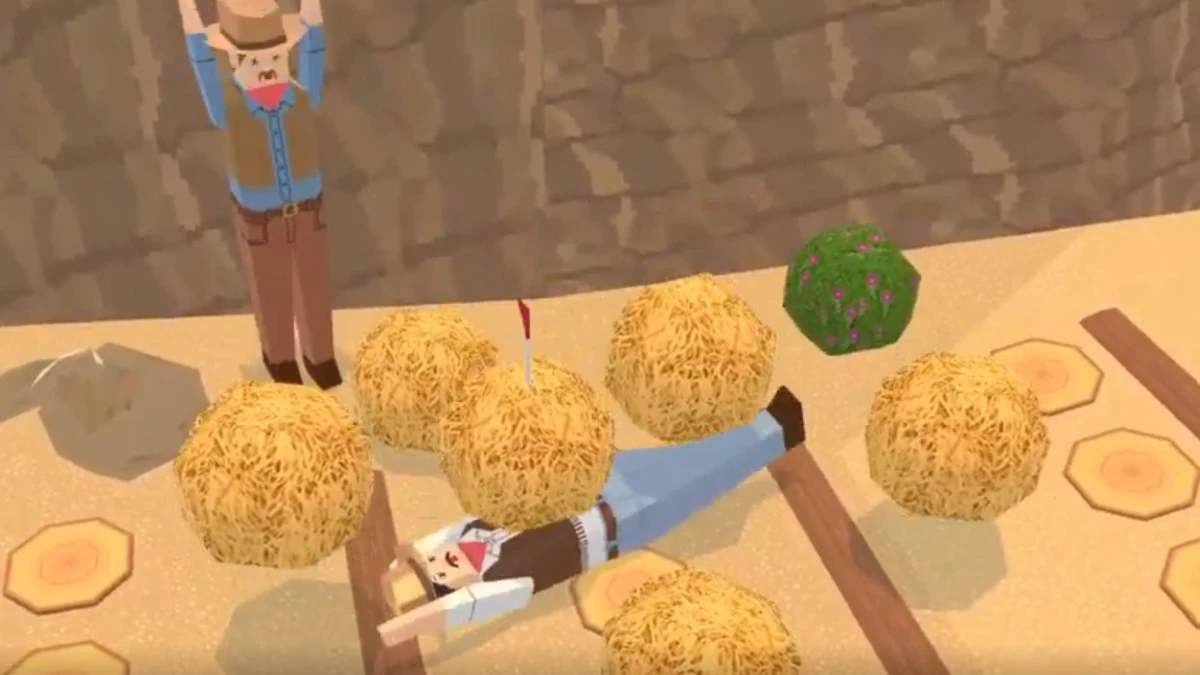
Some stages test how quickly you can grow, others challenge you to pick up specific objects, and a few even toss you into Katamari races that turn chaos into competition. They’re fast, funny, and sometimes pure madness, but always fun to roll through.
Collectibles like King Tokens, cousins, and presents return, and you’ll need to gather a few in order to progress. It can be mildly frustrating to replay a level for one stubborn item, but that’s part of the charm. After all, half the joy of Katamari is seeing what weird combination of junk you can stick together next.
And yes, the cousins are back: all those wonderfully weird relatives of the Prince scattered across time and space. Spotting one mid-roll still gives that same little burst of joy, and collecting them to expand your ever-so-weird cosmic family never gets old.
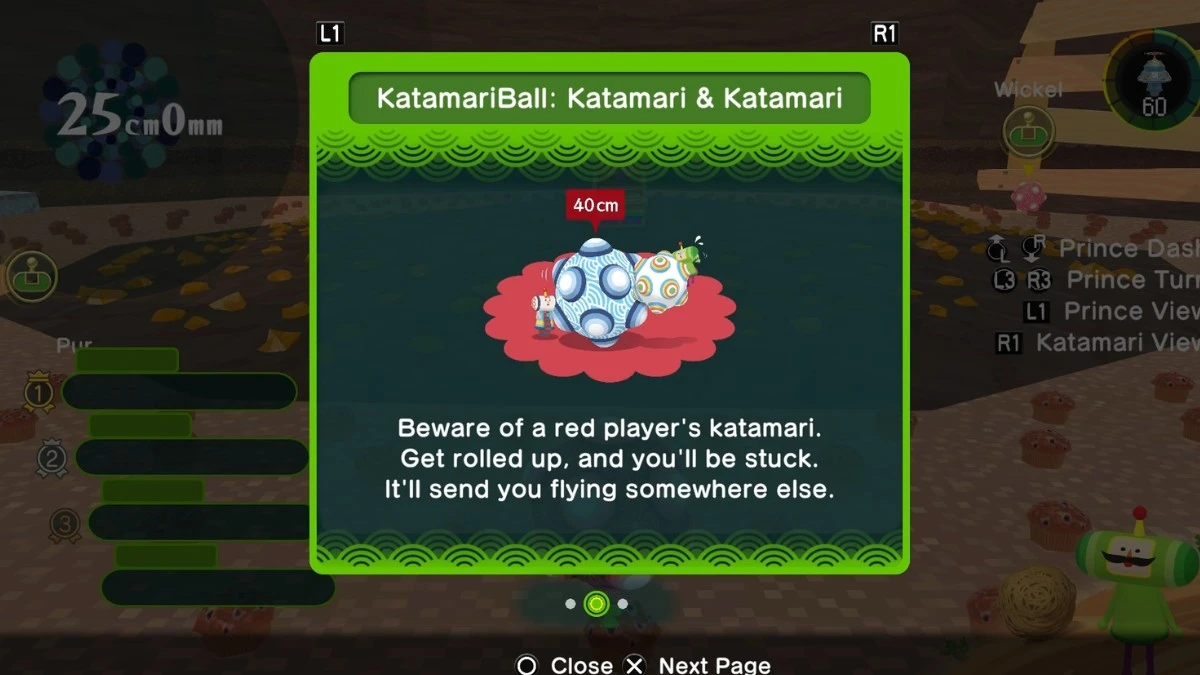
There's also multiplayer, which is typically a feature I normally don't care much about in singleplayer-focused games, but this multiplayer version is as chill and as enjoyable as it should be. In fact, it's probably the smoothest multiplayer mode the series has ever put out with an option given for players to create a lobby and invite friends to roll along with them.
Multiplayer mode is online only and plays out in every era, each with different objectives, the most often-recurring being rolling up the biggest Katamari. Players also accumulate points through other bonuses, like most Katamaris rolled, most dashes, and more.
Verdict
Once Upon a Katamari doesn’t try to build a new universe, it simply reminds you why rolling one up was so much fun in the first place. The visuals are vibrant, the soundtrack’s a pure earworm, and the gameplay nails that perfect mix of chaos and comfort. It’s a sequel that doesn’t need to grow bigger to feel better, polishing up what was already cosmic perfection. The King’s still ridiculous, the Prince is still dutiful, and the cosmos remains a glorious mess waiting to be rolled up all over again.
If you’ve missed Katamari’s offbeat magic, this comeback is absolutely worth the roll. And for newcomers, it’s the perfect place to start–because once you start rolling, you’ll never really stop.
Once Upon a Katamari is out now on PlayStation, Xbox Series X|S, Nintendo Switch, and PC via Steam for US$39.99. We received a copy of the game for this review.