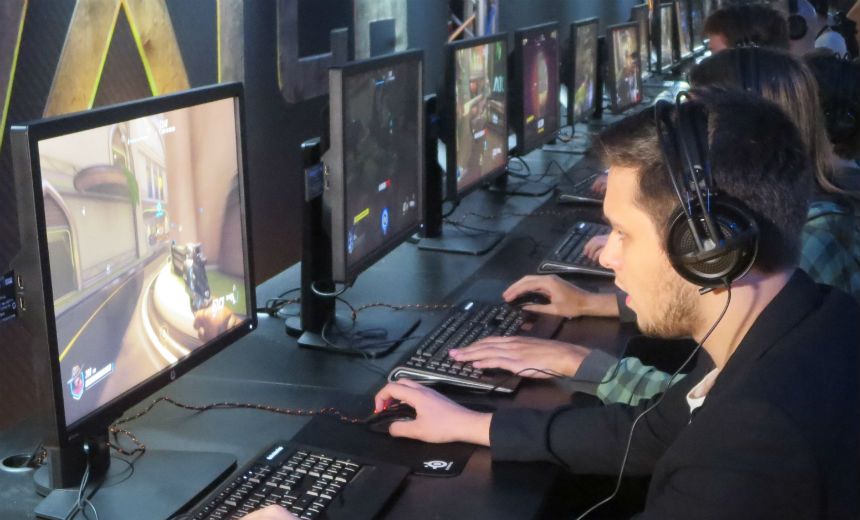
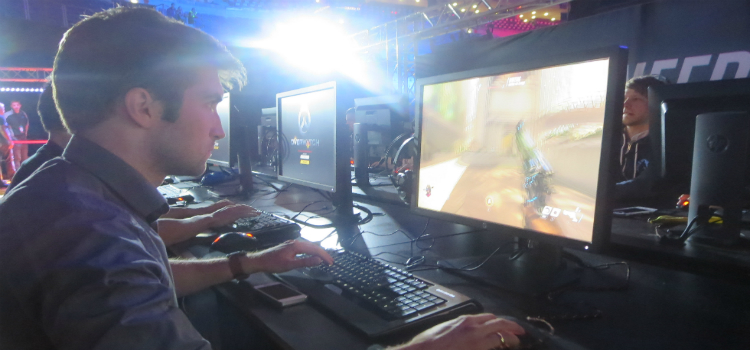
Last weekend, during the European Road to Blizzcon Qualifiers, Overwatch proved to be more than an internet hype. At 10 am on Saturday morning, a queue of hundreds of people had already formed outside the O2 Arena. Quite impressive, if kept in mind that early access ticket holders were allowed to enter only at 11 a.m., and all the others at noon. And even when the event was open to everyone, there constantly was a queue for the Overwatch booths. But, did it live up to the hype, once played? In this article several aspects of the game are discussed by using our own opinions, but also opinions of important eSports characters and, of course, visitors of the event.
Maps
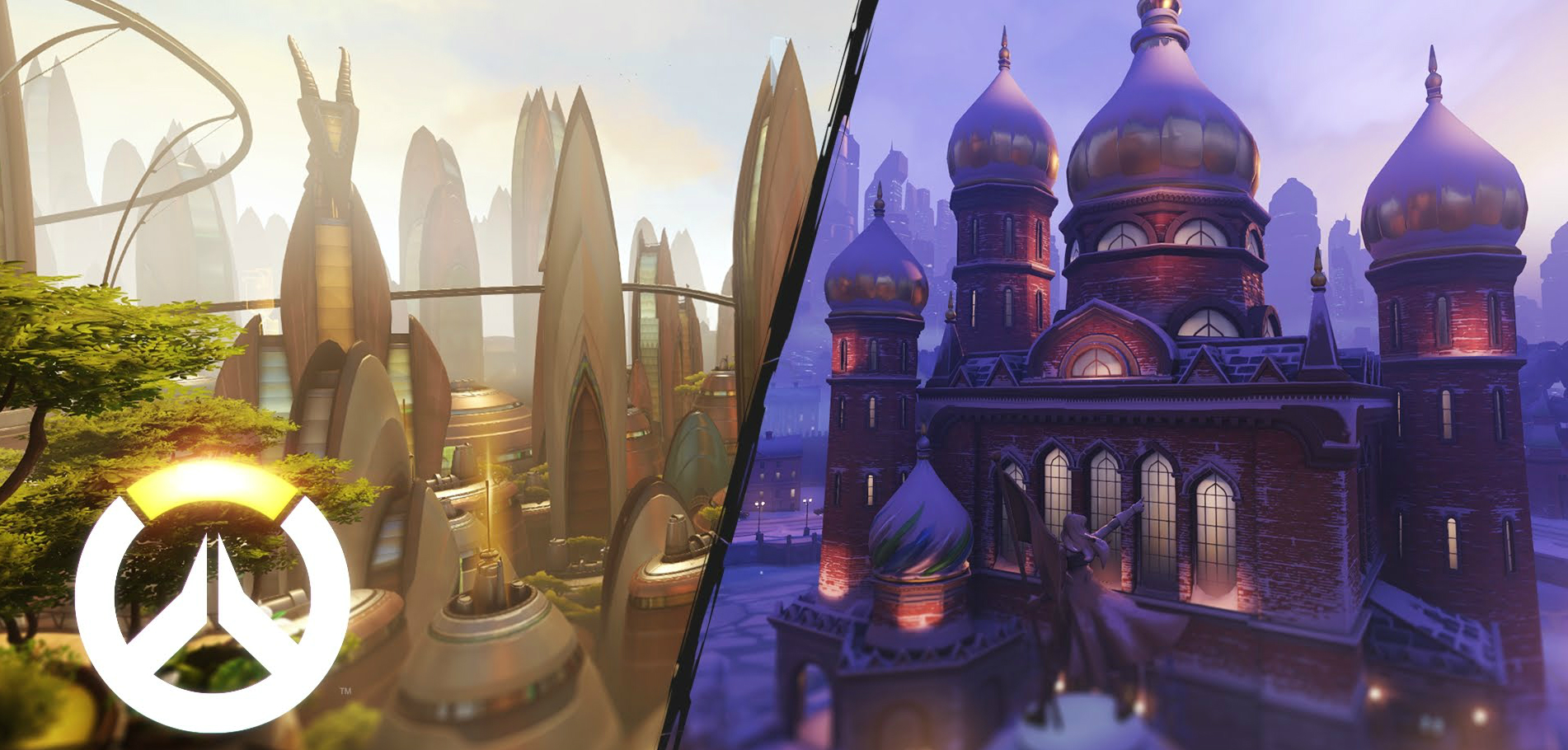
The available maps at the event were Volskaya Industries and Numbani. Volskaya Industries is solely a Capture Point map, whilst on Numbani the attacking team has to capture the Payload first before escorting it. This makes Numbani a combination of normal Payload (an example of which can be seen in this gameplay video of McCree) and Capture Point. Both maps can be quite confusing for a new player. A visitor, who had just finished his first game of Overwatch explained his experience as follows:
“I played on Numbani, and it took some time for me to get used to it. When I left the base, I saw all these alleys, stairs and bridges, and I had no idea where to go to. I just figured I had to go in the direction my opponents were shooting from.”
There are a few ways Blizzard tries to help players understand the maps. Most of these can already be found in Blizzard’s gameplay video’s on YouTube, but not everyone at the event appeared to have watched those.
The maps can be confusing, but Blizzard tries to help players understand them.
Firstly, there is a “main road” from base to base. This is a path that is the widest and most open area within the map (Control Points aside). Although not necessarily the fastest way to get from one point to another, it does help to explore the map.
Secondly, the routes are pointed out, just as in your general car navigation. Not only does it show where your team has to go to (via the main road), it also shows which way the enemies will come from. This is of great help, mainly for the defending team. Given that the Control Points and Payload aren’t directly in front of the enemy base, but as defending team you do want to grab the enemy by the throat immediately, knowing where they will come from helps a lot.
The third way the players learn to understand a map is through Objective Indicators. From any point on the map, a player can see which point needs to be defended or attacked. For example on Volskaya, when defending the points it will be visible from the start where point A is. If the enemy team is capturing the point, an indicator will appear, showing the progression of the capture. Payloads also carry a mark which can be seen at any time from any point, thereby helping players find out to which place in the game they have to rush.
Health packs are the fourth way one can discover a map. The above mentioned main route is not the optimal route for every character in every situation. For example: Reinhardt excels at leading the team on the main road because of his high health pool and his big shield. However, a hero such as Tracer is extremely vulnerable, especially in open fields. A new player will find this out soon enough, and, if no support character is nearby, will have to look for Health packs. These health packs can be found in the alleys, small chambers and many other off-road locations, therefore forcing the player to discover the map.
A long walk to action
Apart from the maze-like impression the maps may have, another problem arose concerning the maps: the distances. Even though the maps aren’t that big, it feels like it takes a lot of time for the defending team to get to the enemy base. This isn’t a problem at the start of the game, since there is plenty of set-up time then. As the game progresses, though, it definitely causes irritation. Eventually the attacking team will push through, and you and your team members will die, most likely one by one. Immediately you’ll want to go back, try to slow the enemy team again and support your whole team.
The only two useful heroes to accelerate the return are Lúcio and Symmetra. Lúcio can use his Crossfade to boost the speed of himself and nearby allies, and enhance it even more by using his Amp It Up ability. However, the only time this will affect the whole team is at the beginning, as only then you’re all together at your base (hopefully only then, otherwise it means your team just got wiped). Symmetra’s ultimate ability, the Teleporter, allows for immediate reinvolvement in the fight. It is extremely powerful, but has as a downside that it is an ultimate ability, which consequently means it takes a while before it can be used. Next to that the Teleporter can be destroyed by the enemy team, making the protection of it a difficult objective as well.
 “Overwatch can definitely become big as an eSport. Even though there are already shooters out there, Overwatch is just something that has never been done before. It really has high potential in the eSport scene, but I’ll just play it casually with my friends.”
- Janne “Savjz” Mikkonen, professional Hearthstone player and caster for Team Liquid
Individually, some heroes do have tricks that could get them from A to B faster, but they are all suboptimal.
Individually, some heroes do have tricks that could get them from A to B faster, but they are all suboptimal. This is mainly because their countdown time is quite long, and the abilities serve a different purpose than to dash forward. Examples are Widowmaker with her Grappling hook, Reinhardt with his Charge and Reaper with his Shadow Step. The hero who thus far has the least problem with the distances is obviously the one built for speed: Tracer. Her Blink regenerates so quickly that dashing towards the frontline is of no issue.
The distances do seem fair for the attacking team, though. If they would be able to return to a progressing offensive line quickly, the game would be over before the defending team realized what happened. It is a difficult aspect to balance in-game, but perhaps the defending team could be allowed to make use of shortcuts. These are also seen in Team Fortress 2, and allows for players to get back into action quicker. Once the enemy has secured a certain point, however, the shortcut closes (otherwise it would allow the defending team to get behind enemy lines with ease).
Heroes
Many wished for it, but it didn’t happen. Dreams were crushed as it became known that neither of the newly announced heroes (or baddies, as they have been called as well), Roadhog or Junkrat, were playable in Prague. Did that seem to bother the first-time players? Not at all. The experience of finally being able to play Overwatch was good enough for them. And though people who had played the game before had their dreams crushed, the absence of the newest heroes didn’t appear to be a huge problem. One of the more seasoned players (as far as one can be seasoned at the moment) stated:
“Would I have liked it if they [Roadhog and Junkrat] would have been available? Of course. But do I like this opportunity to play the game less because of that? Not at all. Now I get to play more with every hero, and try them out in different situations. That way I keep learning and I might have an advantage on everyone else when the game goes into beta!”
Popular pickings
There are always popular kids in a classroom, and this goes for Overwatch as well. Blizzard probably already has their statistics on this, but a good observant could draw some conclusions as well. Reaper, Widowmaker and Soldier: 76 definitely belonged to the cool kids in class, whilst Zenyatta, Torbjörn and Mercy belonged to the outcasts. It is understandable that this happens, for multiple reasons.
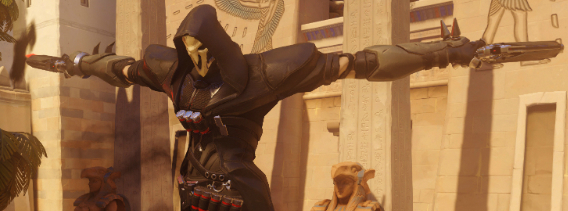
First of all, a hero can look cool. This is probably one of the main reasons people picked Reaper. He portrays death and all that is dark, and frankly just looks like a badass. He’s a mix of a Death Eater from the Harry Potter series and John McClane from the Die Hard movies. Not to be misunderstood is that he definitely is strong as well, but most certainly not in all situations.
As second reason certain heroes got chosen over others was their implied power level. It works as follows: Someone picks e.g. Widowmaker; goes on a 25 kill streak with her; other in-game players think she’s overpowered; everyone picks her. This doesn’t just occur in Overwatch though, it happens in every game. A perfect example of this could be found on the Hearthstone reddit a few days ago. Someone has performed incredibly well with a certain deck, others note it, the meta changes. Back to the Widowmaker example. This was literally overheard being said from one friend to another:
“You’ve got to play with Widowmaker man, she’s too strong! One guy in my team went so well with her, that I decided to switch over to her! Then I got all the kills and became the player with the highest score in our team. We lost, though, but at least I was the best.”
Needless to say, this situation is far from ideal for the gameplay experience of the whole team, but that will be pointed out further in the article. The quote above provides a fine explanation of why heroes are picked. People want to do something for which they can be proud of themselves, and will do close to everything to achieve that. Even if it makes you lose the game on the long run.
 “Overwatch is really great. I’ve played a lot at Blizzcon and at Gamescom, and now I’m playing it here all day. My favourite hero is by far McCree. He just looks very cool, but next to that his abilities are also very powerful. I’d definitely recommend everyone else to give Overwatch a try!”
- Andrey “Trolden” Nolden, YouTube Hearthstone content creator
Picking multiple copies of a hero is obviously a far from ideal situation.
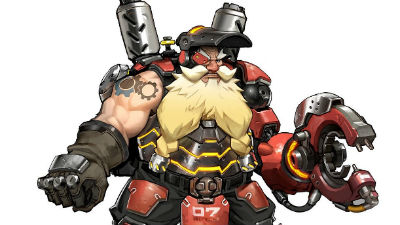
The fact that some of the heroes saw very little play is explainable a well. Take Torbjörn, for instance. Having a lot in common with the Engineer from Team Fortress 2, he is very stationary, and gets relatively little action himself. And it is exactly the latter point that did it for the players in Prague (or didn’t do it, rather). They sometimes stood in line for more than 2 hours to play Overwatch, and wanted some quick, immediate action. It has to be said though, that Torbjörn is capable of changing the outcome of the game. If his sentry gun is put in the right position, Torbjörn can scan the alleys and the back streets nearby for possible sneaking enemies, while his sentry gun takes care of what comes around the corner.
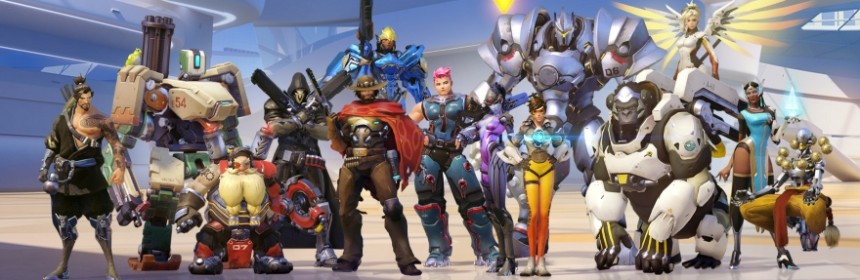
In the end, every hero has its useful applications within certain situations. To already say that one hero will dominate all the others doesn’t even make sense, since Blizzard has designed the heroes in such a way that they all can counter at least one other hero. It is the combination of heroes which can form an impenetrable defence line, or a steamrolling offense. But more of that follows in the next part.
Gameplay experience
Though both the maps and the heroes make up for a large part of the gameplay experience, they certainly don’t cover all of it. A contributor to the gameplay experience is the match format. The format used at Road to Blizzcon Prague was identical to the one used at Gamescom Cologne, where you play two rounds: one round as the attacking team and one round as the defending team. It is not known, however, whether this is also the format that will be used in Beta, or whether this is just what Blizzard uses for events.
The duration of a game can differ a lot. The attacking team initially has 5 minutes to capture the first objective in both Numbani and Volskaya Industries. After this point has been captured, additional time is rewarded to the attackers. On Numbani, the payload can reach a checkpoint during the escort. Once this checkpoint has been reached, even more playtime is added. Overwatch works with an overtime clock as well. As long as attackers are on a capture point or nearby the payload, the game will not end. This brings a lot of extra excitement and tension towards the end of the game, and is a great feature. Although it is possible to play a game of just 3 minutes long (when the attacking team steamroles over the defenders), the average time a game takes up is about 10 minutes on Volskaya, and 15 on Numbani.
 "I really like playing support and helping my team. Mercy for one is really strong. She can be combined with someone like Pharah, and fly along with her whilst boosting the damage output. It will be interesting how Blizzard will coordinate the matchmaking system. Here we could see that if a team is inbalanced it is really frustrating for the players. For Overwatch to become an eSport it will be interesting how Blizzard implements a spectator mode. Overwatch is a really fast game, so a good spectator mode is key for the game to be enjoyable as a viewer."
- Florian "Mamytwink" Henn, YouTuber specialized in Blizzard games, owner of mamytwink.com
Fast, faster, fastest
Overwatch is clearly designed as a fast-paced game, and a clear indication for that is the respawn time. In just a mere 5 seconds a player is ready for action once again, after watching the kill cam. This is significantly lower than in Team Fortress 2, where the general respawn time is 7 to 10 seconds long. A fan had this to say about the respawn times:
“The short respawn times were awesome. Before I knew it, I could get back in the game and hunt my opponents down again! I don’t like it when I have to watch my teammates play via a camera but seeing the kill cam was pretty cool I guess.”
The fast-paced nature of the game also is stimulated by the small advantages the attacking team has. Be it just a better angle to shoot from, or maybe an extra corner to hide behind, if used well these small advantages can quickly cause an escalation. As attacking team you only have 5 minutes to capture the first objective, which proved to be a very short time in many games played. However, with the right strategy and use of the small advantages it is 100% possible to push through and seize the objective.
I must choose!
At the beginning of each match, during the hero selection, the game will have character-archetype suggestions listed that are visible for all allies. These include suggestions such as “No Tank yet”, “Too many offensive heroes” or even “Too many of one hero”. The suggestions obviously serve the purpose of helping a team find their balance. Overwatch’ character selection differs from that of the usual FPS, on two main areas.
 “I liked Widowmaker a lot. You can climb on buildings to try and kill people, but at the same time you have to stay safe because she is a little squishy. When Overwatch releases, I think I’ll play it every day!”
- Cristofer “Blackscorp” Embareck, professional HotS player for Team Liquid
Firstly, it is possible for a team to have two copies of a hero. But why stop there? In Overwatch, a team consisting of solely Winstons is entirely possible. It doesn’t need to be pointed out that this is an easy-to-counter strategy. Although a team of six identical heroes will have the team profit of all the benefits, they will be exposed to a vulnerability they all have in common as well. If the enemy team knows the weaknesses of that particular hero, those weaknesses can easily be exposed and punished. In actual gameplay, even when just one team member chooses the same hero as you did, the team already has an extra weakness which can lead to some frustration. It has to be said though, that it is insanely fun to play with six copies of the same hero (if this is actually your team’s strategy). A game won with six Tracers is not only a lot of blinking fun, there is, let’s be honest, also some joy in shaming your opponent for not being able to counter this outright ridiculous strategy.
Secondly, upon death it is possible for players to switch characters, allowing players to take on different roles at any given moment. A lot of tactical insight comes into play here, as line-ups can almost immediately be countered. The counter-line-ups can on their turn be countered again, which can go on throughout the entire game. Still, there is definitely merit to sticking to one hero throughout the game. Whereas normally upon death (and provided it was already charged fully) the Ultimate ability remains usable, when switching heroes it will need to be recharged completely.
Some small details
In terms of controls, Overwatch feels very natural. It uses the same controls as standard FPS’s, and the heroes’ specific abilities are located on the right place. There are two action keys that feel a little off, though. Or rather: they could’ve been placed on a more logical place. The game provides hero-specific information whilst in game, but to access this the F1 button needs to be used. This is fine when preparing for battle, but when rushing towards the enemy and wanting to refresh the memory again, one will find it awkward to press F1. Next to that, every hero has a melee attack. That is, apart from Reinhardt since he’s already a melee character. The default melee attack button is located at the “V” key. Though this is the default key for melee attacks in other shooters as well, Blizzard could have stood out here. Since the mouse wheel is not used for anything in the game at all (only Mercy has two weapons thus far), it would have fitted perfectly if clicking it would trigger the melee attack. The mouse is used for the basic attacks in the game, and it would seem the melee attack should fit in there as well.
Overwatch features an ally indicator as well. This can, much like the Objective Indicator, be seen from all across the map, allowing a player to know which direction his team mates are in. Every friendly hero has a small triangle above their head. The triangle is blue when the ally is at full health, orange when the ally has lost more than half of their health and the triangle turns into a little skull once the ally has been eliminated. This small feature is a great solution to the absence of a mini map. It arguably is even better than a mini map, based on the format of the game.
 “I can’t wait for Overwatch to come out; I've probably played it as much as you can play without being a Blizzard employee. I’m a huge TF2 fan, I love character based FPS and I love 6v6 action. Zarya is one of my favorite characters. It's cool to see different types of female models in the game, but on top of that she is actually really powerful. As an eSport, I hope that Overwatch will blow everyone out of the water and make everything that is big now look small!”
- Racher “Seltzer” Quirico, eSports host
Follow us @GosuOverwatch for more eSports news.
More on GosuGamers Overwatch: