Phantom Blade Zero is a mind-bogglingly good action game.
When game developer S-Game showed off its wuxia action game Phantom Blade Zero at a 2023 PlayStation Showcase, the game turned a lot of heads. Its slick animations, gorgeous environments, and action-packed combat certainly inspired excitement, but with it came skepticism. In the years of trailers and events that would lead up to its eventual release this year, that sense of skepticism only seemed to compound–the game couldn’t possibly be that good, could it?
Well, I am happy to report Phantom Blade Zero really is that good. In fact, I’d argue it’s even better than that early 2023 trailer might lead you to believe–the game’s full suite of animations, weapons, and enemy variety are downright mind-boggling in both depth and quality. Its gorgeous world, once protected by the wulin’s martial artists and now under threat by horrifying supernatural threats, is enticing to explore, and full of secrets to uncover.
Its twists on the Souls-like genre, like having enemies permanently stay dead after saving at a checkpoint, also strike a solid compromise between the genre’s addictive challenge and frustrating repetition. While we wish that the game’s story and characters had more to offer, this is by far one of the best games we’ve played this year, and on top of that, the best Souls-like that’s determined to break free of its trappings.
Phantom Blade Zero
Release date: 29 October, 2026
Platforms: PlayStation 5, PC
Developer: S-GAME
Phantom Blade Zero story explained
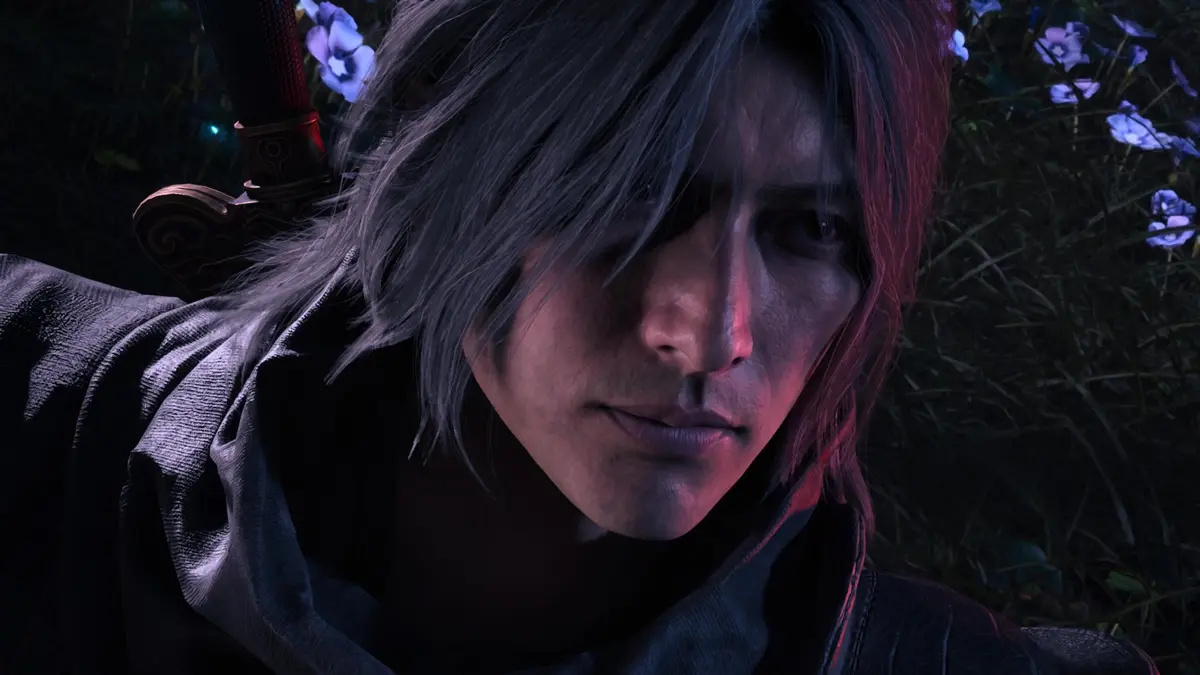
Phantom Blade Zero follows Soul, a former member of the Order who struggles with controlling his Sha-Chi, which is an innate supernatural power that grants him special abilities. Tragically, his inability to control his own powers has led him to commit an atrocity in the eyes of his former peers and warrior companions, and now he’s on the outs with the very people he’s trained and battled with his entire life.
Sadly, this is only the beginning of Souls’ many misfortunes. After an encounter with his former friend-turned-rival Zuo Shang turns sour, Soul gets stabbed in the heart and must find a transplant before his current faulty replacement dies out. Ah, but that’s not all! A calamity has also struck the wulin, rendering settlements and entire towns desolate, as innocent folks trasnform into hollow-faced monsters or mindless puppets driven by entities unknown.
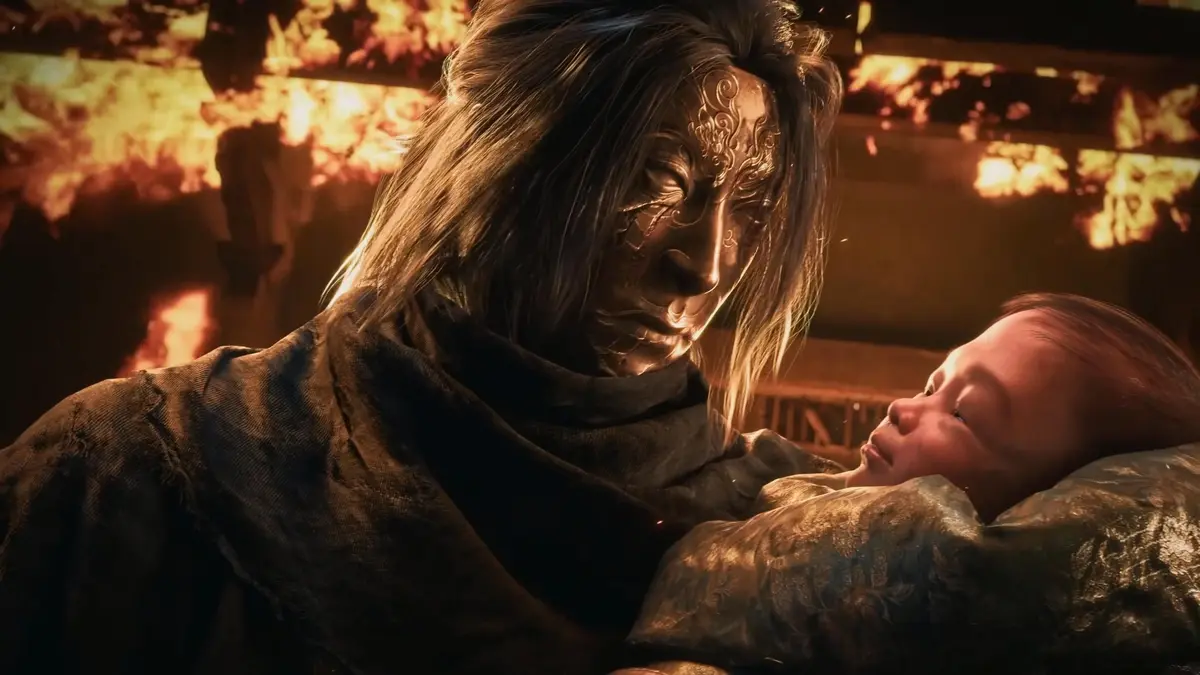
This is where the story begins; with Soul thrust into a world of martial arts and body horror, as he strives to carve out a means for his own survival while unearthing the conspiracies that are threatening to bear an imminent apocalypse. There’s a lot of lore to sort through at first–from warring wulin factions to the mysterious backstory of a masked-up Donnie Yen–which makes the game’s first 10 or so hours feel borderline incomprehensible, as you strive to puzzle out the names of the individual characters and factions they belong to.
Admittedly, I wasn’t expecting much from Phantom Blade Zero’s story. In an earlier preview, I noted that a few of the game’s bossfights had enough emotional weight to carry me through its early hours, despite having some difficulty getting hooked to the larger narrative. Having beaten the game (true ending and all), this remains true of my final playthrough.
Phantom Blade Zero’s narrative strengths do not lie in the telling of its main story. While Soul’s journey is brought to a satisfying enough conclusion, it just doesn't unfold at a concise pace, and almost seem totally uninterested at drawing you in for many hours at a time. Oftentimes, characters will speak in vague airy terms simply to avoid spelling things out to the player, holding back the details that might help you piece things together. Absurdly, they will then drop all pretence and spell things out in excruciatingly detailed exposition-laden monologues for the final six or so hours of the game, making the climax feel like an overdrawn crawl to the finish line.
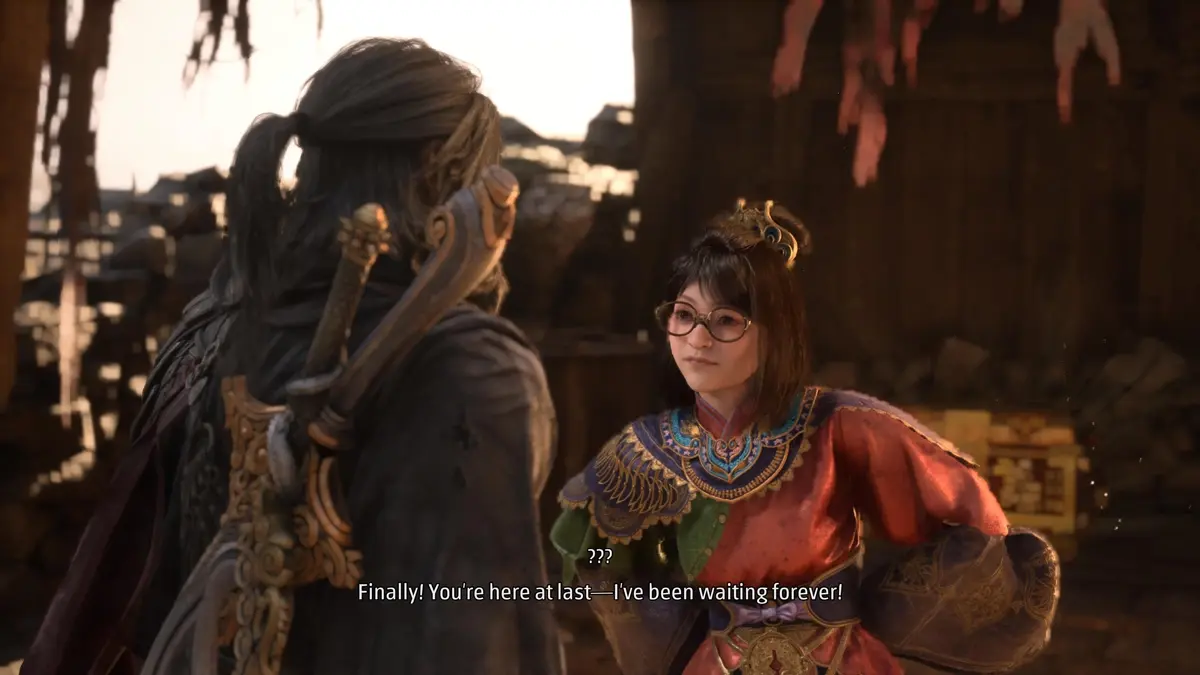
Fortunately, the game’s campaign does have plenty to offer besides its heavy-handed writing. The game’s cinematics are gorgeously animated and choreographed, packed with intense and flashy wuxia-inspired battles. Almost every character, down to even the most fleeting mini boss, is treated with care and has a place in the story. From the endless lore notes to the persistent questlines, it’s incredibly rewarding to meet a character you’ve been hearing about non-stop since the beginning of the game and have them live up to the hype, or see a familiar face return with a storyline of their own later on.
This keen eye for detail does make the more underdeveloped members of the main cast stand out more, however. Despite his looming presence throughout the story, Zuo Shang never feels like a character the game is interested to delve into too deeply. Conversely, while much is unearthed about Soul’s past throughout the story, his dull nonchalant personality remains a point against the game throughout.
How does Phantom Blade Zero’s combat work?
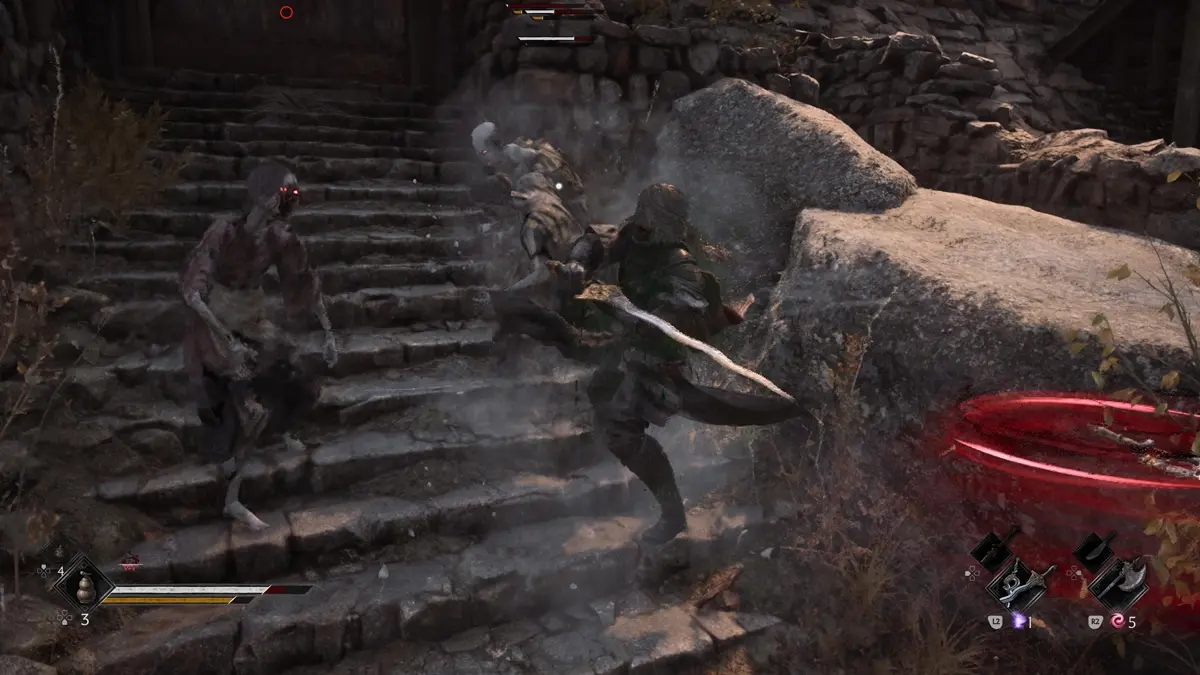
Phantom Blade Zero’s combat heavily emphasises parries, dodges, and working a stamina meter–the latter of which is referred to here as a Sha-Chi meter. This will be par for the course for anyone who’s played a Souls-like game in recent times, but what sets this game apart is the sheer weapon variety on hand.
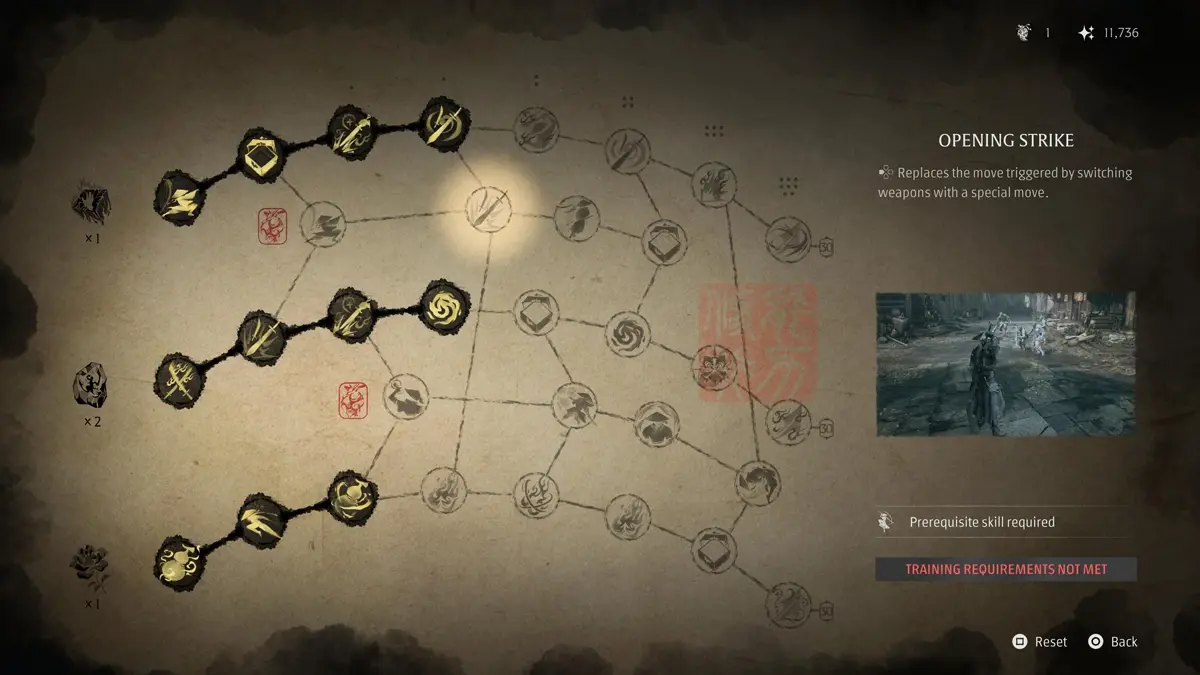
There are 30 primary weapons and 25 secondary weapons in total, the latter of which are referred to as Phantom Edges. All of these weapons are further divided into sub-classes like One-Handed weapons or Destructive Phantom Edges, with each sub-class giving Soul a sharper edge against the game’s wide breadth of enemy types. For example, a Destructive Phantom Edge might work better to break enemy shields, while a Dual-Wield weapon might afford you the speed you need to wreak quick bursts of damage.
While many of the weapons feel pretty similar to one another, and each new weapon that comes your way typically represents a clean upgrade over the old one, S-Game has done a remarkable job at making sure most of them maintain relevancy even in the late game. A system called Soul Tempering allows you to purchase one-time special upgrades for each weapon to increase their efficacy in combat, and while newer weapons may come with higher stats, the unique attributes–like elemental or shield-breaking damage–make the older ones worth using as well.
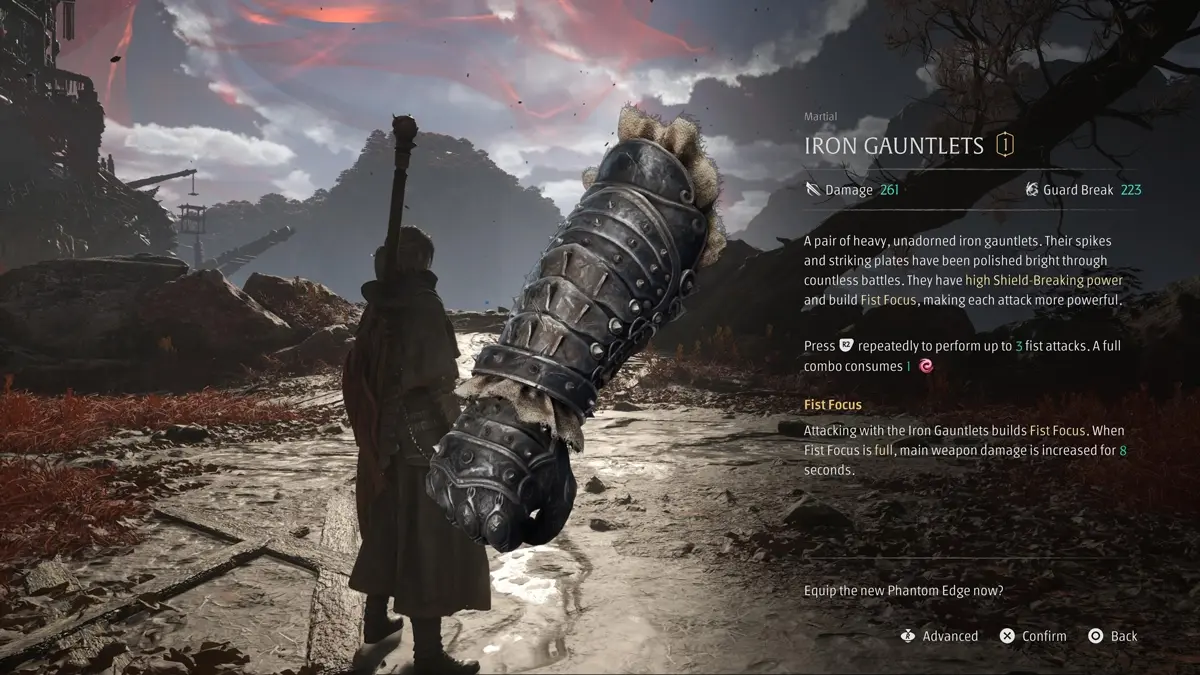
Hence, it rarely feels like you’re just picking up more junk to add to the pile. These weapons feel meaningful, and represent a wide variety of playstyles. Combat encounters can get pretty stale in the late game due to a lack of fresh enemy types, but playing around with your arsenal is always rewarding in and of itself. If you’re tired of parry-fest combat, however, be warned that this is not the game for you. A new controller might be in order once Soul’s journey is over, and I’ll leave it at that.
Much will be said about the game’s boss fights once it’s in everyone’s hands, and for good reason too. S-Game has ensured that multi-phase boss fights come with a checkpoint in between each phase, and that’s likely because these larger-scale encounters can be pretty time-consuming. Thankfully, most bosses (save a few optional fights) are absolutely enthralling, and kept me glued to the controller for as long as it took to beat them.
They’re massive setpieces with electrifying visuals and a frantic pace, frequently busy with visual noise to the point of being nigh-unreadable, and yet a whole lot of fun to beat all the same. The game often feels more focused on making a fight feel as large a spectacle as possible, rather than a tighter slice of combat. Some of them even come with ally NPCs, should you rope them in via sidequests.
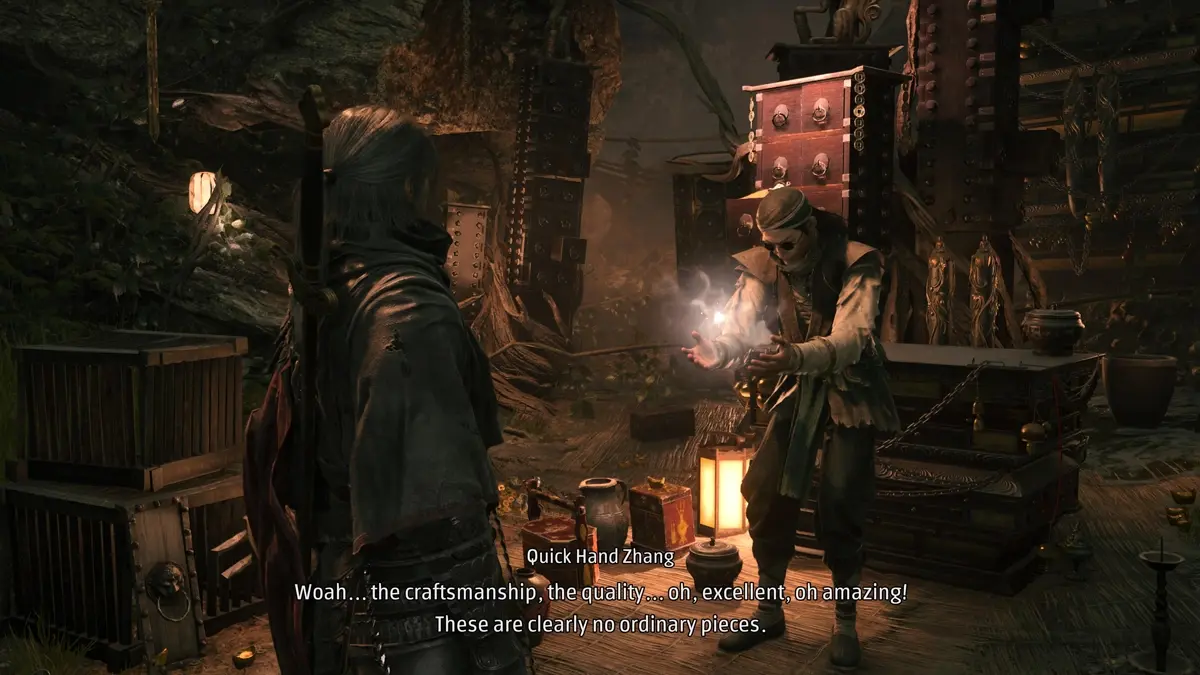
The compromises this game makes, like no respawning enemies and mid-bossfight checkpoints, may prove controversial, but they really worked for me. Downing enemies and having them stay dead made clearing out the game’s world really satisfying. Having checkpoints during boss fights allows the fights themselves to be more of a fun spectacle, rather than several layers of video game concrete to be rammed through.
Combat itself is fast, fluid, and reactive. The sheer volume of different animations programmed into every weapon and enemy interaction is genuinely mind-boggling.
Is Phantom Blade Zero a Metroidvania game?
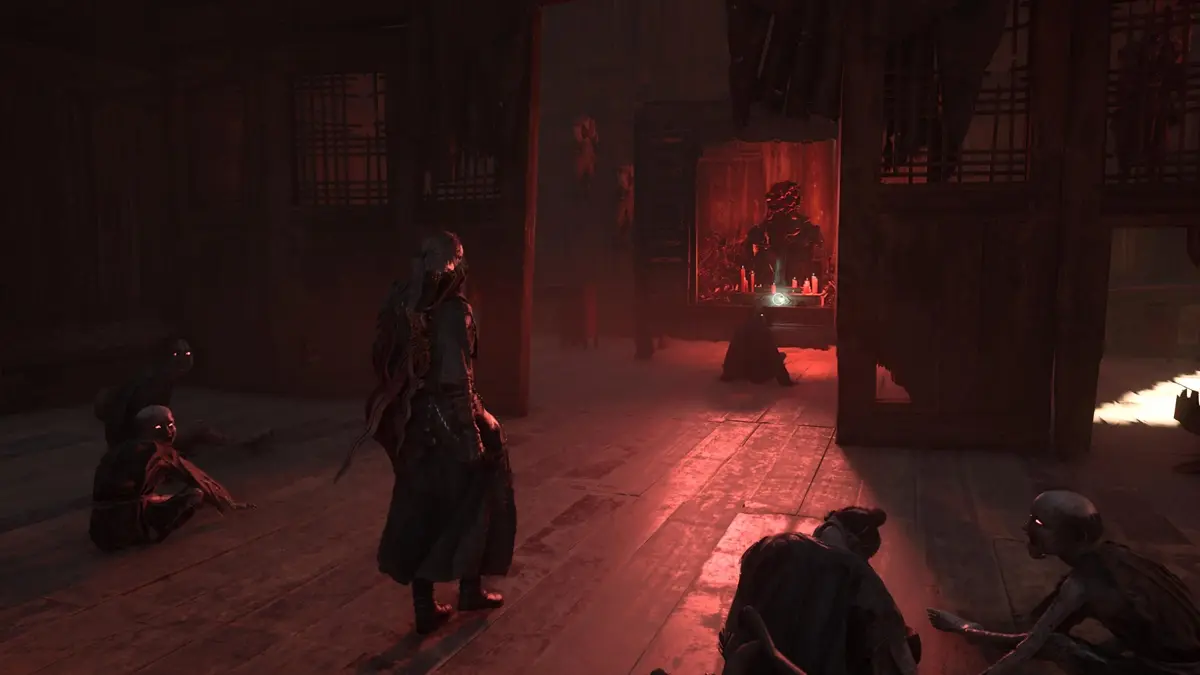
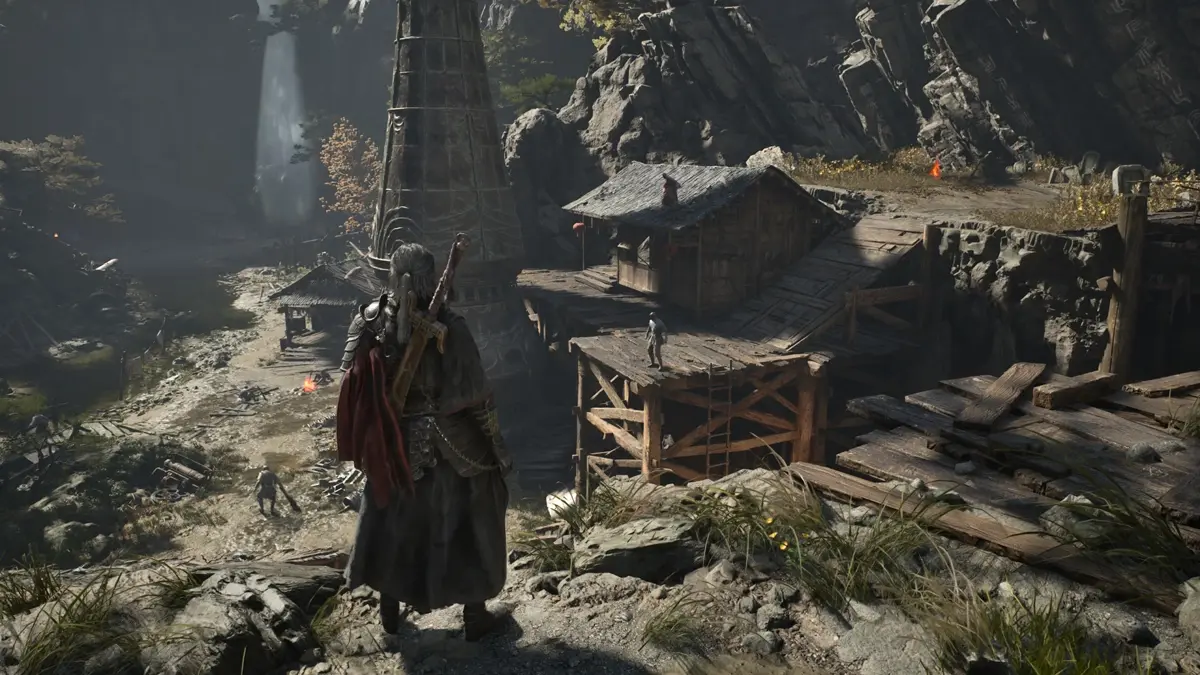
Phantom Blade Zero is a jaw-droppingly gorgeous game at times, and its beauty goes further than graphical fidelity alone. Yes, the game is pretty–environments packed with foliage are especially immersive due to their photorealism, but the game’s character models are equally impressive, with intricate clothing and standout designs. Some character animations feel a little stilted–like enemies snapping from relaxed to guarding stances upon spotting Soul, but for the most part everything feels incredibly fluid and lifelike.
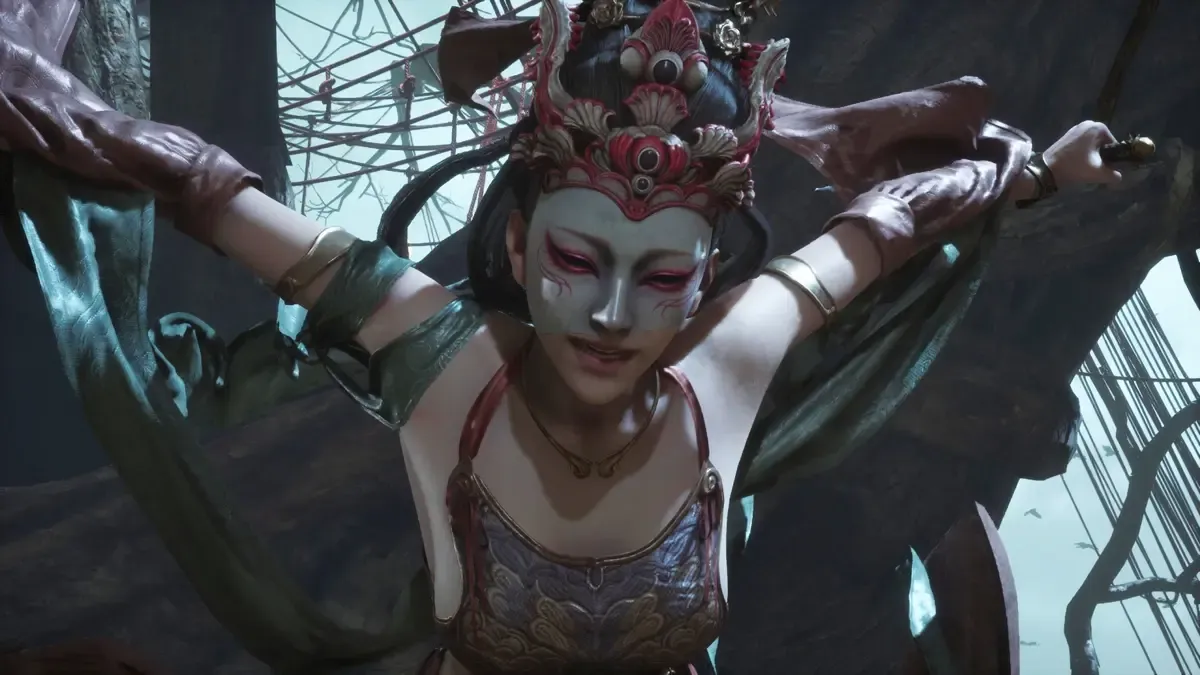
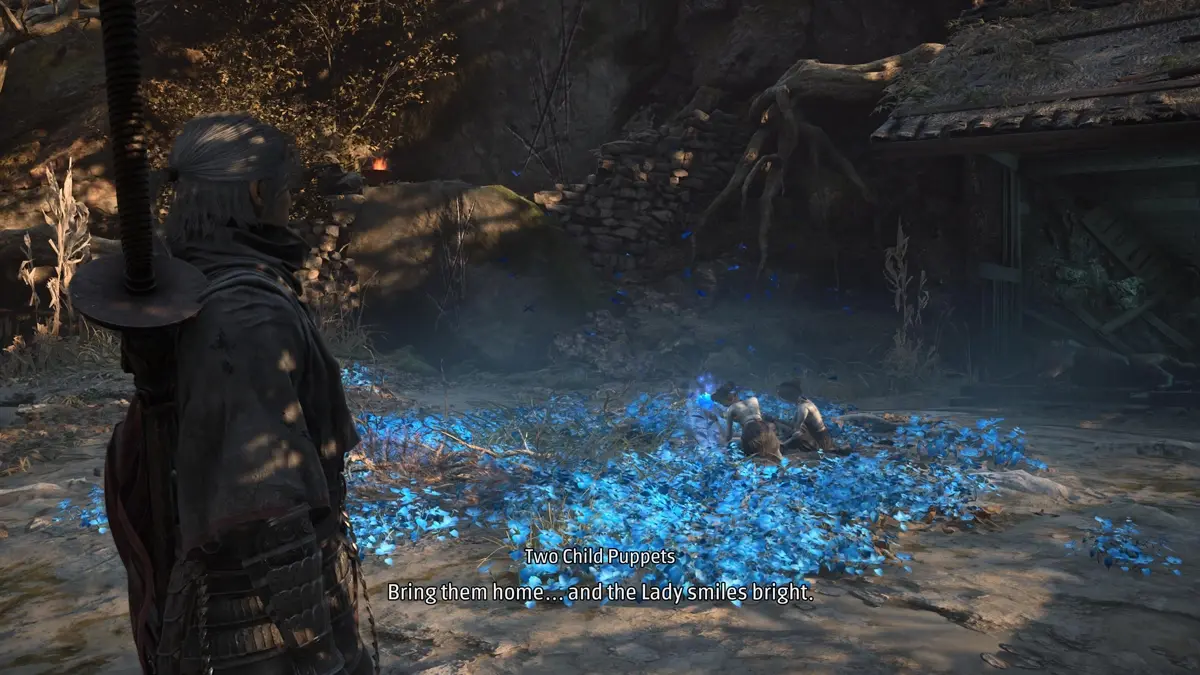
What’s most impressive is the game’s sheer density of detail. Locations like the ghost town of Pangzhen are absolutely filled to the brim with signs of former life–from corpses staged in their final resting places, to plumes of smoke rising from incense sticks burning out, a remarkable depth of worldbuilding is visible in every corner of the game. That extends to the game’s enemy designs, which feel so unique to each of the game’s locations in their own grimy manner, and additionally specific to Chinese mythology and the wuxia genre.
The game also has Metroidvania elements, with Soul being able to pick up certain tools that can help open up new paths in earlier areas throughout the game. This aspect of the game, I’m less hot on. While I did enjoy going back and finding massive sidequests that had been tucked away in places I did not know existed, it did generate a whole lot of busywork in the late game that I could have done without.
A huge part of what makes the late game feel like a slog are these segments; where it feels like you’re not making a lot of forward progress, and maxing out your weapons way too early in pursuit of side quests and collectibles. It feels more like an open world collectathon than expected in the game’s final stretch, though your mileage may vary–our playthrough took roughly 35 hours to get all the weapons and attain the true ending, and we see no way to cut that down unless you’re willing to skip on some very meaty side content. If that just sounds like bang for your buck, don’t let me rain on your parade.
The game doesn’t just have optional weapons, but optional bosses and entire missable locations, so thorough exploration is the name of the game. However, you get such heavy resource drops in the late game that the juice almost doesn’t feel worth the squeeze.
On the subject of performance, much has been said on the subject of Unreal Engine 5 games looking beautiful and having inconsistent frame rates. Phantom Blade Zero isn’t the worst offender in that regard, but it does see a couple of performance drops in its busiest areas, namely in the mid-to-late game, in the town of Pangzhen and beyond. I was playing on a pre-launch patch on the PlayStation 5 and saw pretty choppy frame rates at times, with the caveat that they were limited to dense areas and relatively harmless. Besides that, the game looks gorgeous and runs well on the PlayStation 5.
Additionally, the game’s soundtrack by Caisheng Bo is an absolute triumph. Some of the game’s biggest boss fights only feel more spectacular thanks to the soaring music, which mixes in traditional instruments and electronic beats to fit the increasingly frantic tone of Soul’s battles with the supernatural.
Verdict
Phantom Blade Zero is one of the slickest action-adventure games I’ve played in a long time. Even some of its smaller boss fights held me in sheer bewilderment throughout, wondering how S-Game pieced them together in the first place. Combat is wonderfully fluid and satisfying, but ultimately more forgiving than the typical Souls-like in terms of checkpoints and overall difficulty, making it worth a try even for those who typically avoid the genre.
While the game’s story lost me pretty quickly due to its meandering narrative threads connecting much too late, its diverse locations, great cast of side characters, and eerie world building kept me transfixed nonetheless. This is an absolutely outstanding outing for S-Game, and one that seems destined to propel it into the busy end of year awards season, no less.
Phantom Blade Zero launches on 29 October, 2026, on PC and PlayStation 5. We received a copy of the game for this review.
Is Phantom Blade Zero a multiplayer game?
No, Phantom Blade Zero is a single-player game with no multiplayer elements.
Is Donnie Yen in Phantom Blade Zero?
Yes, Donnie Yen does star in Phantom Blade Zero, but we won't spoil his exact role here.
Is Phantom Blade Zero part of a series?
Phantom Blade Zero is a new entry in the Phantom Blade series, the last of which was Phantom Blade: Executioners (2023). However, it features a new standalone story, and you don't have to play past games in the series to understand its events.