An old man tries to find new meaning in life.
Annapurna Interactive is offering a breather from the bone-chilling thrills of Silent Hill Townfall with a cosy game release this week: Forever Ago. This is a debut title from Third Shift, an indie studio from Germany that announced a publishing deal with Annapurna all the way back in 2022. At the time, Forever Ago was revealed as a road trip game starring an old photographer named Alfred. While the bones were already there, this final version of the game adds its core narrative hook: a dead wife.
Dead spouses are one of the oldest storytelling tropes in the book, right up there with lost daughters and the ominous cough of death. Forever Ago doesn’t innovate or provide fresh twists on its worn premise, which does end up working against the story it’s trying to tell. However, the earnestness with which it delivers upon its premise is infectious, as is the the charm of its vivid art style, and the resolve of its elderly protagonist to see his journey through.
What is Forever Ago about?
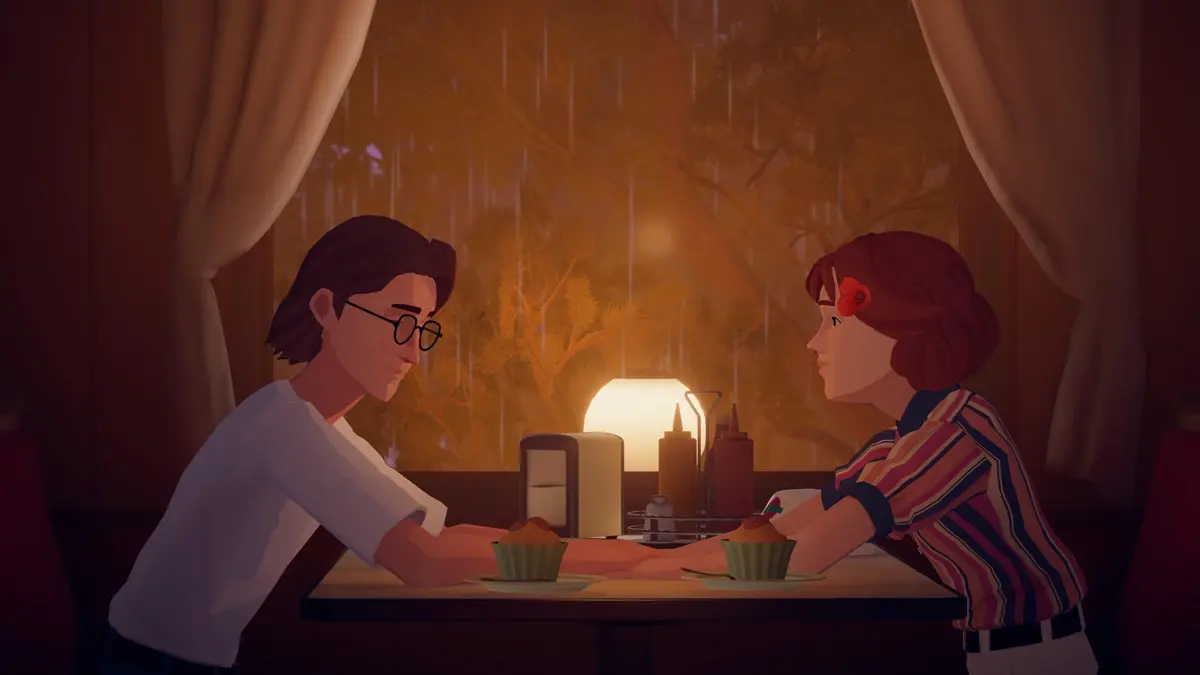
Forever Ago follows Alfred, a photography enthusiast who embarks on a road trip at the request of his late wife Audrey. Audrey succumbed to a terminal illness as the couple were growing old together, but not before sending Alfred on a quest to revisit the many locations across the country that hold meaning to them both; whether it be the spot of their first proposal, or a theme park they would visit annually for novelty’s sake.
Alfred enters the story begrudgingly, with an aimless outlook on the journey laid before him. It quickly becomes clear that he hasn’t been to many of these destinations for decades on end, and to make things worse, Audrey’s intentions are totally lost on him. His late wife’s presence is constant, with every location he steps foot in and every item he observes through the lens of his trusty instant camera bringing to light buried memories of their time together.
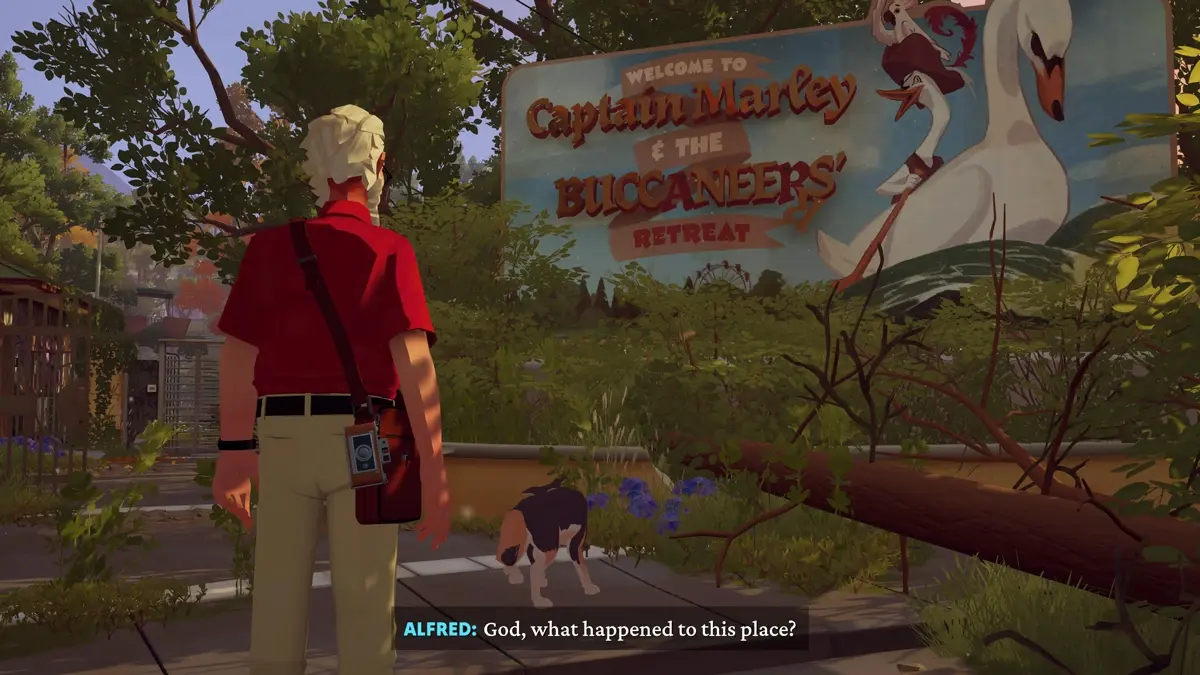
Forever Ago’s exploration of grief is nothing new, rooted in sentimentality and nostalgia without making much of a thematic statement on either. It’s not altogether different from movies like Up, which also features a cantankerous old man who embarks on an adventure where he meets new people and a dog, which eventually leads him to draw new meaning from life. This game is much more centred on its protagonist’s late spouse by comparison, and the core message of its story is directly tied to the spontaneity she brought to their relationship.
The way it explores Alfred and Audrey’s dynamic is less than satisfactory at first; vignettes that interrupt Alfred’s journey constantly flash back to their cross-country adventures together. As the game progresses, the couple gets older in these flashbacks, until the timeline eventually catches up to the present day. There are some genuinely emotional beats throughout, but it’s hard to really buy into their chemistry in the game’s early half, and thus the flashbacks aren’t quite as impactful as they’re intended to be.
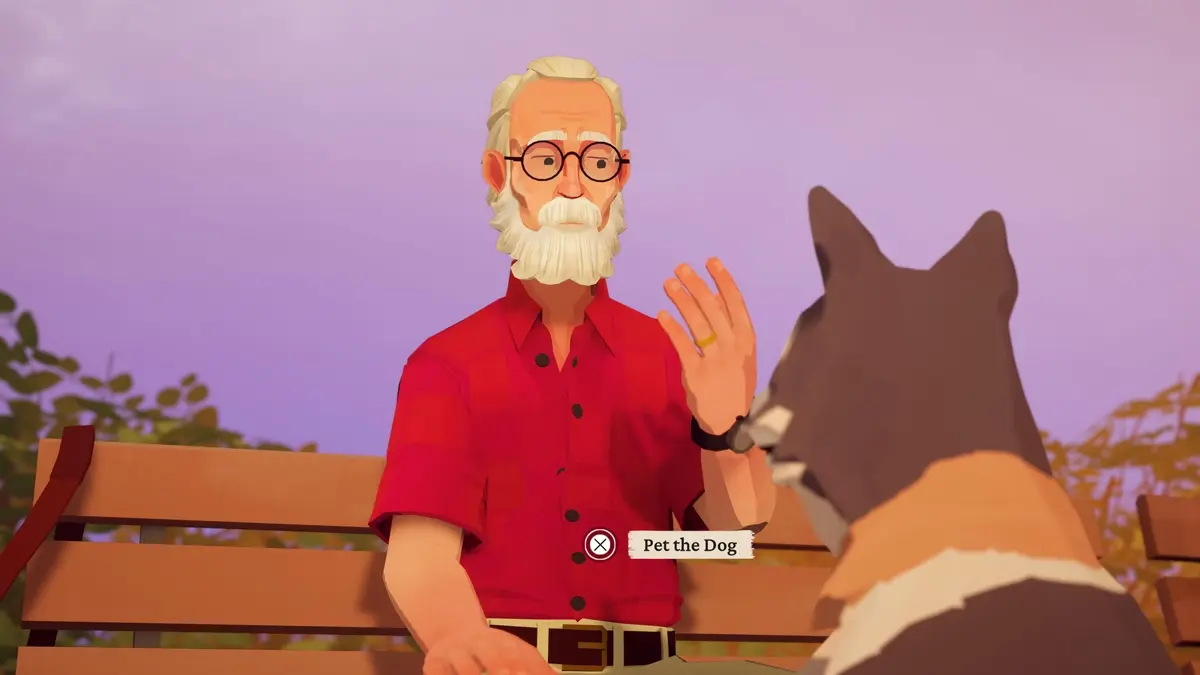
The story does open up quite a bit after an intermission in the road trip, when Alfred meets someone who brings a fresh perspective to his journey. He also accidentally adopts a dog for the remainder of their journey, and this shared relationship becomes far more endearing, perhaps unintentionally, than that of Alfred and his late wife. Past that point, it’s easy to become invested in the rest of their journey together–if only to ensure that the dog gets a happy ending too.
This is a pretty slow-paced, cosy sort of game, akin to Life is Strange and Mixtape. It’s worth noting that I love and actively seek out games like this and yet, without a more unique premise or harder-hitting emotional beats, Forever Ago’s lack of momentum is sorely felt. There are attempts to add more flavour to Alfred’s road trip, like dream-like fantasy sequences and the photography mechanic, but none of it comes together as well as I wanted it to.
Forever Ago gameplay explained
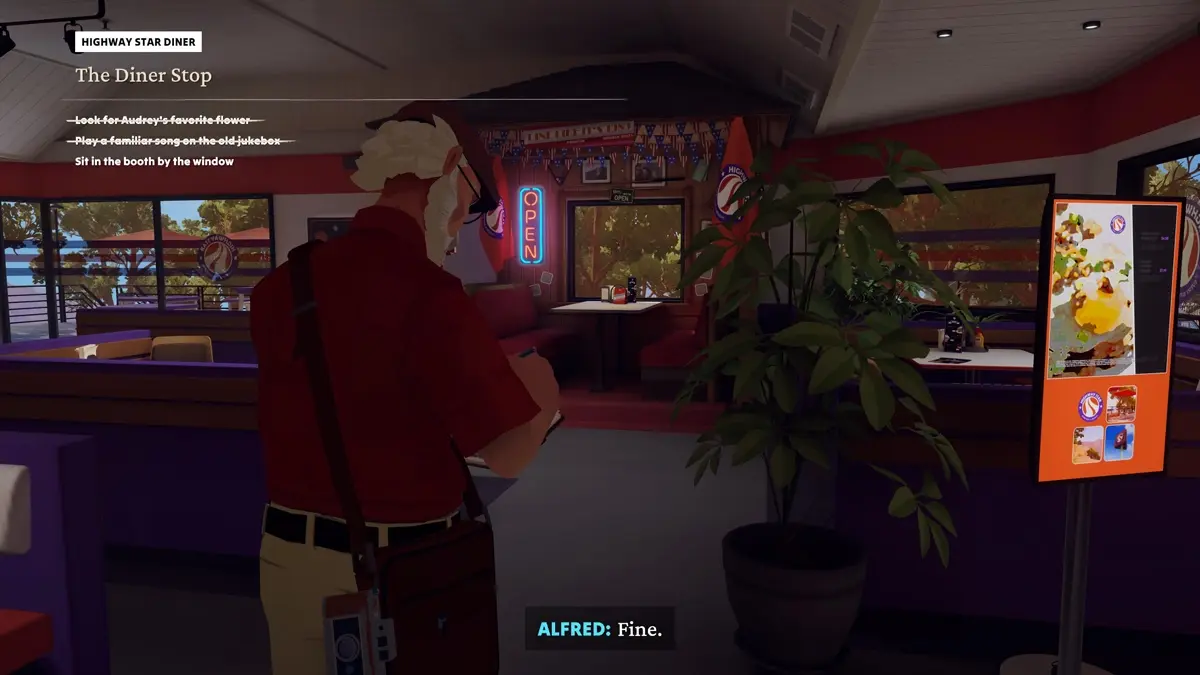
Forever Ago’s visual design is very charming, bringing to life a beautiful tapestry of natural landscapes and flowery gardens with saturated colours and a simple, but nonetheless affable art style. It’s fun to walk around and dig up items or documents to inspect when the backdrop is this pretty to look at. The game’s environments are almost always warmly lit, and cosy enough to be inviting even when you have the barest of reasons to explore.
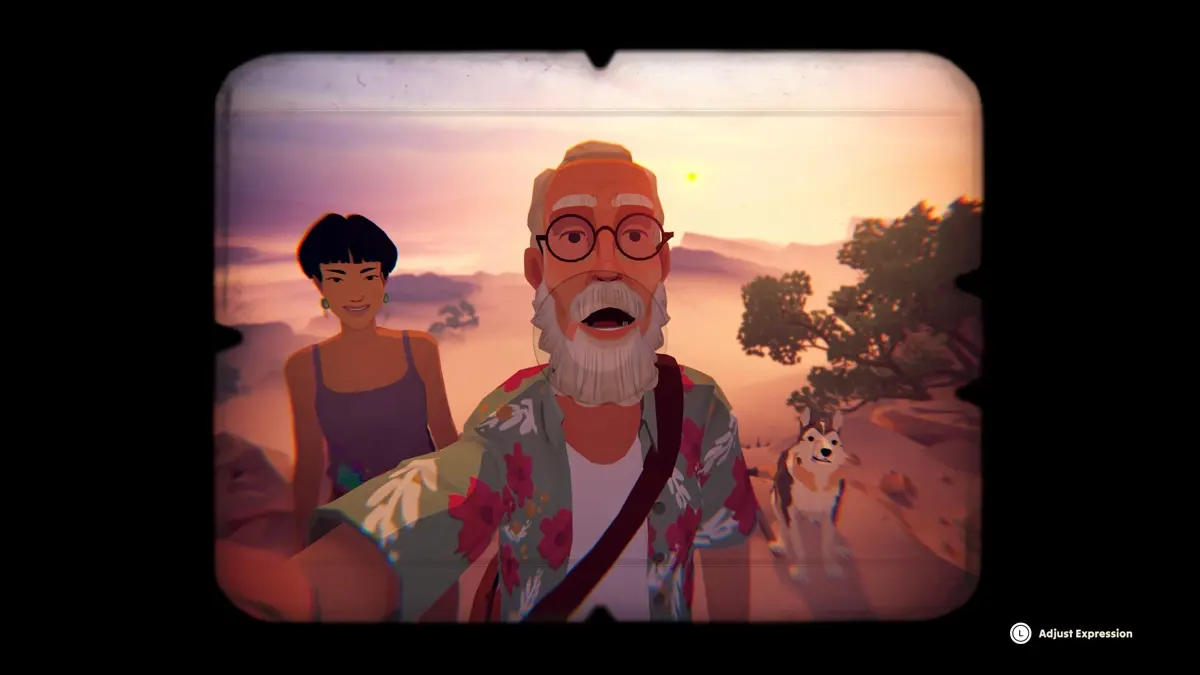
Character models are also a little stiff and robotic, but they’re designed well–Alfred in particular, is easy to follow across all stages in life even with different hair, clothes, and voices, but I will always remember him by the Hawaiian shirt I put him in during the game’s middle section. He just feels atypical for an elderly protagonist, with hair I’m frankly jealous of, and an admirable tolerance for shenanigans.
Besides the general gameplay loop of solving very light puzzles, Alfred also touts an instant camera which players can use to take photos of the various objects and locales they encounter throughout his road trip. At the end of each level, they can select four of these pictures to plug into Alfred’s notebook, as mementos of their journey.
This mechanic is the closest Forever Ago comes to affording the player some agency during gameplay, as the rest of the story unfolds very linearly. Thus, it’s a little disappointing that players can’t really customise Alfred’s notebook in other ways throughout the story, choose more than four pictures from a level, or be otherwise incentivised to use the camera at all.
In fact, you could go for large stretches of the story without even touching the gadget–it’s there if you want it, but oddly unimportant to pick up collectibles or engage in flashbacks. It brings to mind a similar narrative adventure game, Lost Records: Bloom & Rage, which also had a camera-bearing protagonist. In that game, you would use a camcorder to record items for collectibles, and players would see footage pop up later in the story. Forever Ago never goes that far, and treats its camera as a largely optional item players can pick up or ignore as they choose.
Forever Ago console performance
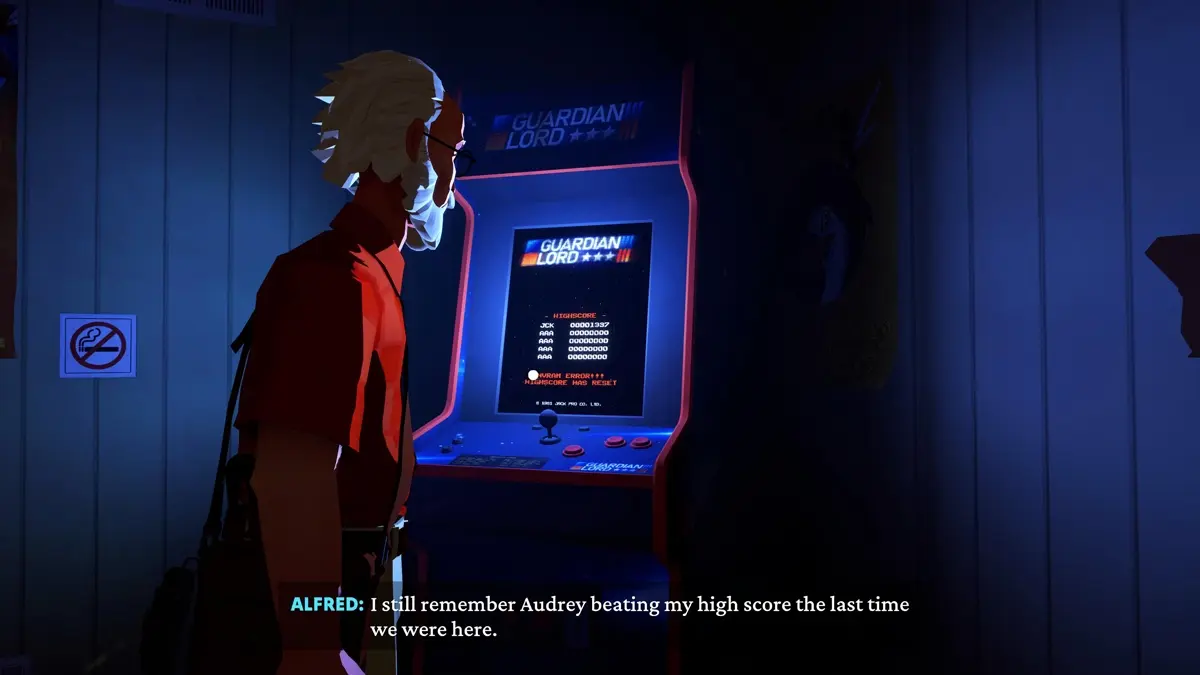
I played Forever Ago before launch, and found the game to be a little janky on PlayStation 5. The inspect button used to examine items more closely can be fiddly, and I would often have to walk back and forth just to get it to show up properly. Strangely, the game’s audio also seems to be tied with how close the camera is to its characters, as voiced dialogue would become muted in wide shots, and then suddenly become louder in close-ups.
The game’s framerate also tanked quite frustratingly in a late game section involving an overgrown theme park, which likely comes down to how busy the environment was with foliage. There’s also a specific section involving a boat which I couldn’t quite figure out, as the controls were weirdly unintuitive. However, it’s worth noting that the game still isn’t out yet, and I can only hope that these specific complaints age like milk upon its full release.
Verdict
I deeply wanted to enjoy Forever Ago. I set out on this adventure with Alfred fully prepared to bawl my eyes out by the time the credits rolled. Instead, I came away from the game feeling weirdly underwhelmed. Perhaps it’s because the game’s photography gameplay doesn’t feel as fleshed out as it could be, or that I never fully believed Alfred and Andrea’s relationship. Perhaps it’s because the game’s environments, as beautiful as they were to explore, afforded me little reason to weave through their nooks and crannies.
Perhaps it’s just because the game’s narrative, which is steeped in unearned sentimentality, only feels serviceable, rather than truly compelling. Its saving grace is the sincerity with which Alfred's story is told, but even that can only get you so far.
Forever Ago launches on 8 October, 2026, on PC, Nintendo Switch 2, PlayStation 5, and Xbox Series X|S. We received a copy of the game for this review.
Who voices Alfred and Andrea in Forever Ago?
Piotr Michael voices Alfred, while Cissy Jones voices Audrey.
How long is Forever Ago?
Forever Ago is roughly four or five hours long, depending on how much time you spend exploring the game’s environments.
Who developed and published Forever Ago?
Developer Third Shift created Forever Ago, while Annapurna Interactive published the game.