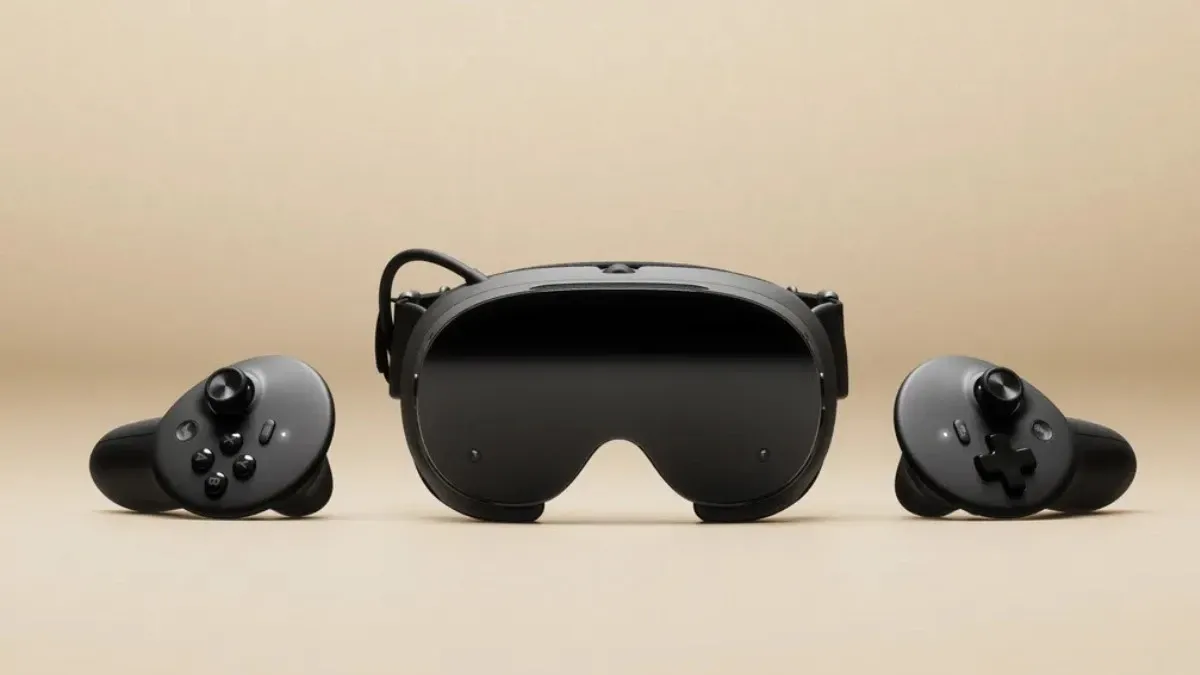
Steam Frame isn't like the Valve Index, it's like a "Steam Deck you can wear on your face."
After years of rumours under the codename Deckard, Valve has finally pulled back the curtain on the Steam Frame, a wireless, streaming-first VR headset that really is like “a Steam Deck you can wear on your face.”
Announced on 13 November on Steam, the headset is positioned as a fully standalone device powered by SteamOS, offering players the flexibility to either stream from their PC or jump straight into gaming on the go.
A headset built for both VR and traditional gaming
The Steam Frame doesn’t just target VR enthusiasts, it’s built to handle your entire Steam library. Players can fire up Half-Life: Alyx or hop into Elden Ring without changing setups, thanks to its versatile controller layout that blends VR motion controls with classic gamepad inputs.
Key features include:
- Streaming-first design: Uses dual radios and a 6GHz wireless adapter to ensure smooth, low-latency streaming for both VR and non-VR games.
- Standalone mode: Powered by a Snapdragon 8 Gen 3 chip with 16GB RAM, it runs SteamOS natively, complete with suspend/resume and cloud saves.
- Foveated Streaming: Tracks your eye movement to sharpen only the pixels you’re looking at improving image quality up to 10x while saving bandwidth.
- Pancake lenses and 4K visuals: Each eye gets a 2160x2160 LCD panel with refresh rates up to 144Hz, ensuring crisp visuals and edge-to-edge clarity.
- Magnetic thumbsticks: Next-gen sticks with capacitive touch, promising precision and smoother control across both VR and traditional games.
The controllers are also designed to multitask. They feature capacitive finger tracking for immersive VR interactions and traditional ABXY buttons, triggers, and D-pad for standard PC titles. Each runs on a single AA battery with around 40 hours of life.
Moving beyond the Valve Index

While the Valve Index remains a beloved headset still used by around 15% of SteamVR players, the Steam Frame represents a clean break from its predecessor. Valve isn’t positioning it as the Index 2, and that’s deliberate.
“This is a new product. That’s one of the reasons we changed the name from Valve Index to Steam Frame, because we’re trying to do something new with this,” said Valve engineer Jeremy Selan in an interview with PC Gamer during their visit to Valve HQ.
Selan explained that Valve doesn’t want players thinking of the Steam Frame as a mere accessory for their PCs, but as something more self-contained.
“If you think about the Valve Index, awesome device, I worked on it myself, but it always was sort of a companion to the PC. This is not. This is a computer.”
That distinction matters. The Index demanded dedicated tracking stations and careful setup before booting it up. The Steam Frame does away with all that, featuring inside-out tracking via four onboard cameras and no need for external sensors or wires.
Steam Frame headset technical specs
Valve has revealed a surprisingly robust hardware configuration for the Steam Frame, making it not just a VR headset, but a fully fledged gaming PC on your face.
Headset:
- Processor: Snapdragon 8 Gen 3 (4 nm, ARM64)
- RAM: 16GB unified LPDDR5X
- Storage: 256GB or 1TB UFS, expandable via microSD
- Display: Dual 2160x2160 LCD panels (one per eye)
- Refresh rate: 72–144Hz (144Hz experimental)
- Field of view: Up to 110 degrees
- Tracking: Inside-out via four outward cameras and two inward for eye tracking
- Connectivity: Wi-Fi 7 (2x2), Bluetooth 5.3, included Wi-Fi 6E wireless adapter
- Audio: Dual stereo speakers per ear with vibration cancellation
- Battery: 21.6 Wh Li-ion with USB-C (45W) charging
- Weight: 440g (core module + headstrap)
Controllers:
- Layout: Split gamepad with full ABXY, D-pad, triggers, bumpers, and thumbsticks
- Thumbsticks: Magnetic TMR sticks with capacitive touch
- Tracking: Full 6-DOF with IMU sensors, tracked by headset cameras
- Haptics: Independent motors per controller for detailed feedback
- Battery: 1x AA each, ~40 hours of use
Valve’s next move in the headset race
It’s been a while since Valve last dipped its toes into VR hardware, and the market looks very different now. The Steam Frame will face stiff competition from Meta Quest 3, PSVR 2, HTC Vive Focus Vision, and Galaxy XR, all chasing the same slice of the growing VR audience.
Valve’s approach, however, feels refreshingly focused on convenience and versatility. The headset is fully wireless, balanced for comfort, and supports both couch gaming and room-scale play. Integrated dual speakers provide spatial audio, while IR LEDs ensure accurate tracking even in darker setups.
A Steam Frame Verified program is also in the works, helping players identify which titles will run smoothly in standalone mode, mirroring the Steam Deck’s compatibility system.
Valve hasn’t confirmed a price yet, but the headset is slated to launch in early 2026, alongside new entries in the Steam Hardware lineup. Developer kits are already being distributed, signalling that Valve wants studios hands-on early.
If the Steam Deck redefined portable PC gaming, the Steam Frame might just do the same for VR–blurring the line between headset and console in true Valve fashion.
This week, Valve also announced the Steam Machine and Steam Controller.