With not a lot of time left prior to the release of Overwatch, there are still lively discussions being held in regards to Overwatch esports. While nothing is set in stone, Jonathan "Reinforce" Larsson is here to give his thoughts in this guest editorial, trying to push the game in what he feels is the right direction.
Within the span of the next 3 months, Blizzard’s newest title Overwatch will hit the market, and while Blizzard finalizes pre-release development, players have an opportunity to test functionality and game mechanics. However, that’s not everything that’s being trialed with little time to go. When it comes to Overwatch, esports, and how Blizzard will approach it, is one of the hottest topics in the scene; people are currently giving their opinions on game modes, format settings and rules.
Regardless of the point of discussion, a lot of people take inspiration from other FPS-games such as Valve’s Overwatch equivalent, Team Fortress 2, the well-established Counter-Strike: Global Offensive, or even MOBA’s such as Dota 2 due to their similarity in hero pool. Should Overwatch have a hero draft system? Should there be a hero limit set in place? They’re all questions worth asking; however, today I will focus on game modes in Overwatch and how I think Blizzard should approach them.
Depth is not always good
The uniqueness of Overwatch introduces many new elements to the FPS genre and esports, with the Payload game mode arguably being one of them. Now that comment might seem ignorant due to Payload being a very popular mode in Team Fortress 2, but the truth is that we haven’t seen Payload being played in front of big esports audiences prior to Overwatch (if the game will reach the expectations it weighs on its shoulders), and thus the game mode has to stand trial whether it will work or not.
Despite the fact that most payload maps include an initial Capture Point, there being stand-alone Capture Point maps and most recently Control Point maps being introduced, Payload has really been the poster game mode for what Overwatch is supposed to be upon release. Having reached the 100-level mark in the Overwatch beta myself, I can safely say that playing the Payload game mode is the most fun I’ve had in video games for a very long time, both when it comes to public matchmaking, and in a competitive environment. But I certainly have my doubts in how exciting it will be to watch as an esport.
There have been plenty of people voicing their support in favor of the game mode, predicting future success if Blizzard were to emphasize on improving Payload for release, implementing features that would help it get it off its feet in the world of esports, there among Paul “ReDeYe” Chaloner. In Chaloner’s piece “Delivering the esports “Payload” in Overwatch” published Tuesday on Slingshotesports, he writes “think of how exciting it would be with the timer counting down as they draw closer to the marker or the end point. Commentary would go through the roof, excitement would be massive, and the players’ hearts would be racing.”
And well, my prediction of Payload is quite the opposite of what Chaloner describes.
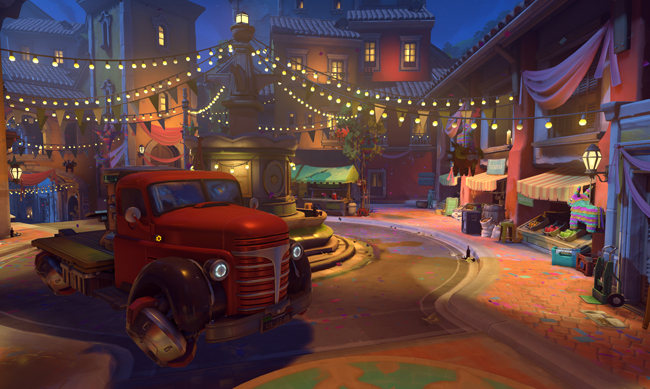
The biggest flaw of Payload as an esports game mode is the lack of clarity in reaching an objective. In its current state, the Payload game mode is decided as followed: one team starts out as attackers meant to push the Payload to the end of the map, setting the best time possible, or pushing the Payload as far as possible. After the initial attack, the defenders from last round now get their chance to beat the initial time, or distance, set by the enemy team and afterwards both rounds a winner is decided.
Not only does half the game, meaning the initial attack, lack a huge amount of hype due to there not being a known winning condition as of yet, but even upon the second round of attack a timer counting down the remaining time is incredibly vague for a spectator. In a lot of the weekly tournaments currently run for competitive Overwatch, the excitement for whether the second attacking team can reach the objective faster than the set time gradually decreases until a state of uncertainty and confusion. When 30 seconds remain, you might start to think to yourself “does the map even allow them to move that fast to the objective, regardless of obstacles?” And the question is never answered until the enemy team taps out; how incredibly anti-climactic.
When you actually sit down and think, why are other FPS games so successful as an esports? The answer is that the objective for winning is so well-defined. In the duel game mode of Quake, the only thing you have to do is to kill your opponent more times than he kills you. In Counter-Strike, the only thing you have to do is to kill your enemy team more times than they kill you. Regardless of skill-level or depth of strategy, it is clear to everyone where the finish line is. The Payload game mode does not have that well-defined finish line to the same extent as it’s FPS brethren, and that’s why I see it failing when it comes to the bigger, casual audience.
Another argument presented in favor of Payload is the depth of strategy available in the game mode, and while I don’t necessarily have anything to back up my opinion of once again disagreeing, considering the game mode in the long-run and the future development of Payload, neither do I think anyone has any facts at their disposal to argue that there is more depth to Payload compared to other game modes available in Overwatch. So far we’ve already witnessed a lot of different metas come and go, but not necessarily exclusively to Payload itself.
The excitement for whether the second attacking team can reach the objective faster gradually decreases until a state of uncertainty and confusion
In Overwatch’s current state, coming up with new strategies, unless it being closely defined to “cheese”, is actually difficult. Throughout the existence of Overwatch, although short, the meta has most often been defined due to some heroes being stronger than others, and not necessarily due to the heroes having different tools at their disposal, which is the source of strategy itself.
If anything, we’ve so far seen a higher hero variety in regards to Capture Point objectives, regardless of the map being King’s Row, Hanamura, or Hollywood, and if I were to explain why, it would be due to the nature of unexpectancy of the attacking hero line-up and “cheese”, which in turn points toward Capture Point being the better game mode due to its hero variety, albeit it originating from something generally considered negative.
The case of Control
The game mode most recently introduced to Overwatch is Control. Control Point, also known as King of the Hill, is a more simplistic game mode where the objective can clearly be defined as both teams battling over control of an objective, either team capturing it, and then keeping control over it for a set duration of time in order to win the round.
Between the three game modes available to play in Overwatch right now, Control Point is the way to go when it comes to Overwatch esports. Although it has flaws, such as the team controlling the objective still gaining points while the enemy team is contesting, which most definitely needs fixing before its implementation into esports, it from the get go has more potential to be appealing to a casual esports audience. You don’t need to be heavily invested into Overwatch to understand that once a team reaches 100% completion they win, and that’s the biggest requirement if you want to be classified as a top tier esport. The game, and everything around it, including the clutch plays, would all have a lot more meaning if the viewers had a better idea of the value behind them, thus resulting in a more enjoyable and fun viewer experience.
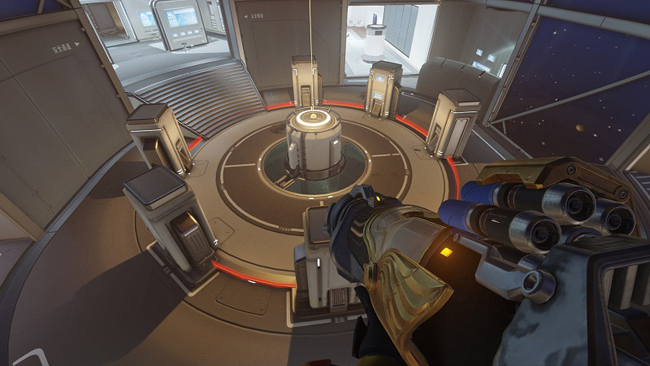
Control Point also has another feature in its favor considering esports, in that there’s distinct rounds on every map. With the addition of rounds on every KOTH map, there is a small guaranteed break during a live match which allows a production team to add more player personality to the broadcast. Personality is one of the most appealing factors to the casual viewer, in getting to know the players and the scene. Watching players go through the motions, and giving the commentators an extra moment to hype up the next round, provides additional story to what we’re about to see.
Now, you might argue that there is a natural small break on Payload maps when the two teams switch between attack and defense, but the difference is that after the initial round on Payload there is no clear way of knowing whether a team is ahead or not, which makes it harder to provide a storyline of a team fighting back from a disadvantageous position, or a team straight up dominating their opposition.
It’s too early to tell whether Control Point is fit with its depth of strategy, mostly due to most teams not having explored the recently added game mode to its fullest potential. But what’s for certain is that with the continuous support from Blizzard (with new exciting heroes/heaps of personality and lore), the Control Point game mode has a shot at taking on today’s frontrunners of esports.
No one knows the future of Overwatch, and that's important to know
As it stands, the Overwatch esports scene is in a state of flux. No matter the topic (hero limits, game modes or optimal meta), opinions and directions are ever-changing, and they will continue to for quite some time moving forward. Ahead of Overwatch’s release within the next three months, I certainly wouldn’t be surprised to see potential hero skill adjustments in order to make some heroes more viable, especially focusing on the Control Point game mode rather than Payload, which most heroes were initially designed for.
Now don’t get me wrong, if Blizzard chooses to focus on Payload as the game mode of their choice Overwatch will still reach a certain amount of success due to its big playerbase to come, but if you really want Overwatch to be played in the Spodek, the Staples Center or Madison Square Garden without having to hand over an unnecessary case of money in return, you’ll have to choose a better route than Payload.
For more competitive Overwatch news and features, follow us @GosuOverwatch.
 |
Jonathan "Reinforce" Larsson is a passionate fan of all eSports. You can find him on Twitter @Reinforce. |