Dylan Faden finally takes centre stage as Control steps beyond the Oldest House. Were the changes worth it?
Control Resonant is not the sequel I expected. The first Control was one of those games that felt genuinely different when it arrived in 2019. The Oldest House was strange, oppressive, and deeply unnerving, and despite how often it made me nervous, I stuck with Jesse Faden until the end, only to be left with more questions.
So when Control Resonant finally came around, I thought I'd need nerves of steel all over again. Instead, after playing through the full game, I found Resonant to be something much wider, louder, and far less claustrophobic than the first game.
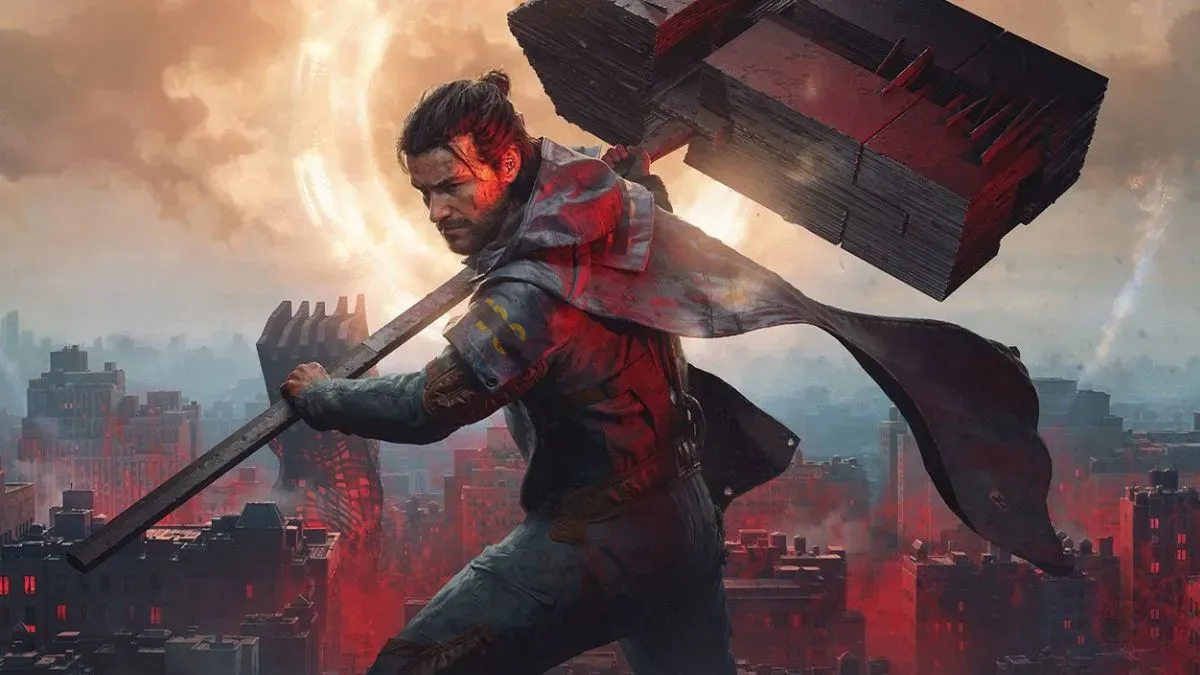
This time, much of the story unfolds through Dylan Faden's eyes as a paranatural disaster spills beyond the Oldest House and into Manhattan. Control Resonant plays like a very different game from Control and, perhaps for the story Remedy wants to tell this time, that may be exactly what it needed.
Control Resonant
Release Date: 24 September 2026
Platforms: PlayStation 5, Xbox Series X|S, PC, and Mac
Developer: Remedy Entertainment
Control Resonant graphics and visual design
For a good portion of Control Resonant, Manhattan looks roughly like Manhattan should, except something has gone terribly wrong with it. Concrete buildings and grey streets dominate much of the first half, with sections bent, twisted, or transformed by the Patterning, the Hiss, and other paranatural forces affecting the city. It initially feels considerably more grounded than wandering through the endlessly shifting halls of the Oldest House.

That starts changing as the game progresses. By the middle and later portions of Control Resonant, environments become increasingly bizarre. Platforms move in ways they should not, rooms are stacked strangely on top of one another, buildings twist until their original orientation becomes difficult to recognise, and entire spaces seem to disregard gravity. Some areas genuinely feel like places that could only exist in a dream, where everything seems completely logical until you stop and think about what you are looking at.
It also helps make Manhattan feel increasingly corrupted as Dylan gets deeper into the crisis. The game does not immediately throw its strangest ideas at the player. Instead, reality seems to get progressively less reliable. It is a different kind of surrealism from Control. The Oldest House was already an unknowable place when Jesse walked through its doors, while in Control Resonant, there is something particularly strange about watching a once familiar city gradually stop obeying the rules.
Control Resonant music and sound
Music is a little more of a mixed bag. There are some genuinely great upbeat tracks throughout Control Resonant, often blasted by Dylan’s handler Zoe through his comms or playing through speakers somewhere in the environment. The choice makes sense for a game that is generally more energetic and less isolated than its predecessor.
Control had a much more restrained soundtrack for much of its runtime, which worked well with Jesse spending long stretches alone inside the Oldest House. Control Resonant has Dylan constantly moving through a city, meeting people, talking to the FBC, and dealing with a much more outward-facing crisis. The louder soundtrack fits that difference.
However, not every use of it worked for me. Some tracks are deliberately made to sound as though they are coming through an old speaker or tinny communications system. It makes sense environmentally, but there were moments when the effect simply made a good song unpleasant to listen to.
The soundtrack is not always upbeat, either. There are more sombre tracks throughout the game that fit the emotional weight of Dylan’s journey, particularly during the final hours. Those quieter moments do a lot to drive home what he has been carrying throughout the story and make some of the later scenes hit much harder.
When the music works, it adds a lot to both sides of Control Resonant: the loud, chaotic energy of its action and the more painful parts of Dylan’s story.
How different is Control Resonant from Control?
Control Resonant plays quite differently from the first game. Control was primarily a third-person shooter, with Jesse fighting through the labyrinthine halls of the Oldest House using the Service Weapon while gradually gaining supernatural abilities.
She also spent much of that journey alone. There were people she could return to, including Emily Pope, who eventually became one of Jesse’s closest allies, and characters such as Arish. But once Jesse left those relatively safe pockets of the Bureau, the Oldest House could feel deeply lonely. It was enclosed, hostile, unpredictable, and sometimes genuinely frightening. Its horror rarely depended on something jumping out at Jesse. It was the uneasiness of walking somewhere she clearly did not understand, hearing the Hiss chanting in the distance, or finding something completely inexplicable sitting in an otherwise ordinary office.
Control Resonant loses some of that feeling. Dylan’s Manhattan is wider, a little brighter, and a bit more populated. He regularly communicates with other people, has allies working alongside him, and meets far more characters throughout his journey. Anyone hoping to recapture exactly that dark, claustrophobic, nerve-wracking feeling of breaking into the unknown may miss it here.
But Control Resonant is also trying to do something very different. The Hiss is no longer contained within one impossible building. Its influence has reached Manhattan, while another anomalous force is now at odds with it. Dylan is no longer sneaking through somebody else’s nightmare. He is being thrown directly into a catastrophe, and that shift affects almost everything about how the game plays.
Control Resonant combat and character builds
Instead of Jesse’s Service Weapon, Dylan uses the Aberrant, a shapeshifting melee weapon that allows players to choose different forms and build around them.
I went with Slash, the scythe-like primary form, which has wide attacks that made it useful for knocking enemies back and dealing with groups. For my secondary weapon, I picked Drill, which focuses sustained damage on a target. Looking back, there were definitely moments when I wished I had chosen the much heavier Crush instead. Other Aberrant forms can eventually be unlocked, giving players more room to experiment with their loadout.
Progression is considerably more complex than it was in Control as well. Jesse’s weapon and ability upgrades were relatively straightforward. Dylan has his different Aberrant forms, supernatural abilities gained from Resonants, Artifacts, and several other ways of shaping a build.
That does not necessarily mean combat always feels more varied. How enjoyable it becomes can depend heavily on the weapons and build you choose. During the first half in particular, combat risks becoming repetitive. Dylan is ultimately hacking and slashing through a lot of enemies, and when some of the tankier ones take a while to bring down, encounters can start feeling like obstacles standing between you and wherever you actually want to go.
Unlocking more weapons and abilities gives the system more variety, but the basic motions of your primary weapon naturally remain familiar after hours of using it. There is also a decent variety of enemies, including some that can inflict effects such as fire or Mold. Eventually, however, familiar enemy types start appearing often enough that they lose some of the disturbing quality creatures in the first Control could have. After fighting enough of them, you stop being particularly scared of what is coming at you and start thinking about how quickly you can get rid of it.

The bosses are a different story. Most of the game's major bosses are Resonants, and these were easily some of my most memorable encounters. There is the first Resonant encountered during the tutorial, The Artist, essentially an enormous head missing its lower jaw. Another encounter takes place around a furnace and felt nearly impossible at first because of the sheer amount of fire and lava being thrown around.

Then there is a performer encountered in a theatre. A theatre-based boss is hardly something games have never done before, but what happens towards the end of that fight gives the encounter an unexpectedly painful emotional edge. That is something Control Resonant does particularly well with its Resonants. Each one feels like it had a life before Dylan found it. The game does not always sit you down and explain every detail of who or what they were, but it gives just enough information to make you wonder. That makes defeating them feel like more than clearing another boss arena.
What is exploration like in Control Resonant?
Exploration is one of Control Resonant's biggest strengths. Moving outside the Oldest House gives Remedy considerably more space to play with what a city affected by the Hiss and other paranatural phenomena might look like. Manhattan becomes trippy, weird, and occasionally frightening, although never quite as suffocating as Jesse being trapped inside the Oldest House.
It can also be incredibly easy to get lost. That was particularly true during my first few hours, before more of the city's districts and routes had become familiar. It gets easier later, but there were plenty of early moments spent turning around and trying to work out where the game actually wanted me to go.
There are also side quests scattered throughout the different districts, and some of them are where Control Resonant gets to be a little silly. There are activities involving floating cargo, a bizarre chase after a stroller that really does not want Dylan to catch it, and, most importantly, helping a very cute and very weird dog that somehow manages to appear in places where a dog absolutely should not be.
Because Dylan is working with the FBC, whether everyone involved likes that arrangement or not, several side quests also help develop his relationships with the people around him. They are a welcome break from the heavier story, particularly during the first half when Manhattan is already strange, but the game has not reached its truly outlandish stretches yet. Completing them also provides useful resources for progression, so wandering away from the main objective rarely feels completely pointless.
Control Resonant puzzles
There are also plenty of puzzles, and some are much better than others. Some are fun and make sense once you figure out what the game is asking you to do. Others involve so much backtracking that they start feeling like a waste of time.
One of the earlier main-story puzzles in particular had me going backwards and forwards enough times that completing it felt more like finally being allowed to leave than actually accomplishing something. The better puzzles use the game's strange spaces and Dylan's powers in ways that make you look at the environment differently, while the weaker ones simply make you retrace your steps.
Why is movement a highlight in Control Resonant?

For all the weapons, supernatural abilities, bosses, and builds Control Resonant throws at Dylan, its movement may be the most exciting part of actually playing it.
Dylan's mobility becomes progressively more ridiculous as his powers grow. He can make huge jumps, float, launch himself through spaces, and eventually move through environments where the very idea of a floor becomes questionable. At certain points, the orientation of an area changes entirely. A wall becomes the new floor, and Dylan simply continues moving as though gravity has decided to follow him instead.
There were moments that reminded me of films such as Inception and The Matrix, except Control Resonant sometimes manages to push that idea even further. It is also one of the areas where being outside the Oldest House really benefits the sequel. Dylan has space to move, and Remedy takes full advantage of it.
Control Resonant characters and story
Jesse and Dylan are very different protagonists. Jesse was driven, confident, increasingly in command of what was happening around her, and, frankly, had a kind of effortless badass quality by the time she settled into the role of Director.
Dylan is not that person. He is socially awkward, constantly carrying guilt, and at times almost suicidally willing to throw himself into dangerous situations. He is persistent, but he does not have Jesse's immediate charisma or the same commanding presence. Considering his life, that makes sense. Dylan was taken by the FBC when he was only 10 years old and spent most of his life inside the Oldest House. He later became possessed by the Hiss and was responsible for the deaths of hundreds of people.

When Control Resonant begins, most people do not particularly like him. Others are openly wary of him. Some work with Dylan because circumstances force them to, while others seem willing to send him into danger because, frankly, he may be the best or last option they have. And I actually found that quite relatable. Dylan is not the person everyone naturally wants in the room. He is the person who has spent most of his life in the background, carrying things other people associate with him, until circumstances suddenly force him to step forward because there is nobody else who can do what needs to be done.
Watching him slowly prove himself gives Control Resonant what feels like a story of self-redemption. He does not suddenly become Jesse. He gradually becomes a better version of Dylan.
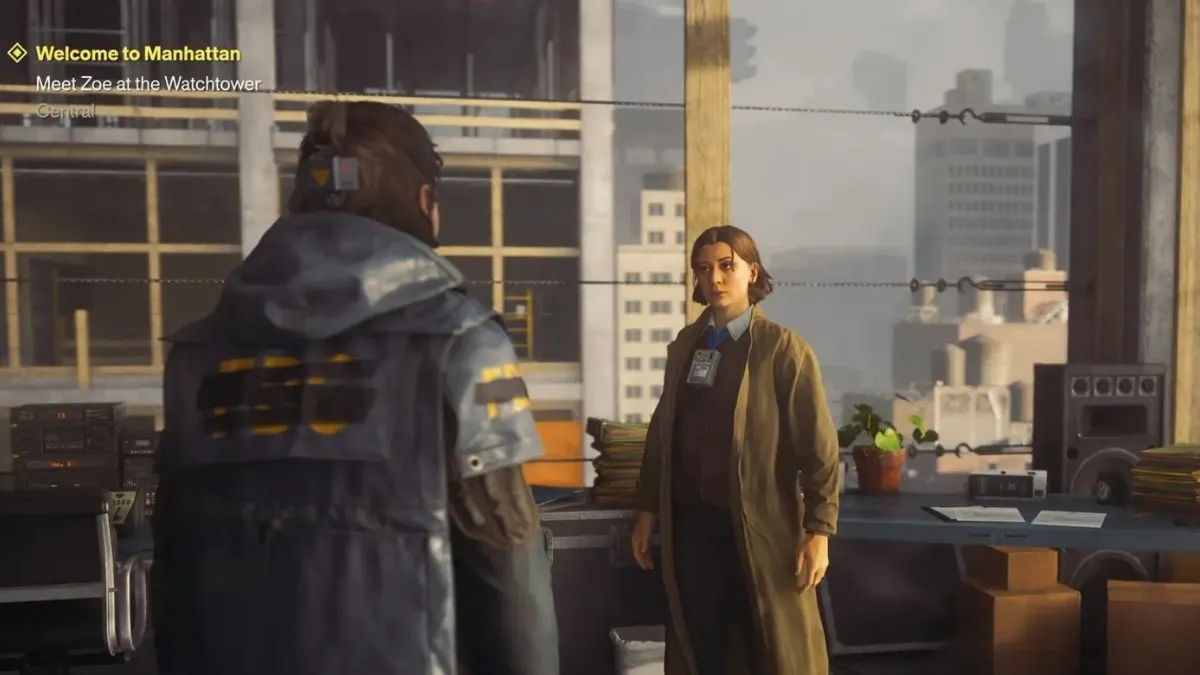
That growth is one of the stronger parts of the story, particularly because his relationships with other characters change alongside him. Some people warm to him. Some develop in their own right and become considerably more likeable as the game continues. Others, admittedly, remain fairly one-dimensional and irritating.
But Dylan himself is given plenty of room to change over the course of the game, and by the end, he feels far removed from the broken man players first encountered in Control.

And despite how loud Control Resonant can be, whether through its combat, music, constantly shifting environments, or the sheer amount happening on screen, it never completely loses sight of the story underneath all of that noise. At its core, this is still a story about Jesse and Dylan, the strange paranatural forces that have shaped their lives, and the people caught up in the consequences.
There are a lot of mysteries in play, and plenty that cannot be discussed without spoiling some of the game’s strongest moments. But Control Resonant manages to keep its bigger supernatural spectacle from drowning out the much more personal story at the centre of it.
Verdict
Control Resonant is a strong continuation of the first game precisely because it is willing to be so different from it.
Its connection to Control is undeniable, from its characters and paranatural threats to the consequences of what happened inside the Oldest House. But the decision to move into Manhattan, make Dylan the protagonist, open up the environments, and completely rethink combat feels deliberate.
Not everything works. Combat can become repetitive, particularly when dealing with tankier enemies, some puzzles rely too heavily on backtracking, and the more open, populated structure means Control Resonant loses some of the isolation and psychological uneasiness that made the first game so memorable. I missed that feeling sometimes.
But Control Resonant has memorable bosses, increasingly bizarre environments, excellent movement, plenty of smaller surprises, and a protagonist whose growth gives the story a very different emotional centre. There are also some genuinely unexpected moments that are better left unspoiled.
Anyone looking for Control again, only slightly bigger and prettier, may come away disappointed. Control Resonant simply is not that game. But for those invested in Jesse, Dylan, the FBC, the Hiss, and the larger story Remedy started seven years ago, Control Resonant feels like the sequel that story needed. It takes a very different route to get there, but by the end, it answers questions that have been hanging over both games while finding some new ones to leave behind.
And if there is one lesson that should probably stick after everything Jesse and Dylan have been through, it is this: if anyone ever finds another suspicious slide projector, perhaps just leave it alone.
Control Resonant launched on 24 September 2026 on PlayStation 5, Xbox Series X|S, and PC via Steam and the Epic Games Store for US$59.99 for the Standard Edition and US$69.99 for the Digital Deluxe Edition. We received a copy of the game for this review.
Frequently Asked Questions
How much is Control Resonant?
Control Resonant's Standard Edition costs US$59.99 and includes the base game. The Digital Deluxe Edition costs US$69.99 and includes the base game, the AWE Mission Outfit, Untapped Artifact (Wallet), a Starter Resource Bundle, a digital artbook, and the original soundtrack.
What platforms is Control Resonant available on?
Control Resonant is available on PlayStation 5, Xbox Series X|S, and PC via Steam and the Epic Games Store.
Can you play Control Resonant on Steam Deck?
The developers have confirmed Steam Deck support for Control Resonant. However, this review does not independently assess Steam Deck performance.
Is Control Resonant a continuation of the first game?
Yes. Control Resonant is a direct continuation of Control and follows Dylan Faden after the events of the first game, with many of its characters, conflicts, and mysteries carrying over.
Do you need to play Control before Control Resonant?
Not necessarily, but playing Control first gives much more context to Dylan and Jesse Faden, the FBC, the Hiss, and several major events referenced throughout Control Resonant.
Is Control Resonant open world?
Control Resonant is much more open than the first game, with large sections of Manhattan to explore, although it is structured around expansive zones rather than a traditional seamless open world.
Is Control Resonant single-player?
Yes. Control Resonant is a single-player game.