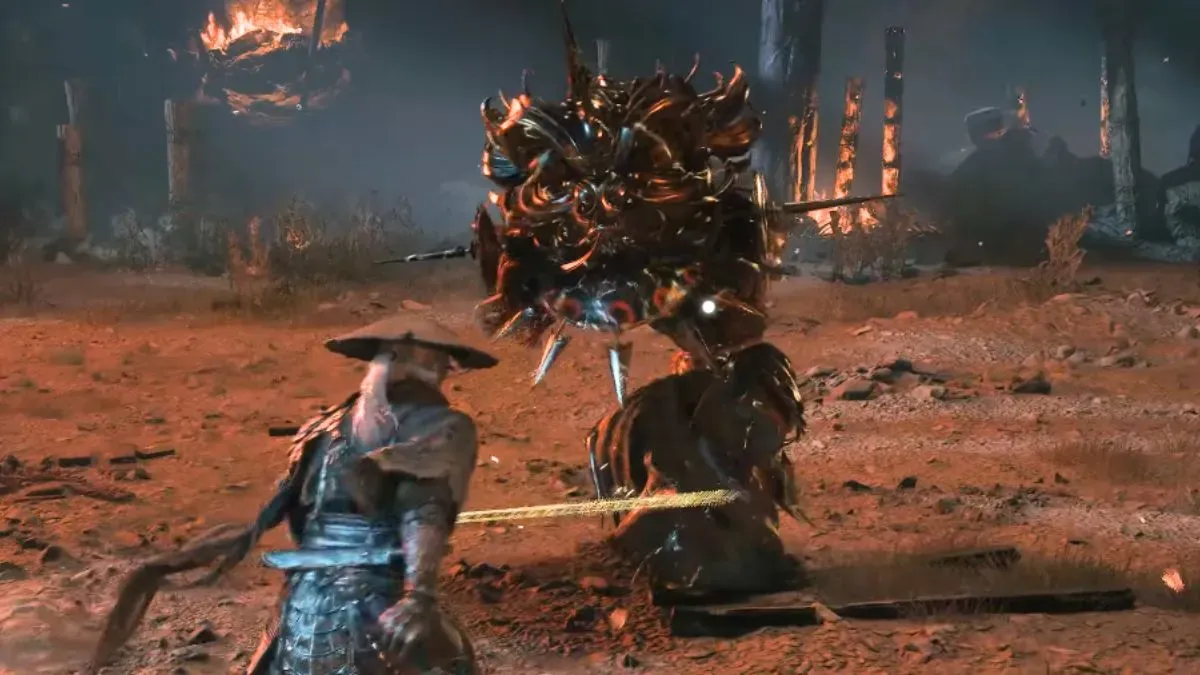
The traditional Chinese lion dance even finds its way into one of Phantom Blade Zero’s boss fights.
There are only a couple of months left before wuxia-style action RPG Phantom Blade Zero arrives, and S-GAME has finally showcased more of what players can expect when they step into the Wulin during Phantom Blade Zero’s State of Play, which streamed on YouTube on Tuesday (18 August).
During State of Play, S-GAME gave a much fuller look at the game, from the different regions players will explore to Soul’s huge arsenal of weapons and martial arts styles, the enemies he’ll face, and the Chinese traditions woven throughout its world and combat. Creator and director Soulframe Liang also went deeper into the studio’s distinctive “kung fu punk” style, while martial arts legend Donnie Yen explained how Phantom Blade Zero draws from wuxia and the traditions of Chinese martial arts.
Phantom Blade Zero
Release date: 29 October, 2026
Platforms: PlayStation 5, PC
Developer: S-GAME
What is the story of Phantom Blade Zero?
Soul is one of the Order’s most feared blades until he is framed for his leader’s murder and betrayed by those around him. After his childhood blood brother Zuo Shang drives a blade through his heart, the mysterious Flesh Sculptor brings Soul back to life with just 66 days to uncover the truth behind his betrayal and the growing threat to the Wulin.
Liang describes the Wulin as “a martial underworld forged in blood and belief”, populated by guardians of righteousness, those who have fallen to darkness and warriors whose hopes have been broken. Many have gathered in Pangzhen, where rival factions, hidden motives, and their various schemes are beginning to collide. Choices made along the way can also change Soul’s path through the story.
What is kung fu punk in Phantom Blade Zero?
Donnie Yen opened the State of Play by describing a wuxia world shaped by “old grudges, shifting alliances and the confrontations that forge these legends”, with Chinese martial arts forming the foundation of Phantom Blade Zero.
“Rooted in the traditions of Chinese martial arts,” Yen said, the game brings its own imagination and distinct cultural elements into the mix to create what S-GAME calls kung fu punk.
Liang describes that style more specifically as traditional kung fu colliding with steampunk machinery and body modification. It can be seen throughout the Wulin, from its martial arts and weapons to stranger locations such as a steam-powered iron tower apparently being used for a dark experiment.
Yen has been directly involved in shaping the martial arts side of the game as Creative Consultant, while also bringing Mó Yuan to life through facial and motion capture.
The State of Play brings those influences together in Flame, the Mask-Bound Lion Dance Grandmaster, a boss inspired by traditional Chinese Lion Dance. Flame’s movements carry recognisable elements of the dance into the fight itself, while traditional Chinese drums and cymbals accompany the encounter. The choreography also gives Soul plenty of opportunities to switch between weapons and techniques, making the fight one of the strongest showcases of S-GAME’s kung fu punk style.
Phantom Blade Zero weapons and martial arts styles
Soul will have access to 30 primary weapons and 25 secondary weapons known as Phantom Edges, with the arsenal drawing from different corners of martial arts and kung fu cinema. As Liang explained, every weapon is shaped by “martial folklore, cinematic legacy, and ancient tradition”, giving each its own techniques and ways to approach a fight.
The Drunken Sword is one of the more recognisable examples, building drunken energy as Soul fights and increasing his evasiveness as he sways and staggers through attacks. It brings the distinctive movements of Drunken Kung Fu, popularised through martial arts films, directly into Soul’s fighting style.
Other weapons give him ways to deal with specific threats. Iron fists and hammers can break through heavy shields, while the Tiger Cannon gives Soul a ranged option for blasting through enemy groups or setting off explosive enemies before they get close. The Flaming Mane sprays fire across groups when blades aren’t particularly useful.
Some of the swords get considerably more unusual. The White Serpent and Crimson Viper Twin Blades work together, with the longer White Serpent allowing Soul to fling the Crimson Viper out for ranged attacks. The flexible Soft Snake Sword can coil around an opponent’s guard and even cut incoming projectiles out of the air.
Upgrading weapons unlocks additional forms and techniques, while accessories offer more room to shape a build around a preferred style. Players can also use the Reforging Talisman to reset an upgraded weapon, recover all the materials invested in it, and immediately put them towards something new.
How exploration works in Phantom Blade Zero
“Phantom Blade Zero is not an open-world game, nor is it a linear adventure from beginning to end,” Liang explained.
Instead, the game is made up of interconnected handcrafted regions, with eight hand-painted Chinese ink wash maps helping players find their way. More complex areas deliberately provide only a rough sense of direction, leaving players to uncover hidden enemies, side quests, rare treasures, and story clues as they explore. Bells allow fast travel between discovered locations.
Soul’s journey takes him through Pangzhen and its surrounding villages, valleys, lakes, and shadowed territories, with some much stranger locations tucked between them. Completing side quests and helping people around the Wulin can also open new story paths and reveal more about the events behind Soul’s journey.
What are the difficulty options in Phantom Blade Zero?
Phantom Blade Zero will offer four difficulty options: Wayfarer, Pathbreaker, Hellwalker and 66 Days. Wayfarer provides a more cinematic experience, while Hellwalker brings fighting game mechanics into its tougher encounters. In Hellwalker, bosses can react to spacing, punish whiffs and adapt to player habits in real time, making their responses less predictable during a fight. Finally, for players looking for the toughest challenge, 66 Days mode puts Soul’s limited lifespan directly into play. It carries over Hellwalker’s intensity, but every defeat takes time from his 66-day countdown. If the clock reaches zero, Soul dies permanently.
With the State of Play now giving a much clearer look at how the Wulin, combat, and its various systems fit together, there isn’t much longer to wait before players can take them on for themselves. Phantom Blade Zero launches on 29 October for PC and PlayStation 5.